This clip from JaMarcus Shephard's opening press conference is a must-watch for any leader.
"I get up in the morning, I look in the mirror, and I say to myself, ‘There’s someone who needs you today, big dog. They need you. They need you now....They need you today. I don’t care what’s going on in your life right now. Go help them."
Someone needs you today. Not when your schedule clears. Not when life feels easier. Today.
You can’t schedule when someone will need you. You can only choose to be there when they do.
📹: OSU Beaver Athletics
@AugustaGolfGirl The fact I can’t see every shot from any player’s round any given week. Monetize it. Let the players do it, take a percentage. Paying for multiple streaming services, have multiple apps, and still at the mercy of featured groups choices and cutoff times. I’ll gladly pay!
Revenge of the Silent Male Voter
What I learned about Trump's landslide victory from one night in New York City.
On election day, I caught the subway from Brooklyn to Manhattan. Sitting across from me an elderly woman wore a t-shirt with the image of Trump pumping his fist in the air with the words “fight, fight.” A small "I Voted" sticker was pressed onto her lapel.
She sat with an easy confidence. There were no disapproving glances from other passengers. There was no tension. No conflict. It struck me that in 2024 it was now perfectly acceptable to express support for Trump in a deep blue (Democratically held) city. As I travelled to my destination I wondered: if one could support Trump this openly in New York City, what might support look like in the rest of the country?
A few hours later I attended an exclusive well-heeled party. I spoke to various professionals who said that they had never voted Republican in their lives, but had voted for Trump that day due to his support—in their words—“for the Jews”. These Manhattanites told me that Kamala was too sympathetic to the “pro-Hamas contingent” of the far-Left, and at a time of rising antisemitism, they couldn’t bring themselves to support her. This small group of cosmopolitans represented a contingent far-removed from the stereotypical MAGA voter. And yet listening to their views, it again occurred to me: if I could find such support for Trump in the middle of a Democratic heartland—what might it look like in the rest of the country?
When I arrived at my final stop of the evening—a private underground bar in the Lower East side of the city—a celebratory atmosphere had begun to explode. The betting markets tipped a Trump win, and online supporters of Harris started to express acceptance of defeat. The beer here had already run dry. It was so bustling that it was hard to move, with young men in their twenties and early thirties outnumbering women by 2:1. These men were diverse: white, black, Hispanic, Asian. A few wore Trump caps, but the aesthetic was more like a university dorm than a MAGA rally. “This is the counter-culture” one party goer told me. "This isn't just about Trump," another said. "It's about Vance and Musk. It's about American dynamism."
In the coming days, much will be written about working class concerns—issues that have become familiar focal points for those seeking to understand Trump’s support. But while inflation and border policies will have no doubt played a role in the Republicans’ landslide victory, we might also want to look at the sentiments expressed by young male voters—voters who represent a new and emerging contingent in American politics. Nothing about the young men I spoke to appeared particularly conservative or “right-wing”. Yet it was easy for them to explain why they voted for Trump. And if we zoom out and look at broader cultural trends, it should be easy for us to understand too.
If we take a macro perspective, we see that such young men have never known a culture in which males are not routinely described as “problematic,” “toxic,” or “oppressive”. Going to university, and working at modern companies, they live in a world of Diversity Equity and Inclusion policies—many of which promote an insidious and pervasive form of anti-male discrimination. Yet to talk about it in public invites social ostracism. To criticise DEI is to risk being called a Nazi.
These young male voters know about theories of patriarchy and white supremacy, but they have never known a culture which celebrates the Great Man Theory of history. Thomas Carlyle’s nineteenth century framework for understanding the past is seen as an anachronism, not worthy of serious thought. Today we acknowledge historical figures not for their feats, but for their crimes. Whether it is due to slavery, colonisation, racism, or sexism, we tear down the monuments of our past, while building no new heroes for our future.
The problem with this way of viewing the world is that it is alienating and self-defeating. It is also wrong. By any objective standards Elon Musk is a great man of history, who is influencing the course of human civilisation for generations to come. As one party-goer told me “he caught a fucking rocket with mechanical chopsticks.” Yet despite his achievements, Musk is more likely to be scorned than celebrated by the Democratic establishment.
This tension between achievement and resentment explains much about our current moment. The young men I met that night in Manhattan weren't just voting for policies. They were voting for a different view of history and human nature. In their world, individual greatness matters. Male ambition serves a purpose. Risk-taking and defiance create progress.
This is why the Trump victory transcends conventional political analysis. It represents more than a rebuke of border policies or inflation rates. It signals a resurrection of old truths: that civilisation advances through the actions of remarkable individuals, that male traits can build rather than destroy, and that greatness—despite our modern discomfort with the concept—remains a force in human affairs.
The elderly woman on the subway, the Manhattan professionals, and the young men at the underground bar all sensed a shift. They saw in Trump not just a candidate, but a challenge to a psychosocial orthodoxy that has dominated American institutions for a generation. Their votes marked not just a political preference, but a cultural correction.
As the final results came in that night, it became clear that what I witnessed in New York was playing out across the nation. The election wasn't just a victory for Trump. It was a victory for a way of seeing the world that many thought dead: one where individual achievement matters, where male ambition serves a purpose, and where great men still shape the course of history.
Read the full article here-->
https://t.co/rSoptfam9o
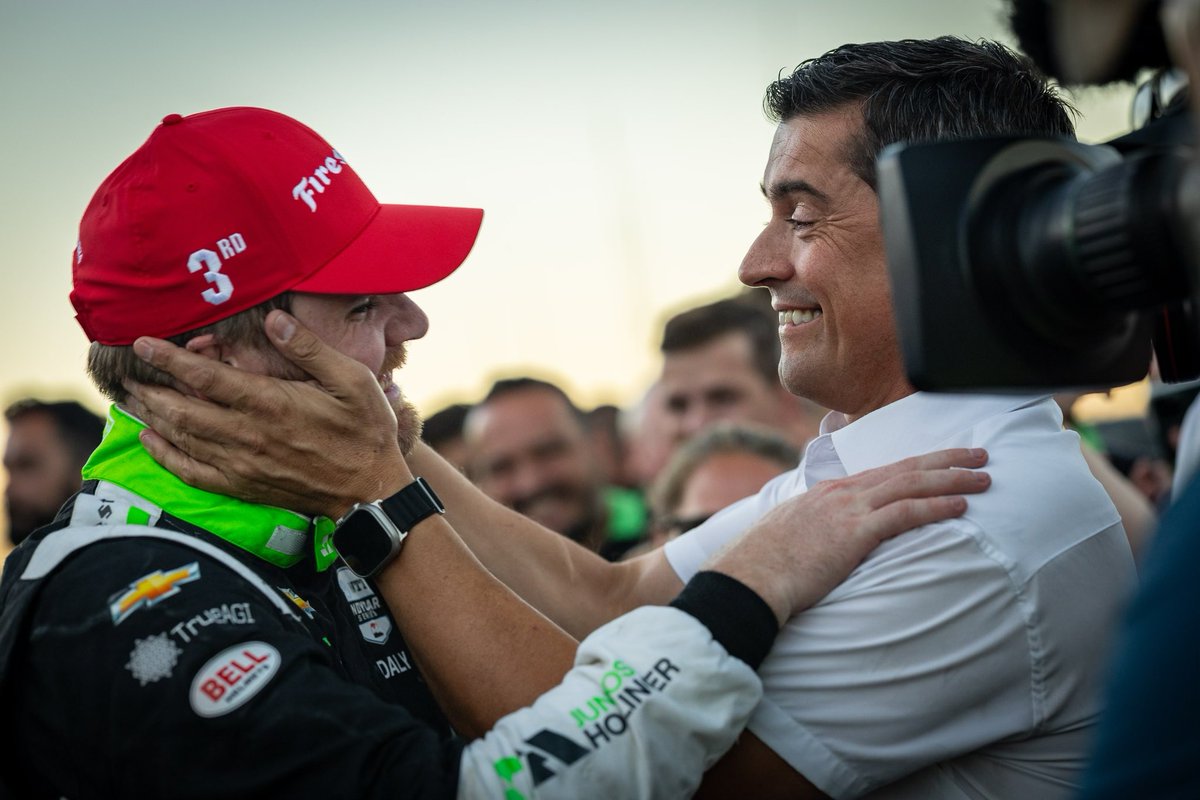
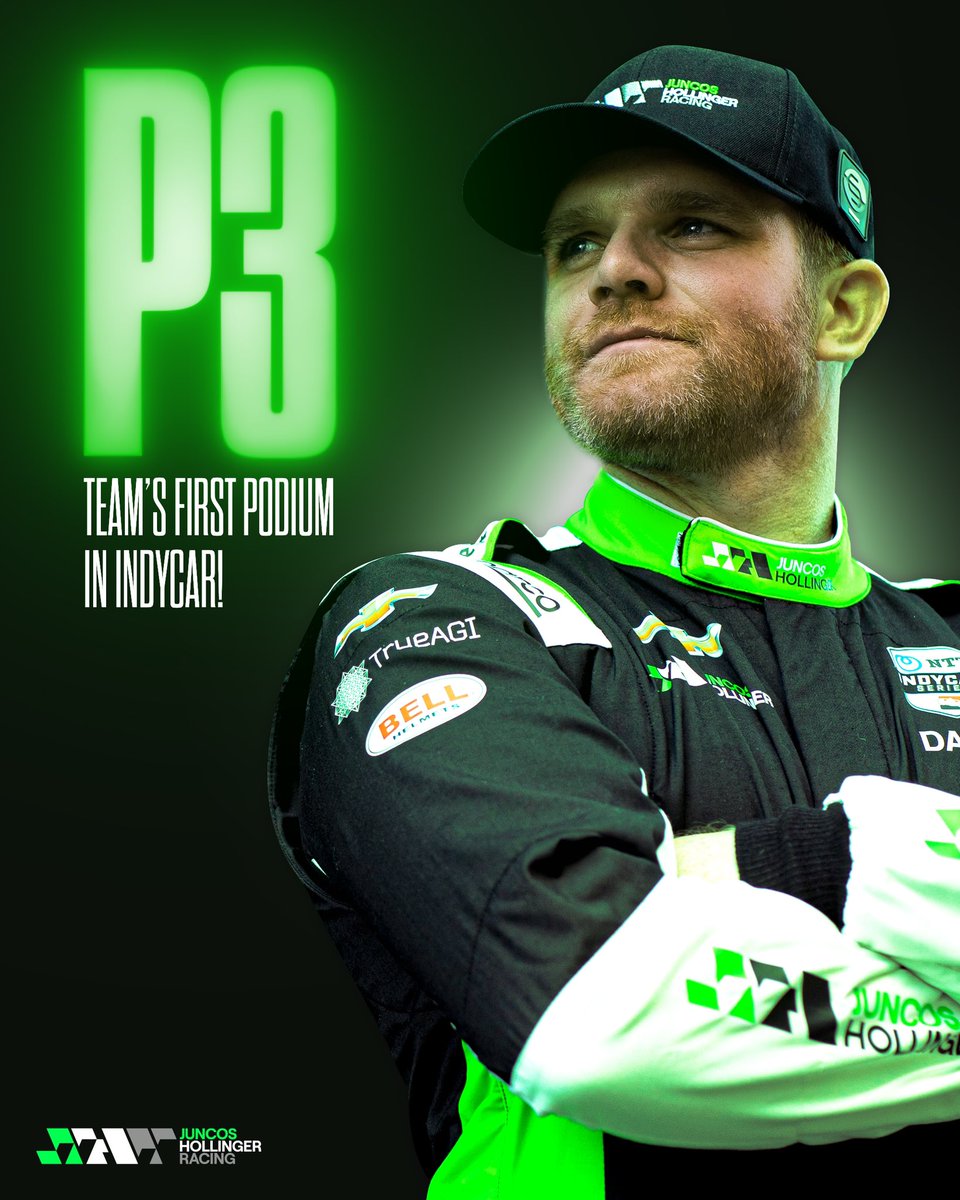
YESSSSSSSS! We did it!!!!! Podium for this amazing team @juncoshollinger !!! Thank you for allowing me to be an @IndyCar driver again ❤️ this means so much #indycar
Amazed at some of the reaction/response here. I did not think this was an even remotely controversial question.
I suppose I should have used clearer language, but I also feel like it's pretty disingenuous to suggest that I was implying that he's a bad person (I pretty obviously wasn't) rather than simply implying that he's hard to root for as a golfer (I was, because he is).
Some guys are tough to root for (Cam Young), some guys are easy to root for (Tom Kim). Most (almost all) are in the middle. That's sports.
Doesn't mean you should or shouldn't root for them. Doesn't make them good or bad people. I'm simply pointing out something that seems ... fairly obvious?
Are we so soft that a question like this is *that* offensive?
🏡 RIGGS EXPERIENCE GIVEAWAY 🏡
One winner and their friend will get a FREE round trip to Pinehurst for 2 nights & 2 rounds of golf, PLUS fully scripted travel outfits from @PeterMillar.
5 other winners will be selected to receive scripting golf outfits from Peter Millar & a Barstool Prize Pack.
To enter:
-Follow @petermillar & @foreplaypod
-Retweet
-Tag the friend you’d bring to Pinehurst