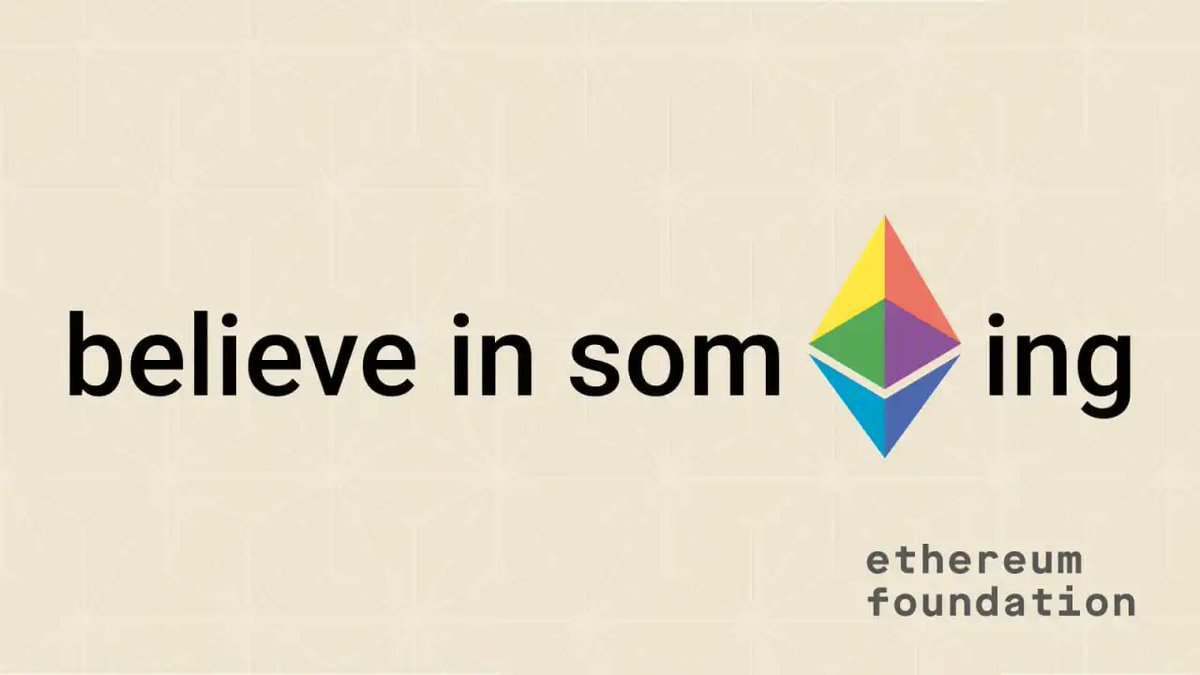
“Ethereum was not created to make finance efficient or apps convenient. It was created to set people free”
This was an important - and controversial - line from the Trustless Manifesto ( https://t.co/QAvZfiNxpe ), and it is worth revisiting it and better understanding what it means.
“efficient” and “convenient” have the connotation of improving the average case, in situations where it’s already pretty good. Efficiency is about telling the world's best engineers to put their souls into reducing latency from 473 ms to 368ms, or increasing yields from 4.5% APY to 5.3% APY. Convenience is about people making one click instead of three, and reducing signup times from 1 min to 20 sec.
These things can be good to do. But we must do them under the understanding that we will never be as good at this game as the Silicon Valley corporate players. And so the primary underlying game that Ethereum plays must be a different game. What is the game? Resilience.
Resilience is the game where it’s not about 4.5% APY vs 5.3% APY - rather, it’s about minimizing the chance that you get -100% APY.
Resilience is the game where if you become politically unpopular and get deplatformed, or if a the developers of your application go bankrupt or disappear, or if Cloudflare goes down, or if an internet cyberwar breaks out, your 2000ms latency continues to be 2000ms.
Resilience is the game where anyone, anywhere in the world will be able to access the network and be a first-class participant.
Resilience is sovereignty. Not sovereignty in the sense of lobbying to become a UN member state and shaking hands at Davos in two weeks, but sovereignty in the sense that people talk about "digital sovereignty" or "food sovereignty" - aggressively reducing your vulnerabilities to external dependencies that can be taken away from you on a whim. This is the sense in which the world computer can be sovereign, and in doing so make its users also sovereign.
This baseline is what enables interdependence as equals, and not as vassals of corporate overlords thousands of kilometers away.
This is the game that Ethereum is suited to win, and it delivers a type of value that, in our increasingly unstable world, a lot of people are going to need.
The fundamental DNA of web2 consumer tech is not suited to resilience. The fundamental DNA of _finance_ often spends considerable effort on resilience, but it is a very partial form of resilience, good at solving for some types of risks but not others.
Blockspace is abundant. Decentralized, permissionless and resilient blockspace is not. Ethereum must first and foremost be decentralized, permissionless and resilient block space - and then make that abundant.
@zerohedge True.
That is why Bitcoin is based on energy: you can issue fake fiat currency, and every government in history has done so, but it is impossible to fake energy.
Every May 22nd since 2010, we celebrate the historic moment when #Bitcoin first entered the real world.
And this year on May 22nd, Bitcoin made history again, with its price breaking through its all-time high (ATH).
#BlockChain#BCDay#Crypto#AI#Web3
Making moves with Movement Mainnet Launch Party.
The MOVE Commemorative NFT for Thunderhead will be available for minting during the event, unlocking various surprises in the future!
@ThunderheadLabs is providing the excellent stMOVE Liquid Staking Solution for Movement Network
Happy Halloween🥳
Happy #BCDay 🎉🎉
We Trust We Love such Non-Fungible Time, #BlockChain and YOU !
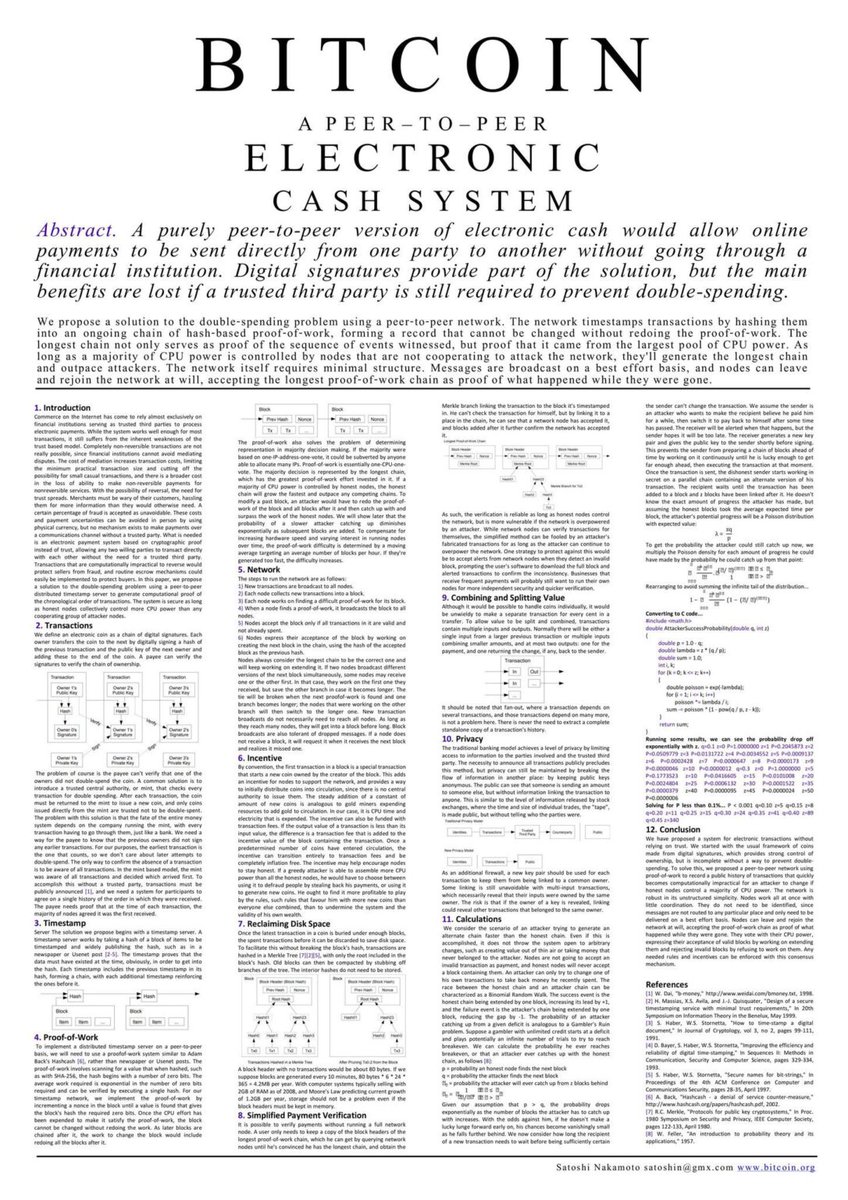
Today in History: The Bitcoin White Paper celebrates its 16th anniversary.
#DigitalTrust#Crypto#Web3
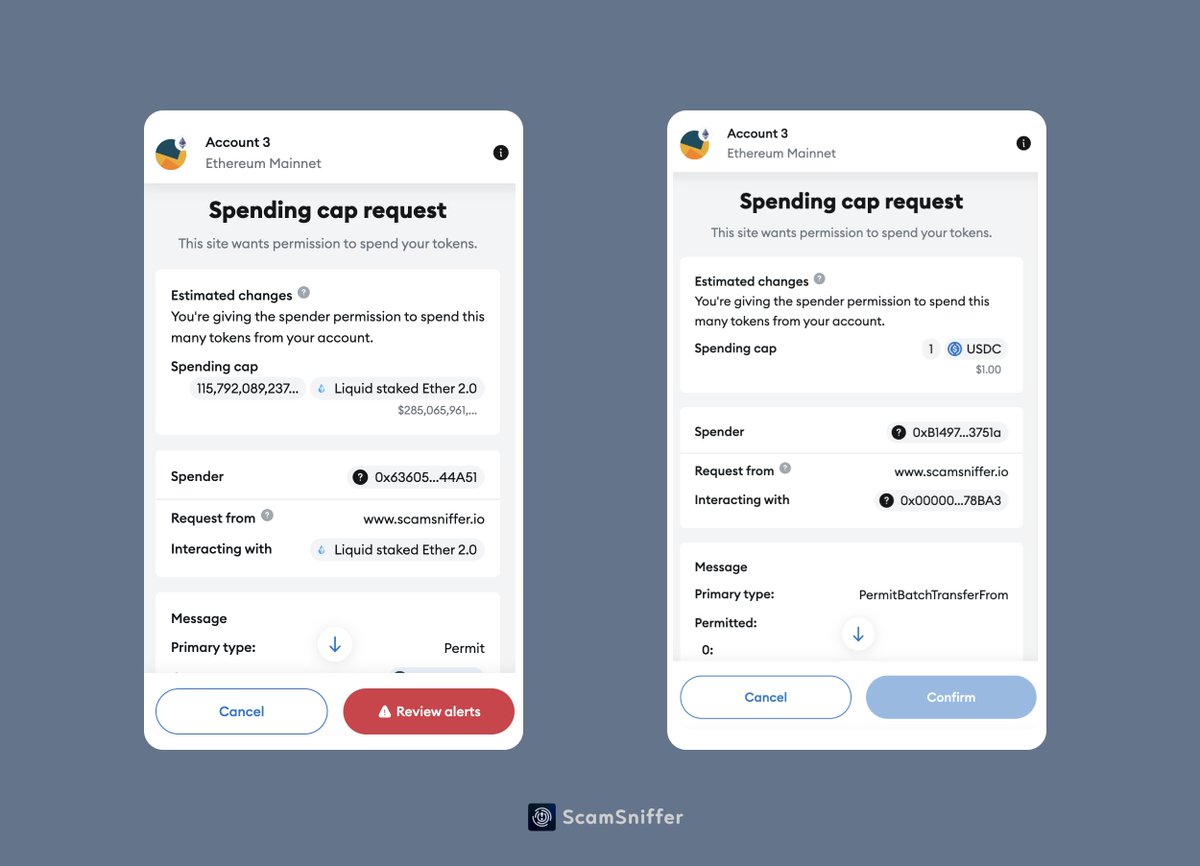
Just noticed MetaMask has improved the readability of Permit and Uniswap Permit2 signatures, helping users clearly recognize these approvals.
Make sure to update your MetaMask to the latest version! 🔄🦊
3/ We believe that good blockchain projects are co-created by the project team and the community, and that the product cannot create value without community participation.
1/ The main contradiction in some recent #airdrops is the contradiction between decentralized blockchain products and centralized team operations. That is, the conflict between the community and the project team.
#BlockChain#BCDay#Crypto#Web3
2/ Some project teams believe that the team creates the product, that the community is just users ,or even e-beggars, and that the team has the right to distribute incentives.
Not aimed at any specific project, but have seen a ton of discourse recently on the topic so figured I’d share my take on good token distributions:
1) tokens, not points
2) don’t farm the farmers - teasing and creating ambiguity around a token distribution to grow your numbers is bad behavior. If you don’t know yet, don’t speculate publicly. If you do know but are not ready to share full details, don’t tease them out. Just share real details when ready
3) real liquidity day 1 - low float tokens are malicious and my biggest pet peeve. You don’t need to work with exchanges or market makers. It’s so easy. Just distribute enough tokens publicly that real price discovery happens on DEX. People should start thinking in FDV not mcap when valuing these things
4) don’t create absurdly high token supply to farm people with unit bias, this is also bad behavior
5) don’t be stingy - give a significant amount away. If you don’t think the community deserves a significant amount, don’t release a token
6) don’t market token price - if you tweet about how your token is going to moon or hire influencers, or marketing firms to do so I assume you’re just trying to get rich quick vs build real value
7) keep it simple
8) put real thought and care into your decisions - so you can stand behind them and explain your rationale. Don’t end up in a situation where you’re fighting or apologizing to crypto twitter. Create something you’re proud of and stand behind it
At 00:09 UTC on 20 April, #Bitcoin completed its fourth halving.
What does Bitcoin halving really mean?
Time will be value-added money💰!
Time is money,but money depreciates over time,and Bitcoin is designed to increase in value over time.
#BitcoinHalving2024#BlockChain#BCDay
The Ultimate Runes Glossary
Rune: A fungible token on Bitcoin (for example a memecoin or a utility token)
Etch: How a Rune comes into existence (once set these properties are immutable)
Rune Name: The unique ticker for a Rune that can consists of the letters A through Z and must be between 1 and 28 characters long (at first only 13+ character Names are available when etching but every 3 months the character count requirement drops by 1 until in 4 years all Names are available)
Spacer: An optional bullet that can be added to a Rune Name when etching to make it more readable however the uniqueness of a name does not depend on spacers (for example the name UNCOMMON•GOODS has a spacer)
Rune Number: A unique number that is automatically assigned to every Rune that indicates when it was created relative to all other Runes (for example the first Rune to be etched is referred to as “Rune 0”, the second Rune to be etched is referred to as “Rune 1”, and so on)
Rune ID: A unique ID that is generated for every Rune based on the block of the etch transaction and the location of the etch transaction in the block (for example if a Rune was etched in the 20th transaction of the 500th block its ID would be “500:20”)
Rune Symbol: The currency symbol of a specific Rune which does not need to be unique (for example 100🔥 or 200⧉)
Divisibility: A Rune's divisibility is how finely it may be divided (a Rune with a divisibility of 0 may not be divided, a Rune with a divisibility of 1 may be divided into tenths like 0.1, a Rune with a divisibility of 2 may be divided into hundredths, like 0.01, and so on)
Premine: The etcher of a rune may optionally allocate to themselves units of the rune being etched (for example “10% was premined”)
Mint: While a rune's mint is open, anyone may create a mint transaction to create and receive a fixed amount of new units of that rune (the only cost associated with minting are the fees that go to Bitcoin miners)
Mint Terms: The rules that determine when a mint opens or closes (for example a mint could be open from block height 840,000 to block height 841,000 and however many mints occur during that period determines the supply or perhaps a supply cap of 21,000,000 is used and a mint is open until the supply is minted out)
Runestone: Rune protocol messages which are stored in the “OP_RETURN” area of a Bitcoin transaction
Edict: A message inside of a Runestone that that lets you customize which output a Rune will go to and the amount of the Rune that will go to an output during a transfer transaction (this allows you to craft custom transactions that for example send runes from one address to 10 other addresses all in the same transaction)
Cenotaph: When a Runestone is malformed for whatever reason it is called a Cenotaph and in the event there is a Cenotaph all Runes in the transaction are burned
Burn: You can destroy runes you hold by transferring them to the OP_RETURN output of a Bitcoin transaction