Fred Rogers met with a child psychologist every week for 22 years to build his show. She shaped everything: every script, prop, and song. The whole point was to give a child's nervous system time to slow down. In 1984, a single regulatory decision ended all of it.
The psychologist was Dr. Margaret McFarland, who co-founded the Arsenal Family and Children's Center alongside Benjamin Spock and Erik Erikson. She and Rogers understood that the prefrontal cortex in children, the part of the brain that controls impulse, emotion, and attention, takes decades to fully develop. At the start of every episode, Rogers tied his sneakers and changed his sweater while children settled in. Those pauses were intentional, designed to help a child's nervous system shift into a calmer, more focused state.
What ended it had nothing to do with child development science. In 1984, Reagan's FCC chairman Mark Fowler abolished the advertising limits that had protected children's programming from commercial pressure. Toy companies moved within months. Between 1984 and 1985, cartoons tied to toy lines increased by 300%, from a handful of shows to more than 40 animated series. In almost every case, the toy was designed first. The cartoon was built to sell it.
Researchers later put numbers to what parents were already noticing. A 2011 study in Pediatrics from the University of Virginia tested 60 four-year-olds across three groups: one watching SpongeBob, which cuts scene every 11 seconds; one watching a slow PBS show, which cuts scene every 34 seconds; and one drawing. Nine minutes later, all three took tests on attention, impulse control, short-term memory, and problem-solving. The SpongeBob group scored significantly worse across every measure.
In the 1970s, children began watching television around age 4. Research from pediatrician Dimitri Christakis found that by 2009, the average age of first screen exposure had dropped to 4 months, as the content got faster and the audience got younger. Researchers separately found that each additional hour of daily screen time at ages 1 or 3 raised the risk of attention problems at age 7 by 9%.
I am aware that students from Minnekhada Middle School in Port Coquitlam are among those impacted by the incident at Cultus Lake Waterpark today.
As a dad, my heart goes out to the students and families affected. There are few things more frightening than receiving a call that your child has been hurt while away from you on a school trip.
I am fully engaged on this matter and am in contact with the appropriate authorities as more information becomes available. The City of Port Coquitlam stands ready to support affected families in any way we can.
We also extend our sincere gratitude to the first responders, medical personnel, and staff for their quick response.
AI is Destroying the University and Learning Itself
Students use AI to write papers, professors use AI to grade them, degrees become meaningless, and tech companies make fortunes. Welcome to the death of higher education. https://t.co/k6zUL1ZNCy @curaffairs
En 1938, des chercheurs de Harvard ont lancé l’étude la plus ambitieuse de l’histoire en suivant la vie de 724 personnes, de leur adolescence jusqu’à leur décès, afin de découvrir ce qui rend réellement une personne heureuse et accomplie.
Pendant des décennies, ils ont analysé leurs cerveaux, leurs salaires, leurs relations et leurs traumatismes. Après 85 années de données, ils ont mis en évidence une corrélation surprenante, à laquelle personne ne s’attendait.
La réussite professionnelle à l’âge adulte ne dépendait ni du quotient intellectuel, ni de la richesse des parents, ni des notes scolaires. L’un des prédicteurs les plus puissants du succès était quelque chose de très simple : faire des tâches ménagères durant l’enfance.
Sortir les poubelles ou faire la vaisselle n’est pas seulement une question de propreté ; c’est un entraînement du cerveau. L’étude, connue sous le nom de Grant Study, a révélé que les tâches domestiques enseignent une leçon qu’aucune école ne peut reproduire : « l’éthique de la contribution ».
Lorsqu’un enfant doit arrêter de jouer pour mettre la table, il apprend que le monde ne tourne pas autour de lui. Il comprend qu’il fait partie d’un écosystème et que son effort est nécessaire au bon fonctionnement du groupe.
Les chercheurs ont découvert que les enfants qui participaient aux tâches devenaient des adultes qui :
– savent reconnaître ce qui doit être fait et le font sans qu’on le leur demande (initiative) ;
– éprouvent davantage d’empathie pour le travail des autres ;
– gèrent mieux la frustration et le report de la gratification.
À l’ère de la « parentalité hélicoptère », où l’on évite que les enfants s’ennuient ou travaillent, Harvard nous avertit qu’en les protégeant des tâches ennuyeuses, nous leur retirons les fondations de leur future compétence professionnelle.
Si vous voulez que votre enfant devienne un adulte accompli, ne lui achetez pas plus de jouets éducatifs. Donnez-lui un balai.
Source : Harvard Study of Adult Development (Grant Study) et Julie Lythcott-Haims (How to Raise an Adult).
Universo Sorprendente.
The smarter women are, the more hostility they face.
In the U.S. & China, the higher women’s IQs, the less they're liked—and the more they’re undermined by coworkers. Men pay no price for being bright.
It's long past time to recognize female intellect as an asset, not a threat.
A Russian psychologist spent 10 years proving that the act of talking to yourself out loud is one of the most powerful cognitive tools the human brain has, and almost nobody outside his field has read the work.
His name was Lev Vygotsky.
He worked in Moscow in the 1920s and died of tuberculosis in 1934 at the age of 37. He had no laboratory, no funding, almost no English readers, and a body of work that the Soviet government suppressed for two decades after he died.
He produced the foundational theory of how human cognition actually develops, and the central piece of that theory was a behavior almost every adult is faintly embarrassed about.
Vygotsky noticed that young children talk to themselves constantly. They narrate their own actions, they argue with imaginary opponents, they instruct themselves through tasks out loud.
The dominant theory at the time, from the Swiss psychologist Jean Piaget, said this was a sign of cognitive immaturity that children would eventually grow out of as they learned to think properly.
Vygotsky said the exact opposite.
He argued that this self-directed speech was the most important cognitive event in the entire developmental window, because it was the moment a child first started to use language as a tool to control their own mind. The child was not failing to think. The child was learning how to think by externalizing the process and listening to themselves do it.
He predicted that as children matured, this out-loud self-talk would not disappear. It would go underground. It would become silent inner speech, which is the running monologue every adult has inside their own head for the rest of their life.
The voice you hear when you read this sentence is the direct descendant of a four-year-old narrating their own block tower.
For 50 years almost nobody outside Russia had access to his work, and the few researchers who did pick it up could not get funding to test it. Then in the early 2000s the experiments finally started to pile up, and what they found was that Vygotsky had been right about something even more important than he knew.
The first major study came from Gary Lupyan at the University of Wisconsin and Daniel Swingley at the University of Pennsylvania in 2012. They ran a simple visual search experiment. Participants were shown 20 images at once and asked to find a specific object, like a banana or a chair. In one condition they searched silently. In the other condition they were told to say the name of the object out loud to themselves while looking for it.
The participants who spoke the target name out loud found the object significantly faster, with higher accuracy, than the participants who searched in silence. The effect was strongest when the spoken word matched a familiar object the brain already had a strong category for.
Saying the word out loud literally tuned the visual system to detect that thing better. The researchers called it the label feedback effect, and the implication was that the act of vocalizing a goal physically changes how the brain processes the world while pursuing it.
The second major study came out of the University of Michigan and Michigan State in 2017. The lead researchers were Ethan Kross and Jason Moser, and they used both EEG and fMRI to record what happens inside the brain when people talk to themselves while emotionally upset.
They asked participants to recall painful autobiographical memories and reflect on them in two different ways. Some used the first person, saying things like "why am I feeling this way." Others used the third person, referring to themselves by their own name, saying things like "why is John feeling this way."
The brain scans showed that the simple act of switching from first person to third person, even silently, decreased activity in the medial prefrontal cortex, the region responsible for rumination and self-referential pain. Within a single second of using their own name instead of the word I, participants showed measurably lower emotional reactivity. The shift required no extra cognitive effort. It cost the brain nothing. And it worked.
Kross described the mechanism in his interviews. Talking to yourself by name creates a small amount of psychological distance from your own experience. Your brain processes the situation more like a problem belonging to someone else, which means it can analyze it instead of drowning in it.
What Vygotsky had intuited in 1934 turned out to be even more powerful than the developmental theory he built it into. The voice you use to talk to yourself is not background noise. It is one of the most precise cognitive tools the brain has, and you can change how it works just by changing the pronoun you use.
People who talk through problems out loud are not anxious or unstable. They are running an externalized version of a process the rest of us are running silently and worse. The kindergartener narrating their block tower, the surgeon muttering through a procedure, the engineer pacing a hallway describing a bug to nobody, the athlete repeating a cue to themselves before a free throw, they are all using the same ancient mechanism that builds and steers human thought.
You can run the experiment yourself the next time you are stuck on something hard. Stop trying to solve it silently in your head. Say it out loud. Describe what you are seeing. Walk yourself through the steps as if you were explaining it to a colleague who is not in the room.
And when something genuinely upsets you, switch to your own name. Ask why this person is feeling this way, instead of why I am feeling this way.
The voice you have been told to keep quiet your entire life is one of the oldest pieces of cognitive technology you own.
Most people are still embarrassed to use it.
The Library of Alexandria created the first catalog of all human knowledge 2,300 years ago, and a team of fewer than 20 people just finished the modern version and made it free for the entire planet.
It is called OpenAlex. The name is not an accident.
The ancient library had the Pinakes, a catalog mapping every scroll, every author, every subject. When the library fell, the map of what humanity knew fell with it.
For the last two decades, that map existed again, but it was locked up.
Elsevier owns Scopus. Clarivate owns Web of Science. If your university could not afford the subscription, you could not see the structure of science itself. Entire countries were priced out of knowing what research existed.
OpenAlex indexes 474 million scholarly works. Every author disambiguated. Every citation traced. Every institution and funder connected. It updates with roughly 50,000 new works every day.
The whole thing is CC0. Not just free to search. Free to download, copy, sell, and build on. The API allows 100,000 requests a day without an account.
The ancient library burned and the catalog was lost for two millennia.
The new one cannot burn. Anyone can hold a copy.
https://t.co/peUYYpucnc
The reason we think dandelions are weeds is because of a 1950s marketing campaign.
Dandelions, native to Europe and Asia, were brought to North America in the 1600s by European colonists who grew them deliberately.
Every part is edible. The leaves are a salad green, the flowers were made into wine, and the roots were roasted as a coffee substitute and used medicinally for liver and kidney conditions for thousands of years. They were a kitchen-garden staple well into the 1800s.
The shift happened after World War II, when 2,4-D (originally developed for chemical warfare research) was approved as a residential herbicide. Companies like Scotts built the modern lawn-care industry around the idea that a perfect green lawn meant zero broadleaf plants.
Dandelions, being bright yellow and resistant to mowing, became a visible enemy, and the campaign worked. By the 1970s, "dandelion-free" was synonymous with "well-kept."
They aren't native, but they aren't doing significant ecological harm either. The herbicides used to kill them, on the other hand, kill bees, contaminate groundwater, and have been linked to non-Hodgkin lymphoma in humans.
If you hate dandelions, it's most likely due to a marketing campaign that ran before you were born.
Basit ve güzel bir anlatımla " tüm çokgenlerin dış açılarının toplamının neden 360 derce olduğunun ispatı. Hiç bir çocuk bu şekilde anlatıldığında bunu unutmaz.
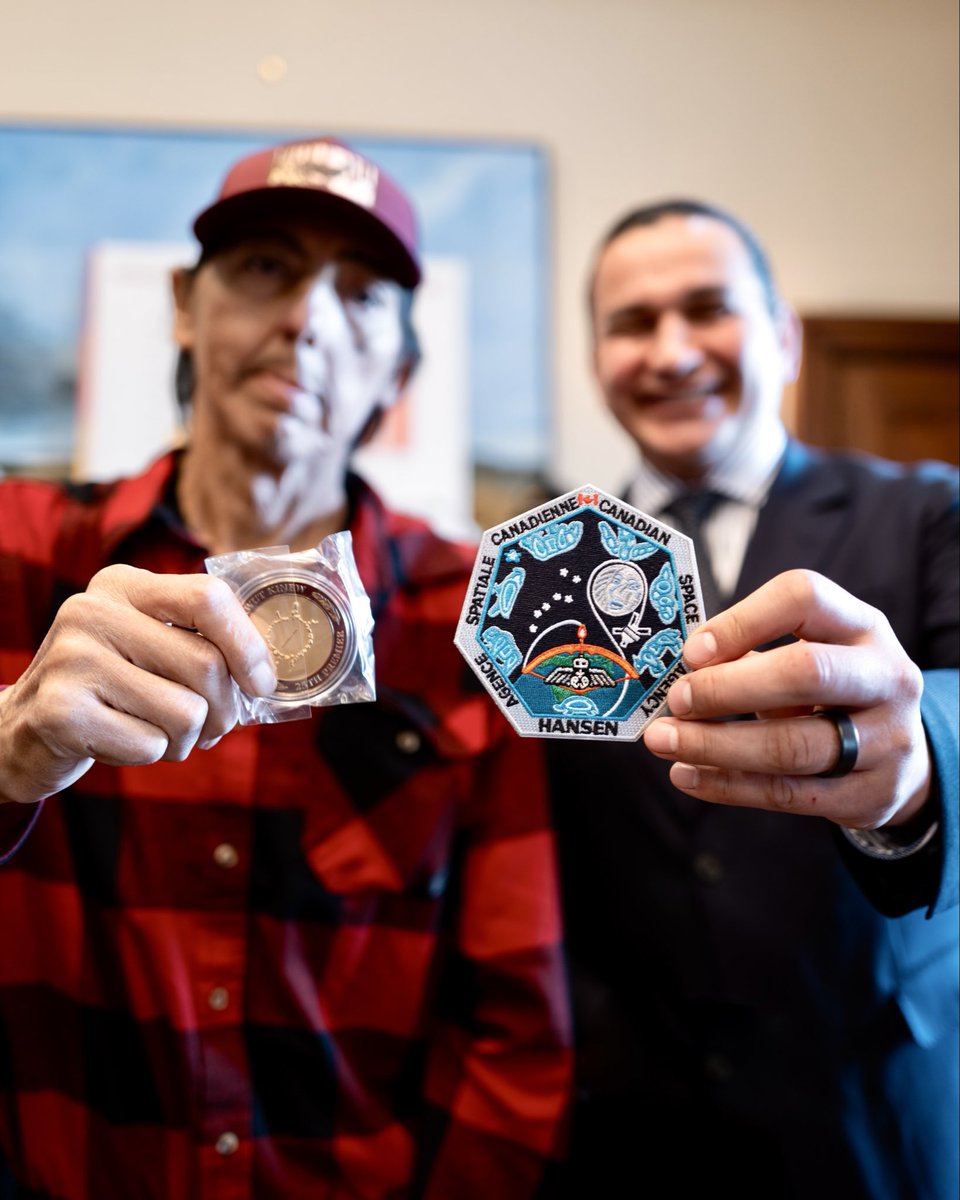
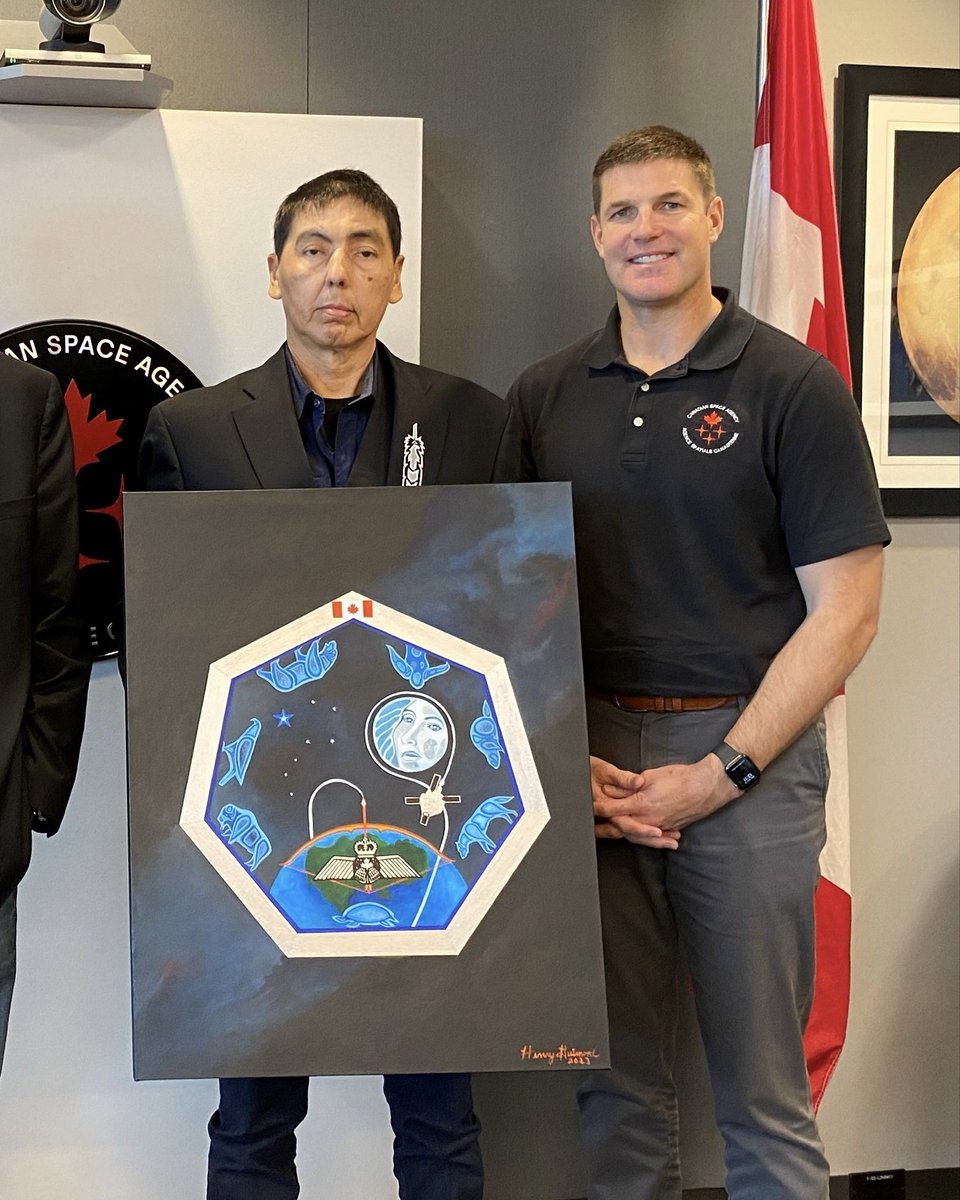
We’re proud of Anishinaabe artist Henry Guimond from Sagkeeng First Nation.
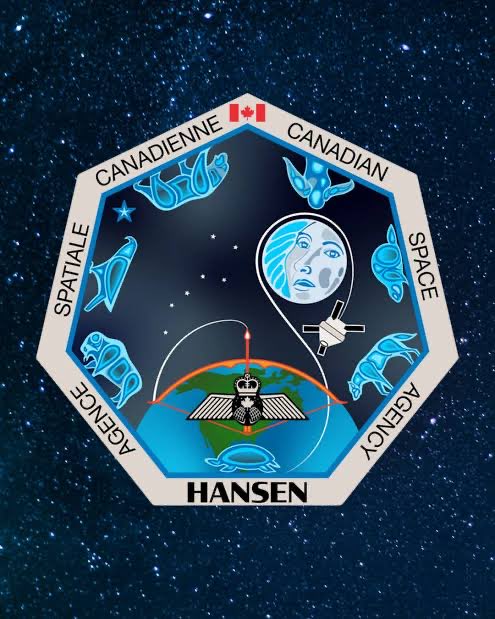
He designed the patch worn by Canadian astronaut Jeremy Hansen on the Artemis II mission-carrying the Seven Sacred Laws and Anishinaabe teachings into space.
Today he visited with his family, and we had the chance to connect, alongside Minister Ian Bushie. We traded a patch and a challenge coin- his design in my hand, and a coin featuring Manitoba petroforms in his.
From where the Creator lives to the stars, our stories travel with us. 🦬
Elon Musk was asked: “What’s one invention that’s made us worse, not better?”
His answer: short-form video.
He called it straight-up “brain rot.”
And he’s not wrong. A local news report highlighted how kids are getting flooded with dopamine hits every 15–30 seconds from YouTube Shorts and TikTok-style content. Brain scans show overactivation in the reward centers, which over time trains the brain to crave instant gratification, shortens attention spans, and contributes to attention problems, behavioral issues, and even emotional dysregulation.
Doctors are now seeing cases where it’s hard to tell the difference between true ADHD and what they’re calling “environmental ADHD” caused by excessive screen use.
78–84% of kids aged 2–12 are on YouTube, often for 2+ hours a day.
This one feels especially urgent for parents.
How much short-form video are your kids (or you) consuming daily — and have you noticed any real impact on attention span or mood?
Playing in the dirt may be one of the healthiest things a child can do.
In a remarkable study from Finland, researchers transformed ordinary daycare playgrounds by replacing gravel and asphalt with pieces of natural forest floor, including moss, leaf litter, sod, and low vegetation. After just 28 days, children who played in these biodiverse environments showed measurable changes in their skin and gut microbiota, along with improved immune markers in their blood. The findings suggest that regular contact with natural microbial life may help train the immune system early in life.
The study adds strong support to the “biodiversity hypothesis,” which proposes that modern urban living reduces our exposure to beneficial environmental microbes, potentially contributing to the rise in allergies, asthma, and autoimmune disorders. Instead of seeing dirt, moss, and leaf litter as mess, this research suggests they may actually be part of the biological foundation children need for healthier immune development.
What makes this especially important is how quickly the changes appeared. In only four weeks, the children exposed to the rewilded play yards developed more diverse microbial communities and higher levels of regulatory T-cells, which help the body control inflammation and prevent excessive immune reactions. It is a powerful reminder that nature is not just something children enjoy — it may be something their bodies genuinely depend on.
Source: Roslund, M. I., Puhakka, R., Grönroos, M., et al. (2020). Biodiversity intervention enhances immune regulation and health-associated commensal microbiota among daycare children. Published in Science Advances by the American Association for the Advancement of Science (AAAS).
The word "empathy" only came into popular use a century ago to describe the imaginative act of projecting oneself into a work of art in an effort to understand why art moves us. The story of its invention, born of Rilke's improbable friendship with Rodin: https://t.co/ay4NSYmDY7
🛢⬆️This trigger more leave messages that turns my well-intentioned old message into a type of spam).
🌿
How many times has this happened to you lately?
(🤚 3 times this past week.)
Everytime someone finds a years old group message I created (rarely send them now), and decides to leave the group message, I have to go in and unsend my content before everyone starts re-reading old messages and thinking they need to leave. #ai
https://t.co/s148LZ09av🛢