this account is no longer monitored - a network of BC educators thinking together about numeracy, supported by school districts and the BC Ministry of Education
Common manipulatives, such as popsicle sticks and wooden cubes, serve well as symbols for mathematical ideas! Learn about the 4 guidelines for using manipulatives in classrooms developed by Laski and colleagues to improve student learning.
https://t.co/CkmIUEDdE2
Get students using spatial language at the beginning of math class with this quick activity you can use over and over again. Students improve visualization and communication skills over time!
Free slides with prompts in presenter's notes for teachers: https://t.co/fcWYCSxJRf
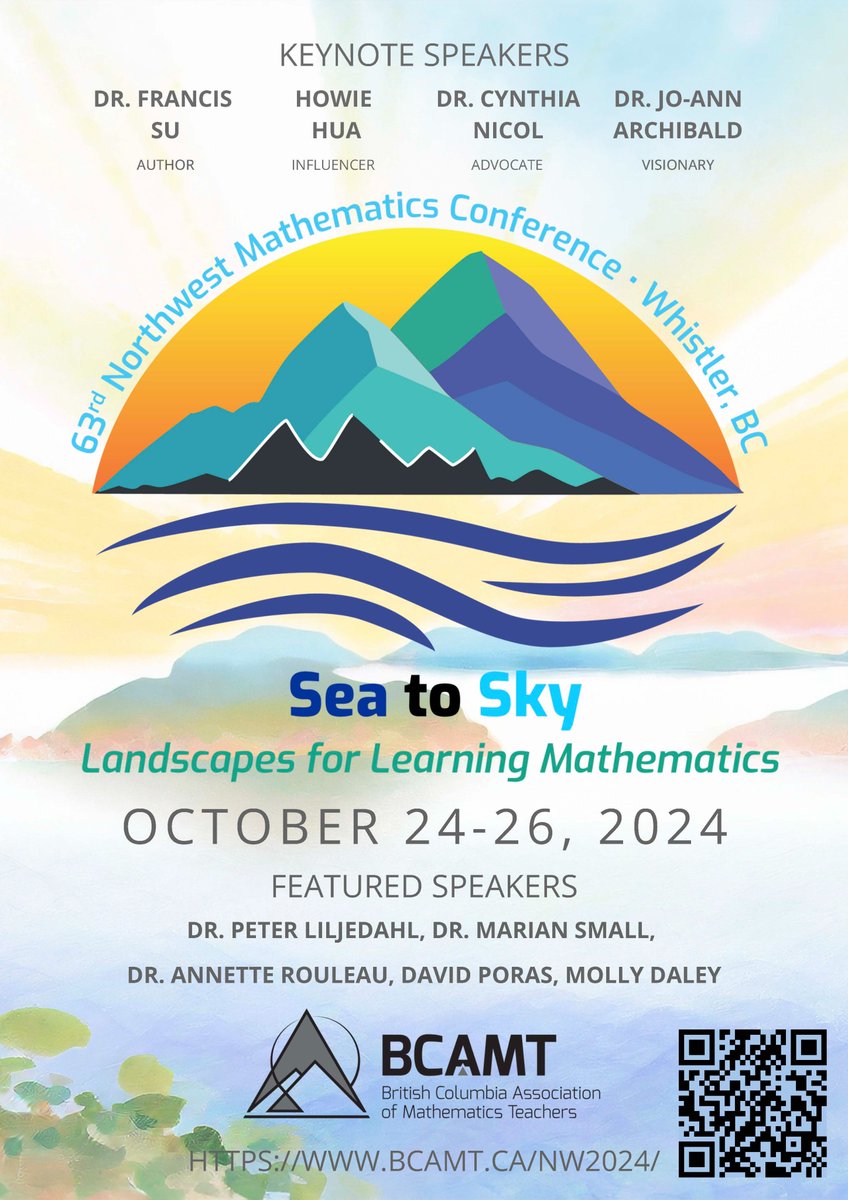
The Northwest Math Conference committee just did a site visit to Whistler to check out the hotel conference rooms, guest rooms and other facilities, places, and spaces. Hope you’ll join us!
Conference info here: https://t.co/vJCZUQjZXD
#nwmath2024@nwmathconf@BCAMT
Join us in Whistler, October 24-26, 2024, for the 63rd annual Northwest Mathematics Conference! Registration is now open! Full program details and hotel links will be posted soon. https://t.co/Wb6fwSEmma
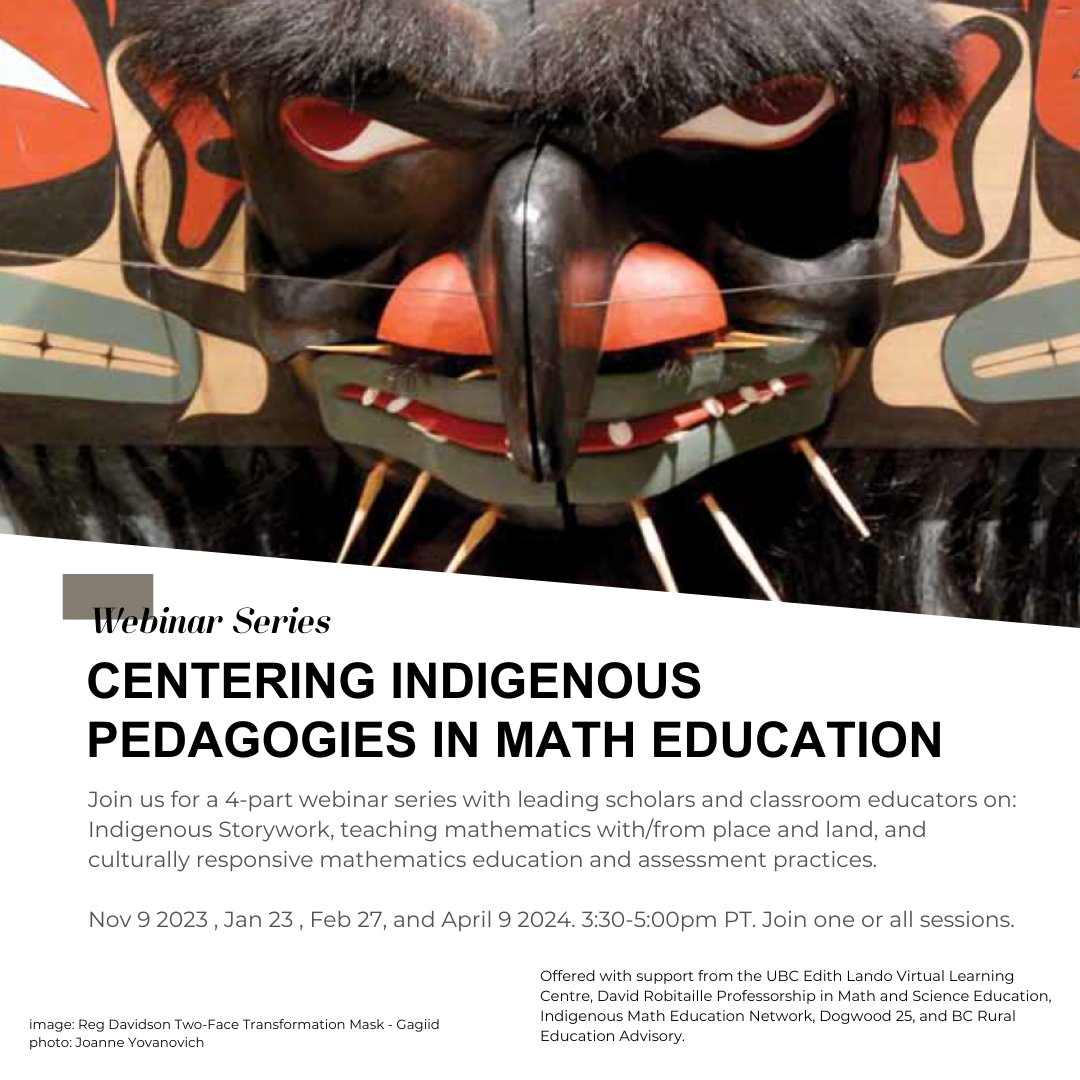
Centering Indigenous Pedagogies in Math Education, free four-part webinar series through @EdithLandoVLC and @UBCEducation - more information and to register here: https://t.co/tZy2pnuCAH
And while in Victoria, we had the opportunity to meet with some Ministry staff to share feedback and ideas we have received from educators across the province about what supports are needed in the areas of mathematics and numeracy teaching, learning and assessment.
Educators in the BC Numeracy Network met in Victoria this week to update our website (link in bio). Our website is a collection of questions, considerations and resources to support teachers who are engaging in professional inquiry into mathematics teaching and learning.
More to come, including a page focused on numeracy and its relationship to mathematics for our BC context. More assessment resources will also be added and these focus on building pedagogical content knowledge in teachers and understanding learning progressions/trajectories.
@AlexaM52069@laurengue2 @RobertaLSutton @rastokke Thanks for your suggestions. The learning standards are what is required for teaching, assessing and reporting in BC so we align our supports with those but do draw upon a range of research available.
The BC Numeracy Network educators are meeting in Victoria next week.
What additions to our website would support K-12 educators in our province?
#bcedchat
@laurengue2 @RobertaLSutton @rastokke Thanks for your suggestion. We will discuss what that might look like using BC’s curricular content and competency learning standards.
@RobertaLSutton @rastokke Thanks for the feedback. We used the term balanced for our framework at the beginning of our work to reflect our new curriculum/the requests of teachers. Our components don’t align with those of BL but understand this is often an assumption made so yes, probably need to update!
@Lynn77047982 Thank you for these ideas. What research articles in these areas would you recommend to us to reference and draw upon for instructional strategies?
@DyslexiaBC@Kathy_Rice@bcedplan@SusieChant_nvs@RachnaSinghNDP@elenoresturko @NumCog Hi there - we are unable to read the tweets in which you have tagged us as they are private. We are a group of educators that create resources to support BC educators in both math & numeracy. We gather and respond to requests from BC educators - please share your ideas with us!
Join #bcedchat this Sunday, April 16th at 7pm pst for a chat on Play-Based Learning. Check out the Questions now and join the chat on Sunday to share ideas, inspiration, stories, and conversation. We can't wait!
This year's Indigenous Math K-12 Symposium will be held via Zoom on May 10 & 17. This year's theme is Learning from Indigeneity: Living Mathematics Education as Relational Practices. For more information and to register: https://t.co/hMMYcrwotP #bcedchat#sd38learn#BCreggiomath