We are called "the elderly." But that quiet label hides something most people rarely stop to consider. We are the last living witnesses of a world that no longer exists.
Look at us and you might see gray hair, slower steps, and the patience that time teaches.
But listen to our story — really listen — and you'll realize something extraordinary.
We are the only generation in human history to have lived a fully analog childhood and a fully digital adulthood.
That's not a small thing. That's one of the most breathtaking journeys a human being has ever been asked to make.
We were born in the 1940s, 50s, and early 60s, into a world still rebuilding from the rubble of World War II.
Our toys were marbles and hopscotch and card games at kitchen tables. When the streetlights flickered on, that was it — childhood adventures were over, and it was time to go home. No smartphones. No streaming. No endless scroll.
We built our memories in the real world. With scraped knees and laughter echoing down streets and friendships formed face to face.
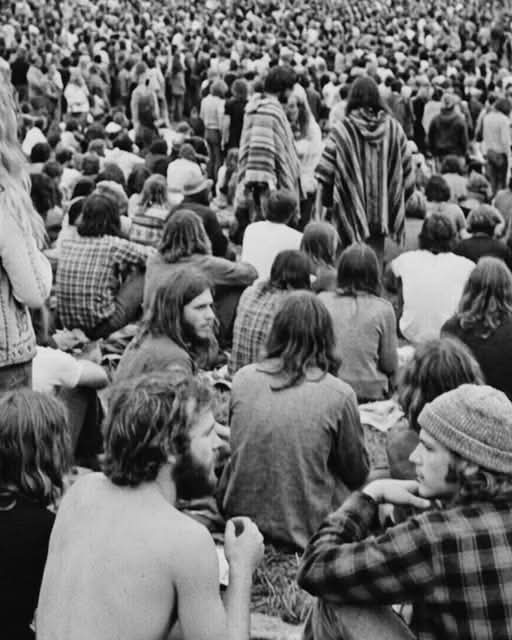
In 1969, we sat in living rooms staring at black-and-white televisions as Neil Armstrong took humanity's first steps on the Moon. Hundreds of thousands of us stood in muddy fields at Woodstock believing — really believing — that music and community could reshape the future.
We fell in love to vinyl records spinning on turntables. We waited days, sometimes weeks, for handwritten letters to arrive. We learned patience because information didn't come instantly. Mistakes were fixed with erasers — not a delete button.
Then the world transformed.
Machines that once filled entire rooms shrank to devices lighter than a paperback. We went from rotary phones and party lines to seeing the face of someone we love on the other side of the ocean — instantly, on something that fits in a pocket.
We watched the birth of the personal computer. The arrival of the internet. The smartphone. Artificial intelligence.
And through every single shift — we adapted.
Not because it was easy. Because that's what our generation does.
We also carry the weight of history in our bodies.
We grew up afraid of polio and tuberculosis. We watched science defeat them. We witnessed the discovery of the structure of DNA, the decoding of the human genome, the transformation of medicine itself. We survived pandemics across decades — and kept going.
Few generations have been asked to absorb so much change in a single lifetime.
And through all of it, certain things never changed.
We still know the joy of a cold glass of lemonade on a hot afternoon. The taste of vegetables picked straight from a garden. The value of a long conversation that unfolds slowly, without a screen interrupting it.
We have celebrated births and mourned losses. Carried the stories of friends who are gone. Watched the world become something our younger selves couldn't have imagined — and found ways to belong in it anyway.
We are not relics.
We are living bridges between two entirely different worlds.
Our memory carries something the modern world needs — proof that progress doesn't have to erase wisdom. That speed doesn't have to replace patience, kindness, or reflection.
So when someone calls us elderly, we can smile.
Because behind that word is something remarkable.
We crossed two centuries. Witnessed eight decades of transformation. Walked from handwritten letters to artificial intelligence — and never lost our sense of what actually matters.
Some Olympians wanted to be political. Jack Hughes put it all on the line, lost some teeth, scored the winning goal and praised his teammates and said how proud he was to play for our country. That's American Pride! Others should take lessons from Jack.
Alysa Liu beams with pure joy talking about winning on her own terms.
She walked away from US champion at 13 in tears, ignored her coach at 16 who called the comeback a “bad idea,” then stormed back to win Worlds and 2 Olympic golds.
Simply amazing!
Barkley Marathons 2026 ha comenzado: cuando Laz decidió adelantar el infierno | #BM100 siempre ha sido sinónimo de misterio, dureza y tradición. Pero en 2026, incluso para los estándares de esta carrera legendaria, algo ha cambiado: por primera vez en sus 40 años de historia, la prueba ha comenzado en febrero. Adelantar la edición de 2026 a febrero no es un capricho. Es un mensaje. Uno muy claro: Aquí manda Laz.
https://t.co/FIaqEgm6Dq
@charliersmith1 Negative comments are unforgivable. No excuse for meanness. You are a lovely young woman and deserve respect as does everyone that is kind.
Robin Williams bittersweet last line in his final film.
In Night at the Museum 3, he gave a performance that is impossible to watch without feeling the weight of the moment.
He delivers a line of hope and acceptance that lands like a quiet farewell.
Highway chaos. A crash. Two lives shattered in an instant. Amid speeding cars and blaring horns, Melinda Gurrola lay bleeding, her leg severed, her life slipping away.
And then — a Marine ran toward the danger.
Hospital corpsman Sammuel Goodwin grabbed his medical kit and sprinted across four lanes of traffic. He reached Melinda, saw the arterial bleed, and knew seconds meant everything. With calm precision, he applied a tourniquet, packed her wounds, and wrapped her severed leg in hopes it could be saved. For 22 minutes, on the asphalt lit only by headlights, he fought to hold life steady until paramedics arrived.
Doctors later called his battlefield-style work “some of the best” they had ever seen outside a hospital. Witnesses said he didn’t think twice, just ran straight into danger when others froze.
But Goodwin’s heroism didn’t end on the highway. He visited Melinda in the hospital, checking on her condition, offering support to her family. Humble in his response, he said only, “By God’s grace, I was there — and didn’t get killed in the process.”
For Melinda, the road to recovery will be long. But because one Marine refused to stand back, she has that chance.
🙏 Tonight, let us honor Sammuel Goodwin — proof that heroes don’t wait for safety, they create it. His courage reminds us all: even in the darkest chaos, light can still break through.