The picture says it all. A canyon of information captured indefinitely on a medium (paper) that does not require a data center to maintain or a digital screen to access.
#saveourlibraries
Thanks to @pauljpastor for post.
Professor Boole is an inspiration to all of us who choose to pursue something more practical, even if it may not be implemented right away. Thank goodness there were ‘hard copies’ of his manuscript still around for Mr. Shannon to discover at MIT years later. Thanks to @MillieMarconni for the great article.
My recent book about a Scottish nurse who volunteers for the International Brigades to help stop fascism during the Spanish Civil War is now on sale on Amazon.
@Pergament_F Sophia paints a brilliant picture of Thomas Hardy, which every writer should aspire to. His heartfelt character portrayals and lumistic prose still seem fresh and unambiguous today. And to think he developed that ability without a formal education is fascinating.
@AlexTran677026 A favorite movie of mine because it brilliantly shows how the best military strategy can go awry, yet the troops never give up the fight. The cast was outstanding as well. Thanks to @AlexTran677926 for posting this.
A Bridge Too Far (1977), directed by Richard Attenborough, is a sweeping war epic that recreates Operation Market Garden during World War II. The film is remembered not only for its massive scale but also for its extraordinary ensemble cast, making it one of the greatest “all‑star” productions of the 1970s.
With a runtime of over three hours, it features legendary names such as Sean Connery, Robert Redford, Anthony Hopkins, Gene Hackman, Laurence Olivier, and James Caan.
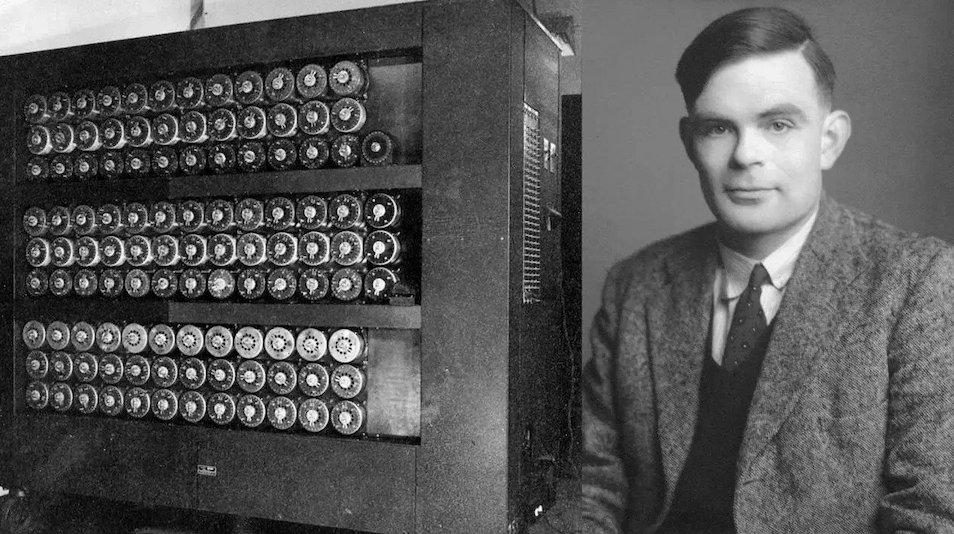
Mr. Turing would certainly qualify as one of the most important people of the twentieth century. His technical leadership in cracking the Enigma code was arguably the primary reason the Allies were able to stem the tide of fascist advances in Europe. And the fact that he continued to selflessly provide a roadmap for implementing computing systems until his untimely death is remarkable. A true, albeit tragic hero to us all. Thanks to @ihtesham2005 for a great article.
A British mathematician invented the computer at 24, won the war at 30, was chemically castrated at 40, and was dead at 41.
I went down this rabbit hole expecting a story about science. What I found was the most brutal betrayal in the history of modern technology.
His name was Alan Turing.
In 1936 he was a 24-year-old graduate student at Cambridge working on an obscure logic problem nobody outside academia cared about. The German mathematician David Hilbert had asked whether a single procedure could exist that, given any mathematical statement, would tell you whether it was provable.
Turing answered no. But to prove the answer was no, he first had to define exactly what a procedure was. So he invented an abstract machine to capture the idea.
The paper is called On Computable Numbers. It is 36 pages long. It is the most important paper in the history of computer science.
What he sketched on paper that year is now called a Turing machine. A device that reads instructions off a tape, modifies what it reads, and moves to the next instruction.
Every CPU on Earth is a physical implementation of this idea. Every programming language is a way of writing instructions for one. He proved, on paper, that there could exist a single universal machine capable of simulating any other machine. That single proof is the reason your laptop can run thousands of different programs without being redesigned for each one.
Hardware and software are different things because Turing proved they could be, nine years before there was such a thing as a stored-program computer.
Then the war happened.
In 1939 he was recruited to Bletchley Park, the British codebreaking center where the most secret work of World War II was done. The Germans were using a cipher machine called Enigma to encode every military order moving across Europe. The number of possible Enigma settings was 158 quintillion. The Polish had cracked an earlier version. The new German naval Enigma was considered unbreakable.
Turing led the team that broke it.
He designed a machine called the Bombe that could systematically eliminate impossible cipher settings until only the correct one remained. By 1943 his team was decrypting roughly 84,000 German messages per month.
The British Admiralty could read U-boat positions in the Atlantic before the U-boats reached them. Historian Sir Harry Hinsley, who served at Bletchley Park and later wrote the official British intelligence history of the war, estimated that the work shortened the war by two to four years. Millions of people who would have died are alive because of what one small team did in a country house outside London.
Almost none of them ever knew his name.
The work was classified for 30 years. Turing went back to civilian life, took a position at the University of Manchester, and in 1950 wrote a second paper that would do for artificial intelligence what his 1936 paper had done for computing.
It is called Computing Machinery and Intelligence. The opening line is famous. "I propose to consider the question, can machines think." Then he did something nobody had ever done with that question. He pointed out that the question itself is meaningless until you define what thinking is, and that nobody can define what thinking is even for humans.
So he proposed replacing it with an operational test. If a machine could hold a conversation indistinguishable from a human conversation, the question of whether the machine "really" thinks becomes a philosophical preference, not a scientific one.
ChatGPT, Claude, Gemini, every large language model in production today, every conversation about AI alignment, every benchmark measuring whether a model has crossed some threshold of capability all of it traces back to the test he proposed in that single 1950 paper.
He defined the entire vocabulary of the field he never lived to see exist.
In 1952 he was arrested.
A young man named Arnold Murray had stayed at his house. Murray's friend later broke in to steal something. Turing reported the burglary to the police. Under questioning, he admitted he had been in a relationship with Murray. Homosexuality was a crime in Britain under the 1885 gross indecency law, the same statute that had been used to imprison Oscar Wilde 57 years earlier.
Turing did not deny what he had done. He told the police it should not be against the law. He was convicted.
The court gave him a choice. Prison, or a year of forced estrogen injections to chemically suppress his sex drive. He chose the injections so he could keep working. The treatment caused weight gain. It gave him breasts. It stripped his security clearance. The country that had used his mind to win the war was now using its laws to destroy the body that mind lived inside.
On the morning of June 8, 1954, his housekeeper found him dead in his home in Wilmslow. He had died the previous day, June 7. He was 41 years old. A half-eaten apple was on the bedside table. The autopsy found cyanide in his system. The inquest ruled it suicide.
Some historians dispute the ruling. Jack Copeland, a leading Turing scholar at the University of Canterbury, has argued that the apple was never tested for cyanide, that Turing was in good spirits in the days before his death, that he had been making plans for the week ahead, and that the cause of death is consistent with accidental inhalation of cyanide vapor from a home electroplating experiment he had been running in his spare bedroom. We will probably never know which version is correct.
What is certain is that he died alone, in a small house outside Manchester, a year after the British government finished injecting hormones into his body, in a country whose existence depended on the work he was no longer allowed to do.
In 2009 the British government issued an official apology. Prime Minister Gordon Brown wrote that the treatment Turing received was "appalling" and that he deserved "much better." In 2013 Queen Elizabeth II granted him a posthumous royal pardon. In 2021 his face was placed on the Bank of England's 50 pound note.
Sixty years. That is how long it took the country that owed him everything to put his face on its money.
The 1936 paper is free online. The 1950 paper is free online. Both have been read by every serious computer scientist who has ever lived. The man who wrote them did not live to see a personal computer, did not live to see the internet, did not live to see a single one of the machines whose architecture he had defined while still in his twenties.
Every algorithm running on every machine on Earth right now traces back to a graduate student who got 41 years on this planet before the country he saved decided they could no longer tolerate the way he loved.
@Mr_Husky1 Phenomenal story of another woman hero of World War2. It seems the only thing greater than her sheer determination was her humility. Thank to @Mr_Husky for shining a light on this incredible woman and her accomplishments.
This activation theory makes perfect sense to anyone experiencing a down moment. Playing a musical instrument, running through the park, or even washing your car provides a physiological gratification that pushes back on feelings of self doubt and anxieties. Churchill had the right idea. I would love to see the brick walls he built.
Winston Churchill fought his depression with bricks. He'd lay them for hours at his country home in Kent. He joined the bricklayers' union. And in 1921 he wrote about why it worked. It took psychology another 75 years to catch up.
He called his depression the "Black Dog." It followed him for decades. His method for fighting it back was as basic as it sounds: laying brick after brick, hour after hour.
Churchill spelled out his theory in a long essay for The Strand Magazine. People who think for a living, he wrote, can't fix a tired brain just by resting it. They have to use a different part of themselves. The part that moves the eyes and the hands. Woodworking, chemistry, bookbinding, bricklaying, painting. Anything that drags the body into a problem the mind can't solve by itself.
Modern psychology now calls this behavioral activation. It's one of the most-studied depression treatments out there. Depression sets a behavior trap. You feel bad, so you stop doing things, and doing less means less to feel good about. Feeling worse makes you do even less. The loop tightens until you can't breathe inside it.
Behavioral activation breaks the loop from the action side. You schedule the activity first, even when every part of you doesn't want to. Doing it produces small rewards: a wall gets straighter, a painting fills in, a messy room gets clean. Those small rewards slowly rewire the brain. Action comes first, and the feeling follows.
Researchers at the University of Washington put this to the test in 2006. They studied 241 adults with major depression and compared three treatments: behavioral activation, regular talk therapy, and antidepressants. For the people who were most severely depressed, behavioral activation matched the drugs. It beat the talk therapy. A 2014 review of more than 1,500 patients across 26 trials backed up the result.
Physical work like bricklaying does something extra on top of this. It crowds out rumination, the looping bad thoughts that grind people down during the worst stretches of depression. Bricklaying needs both hands and gives feedback brick by brick: each one is straight or crooked. After an hour you can see exactly how much wall you built. No room left for the mental chewing.
The line George Mack used in his post, "depression hates a moving target," is good poetry. The science behind it is sharper. Depression hates a brain that has somewhere else to be.
#KindleDeals
Read these titles on promotion
Just 99p/c
The Groom's Promotion, by @mdennismcg
https://t.co/whGTYeuCYQ
Mystery in the Snowy Mountains, by Alan C Williams
https://t.co/3F945PCeR2
The Prendergast Watch, by @EmWoodhouse8
https://t.co/QwGW60DtYz
#Histfic#Dealoftheday
This is a tremendous lecture. Better than most TED talks because the sincerity he displays is as apparent as the knowledge he presents. Well worth the time to watch and learn. A key takeaway for me was the KPt rule discussed.
A MIT professor gave a 1-hour lecture in 2019 that has 18 million views.
He died 5 months after recording it.
It was his final gift to the world.
Patrick Winston taught at MIT for 50 years.
The smartest engineers on earth sat in his classroom.
And he spent his last lecture teaching them the one skill their degrees never covered.
How to speak.
15 lessons that will change how you communicate forever:
Never open with a joke. Your audience is not ready to laugh yet. Open with a promise of what they will know by the end.
Your ideas are like your children. You are too close to them. What is obvious to you is invisible to everyone else. Explain the obvious.
The 5-minute rule: the first 5 minutes of any talk determine whether people will listen for the next 55. Spend more time on your opening than anything else.
Repeat your most important idea 3 times in 3 different ways. Once is never enough.
Build a fence around your idea. Tell people what it is NOT before you tell them what it IS.
Verbal punctuation. Pause. Let the idea land before moving to the next one.
Ask questions nobody will answer. Then wait 7 seconds. The silence is not awkward. It is processing.
Never read your slides. Your audience can read. They cannot listen and read simultaneously.
Use the board not the slides. Writing forces you to slow down. Slowing down forces clarity.
Inspire before you inform. Nobody learns from someone they are not inspired by.
End with a contribution not a summary. Tell them what you gave them. Not what you said.
Never say thank you at the end. It is weak. End with something that lands.
Stories make ideas stick. Data makes ideas understood. You need both. In that order.
The quality of your communication determines the quality of your ideas in the eyes of the world. Not the ideas themselves.
Practice is not preparation. Practice IS the skill.
Patrick Winston understood something most people spend their entire careers missing.
Your ideas are only as powerful as your ability to transfer them into someone else's mind.
You can be the smartest person in the room and be completely invisible.
Or you can master communication and make average ideas feel like breakthroughs.
He chose to spend his last lecture teaching this.
Watch it tonight.
Bookmark this first.
Follow @cyrilXBT for more lessons from the people who built the future.
@cyrilXBT This is a tremendous lecture. Better than most TED talks because the sincerity he displays is as apparent as the knowledge he presents. Well worth the time to watch and learn. A key takeaway for me was the KPt rule discussed.
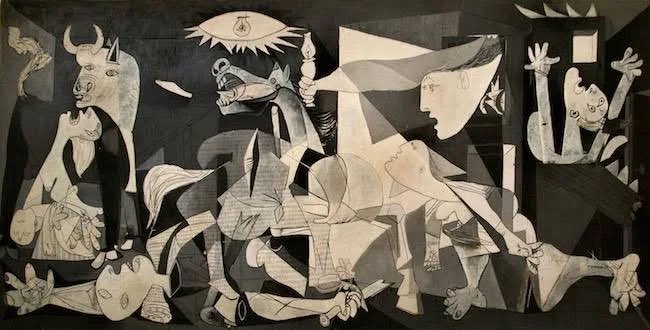
@LincolnBrigade Only Picasso could have provided such a heartfelt rendition of the horror felt that day in Gernika. The full size mural can be viewed at the Museo Reina Sofia in Madrid.
@Old_But_Gold50s Great post. I took up piano several years ago to have something else to do as I started retirement. It's become one of my best habits. I can only imagine how it must have been for Adrien to devote every waking moment to learning to play as if a student of Chopin.
@MrPitbull07 Inspiring story especially for us older veterans who still feel that heart and a strong will can overcome almost any adversary, no matter how superior their weapons may be.
Bees lives less than 40 days, visit at least 1000 flowers and produces less than a teaspoon of honey. For us it is only a teaspoon of honey, but for the bee it is a lifetime of work.
Thank You Bees!
#WritingCommunity, Do you have a book, website, blog, or something else that you would like everyone to know about? If so, drop a link in the comments. Remember to like and RT to spread the word. #writerslift#books#retweet