Years of sweat and tears to get this movie done. It was the most daunting thing that I've ever undertaken. If you have the chance and mean, please watch it and enjoy the fruit of our labour. You won't be disappointed with this jam packed hand-drawn animation of a movie.
The animator draws Angel from "LILO & STITCH: THE SERIES" with plans to help the darling diva put on a concert, but Angel has even bigger plans
Liamani Segura ("Descendants: Wicked Wonderland", "Camp Rock 3") guest stars as the animator
https://t.co/QDmOkMgwWn
#HowNOTToDraw
Walt Disney’s brother thought he’d gone insane. In 1932, halfway through an 8-minute cartoon, Disney ordered the project halted. He wanted to start over in full color, using a process no studio had tried publicly yet, on money the studio didn’t have.
The cartoon was “Flowers and Trees,” the 29th entry in Disney’s Silly Symphonies series. Roy Disney and others argued against it. Color film was far more expensive than black and white. They’d just signed a new distribution deal with United Artists. If the gamble failed, the studio could go bankrupt in the middle of the Great Depression. Walt went ahead anyway.
The technology came from Herbert Kalmus at Technicolor. His “three-strip” system ran three film strips through a single camera, using a prism to split light into red, green, and blue, then merged them into one strip in the lab. The previous process had only captured yellow and green. This was the first time cinema could show what the human eye actually sees.
Disney didn’t just use the process. He locked it up. As part of the deal, he secured exclusive rights to use it in animation through the end of 1935. Max Fleischer, whose studio made Betty Boop and later Popeye, was locked out. Fleischer had to use an inferior two-color system called Cinecolor. His “Color Classics” series launched in 1934 as a direct answer to Disney’s Silly Symphonies, but the visual gap was obvious. Fleischer’s cartoons couldn’t get the same process until 1936.
“Flowers and Trees” premiered at Grauman’s Chinese Theatre on July 30, 1932, completed just days before showtime. Film Daily called it a “genuine novelty.”
That November, the Academy introduced a brand-new category: Best Short Subjects, Cartoons. Disney was nominated twice for the first prize, with “Flowers and Trees” and “Mickey’s Orphans.” He won with “Flowers and Trees,” making it the first animated film to win an Oscar in a category that hadn’t existed before. The Library of Congress added it to the National Film Registry in 2021, nearly nine decades later, for being “culturally, historically, or aesthetically significant.”
Roy thought the whole thing was madness. Walt was right.
She lost it for a moment 🥹🥲💔
This is just too much I can't 😭 This woman pours her heart and soul into her songs and performances 🥹🫶
We love you so much @AmyLeeEV! Thanks for being so honest and genuine in your music. It’s helped me and so many others more than you know❤️
Presenting another look at the latest instalment in the Kingdom Hearts series.
Kingdom Hearts IV will launch simultaneously on Nintendo Switch 2, PlayStation 5, Xbox Series X|S, Xbox on PC, Epic Games Store and Steam!
Stay tuned for more updates.
Well, the years start comin' and they don't stop comin' and they don't stop comin' and they don't stop comin' and they don't stop comin' and they don't stop comin' and they don't stop comin' and they don't stop comin' and they don't stop comin' and they don't stop comin'
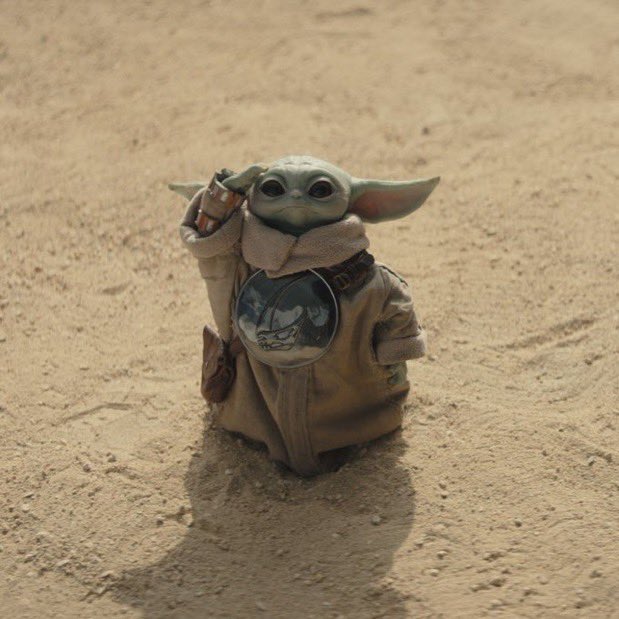
That little green guy walking the red carpet last night is a $5 million puppet. The studio almost didn’t build him. The original plan was full CGI.
Three weeks before filming started, the puppet team brought in a test version they’d been quietly working on. Everyone in the room changed their mind.
It was built by Legacy Effects, a workshop founded by people who trained under Stan Winston, the designer behind Jurassic Park’s dinosaurs and the original Terminator. Grogu’s skin is custom silicone, made to look “fleshy” under hot studio lights. Inside him are wires, tiny motors, and metal rods that puppeteers push and pull from just out of frame.
For every scene, two people sit off-camera with controllers. One works only the eyes and mouth. The other works the rest of the face: ears twitching, eyebrows lifting, cheeks puffing when he eats a frog. On harder shots, three or four puppeteers run the controls together, like a band all playing the same instrument.
The ears alone took four full rebuilds. Legacy wanted the skin thin enough that you could see the little red veins underneath when the lights hit them. They kept thinning, testing, scrapping, and starting again.
Werner Herzog, the German filmmaker, plays a villain in the show’s first season. He fell so hard for the puppet on set that the director said he seemed to forget it wasn’t alive. One day the crew started removing the puppet for a CGI backup version. Herzog turned around and called the entire team cowards. The puppet stayed.
For scale: the most expensive Grogu replica on the market costs $100,000. It runs on 25 tiny motors that let it blink, twitch its ears, and grip things. That’s the consumer version. The one used on the show was built closer to laboratory equipment than a toy.
A detail that never made it on screen: Grogu has feet. Legacy built them. Favreau hated how they looked, so the robe always covers them.
The Mandalorian and Grogu hits theaters May 22. Pedro Pascal is back as the masked bounty hunter. Sigourney Weaver plays a colonel in the new government rebuilding the galaxy after the Empire fell. Jeremy Allen White, from The Bear, voices Jabba the Hutt’s son, all grown up.
But the star of the movie is still that tiny green face. Almost every emotional reaction you’ll have to that face was sculpted by hand, by a team that nearly went CGI instead, and stayed only because Werner Herzog called them cowards.