TRON is now live on https://t.co/cDjACFpacY Cross-Chain.
1/6
At first glance, it sounds like just another network integration.
I think it's more interesting than that.
It's another step toward making users stop thinking about which chain they're on. 🧵
GM CT happy Sunday
Third week of going through @DigiMaaya piece by piece, and this time I focused less on describing each product and more on actually testing and questioning them.
Here's the honest recap of what held up and what's still unresolved.
What held up under closer scrutiny:
• The Loyalty App's onboarding genuinely works for non-traders, walked through it directly this week, and the task flow doesn't assume prior Web3 knowledge at any point
• Springboard's filter for founders is real, not just process theater, the Assess and Incubate stages exist specifically to slow down businesses that aren't actually ready, which is the opposite of how most incubators operate
• The exchange's pre-launch security posture (open-source code, independent FearsOff review, demo access) is unusually far along for something not yet publicly live
• Tech EZ owning its own events infrastructure instead of renting visibility elsewhere signals a longer-term relationship-building strategy, not a marketing spend
What's still genuinely open:
• The link between Maaya Points and $EMYA utility isn't visible inside the Loyalty App itself yet, it's a narrative you have to piece together from outside content, not something the product shows you directly
• How long founders actually spend in Springboard's Assess and Incubate stages remains unclear from the outside,the stages exist, but the real timeline isn't public
• Whether "under discussion" partnerships convert to confirmed ones at any meaningful rate is something that can only be judged over the next few months, not this week
• The exchange's security claims are strong pre-launch, but pre-launch review isn't the same as a track record under real volume, that test hasn't happened yet
The pattern across both weeks of this recap:
• Every product in the ecosystem uses the same honest-labeling approach,"In Execution," "Under Review," stages that exist to filter rather than rush
• The individual pieces are further along than the connective narrative between them,each product works on its own, but the case for why they're one ecosystem instead of four separate ones still leans more on community explanation than on what the products themselves show a new user
• Nothing found this week contradicts what showed up in week one, if anything, actually testing the Loyalty App and reading the roadmap labels closely reinforced the same read: this moves deliberately, sometimes at the cost of speed
What would change my read going forward:
• Visible in-app connection between Loyalty Points and $EMYA once more of the ecosystem is live
• A public case study or timeline from an actual Springboard founder, not just the process diagram
• The exchange's first real stretch of live volume, not just the demo
Two weeks of paying close attention is still early. What matters more than any single feature is whether the deliberate pace holds as more pieces go live, or starts getting rushed once there's pressure to show growth numbers.
What's the one thing you'd want confirmed or shipped next before you'd consider using more of the ecosystem yourself?
@WEEX_Official
Morning legends
The crypto industry has evolved.
Unfortunately, many exchanges haven't.
They're still stuck on:
• Expensive fees
• Slow innovation
• Generic reward systems
• Poor onboarding
• Limited AI integration
Traders deserve an exchange that evolves with technology
At @voodex_moon, AI is built directly into the trading experience.. futures, staking, swaps, token creation, and community rewards, all in one place.
We're not chasing trends.
We're building infrastructure for the next generation of Web3 traders.
@tonkeeper@ton_blockchain
$VDX #TON
GM CT 🌄
Reading about a product and actually using it end-to-end are two different exercises. This week I walked through the @DigiMaaya Loyalty App step by step instead of just describing what it does in general terms,here's what that actual flow looks like.
Getting started:
• Onboarding doesn't ask for trading experience or wallet history upfront, it's built for someone walking in with zero Web3 background
• The first tasks are low-friction: profile setup, learning modules, small community actions, nothing that requires you to already understand tokenomics
• Maaya Points show up immediately after the first completed task, so there's no waiting period before the system feels functional
Referrals in practice:
• The referral flow is straightforward a link, a tracked signup, points on both sides once the referred user completes their own first actions
• What stood out: referrals aren't a one-time bonus for the invite itself, they're tied to the referred user's ongoing activity, which discourages empty invite-farming
• This structure rewards bringing in people who actually stick around, not just padding a referral count with inactive signups
Task variety:
• Tasks range from educational content about the wider ecosystem to community engagement actions, giving the app more depth than a typical "log in daily" loyalty loop
• Educational tasks specifically double as onboarding, by the time a new user finishes them, they understand Springboard and the exchange roadmap without ever leaving the Loyalty App
• This is the detail that makes the Loyalty App feel like a funnel rather than an isolated product, task completion quietly builds ecosystem literacy alongside the point balance
Where the experience could tighten up:
• The connection between Maaya Points and eventual $EMYA utility isn't visible inside the app flow itself yet,it's something you have to already know from outside content
• A first-time user completing tasks has no in-app signal yet for how today's points translate into future value, which is the one gap between a good onboarding flow and a fully connected ecosystem experience
The honest takeaway from actually going through it:
• The onboarding is genuinely built for non-traders, that part delivers on what the ecosystem claims
• The gap isn't in the mechanics, it's in the narrative, the app teaches you what DigiMaaya is, but doesn't yet show you inside the interface how your points connect forward to Springboard or the exchange
Screenshots and feature lists tell you what a product has. Actually completing the flow tells you what it feels like to be a new user with no context. This one holds up better than most loyalty apps I've gone through, but the forward-looking connection to $EMYA utility is the piece worth watching as it develops.
If you've gone through onboarding recently, did the task flow feel like it was building toward something, or did the connection to the wider ecosystem only click once you read about it elsewhere?
@Bybit_Official
THE VOODEX AIRDROP HAS MY ATTENTION.
Why?
Voodex is building a trading ecosystem around TON, with:
• AI-powered trading
• DEX & futures
• Staking
• $VDX utility
• Community rewards
The interesting part is getting involved while the ecosystem is still early.
If you're already active around TON, @voodex_moon is definitely one to watch.
I’m keeping my eyes on this one.
Good morning builders Happy Friday
Most Web3 projects treat events as a spend line, pay for a booth, get a panel slot, post a recap thread, move on. @DigiMaaya went a different direction and built the events infrastructure itself. That choice says something about long-term intent that a sponsorship budget never does.
Why owning the platform is a different bet than renting a stage:
• Sponsoring someone else's conference gets you visibility for a weekend, owning a recurring events platform builds a relationship with the same audience over time
• A one-off panel appearance disappears from people's memory within a week, a platform running private forums, X Spaces, and destination events consistently keeps showing up
• Control over format means Tech EZ can shape conversations around DigiMaaya's actual priorities, founder readiness, exchange security, community growth, instead of fitting into someone else's agenda
The three formats, and what each one is actually built for:
• Private forums — curated, in-person, built for the kind of founder-investor conversation that doesn't happen productively in a public feed
• X Spaces — extends reach to anyone following along online, turning a room of twenty people into a conversation thousands can actually hear
• Destination events (Maldives, Monaco, LA, Riyadh) higher-stakes gatherings meant to attract the tier of investor, founder, and media relationship that a standard meetup doesn't reach
Why the partnership discipline matters more than the events themselves:
• Confirmed partners are only shown once approved, no name gets used as social proof before the relationship is actually locked
• Exchange and liquidity partners are explicitly labeled "under discussion" rather than blurred into confirmed status for optics
• That distinction is small on paper but rare in practice,most projects blur "in talks with" and "partnered with" the moment it's convenient for a tweet
What actually determines whether this works long-term:
• Events only matter if they produce something durable, actual founder connections for Springboard, actual media coverage that outlasts the event itself, actual partnerships that convert from "under discussion" to confirmed
• A destination event with a great photo dump but no follow-through is indistinguishable from a marketing expense,the value is in what happens after people leave the room
• The real signal to track isn't attendance numbers at the next Tech EZ event, it's how many Springboard founders or exchange partnerships can be traced back to a specific event or X Space conversation
Anyone can host an event. Fewer projects build the infrastructure to host them repeatedly and use the same relationships across the whole ecosystem instead of a single announcement. Whether Tech EZ becomes genuine infrastructure or just a recurring content moment depends entirely on what gets built from the connections made there.
If you've attended a Tech EZ forum or caught one of the X Spaces, I'd like to know, did it lead anywhere concrete for you, or connect you to something else in the ecosystem, or was it more of a one-time conversation?
@MEXC
GN CT
A TOKEN IS ONLY AS INTERESTING AS WHAT YOU CAN ACTUALLY DO WITH IT.
That’s why I’m paying attention to how Voodex is building around $VDX.
The token isn’t being positioned as just another ticker.
The ecosystem ties $VDX into things like:
• Rewards • Staking • Governance • Ecosystem participation
And it sits inside a broader trading platform connected to TON.
That combination is what makes Voodex interesting to me.
The real test, of course, is execution.
But if Voodex can turn $VDX into something users actually interact with while TON’s DeFi ecosystem keeps growing, there could be something worth watching here.
Still early.
Still watching.
Morning CT
𝗠𝗼𝘀𝘁 𝗹𝗼𝘆𝗮𝗹𝘁𝘆 𝗽𝗿𝗼𝗴𝗿𝗮𝗺𝘀 𝗶𝗻 𝗰𝗿𝘆𝗽𝘁𝗼 𝘀𝗼𝗹𝘃𝗲 𝘁𝗵𝗲 𝘄𝗿𝗼𝗻𝗴 𝗽𝗿𝗼𝗯𝗹𝗲𝗺.
They reward people for showing up, but they never answer what that engagement is actually worth later. @DigiMaaya's Maaya Points system is worth examining precisely because it's trying to answer that second question from the start, not bolt it on after the fact.
𝙏𝙝𝙚 𝙚𝙣𝙜𝙖𝙜𝙚𝙢𝙚𝙣𝙩 𝙥𝙧𝙤𝙗𝙡𝙚𝙢 𝙢𝙤𝙨𝙩 𝙥𝙧𝙤𝙟𝙚𝙘𝙩𝙨 𝙣𝙚𝙫𝙚𝙧 𝙨𝙤𝙡𝙫𝙚
Airdrop farmers show up for a claim and disappear the next day, no lasting relationship with the ecosystem. Points systems without a clear utility destination become vanity metrics, numbers that go up with no real weight behind them. And community actions that aren't tracked or rewarded consistently teach users that showing up doesn't actually matter.
𝙃𝙤𝙬 𝙈𝙖𝙖𝙮𝙖 𝙋𝙤𝙞𝙣𝙩𝙨 𝙖𝙧𝙚 𝙨𝙩𝙧𝙪𝙘𝙩𝙪𝙧𝙚𝙙 𝙩𝙤 𝙖𝙫𝙤𝙞𝙙 𝙩𝙝𝙖𝙩
Points accumulate through tasks, referrals, and community actions,not a single claim event. Referrals are treated as core infrastructure for ecosystem growth, not an afterthought bonus feature. And the system builds an actual engagement history per user, which matters if that history ever gets used to determine access, allocation, or rewards later.
𝙒𝙝𝙚𝙧𝙚 $𝙀𝙈𝙔𝘼 𝙞𝙨 𝙥𝙤𝙨𝙞𝙩𝙞𝙤𝙣𝙚𝙙 𝙩𝙤 𝙢𝙖𝙩𝙩𝙚𝙧
$EMYA is framed as the utility layer connecting engagement across the ecosystem, not a token sitting apart from the loyalty system as a separate speculative bet. Campaigns are structured so consistent, ongoing participation compounds rather than resetting with each new cycle. The real function test for $EMYA isn't its price, it's whether loyalty engagement and exchange or Springboard activity actually reference the same underlying value, instead of operating as disconnected systems that happen to share a token name.
𝙒𝙝𝙮 𝙩𝙝𝙞𝙨 𝙘𝙤𝙣𝙣𝙚𝙘𝙩𝙨 𝙗𝙖𝙘𝙠 𝙩𝙤 𝙩𝙝𝙚 𝙧𝙚𝙨𝙩 𝙤𝙛 𝙩𝙝𝙚 𝙚𝙘𝙤𝙨𝙮𝙨𝙩𝙚𝙢
A Loyalty App user with a strong engagement history is a more qualified candidate for future Springboard community allocations than an anonymous wallet with no history. Consistent community actions reported through the Loyalty App feed directly into what gets flagged as genuine community feedback,questions, objections, and requests that actually shape priorities. None of this works if the Loyalty App stays disconnected from the exchange and Springboard once both are fully live. The test is whether points and utility travel with a user across the ecosystem, not just within one app.
𝙏𝙝𝙚 𝙝𝙤𝙣𝙚𝙨𝙩 𝙤𝙥𝙚𝙣 𝙦𝙪𝙚𝙨𝙩𝙞𝙤𝙣
🔹 A loyalty system is easy to launch and hard to prove out, the real signal only shows up once $EMYA utility becomes visible across more of the ecosystem, not just inside the Loyalty App itself. Whether referral-driven growth holds up at scale without diluting what a Maaya Point actually represents is the thing worth watching over the next few months, not the current headline user numbers.
Points systems are common in this space. What's uncommon is a points system built with a clear line to a utility token that's meant to function across multiple products, not just one app. Whether that line holds is the actual story here,not the growth numbers on their own.
For anyone actively earning Maaya Points, has the referral and task structure felt like it's building toward something, or does it still feel disconnected from the rest of the ecosystem right now?
@Lbank_Exchange
Good Night CT
𝗫𝗥𝗣 𝗵𝗮𝘀 𝗮𝗹𝘄𝗮𝘆𝘀 𝗯𝗲𝗲𝗻 𝗲𝗮𝘀𝘆 𝘁𝗼 𝗵𝗼𝗹𝗱. 𝗧𝗵𝗲 𝗶𝗻𝘁𝗲𝗿𝗲𝘀𝘁𝗶𝗻𝗴 𝗾𝘂𝗲𝘀𝘁𝗶𝗼𝗻 𝗶𝘀 𝘄𝗵𝗮𝘁 𝗰𝗼𝗺𝗲𝘀 𝗻𝗲𝘅𝘁.
XRP has the liquidity. The network. One of the most recognizable communities in crypto.
And yet, for a typical holder, the strategy has often been remarkably simple: buy XRP, put it in a wallet, wait.
That isn't necessarily a problem. But it raises a bigger question: what happens when holding an asset is no longer the end of the journey?
This is the space 𝗫𝗼𝗿𝗮 𝗙𝗶𝗻𝗮𝗻𝗰𝗲 is trying to explore.
𝙁𝙧𝙤𝙢 𝙖𝙣 𝙖𝙨𝙨𝙚𝙩 𝙩𝙤 𝙖 𝙛𝙞𝙣𝙖𝙣𝙘𝙞𝙖𝙡 𝙗𝙖𝙡𝙖𝙣𝙘𝙚
@xora_finance is building an XRP-focused neobank around the XRP Ledger. Not just another place to trade XRP, the idea is financial services built around the asset itself. Today, that starts with yield: deposit XRP, earn a daily accruing return, and withdraw anytime with no fixed lock-up. But the more interesting part is what sits around that core.
𝙏𝙝𝙚 𝙥𝙧𝙤𝙙𝙪𝙘𝙩 𝙞𝙨 𝙗𝙞𝙜𝙜𝙚𝙧 𝙩𝙝𝙖𝙣 𝙩𝙝𝙚 𝙮𝙞𝙚𝙡𝙙
Yield is the easiest feature to market. It's also the one that deserves the most scrutiny, where does it come from, is it sustainable, what happens as the platform scales?
Xora's answer: current yield is treasury-funded during bootstrap, with the longer-term plan shifting toward on-chain sources like XRPL AMM liquidity and lending markets. Not "deposit and earn a huge APY" something more nuanced. Because the real proposition isn't a percentage on a dashboard. It's an entire financial layer built around XRP.
𝙒𝙝𝙖𝙩 𝙩𝙝𝙖𝙩 𝙘𝙤𝙪𝙡𝙙 𝙡𝙤𝙤𝙠 𝙡𝙞𝙠𝙚
Your XRP balance, doing more than one job:
🔹 𝗘𝗮𝗿𝗻 through Xora's yield product, 𝘀𝗽𝗲𝗻𝗱 via the planned XORA Card, 𝗮𝗰𝗰𝗲𝘀𝘀 𝗹𝗶𝗾𝘂𝗶𝗱𝗶𝘁𝘆 through future lending without selling, and 𝗽𝗮𝗿𝘁𝗶𝗰𝗶𝗽𝗮𝘁𝗲 through token-based tiers and platform benefits.
Individually, each feature is interesting. Together, they point to something bigger: utility around the balance itself.
𝙒𝙝𝙮 𝙓𝙍𝙋𝙇 𝙢𝙖𝙩𝙩𝙚𝙧𝙨 𝙝𝙚𝙧𝙚
Xora isn't building this in isolation. It's built on the XRP Ledger, fast settlement is exactly what makes this kind of financial experience possible. XRP provides the asset, XRPL provides the rails, Xora builds the experience around them. A far more compelling thesis than chasing another high-yield product.
𝙏𝙝𝙚 𝙧𝙚𝙖𝙡 𝙩𝙚𝙨𝙩
Building a neobank on crypto rails isn't easy. Yield has sustainability questions, custody introduces trust assumptions, regulation matters, and execution matters even more. Xora is upfront that it isn't a chartered bank, users should understand the risks.
So the real question isn't "can Xora offer a high yield?" It's: 𝘊𝘢𝘯 𝘟𝘰𝘳𝘢 𝘵𝘶𝘳𝘯 𝘟𝘙𝘗 𝘪𝘯𝘵𝘰 𝘢 𝘶𝘴𝘦𝘧𝘶𝘭 𝘧𝘪𝘯𝘢𝘯𝘤𝘪𝘢𝘭 𝘣𝘢𝘭𝘢𝘯𝘤𝘦 𝘱𝘦𝘰𝘱𝘭𝘦 𝘢𝘤𝘵𝘶𝘢𝘭𝘭𝘺 𝘸𝘢𝘯𝘵 𝘵𝘰 𝘬𝘦𝘦𝘱, 𝘶𝘴𝘦, 𝘢𝘯𝘥 𝘪𝘯𝘵𝘦𝘳𝘢𝘤𝘵 𝘸𝘪𝘵𝘩?
If yes, the significance goes beyond yield. An asset built for holding starts becoming part of a broader financial experience. The next phase of XRP may not be about giving people another reason to buy it, it may be about giving people more reasons to actually use the XRP they already have.
https://t.co/5TmVQpLI6D
Good morning builders
TON isn't just about payments anymore..
The ecosystem is gradually building the infrastructure around them too.
That’s why Voodex caught my attention.
Voodex is building a trading ecosystem connected to TON, bringing things like:
• DEX & spot trading
• Futures
• Staking
• AI-powered trading
• $VDX rewards
The interesting part?
It gives TON users another place to access more advanced trading tools without constantly moving between different platforms.
I’m still watching how Voodex develops, but the direction makes sense.
More useful infrastructure = a stronger TON ecosystem.
And Voodex is one project I’ll be keeping an eye on.
@voodex_moon
#VDX #Airdrop #TON
GM CT 🌄
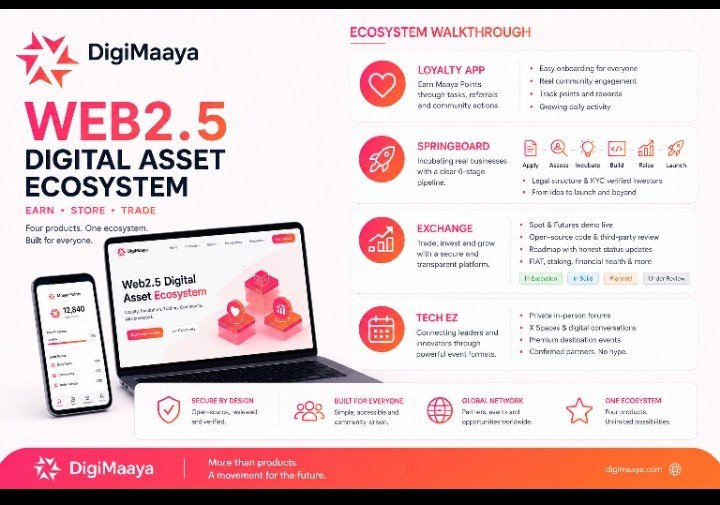
Ask ten people in Web3 what a "digital asset ecosystem" actually means?
And you'll get ten different answers, usually because most projects use the term loosely to describe one product with a bigger vocabulary.
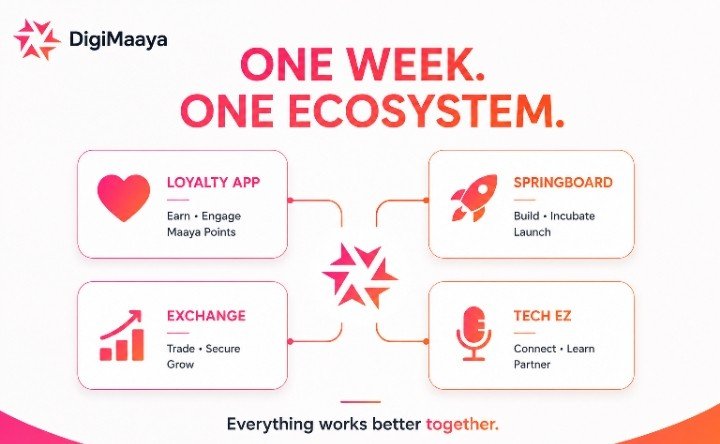
@DigiMaaya is one of the few actually building toward the literal definition: multiple connected products serving different roles, not one app wearing a bigger label.
The four pieces, and what each one actually solves:
• Loyalty App — solves the cold-start problem most Web3 projects never fix: how do you get people engaged before they have any reason to trade or hold anything
• Springboard — solves the credibility gap for real businesses: how does an established company enter Web3 without cutting corners on legal structure, token design, or investor protection
• Exchange — solves the trust problem every new exchange faces: how do you prove security and reliability before asking people to move real funds
• Tech EZ — solves the visibility problem: how does an ecosystem build founder and investor relationships that outlast a single announcement cycle
Why treating these as one ecosystem instead of four products matters:
• A user who starts in the Loyalty App today has a natural next step once the exchange is fully live, they're not starting from zero in a separate product
• A founder going through Springboard eventually has a listing venue and a warm community waiting through the Loyalty App, not a cold audience they have to build from scratch
• Tech EZ's events aren't disconnected marketing, they're where Springboard founders, exchange partners, and community builders actually meet in the same room
What's easy to miss if you only look at one product at a time:
• The Loyalty App looks small on its own, a points system, until you see it as the pipeline feeding Springboard-incubated projects and future exchange activity
• Springboard looks like a standard incubator until you notice it's structured to hand founders a warm community and a listing path, not just funding
• The exchange looks like "yet another exchange" until you clock that it's built to serve the users and founders already inside the ecosystem, not to compete for cold traffic from scratch
The honest tension worth naming:
• Building four connected pieces at once is slower than launching one product and iterating
• It also means each piece has to be genuinely good on its own, a weak Loyalty App or a rushed exchange would undercut the whole structure, not just one product
• The real proof point isn't any single piece launching, it's whether a user's journey from Loyalty App to Springboard-incubated project to exchange activity actually feels connected once all three are fully live
Most of what gets called an "ecosystem" in this space is a token with a roadmap slide. Whether DigiMaaya earns the term long-term comes down to one thing: does using one product actually make the others more useful, or do they just sit next to each other on the same website.
What's your honest read,does the connective story between the four pieces feel real right now, or does it still read as four separate products under one name?
@Bybit_Official@DigiMaaya