Introduction to the Nile
An accurate understanding of the Nile is no longer optional; it is essential to counter decades of systematic misinformation surrounding the river’s origins, hydrology, and ownership. Sound science, not political mythology, must define the global conversation about the Nile.
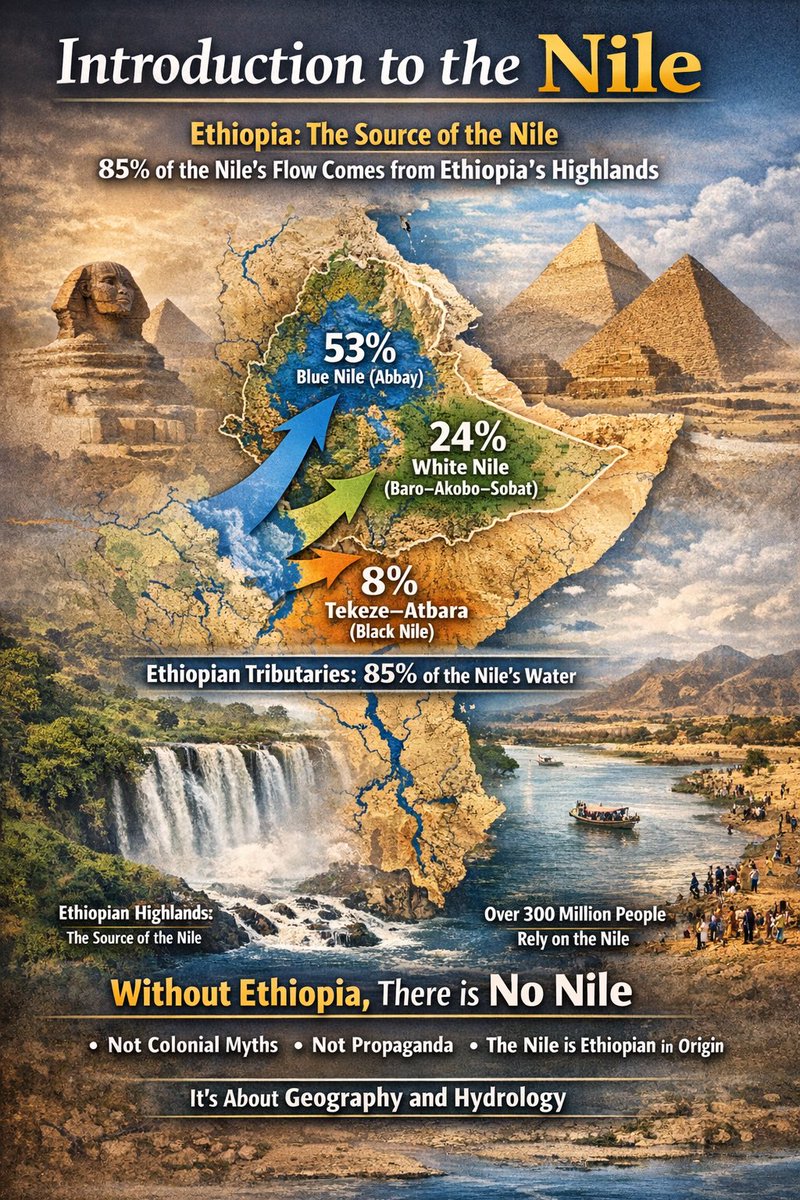
Ethiopia is the primary source of the Nile’s waters. Approximately 85% of the total Nile flow originates from Ethiopian highlands through three major tributary systems:
The Blue Nile (Abbay) - 53%
The White Nile (Baro–Akobo–Sobat) - 24%
The Black Nile (Tekeze–Atbara) - 8%
These rivers are not marginal contributors; they are the hydrological backbone of the entire Nile Basin. Every year, rainfall over Ethiopia’s highlands is converted into the water that sustains more than 300 million people downstream. Without Ethiopia, there is no Nile in any meaningful physical sense. Nile doesn’t pass through Ethiopia, it originates here.
Understanding this reality is the foundation of any honest discussion about Nile governance, water rights, or regional cooperation. The river does not belong to historical narratives or colonial-era treaties; it belongs to the geography and the hydrology that create.
Introduction to the Nile
An accurate understanding of the Nile is no longer optional; it is essential to counter decades of systematic misinformation surrounding the river’s origins, hydrology, and ownership. Sound science, not political mythology, must define the global conversation about the Nile.
Ethiopia is the primary source of the Nile’s waters. Approximately 85% of the total Nile flow originates from Ethiopian highlands through three major tributary systems:
The Blue Nile (Abbay) - 53%
The White Nile (Baro–Akobo–Sobat) - 24%
The Black Nile (Tekeze–Atbara) - 8%
These rivers are not marginal contributors; they are the hydrological backbone of the entire Nile Basin. Every year, rainfall over Ethiopia’s highlands is converted into the water that sustains more than 300 million people downstream. Without Ethiopia, there is no Nile in any meaningful physical sense. Nile doesn’t pass through Ethiopia, it originates here.
Understanding this reality is the foundation of any honest discussion about Nile governance, water rights, or regional cooperation. The river does not belong to historical narratives or colonial-era treaties; it belongs to the geography and the hydrology that create.