@sunnysdesk @mjbereyhi @NilsEngelsen Thanks Sunil; if you are interested, we reported on some Allen deviation measurements of frequency stability in the Appendices.
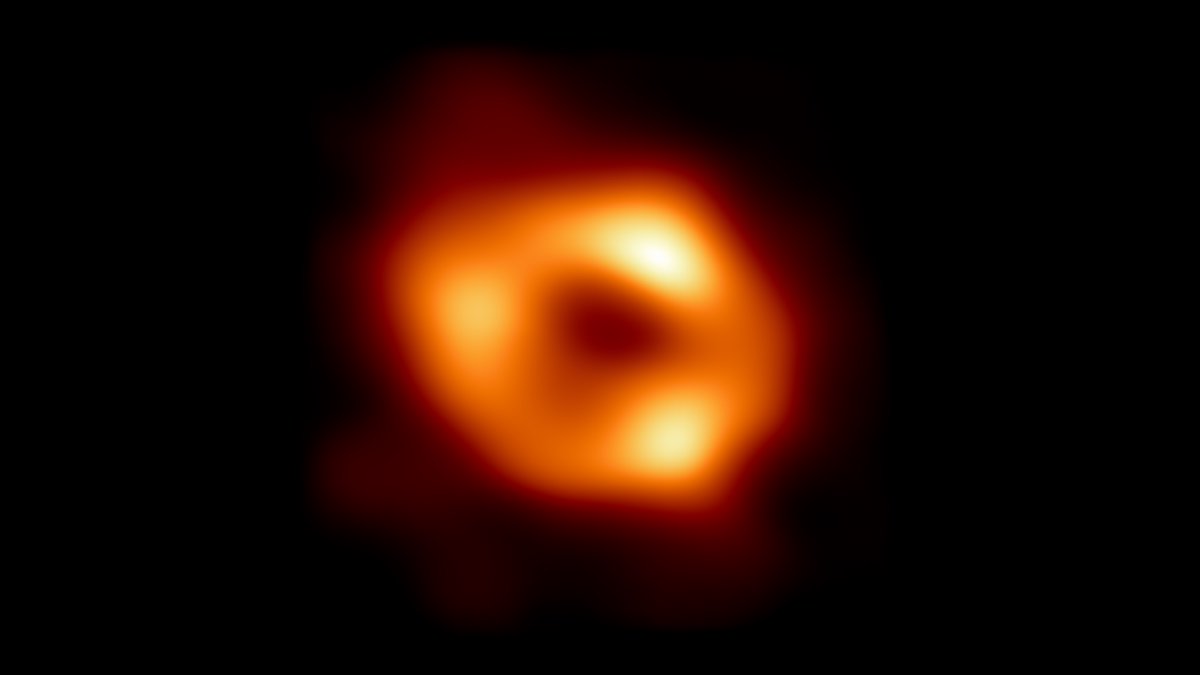
We finally have the first look at our Milky Way black hole, Sagittarius A*. It’s the dawn of a new era of black hole physics. Credit: EHT Collaboration. #OurBlackHole#SgrABlackHole
Link: https://t.co/Ax7ECRVg8A
Very interesting. The trajectory implies that the position expectation value does not need to follow the laws of classical mechanics, a subtlety contained in Eherenfest's theorem.
Our work on strained silicon mechanical resonators is out in Nature Physics today! Many clarifications since the previous version and extra details on the finite element modelling of the resonators.
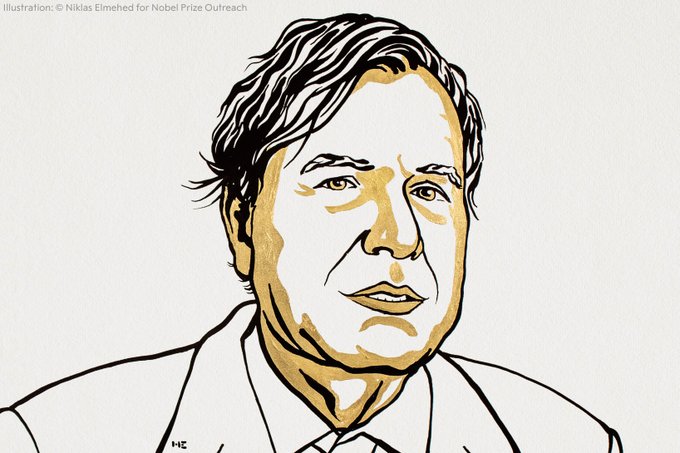
In the Scientific Background of the Physics @NobelPrize for Giorgio Parisi, 5 PRLs & 1 RMP were cited. We've made them all free to read:
https://t.co/4j3O22ToOY
https://t.co/VGLn3K1Gp0
https://t.co/Er6h2ONtAi
https://t.co/1jU0UqAVT9
https://t.co/LPLQ8ObTzQ
https://t.co/bilFtFGof2
In our newest arXiv submission, (https://t.co/mQrFIb50Zi) we use simple shapes (regular polygons) to realize mechanical Qs up to 3.6 billion at RT. The flexural modes around perimeter essentially do not see the clamps of the resonator, giving the high Q. Project led by @mjbereyhi
The work in our most recent preprint (https://t.co/K9oV2tg6uu) was first conceived ~4 years ago and the tireless work of @beccari_alberto let us realize 10-nm thick, 6-mm long strained silicon nanobeams with mechanical Q over 10 billion at 6K (rings down for hours at 1.44 MHz)