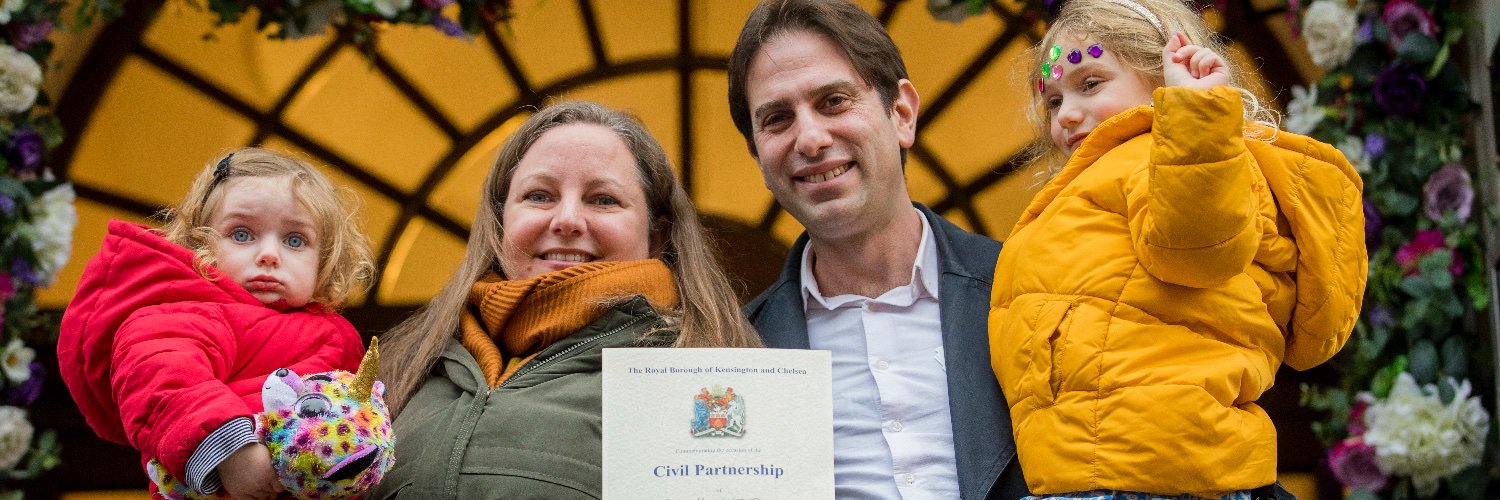
Happy 5th birthday equal civil partnerships!!! Congratulations to all who’ve civilly partnered since 31st December 2019. And happy anniversary to us, @charleskeidan. Here’s to the next five years of civil partnership(s). Happy new year 🥳🍾🥂
Big blow-up about this @JME_BMJ article. Why can’t we accept that two things can be true at the same time?
➡️Practices can be harmful AND cultural
➡️Campaigns can have good intentions AND bad effects
➡️Girls AND boys can both experience harmful genital practices
🌍 "Harms of the current global anti-FGM campaign" by Fuambai Sia Nyoko Ahmadu and colleagues
This essay critiques the dominant global campaign against female genital mutilation (FGM), arguing that its universal, ethnocentric framing obscures cultural diversity and produces serious harms. The authors highlight consequences including racial profiling, distrust in healthcare, silenced community voices, and a double standard that tolerates similar surgeries in Western contexts. They call for more nuanced, culturally sensitive approaches to advocacy that avoid reinforcing the very injustices the campaign seeks to end #FGM #bioethics #humanrights #globalhealth
🔗 Read more here: https://t.co/rruCzU6MC7
Might be a good time to repost this, as a reminder of my views. I argue against all forms of medically unnecessary nonconsensual genital cutting including the “ritual nick” form of what the WHO defines as FGM https://t.co/bsqU69rnZn
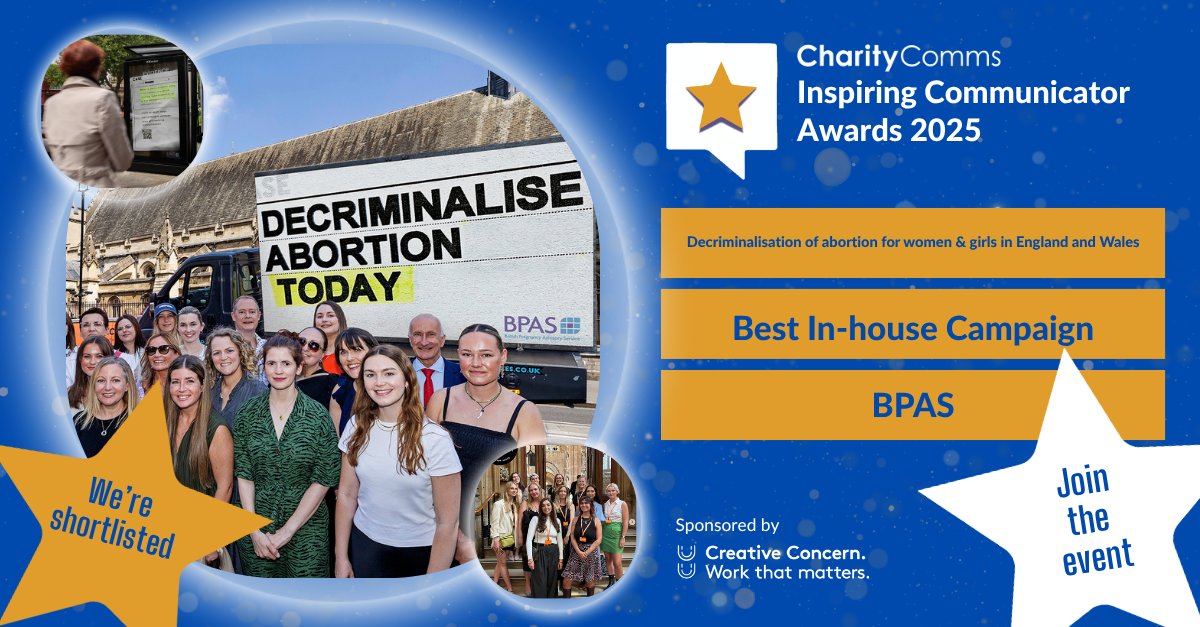
We’re thrilled our campaign to decriminalise abortion for women and girls has been shortlisted for ‘Best In-house Campaign’ at the @CharityComms awards.
After 10 years of campaigning — and support from millions — this historic reform removed women from criminal law.
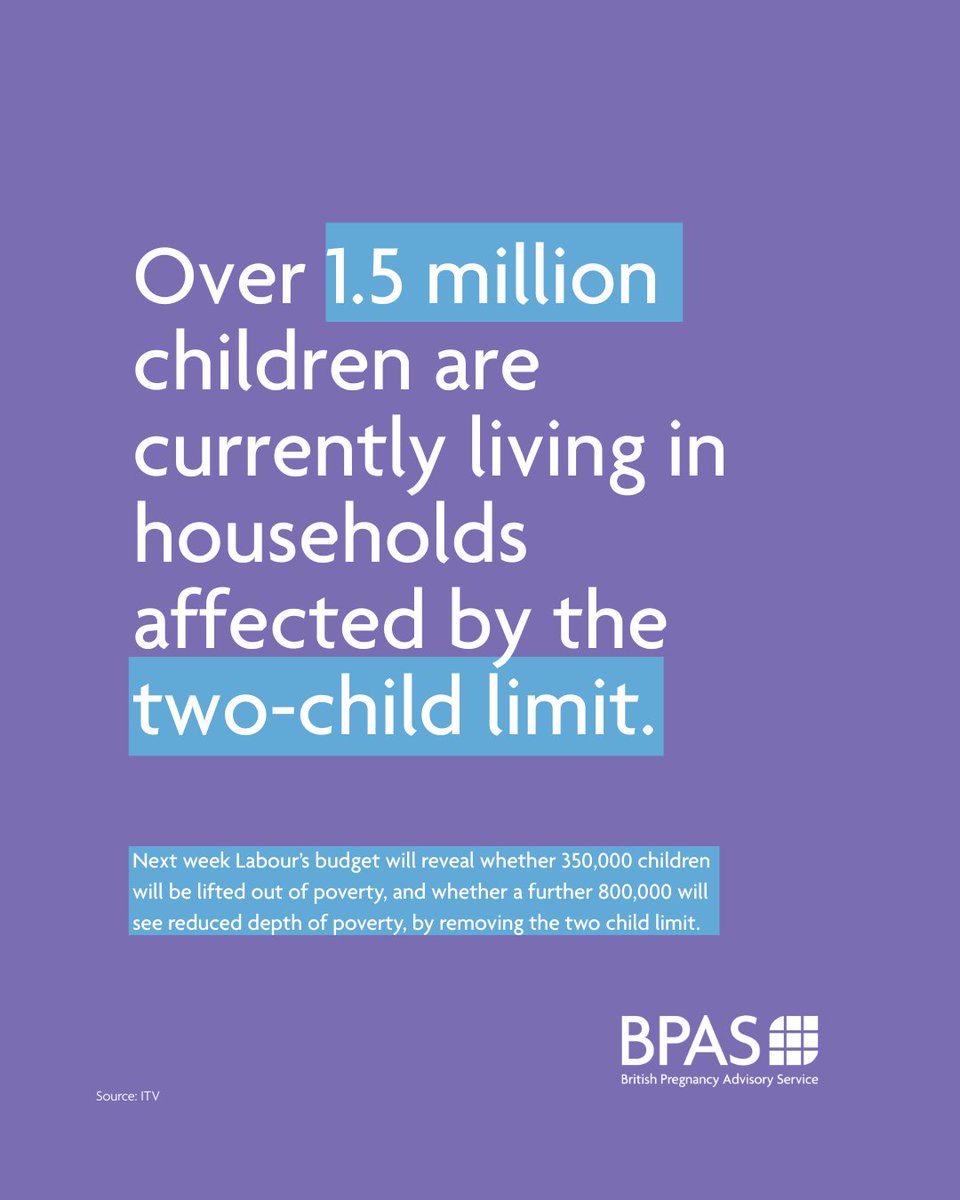
Over 1.5 million children are affected by the two child limit, pushing families into poverty and limiting women’s choices. Labour’s budget will show if action will lift 350,000 children out of poverty. BPAS urges the government to remove this harmful policy.
Some of the replies to this… 🤯
A reminder that, at a time when women’s reproductive health and rights are under attack, Labour will always defend them.
We are delighted to join numerous other pro-choice organisations in launching #LetsChangeTheAct - a new campaign to reform Scotland’s outdated abortion law.
To get involved, visit https://t.co/NK4yGzhd9R.
Today marks a big step forward for women’s healthcare.
At BPAS, we’ve campaigned for years to make this essential medication easier to get — but there’s still more to do.
Listen to our Head of Campaigns discuss the news on @BBCRadio4 (around 30 mins in): https://t.co/tibebqPzRo
New NHS data shows a sharp decline in contraceptive access. Contacts with SRH services down almost 48% in a decade. Funding cuts and service reductions are leaving women without choice. We need investment and innovation now.
Absolutely brilliant podcast with @beccasteinfeld on why we need a new, pro-choice, woman-centred, evidence-based approach to infant feeding, and how current policy sets women up to fail. 🎧 cc @CPCS_UniKent
https://t.co/MH4gjYQkqE
An excellent critique of "breast is best" mantra from @drruthannharpur. Well worth the read. As she says "debunking mantras requires more effort than chanting them." In my view, it's beyond time that we applied scientific rigour to policies that are harming mums & babies.
Breastfeeding: Miracle or Myth
@DrHoenderkamp words are familiar and repetitive like so many other thought-stopping mantras recited as public health creeds to encourage women to breastfeed without needing to scrutinise the evidence behind the claims.
These statements don't inform. They stop questions being asked.
So, let’s science, shall we?
🪄Yes, breast milk is an extraordinary biological fluid. It contains live cells, antibodies, enzymes - all true. But that doesn't make it unique. Saliva is also rather magical and urine is positively teeming with biochemical intelligence, if you like to combine a little biology with good storytelling.
🪄Saliva contains immune factors and growth agents that heal wounds.
But you probably still want to stick to Savlon.
🪄Within a few millilitres of urine, you’ll find cortisol from your last stressful day, serotonin metabolites from last night’s dreams, and exosomes carrying genetic messages from your kidneys to your bladder.
But no one’s tweeting #liquidgold about that.
Breastmilk is not formula just like Coke is not Pepsi and a G&T is not whiskey on the rocks. So what?
Just because they're different doesn't mean one is better than the other.
Now of course, there's ample data that breastfeeding correlates with all manner of good things including wealth, higher social status, propensity to follow health advice but that doesn't mean breastmilk causes wealth, or social status or propensity to follow health advice or better health outcomes....
We simply cannot take correlational data and draw causal conclusions.
🤓A first-year undergraduate who’s taken Statistics 101 could tell you that.
🧐And yet, the “benefits of breastfeeding” are confidently touted when the vast majority of the evidence regarding these so-called benefits is drawn from correlational studies.
Let’s look at the ones @DrHoenderkamp has claimed.
🧠I’ll ignore correlational data for now, because… well… correlation doesn’t imply causation and we aren't stupid.
Let’s focus on studies where some evidence for causality can actually be inferred on whether infant feeding type leads to different rates of infection, constipation and obesity
🤒1. Infection
The strongest evidence that breastfeeding protects against infection comes from a quasi-experimental study which allocated hospitals to either a breastfeeding promotion initiative or “care as usual.”
I’ve never been able to find out what “care as usual” involved but given that this was 1990s Belarus, a middle-income country in a period of immense political and social upheaval, it’s safe to assume it wasn’t comparable to present-day UK conditions.
This was before routine vaccination for rotavirus or pneumococcus, when smoking was common, and healthcare and housing infrastructure were still finding their footing post-Soviet collapse.
So yes, breastfed babies in Belarus may have had fewer infections. But rates of hospitalisation for infection among infants today in the UK are lower across the board than for babies in either arm of that Belarus study - breastfed or not.
That’s what happens when you have clean water, vaccination, improved housing and modern healthcare. We don’t need to invoke the magical properties of breast milk to explain it - just basic public health.
And should we be quite so quick to assume that the difference in infection rates was due to some mystical ingredient in milk, rather than something as mundane as contamination from feeding receptacles in 1990s Belarus? Is it magical breastmilk or just... hygiene.
There’s also another possible explanation for the lower infection rates in breastfed babies.
When a baby is breastfed - especially exclusively - they are tethered to their mother.
That may mean less extended contact with other caregivers, whether because of personal choice or practical necessity.
Sound familiar?
😱Remember social distancing - keeping our contacts to a minimum to prevent the spread of infection? Yes, I'd rather forget it too.
So, is the reduced infection in this study due to some magical property of breast milk, or simply reduced social contact? And if it was social contact, would we really want to start advising mothers to keep their babies' social contacts to a minimum. I mean it would prevent infection wouldn't it? But that doesn't make it a good idea.
💩2. Constipation
Another common claim is that formula-fed babies are “more likely to get constipated.”
I've not been able to find any evidence of this although I'd suggest that generations of nappy changers can probably confirm that the poo of formula fed babies is firmer.
But firmer isn’t the same as pathological. And we should also remember that formula is an evolving product.
Breastfed babies produce loose, seedy stools because human milk has a mild laxative effect, largely due to its mix of hormones and oligosaccharides that stimulate gut motility and feed good bacteria. But let’s not forget most formulas now contain oligosaccharides too.
The difference isn’t constipation versus comfort; it’s chemistry versus mythology. And in practice, constipation in infants is mild and usually resolves with simple adjustments like ensuring adequate hydration and eating high fibre foods for older babies.
These are feeding-management issues, not evidence of biological inferiority.
Perhaps we should be honest about what’s really happening:
We’ve moralised infant poo.
And I’m really not joking. The NHS (that most trusted of British institutions) actually informs new mothers that the poo of breastfed babies does not smell (I can confirm this is a steaming pile of yellow seedy) and that formula-fed babies might poo up to five times a day at first.
So much for the constipation effect.
(Screenshot from the website of @CambsPboroCYP)
👀3. Obesity
So, does formula - that ultra-processed artificial milk made in a factory (cue pantomime baddie sound effect) - make babies obese?
Well, luckily for us, that study from 1990s Belarus - the one that assigned hospitals to either a breastfeeding-promotion initiative or “care as usual” also looked at this. And yes, they did find a difference.
📈There was a small but statistically significant increase in overweight and obesity in adolescence among the group that had the breastfeeding-support intervention.
Re-read that.
You read correctly.
The results of this study do not suggest that breastfeeding prevents obesity or that formula causes it. They suggest that breastfeeding promotion increased the rates of overweight and obesity.
Now, I’m an honest scientist and I’ll say this is not a fantastically designed study, was conducted in a very different context to 2025 UK, and the effect was small.
So no, I don’t think this study should be used to confidently claim that breastfeeding causes obesity or that breastfeeding promotion leads to it.
But let’s be honest, if that tiny statistical difference had gone in the other direction, we would never ever hear the end of it.
BUT this isn't the most egregious aspect of the love affair between public health and breastfeeding. Oh no.
It's the outright denial that breastfeeding has any risks at all. And yet... insufficient breastmilk is common. Great summary of the evidence here from @vk_wilde
https://t.co/m2FtkFJxX0
And evidence is clear that rates of feeding complications that often result from insufficient milk intake are rising in the UK. All at the same time as breastfeeding promotion has gained an ever stronger footing in maternity policy.
It’s a completely predictable effect, but one that no study in the UK or other high-income settings has examined as a potential risk. We therefore have no safety data on whether advising exclusive breastfeeding without ensuring adequate intake before clinical signs of underfeeding appear is, in fact, safe.
Is it worth all the benefits we get from breastfeeding promotion. Well, given a government funded review of the so called "Baby Friendly" Initiative (the mainstay of breastfeeding promotion in the UK) failed to find any evidence of health benefits - I very much doubt it.
https://t.co/7zz70ANTNI
But surely, I hear you say, in developing countries, breastfeeding is very important. Well, if your main argument is that it is important because it is a source of food and a good alternative (ie. safely prepared formula milk) is not available, I would not disagree. But, that's because I am of the rather unpopular belief that babies need to consume a nutritionally adequate food.
So how did an intervention that increased exclusive breastfeeding in a low-income context fare when it came to supporting infant growth?
Oh wait... no... it bombed💣.
In fact, an intervention that encouraged exclusive breastfeeding led to increased rates of growth stunting in a low-income setting - an effect present even 5 years after birth
https://t.co/hBdVsCmlBt
Doesn't seem that outrageous to propose that the provision of safe infant formula in communities where it is not widely available would be a public health boon.
That same study found no effect of exclusive breastfeeding promotion on diarrhoeal infection. And if it was going to show up anywhere, a low-income setting should’ve been a slam dunk..
Science isn’t faith or mantra. It's the discipline of being willing to be wrong, of choosing scepticism before giving a public health sermon.
And right now, public health can’t admit it might be wrong about breastfeeding and it's babies paying the price, in high- and low-income settings alike.
Apologies for the length. Apparently, debunking mantras requires more effort than chanting them.
If you're interested in debates about #infantfeeding, listen to this podcast I just recorded with the thoughtful @FrancoiseGirard for Feminism Makes Us Smarter. We covered a lot of (controversial) ground, so I'm sure people on here will have Opinions :-)
https://t.co/EhWNvn5Wgx
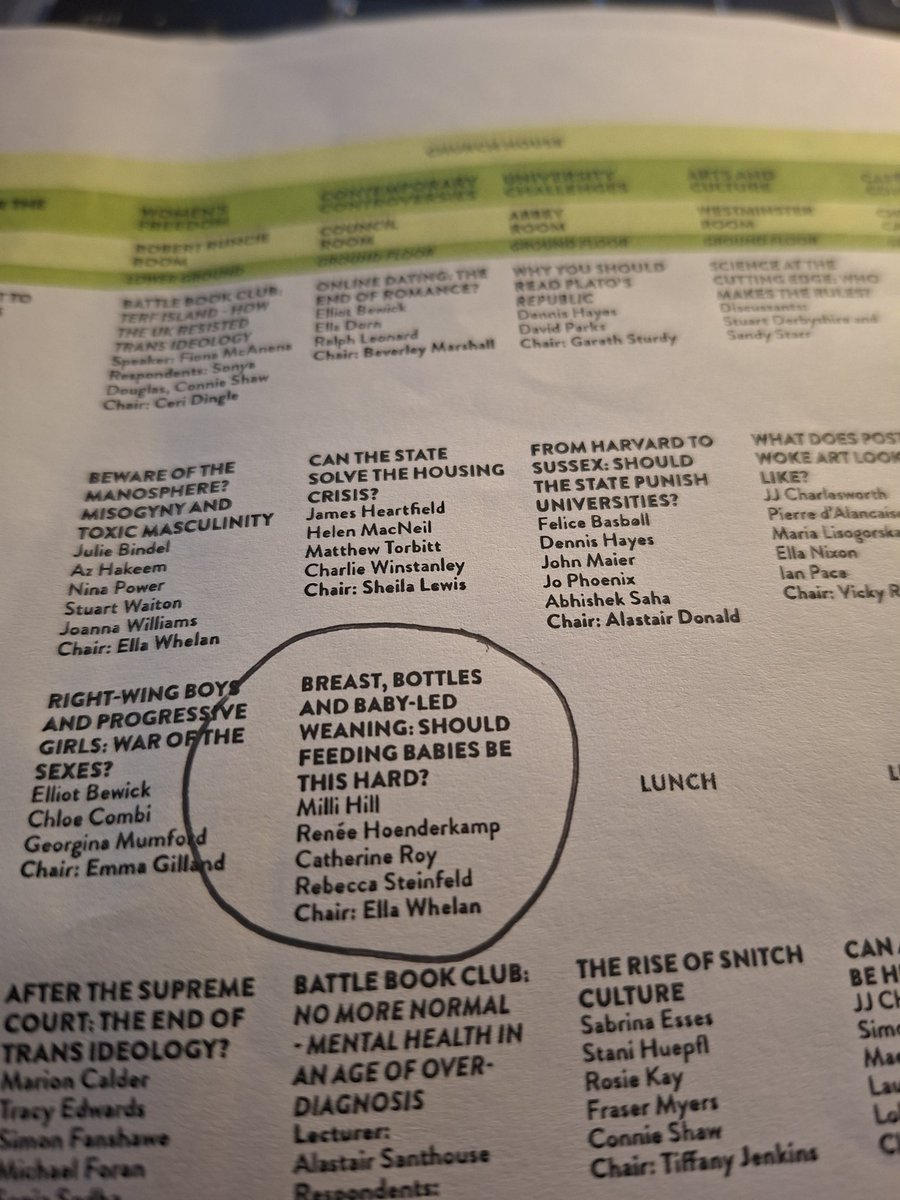
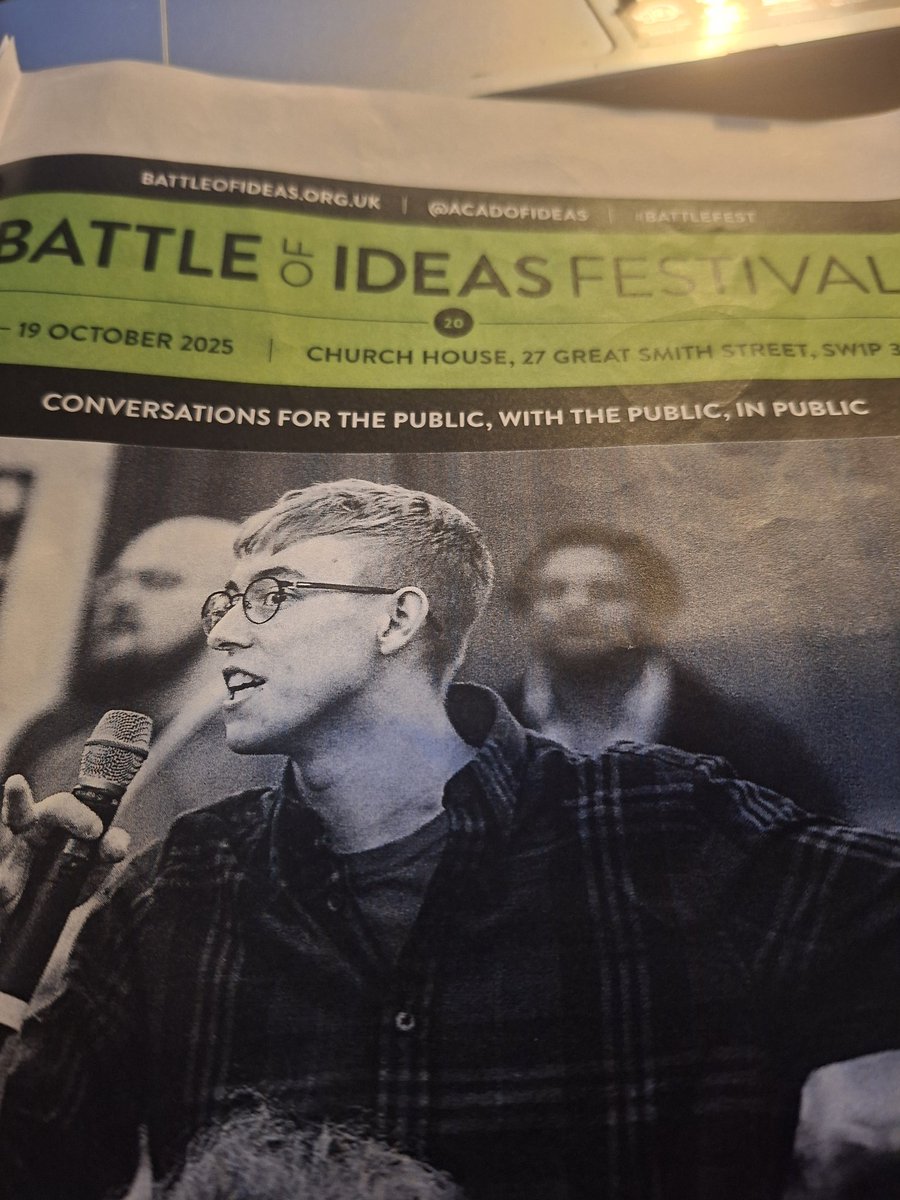
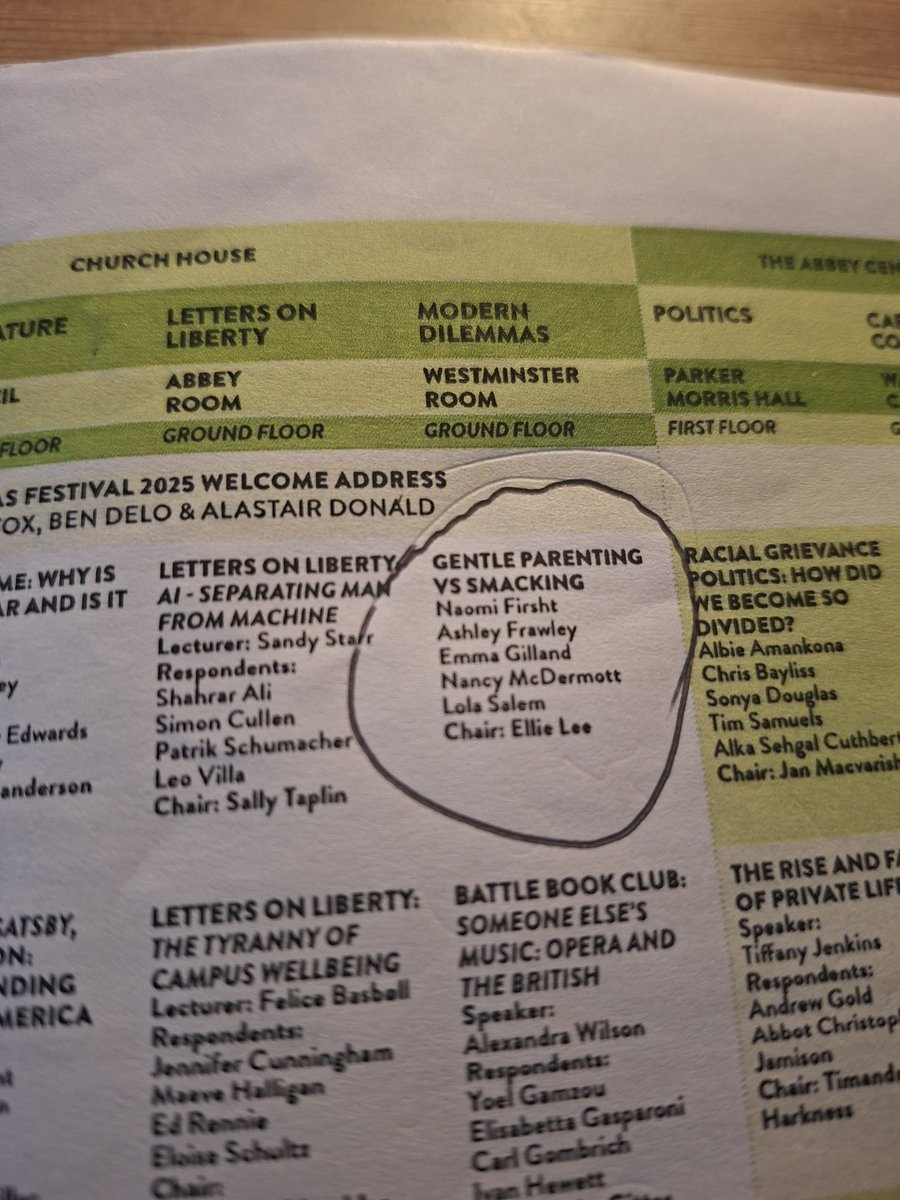
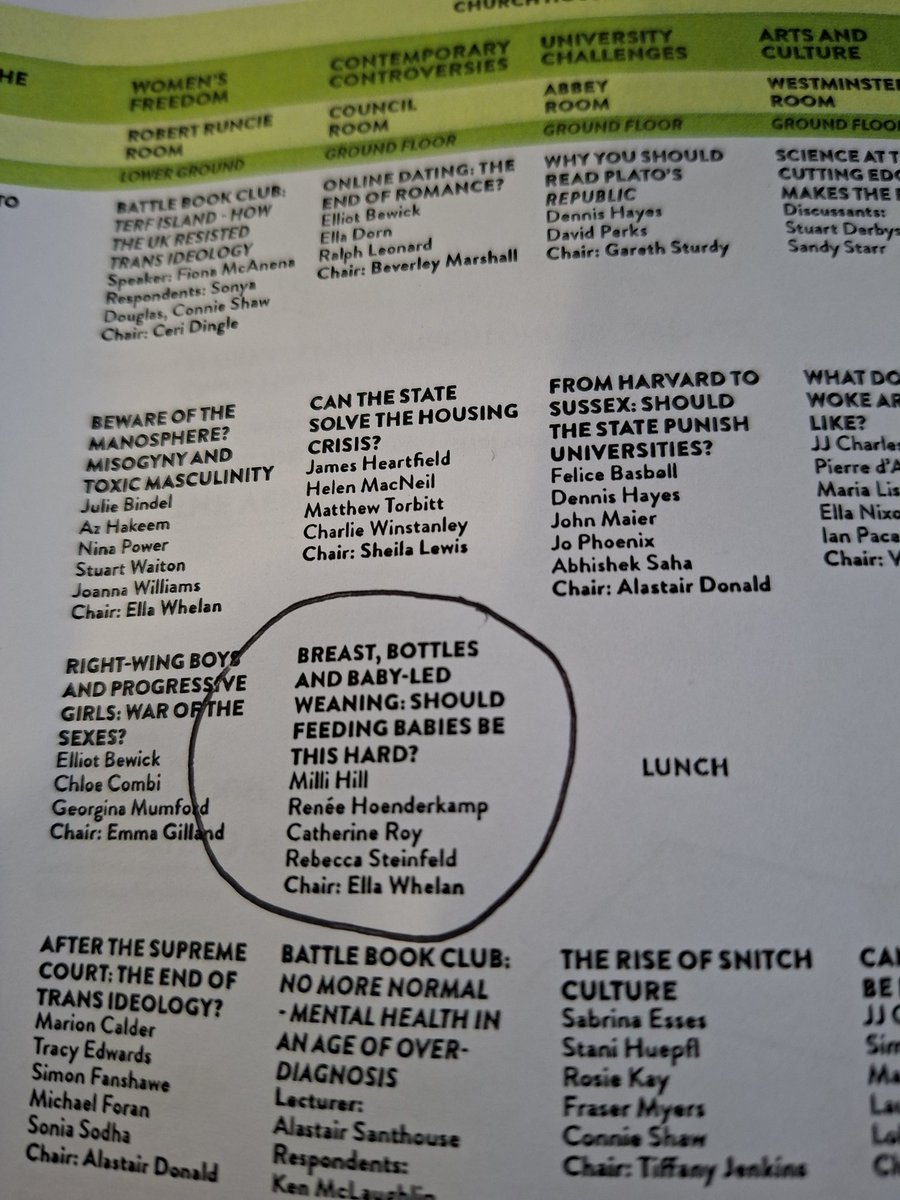
Was our panel on the niche topic of infant feeding the most controversial at @acadofideas#BattleFest? It was definitely a fiery debate! Thanks to @Ella_M_Whelan, @Fox_Claire & @CPCS_UniKent for ensuring important issues like this get a platform for discussion.
Just to echo this - thank you to @Fox_Claire & @acadofideas for creating space to debate difficult topics that too many shy away from. Our fiery infant feeding panel shows exactly why this is so important and necessary. Here's to the next #BattleFest!
EXACTLY this. I wasn't going to go to synagogue today - but now I will, for the last service of Yom Kippur, Ne'ilah. Because it's right and important to not hide in fear - but to unite in solidarity and community.
When you walk to shul on Yom Kippur afternoon for the services ending the day, you feel an inner peace, after a day of fasting and prayer. Today in the UK it will be noise, police cars and cameras instead. This is the time for British people to go out there and show solidarity.
“If British Jews are attacked, respect our dignity – and keep your agendas to yourself” - this prescient piece written by @KeithKahnHarris 10 years ago should be a guide on how to respond today to the terror attack on Manchester’s Jews https://t.co/UCIffLoiW3