Very excited to share a new paper that just got accepted into JARMAC!
We found that the biased-lineup preference effect (the finding that lay ppl rate IDs from biased lineups as more reliable than those from unbiased lineups) is driven by fluency.
🔗 https://t.co/CbfXIof5Ac
New preprint! w/@TesCharlesworth & @william__brady:
'The Psychology of Algorithmic Bias'
We introduce a psychology-centered framework to specify mechanisms through which human behavior interacts dynamically with AI systems to produce algorithmic bias.
https://t.co/dtuGJDourp
Took 3 trips in the past month and have had the worst luck:
- stranded in a NY blizzard with @ayala_nydia
- stranded in Reno with @katie_cunius because of an Iowa blizzard
- now stranded in ATL because I didn’t realize TSA would take 5 hours..
I am never travelling again ❤️
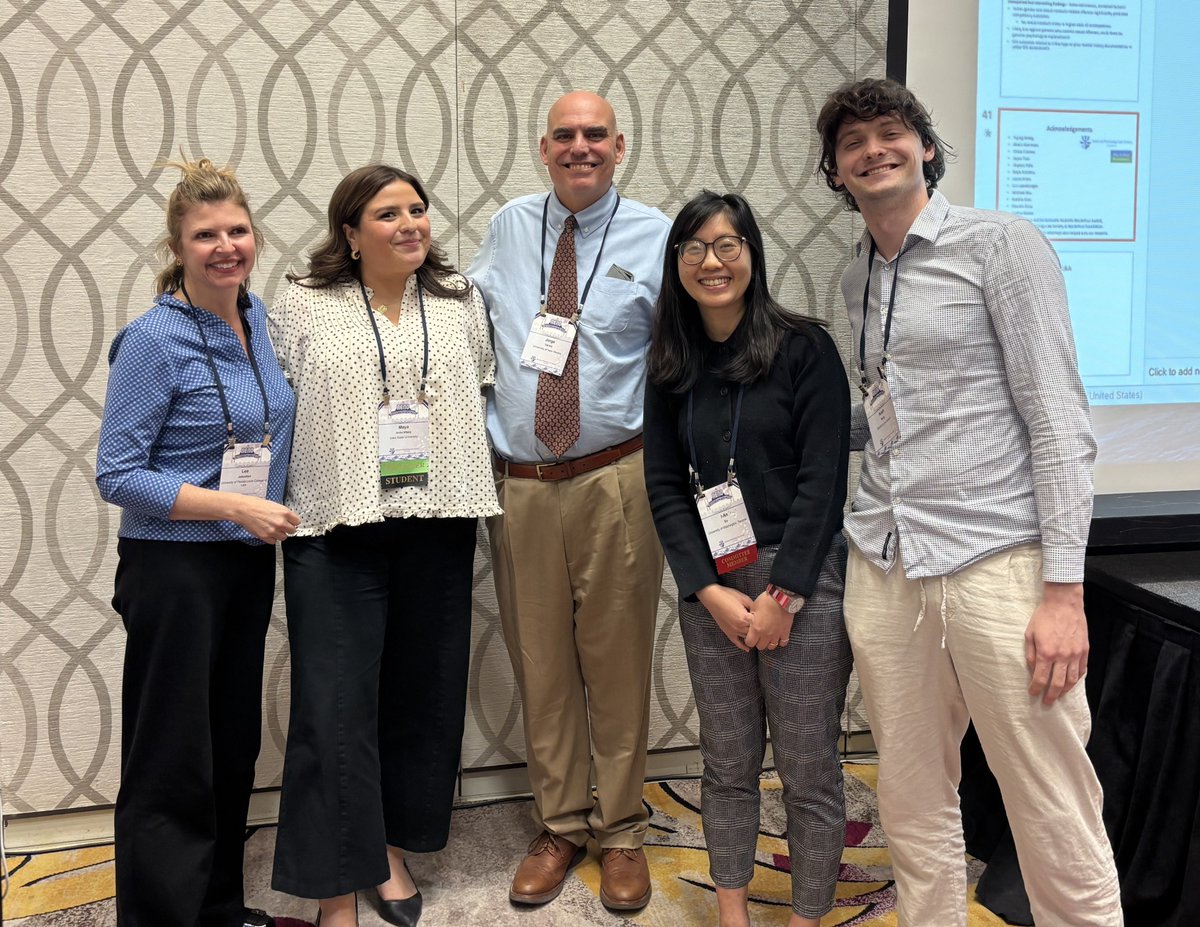
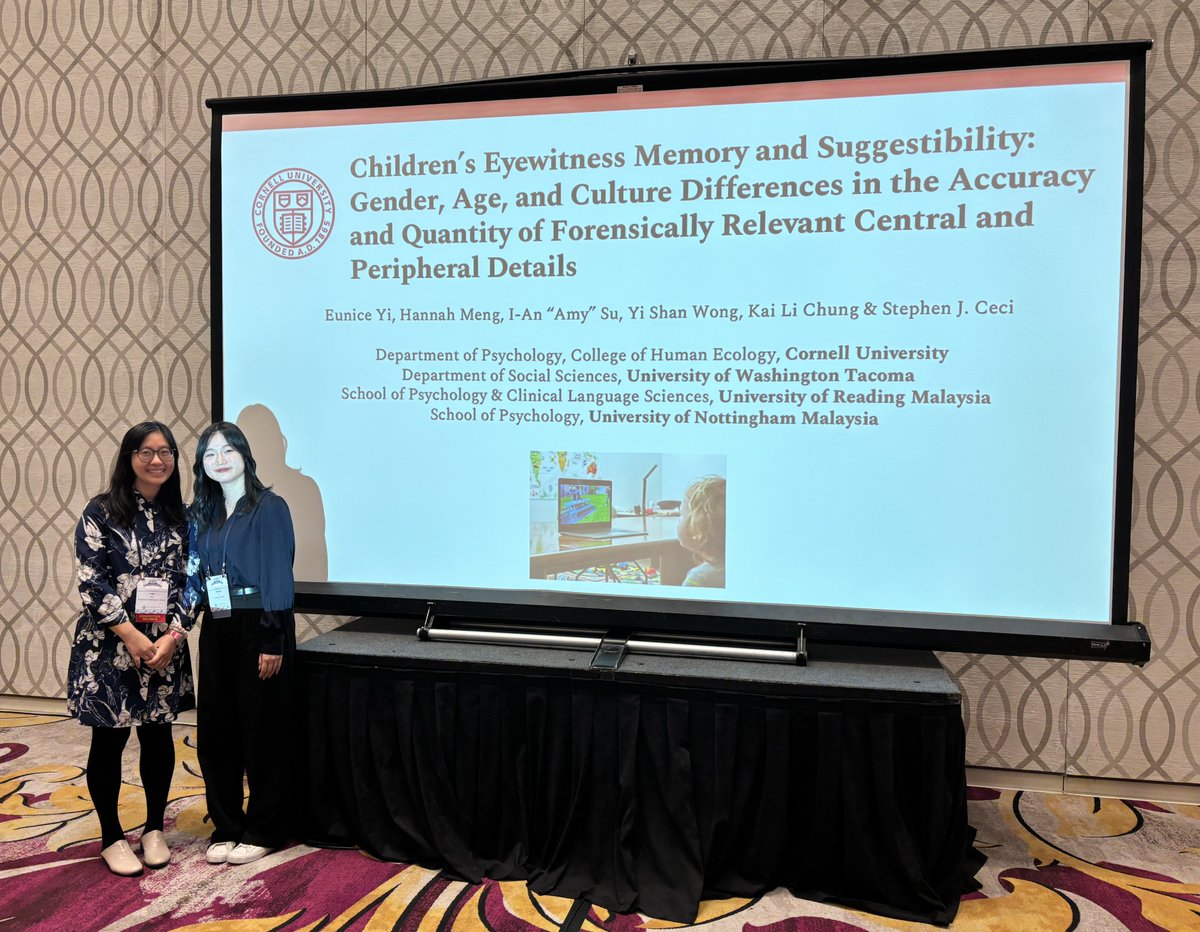
Attended #APLS26 in Reno as a new faculty member at @UWTacoma! Loved reconnecting with fellow Cornellians and presenting work on children’s eyewitness memory & competency for execution. Grateful to our collaborators—see you in Louisville next year!
Haiku for my labmate, Taylor Tracy, who presented her first-ever AP-LS poster this year:
Opt-out instructions
Might result in info loss
But we found no change
Instead, witnesses
lowered their criterion
for high-conf judgments.
#apls2026
Very excited to announce that I will be joining the Department of Psychological Science at Kennesaw State University (@kennesawstate) as an Assistant Professor in Fall 2026! ☺️
Our new paper evaluating the use of a confidence rating scale for perceptual tasks has been published in Royal Society Open Science! Check it out here https://t.co/878xhVleTc
@RSocPublishing@TaliraKucina@jamessauer
I made a Goodreads for academic papers!
(..and blog posts, substacks, lesswrong, etc)
Paper Trails [https://t.co/dPzhlBgo8E] is something I built because I wanted a place where engaging with research felt fun, beautiful, and personal to you
I hope you give it a try & love it!
Excited to present in the Artificial Intelligence and Human Memory symposium at 3:45 alongside some really great researchers. Hope y’all can drop by! #psynom2025@Psychonomic_Soc
Wrongful convictions in Spain: Systematic analysis of judgments from 1996 to 2022
New article by Nuria Sánchez, Guadalupe Blanco-Velasco, @LindaGeven, @Jaume_Masip_, & Antonio Manzanero
https://t.co/In5iu7khFm
🚨 New preprint 🚨
Why should police video-record lineups?
We videorecorded 1496 witnesses as they completed lineups. We coded the behaviors that these witnesses demonstrated and subjected the resulting data to machine learning analyses.
Link and findings below!
‼️ Another new preprint ‼️
Here, we find that video recordings of lineup procedures can aid us with diagnosing witness accuracy (over and above confidence and decision time).
This project provides even more evidence that the legal system should mandate video recording lineups.
🚨 New preprint 🚨
Why should police video-record lineups?
We videorecorded 1496 witnesses as they completed lineups. We coded the behaviors that these witnesses demonstrated and subjected the resulting data to machine learning analyses.
Link and findings below!
Why are lineup rejections less diagnostic of innocence than suspect identifications are of guilt? Take a look at our preprint for insight on this all-too-common finding in the eyewitness literature.
These findings contradict recent inferences that in the context of eyewitness lineups, target variability is less than or equal to lure variability and brings models of eyewitness memory in line with longstanding findings from the basic recognition literature!
🚨 New preprint available!
In this paper, we look at why lineups better inculpate the guilty than they do exculpate the innocent (the rejection-inferiority effect).
W/ Andrew Smith, Jim Lampinen,
@ayala_nydia, & Ian Dobbins
🔗 https://t.co/WmQgZtKSC6
Here, we examined DPSDT and UVSDT models & found that they were able to account for residual asymmetry (& improved model fit relative to the EVSDT model). These models suggest that the visual recognition system is better at detecting target presence than target absence.





![heyanuja's tweet photo. I made a Goodreads for academic papers!
(..and blog posts, substacks, lesswrong, etc)
Paper Trails [https://t.co/dPzhlBgo8E] is something I built because I wanted a place where engaging with research felt fun, beautiful, and personal to you
I hope you give it a try & love it! https://t.co/PVtgvaUVa6](https://pbs.twimg.com/media/G7lbFSUX0AEdtRl.jpg)





