Familiarise yourself with the Salafi scholars of the last century. Learn about those who came before you, how they confronted the challenges of their time, and how they responded to European attempts to import foreign ideas, values and ways of life into Muslim lands.
Their writings offer valuable lessons for understanding and confronting the challenges Muslims face today.
Shaykh Mubārak al-Mīlī (d. 1945) was one of Algeria’s leading Salafi reform scholars, alongside Ibn Bādīs and al-Bashīr al-Ibrāhīmī.
His famous Risālat al-Shirk wa-Maẓāhiruhu confronted shirk, superstition, grave-veneration and other corrupt practices, calling Muslims back to pure Tawḥīd and the Sunnah.
Part 1:
𝐓𝐡𝐞 𝐂𝐥𝐞𝐚𝐫 𝐒𝐭𝐚𝐭𝐞𝐦𝐞𝐧𝐭𝐬 𝐚𝐧𝐝 𝐔𝐧𝐰𝐚𝐯𝐞𝐫𝐢𝐧𝐠 𝐒𝐭𝐚𝐧𝐜𝐞𝐬 𝐨𝐟 𝐭𝐡𝐞 𝐌𝐚𝐣𝐨𝐫 𝐒𝐜𝐡𝐨𝐥𝐚𝐫𝐬 𝐚𝐧𝐝 𝐆𝐫𝐞𝐚𝐭 𝐈𝐦𝐚𝐚𝐦𝐬 𝐨𝐟 𝐀𝐡𝐥𝐮𝐬-𝐒𝐮𝐧𝐧𝐚𝐡 𝐰𝐚𝐥-𝐉𝐚𝐦𝐚𝐚’𝐚𝐡 𝐂𝐨𝐧𝐜𝐞𝐫𝐧𝐢𝐧𝐠 𝐭𝐡𝐞 𝐑𝐮𝐥𝐞𝐫𝐬 𝐚𝐧𝐝 𝐊𝐡𝐮𝐫𝐨𝐨𝐣 (𝐑𝐞𝐛𝐞𝐥𝐥𝐢𝐨𝐧) - 𝐄𝐬𝐬𝐞𝐧𝐭𝐢𝐚𝐥 𝐑𝐞𝐟𝐥𝐞𝐜𝐭𝐢𝐨𝐧 𝐟𝐨𝐫 𝐭𝐡𝐞 𝐎𝐧𝐞 𝐰𝐡𝐨 𝐂𝐚𝐫𝐞𝐬 𝐀𝐛𝐨𝐮𝐭 𝐇𝐢𝐬 𝐂𝐫𝐞𝐞𝐝 𝐚𝐧𝐝 𝐌𝐞𝐭𝐡𝐨𝐝𝐨𝐥𝐨𝐠𝐲, 𝐒𝐚𝐟𝐞𝐠𝐮𝐚𝐫𝐝𝐢𝐧𝐠 𝐢𝐭 𝐅𝐫𝐨𝐦 𝐑𝐞𝐛𝐞𝐥𝐥𝐢𝐧𝐠 𝐀𝐠𝐚𝐢𝐧𝐬𝐭 𝐭𝐡𝐞 𝐂𝐨𝐧𝐬𝐞𝐧𝐬𝐮𝐬 𝐨𝐟 𝐭𝐡𝐞 𝐒𝐚𝐥𝐚𝐟.
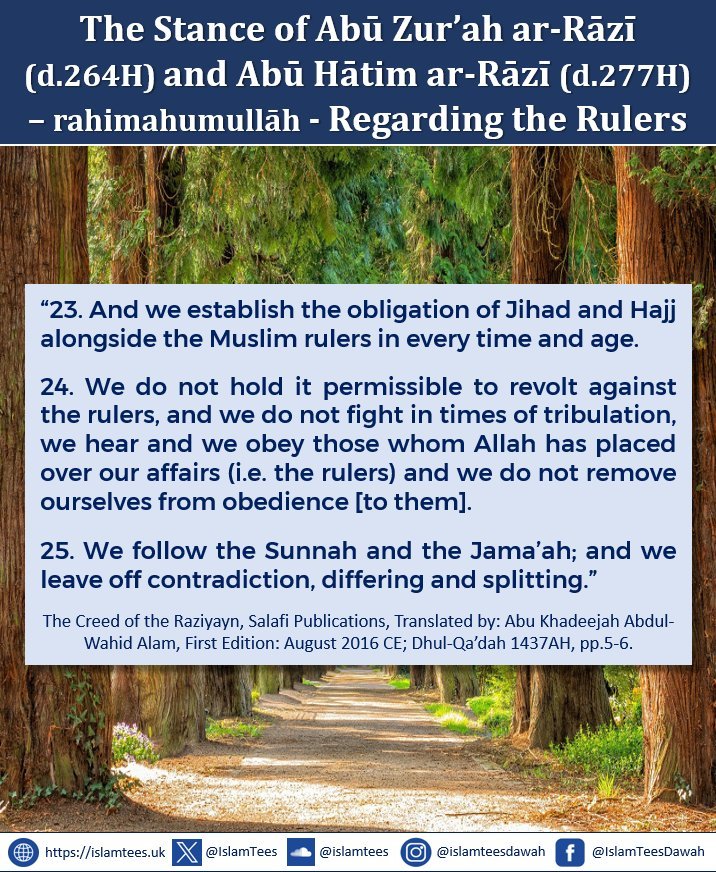
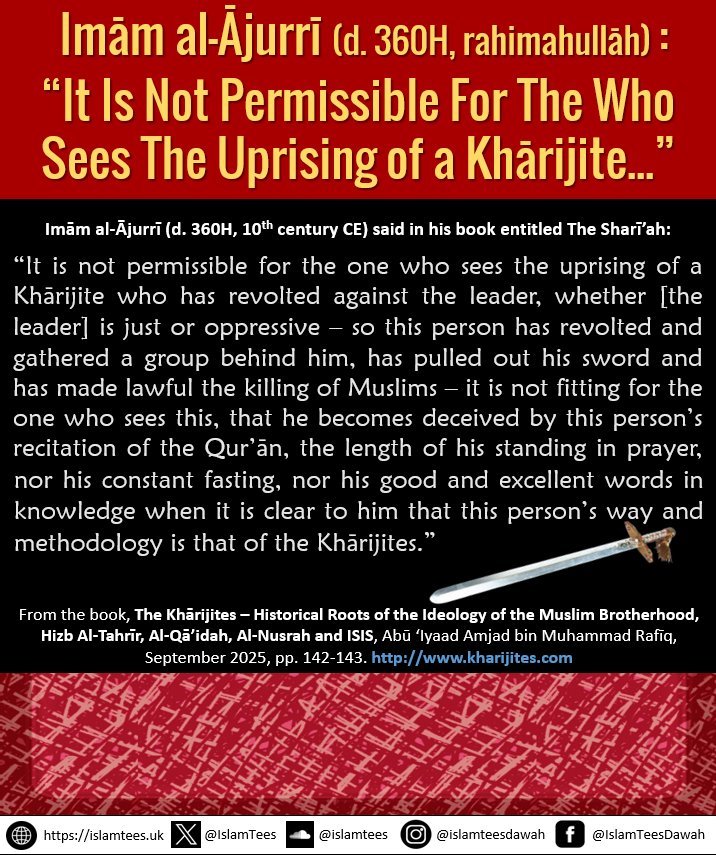
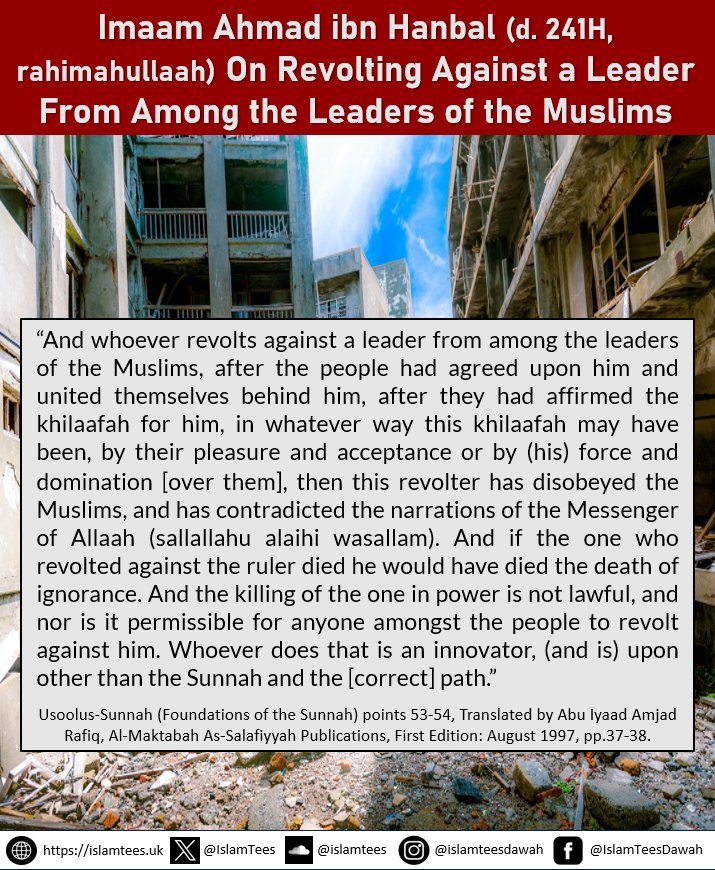
The following evident statements, principles and stances make clear the Madhhab of the Salaf and Ahlul-Hadīth, their ‘Aqīdah and Manhaj with regards to the rulers and not rebelling against them.
Narrated 'Ubada bin As-Samit (radiyallahu ‘anhu):"𝐖𝐞 𝐠𝐚𝐯𝐞 𝐭𝐡𝐞 𝐨𝐚𝐭𝐡 𝐨𝐟 𝐚𝐥𝐥𝐞𝐠𝐢𝐚𝐧𝐜𝐞 𝐭𝐨 𝐀𝐥𝐥𝐚𝐡'𝐬 𝐌𝐞𝐬𝐬𝐞𝐧𝐠𝐞𝐫 (𝐬𝐚𝐥𝐥𝐚𝐥𝐥𝐚𝐚𝐡𝐮 ‘𝐚𝐥𝐚𝐢𝐡𝐢-𝐰𝐚𝐬𝐚𝐥𝐥𝐚𝐦) 𝐭𝐡𝐚𝐭 𝐰𝐞 𝐰𝐨𝐮𝐥𝐝 𝐥𝐢𝐬𝐭𝐞𝐧 𝐭𝐨 𝐚𝐧𝐝 𝐨𝐛𝐞𝐲 𝐡𝐢𝐦 𝐛𝐨𝐭𝐡 𝐚𝐭 𝐭𝐡𝐞 𝐭𝐢𝐦𝐞 𝐰𝐡𝐞𝐧 𝐰𝐞 𝐰𝐞𝐫𝐞 𝐚𝐜𝐭𝐢𝐯𝐞 𝐚𝐧𝐝 𝐚𝐭 𝐭𝐡𝐞 𝐭𝐢𝐦𝐞 𝐰𝐡𝐞𝐧 𝐰𝐞 𝐰𝐞𝐫𝐞 𝐭𝐢𝐫𝐞𝐝 𝐚𝐧𝐝 𝐭𝐡𝐚𝐭 𝐰𝐞 𝐰𝐨𝐮𝐥𝐝 𝐧𝐨𝐭 𝐟𝐢𝐠𝐡𝐭 𝐚𝐠𝐚𝐢𝐧𝐬𝐭 𝐭𝐡𝐞 𝐫𝐮𝐥𝐞𝐫 𝐨𝐫 𝐝𝐢𝐬𝐨𝐛𝐞𝐲 𝐡𝐢𝐦, 𝐚𝐧𝐝 𝐰𝐨𝐮𝐥𝐝 𝐬𝐭𝐚𝐧𝐝 𝐟𝐢𝐫𝐦 𝐟𝐨𝐫 𝐭𝐡𝐞 𝐭𝐫𝐮𝐭𝐡 𝐨𝐫 𝐬𝐚𝐲 𝐭𝐡𝐞 𝐭𝐫𝐮𝐭𝐡 𝐰𝐡𝐞𝐫𝐞𝐯𝐞𝐫 𝐰𝐞 𝐦𝐢𝐠𝐡𝐭 𝐛𝐞, 𝐚𝐧𝐝 𝐢𝐧 𝐭𝐡𝐞 𝐖𝐚𝐲 𝐨𝐟 𝐀𝐥𝐥𝐚𝐡 𝐰𝐞 𝐰𝐨𝐮𝐥𝐝 𝐧𝐨𝐭 𝐛𝐞 𝐚𝐟𝐫𝐚𝐢𝐝 𝐨𝐟 𝐭𝐡𝐞 𝐛𝐥𝐚𝐦𝐞 𝐨𝐟 𝐭𝐡𝐞 𝐛𝐥𝐚𝐦𝐞𝐫𝐬."
𝑆𝑎ℎ𝑖ℎ 𝑎𝑙-𝐵𝑢𝑘ℎ𝑎𝑟𝑖 7199, 7200 𝑖𝑛 𝑡ℎ𝑒 𝐵𝑜𝑜𝑘 𝑜𝑓 𝐽𝑢𝑑𝑔𝑒𝑚𝑒𝑛𝑡𝑠 𝑢𝑛𝑑𝑒𝑟 𝑡ℎ𝑒 𝐶ℎ𝑎𝑝𝑡𝑒𝑟 𝐻𝑒𝑎𝑑𝑖𝑛𝑔: 𝐻𝑜𝑤 𝐷𝑜 𝑡ℎ𝑒 𝑃𝑒𝑜𝑝𝑙𝑒 𝐺𝑖𝑣𝑒 𝑡ℎ𝑒 𝐵𝑎𝑦'𝑎ℎ (𝑂𝑎𝑡ℎ 𝑜𝑓 𝐴𝑙𝑙𝑒𝑔𝑖𝑎𝑛𝑐𝑒) 𝑡𝑜 𝑡ℎ𝑒 𝐼𝑚ā𝑚 (𝑅𝑢𝑙𝑒𝑟)?
Abud-Dardā (radi'Allāhu 'anhu) heard the Messenger of Allāh (sallallahu alaihi wasallam) say:
"Whoever treads a path due to which he seeks knowledge, Allaah will make him tread one of the paths towards Paradise. And the angels lower their wings out of contentment for the seeker of knowledge. And verily all those in the heavens and the earth, even the fish in the depths of the sea ask forgiveness for the scholar. And verily, the virtue of the scholar over the worshipper is like the virtue of the moon on the night of Al Badr over all the stars. 𝐈𝐧𝐝𝐞𝐞𝐝, 𝐭𝐡𝐞 𝐬𝐜𝐡𝐨𝐥𝐚𝐫𝐬 𝐚𝐫𝐞 𝐭𝐡𝐞 𝐢𝐧𝐡𝐞𝐫𝐢𝐭𝐨𝐫𝐬 𝐨𝐟 𝐭𝐡𝐞 𝐩𝐫𝐨𝐩𝐡𝐞𝐭𝐬, 𝐟𝐨𝐫 𝐭𝐡𝐞 𝐩𝐫𝐨𝐩𝐡𝐞𝐭𝐬 𝐝𝐨 𝐧𝐨𝐭 𝐥𝐞𝐚𝐯𝐞 𝐛𝐞𝐡𝐢𝐧𝐝 𝐚 𝐝𝐢𝐧𝐚𝐫 𝐨𝐫 𝐚 𝐝𝐢𝐫𝐡𝐚𝐦 𝐟𝐨𝐫 𝐢𝐧𝐡𝐞𝐫𝐢𝐭𝐚𝐧𝐜𝐞, 𝐛𝐮𝐭 𝐫𝐚𝐭𝐡𝐞𝐫, 𝐭𝐡𝐞𝐲 𝐥𝐞𝐚𝐯𝐞 𝐛𝐞𝐡𝐢𝐧𝐝 𝐤𝐧𝐨𝐰𝐥𝐞𝐝𝐠𝐞. 𝐒𝐨 𝐰𝐡𝐨𝐞𝐯𝐞𝐫 𝐭𝐚𝐤𝐞𝐬 𝐡𝐨𝐥𝐝 𝐨𝐟 𝐢𝐭, 𝐡𝐚𝐬 𝐚𝐜𝐪𝐮𝐢𝐫𝐞𝐝 𝐚 𝐥𝐚𝐫𝐠𝐞 𝐬𝐡𝐚𝐫𝐞 (𝐢.𝐞. 𝐨𝐟 𝐢𝐧𝐡𝐞𝐫𝐢𝐭𝐚𝐧𝐜𝐞)."
𝘚𝘶𝘯𝘢𝘯 𝘈𝘣𝘪 𝘋𝘢𝘸𝘶𝘥 3641, 𝘉𝘰𝘰𝘬 𝘰𝘧 𝘒𝘯𝘰𝘸𝘭𝘦𝘥𝘨𝘦 (𝘒𝘪𝘵𝘢𝘣 𝘈𝘭-𝘐𝘭𝘮), 𝘚𝘢𝘩𝘪𝘩 (𝘈𝘭-𝘈𝘭𝘣𝘢𝘯𝘪).
Take a hold and share of their inheritance (of knowledge), follow the major scholars, return to the great imams whose creed, methodology, principles and stances regarding the rulers and khurooj is still well known and established even after their passing away so you can be "with" the scholars in relation to this serious and very important creedal and methodological issue.
Note: this should be common knowledge for those who’ve read or studied the 𝙗𝙤𝙤𝙠𝙨 𝙤𝙛 𝘼𝙦𝙚𝙚𝙙𝙖𝙝 of our Salaf and Imāms of Ahlus-Sunnah wal-Jamā’ah (scholars deeply rooted in knowledge and insight) – rahimahumullāh – but has been provided for reference sake. This is also by no means a complete list, and could be added to, in-shā-'Allāh.