A project to identify, monitor and protect natural Honeybee nests and their Trees within the Boughton Estate Northamptonshire 🌳🐝 #RegenerativeBeekeeping
A dramatic season last year. There was 6 colonies cohabiting with V. Crabro and a further 4 within meters of nests.
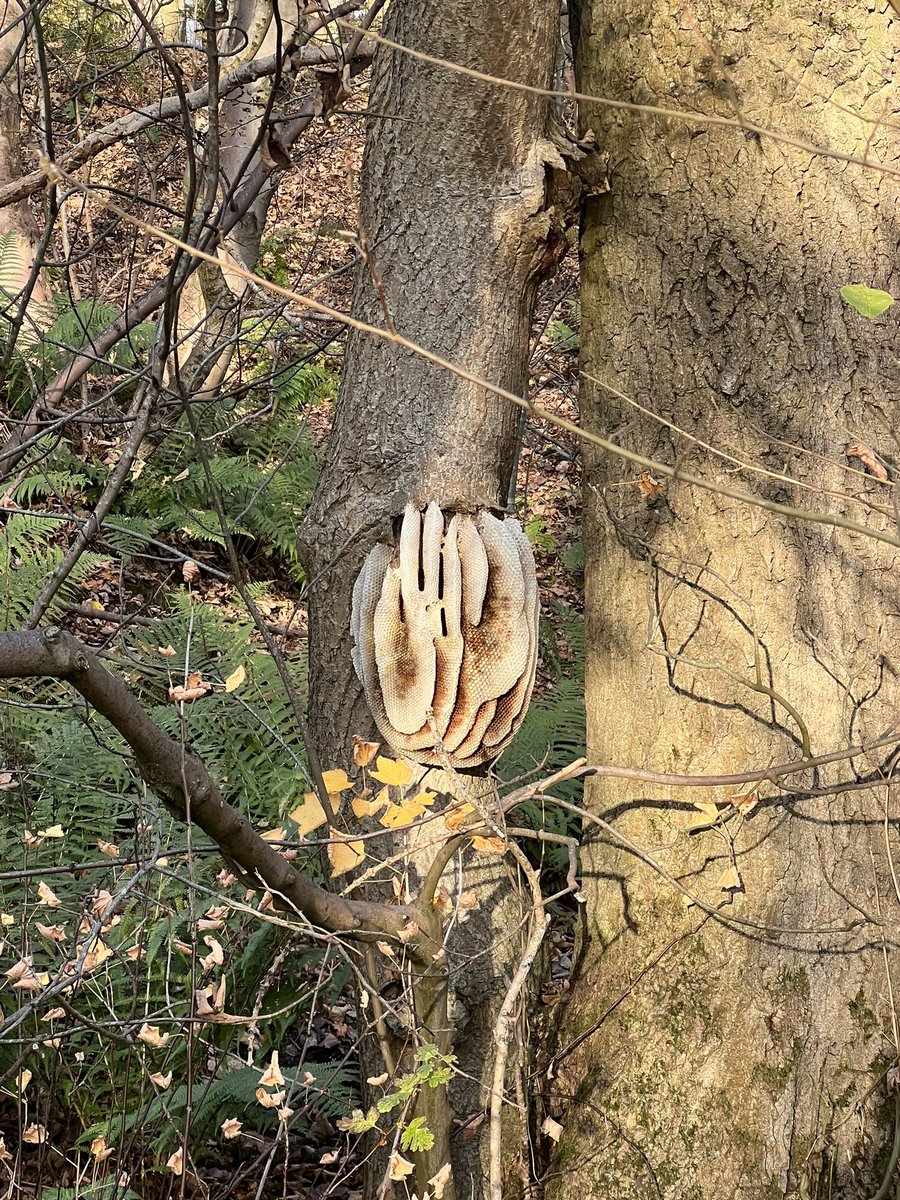
Some perished. Many ceased activity all together, like this one. A defensive trait??
Checks on 40+ empty and dead nest sites show no sign of scout activity….yet!
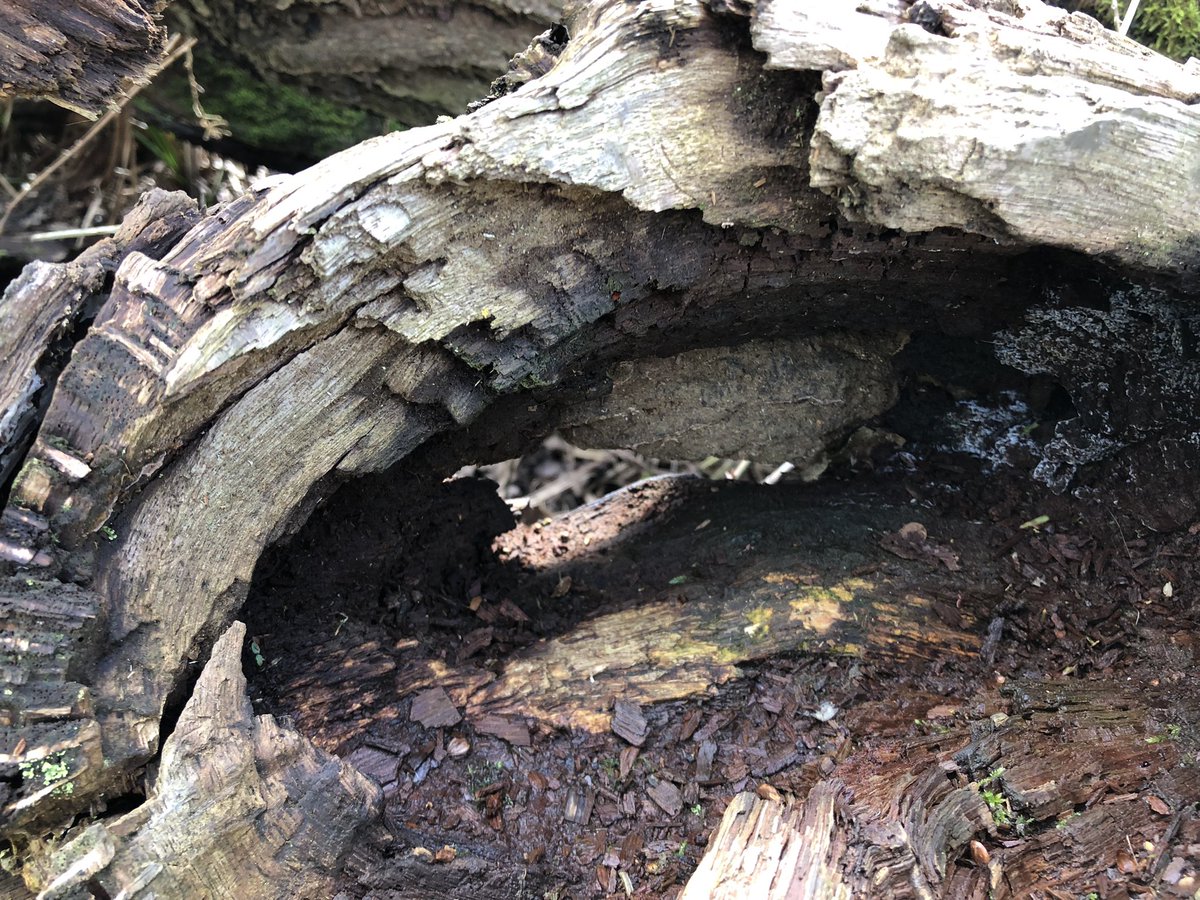
Habitat Hive/Log Winter Loss 2023/2024
This winter 91% survived (10/11).
A three winter average of 91%.
Interestingly 7 of the 11 have survived 3 winters continuously and are still active and vibrant.
Forest colonies appear to fare better in the adapted ‘hives’
Note - Obviously colony/nest numbers have increased as I have found them over a 4yr period. There is a large element nest development, loss, damage involved. These colonies are subject to natural selection, pathogen and forage competition. Established colonies are now evident.
Forest Colony Winter Survival for 2023/24 is 81%
That’s a four winter average of 81.4%
6 colonies have survived four winters and a further 10 colonies have passed their third winter.
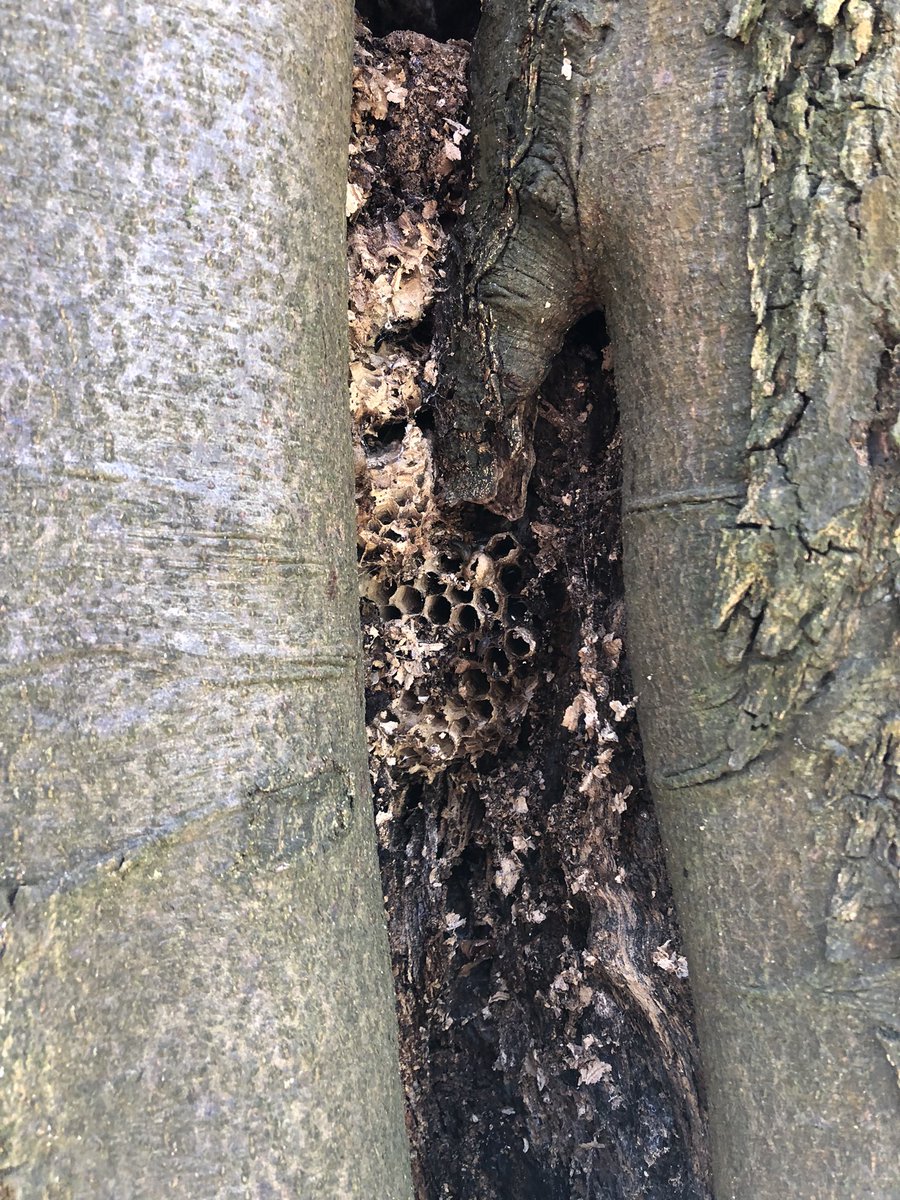
The skeletal remains of a hornets nest, decaying sullenly 20ft from a honey bee colony.
I was sure the bees would perish during winter from the Hornet pressure but they’re going strong 🐝
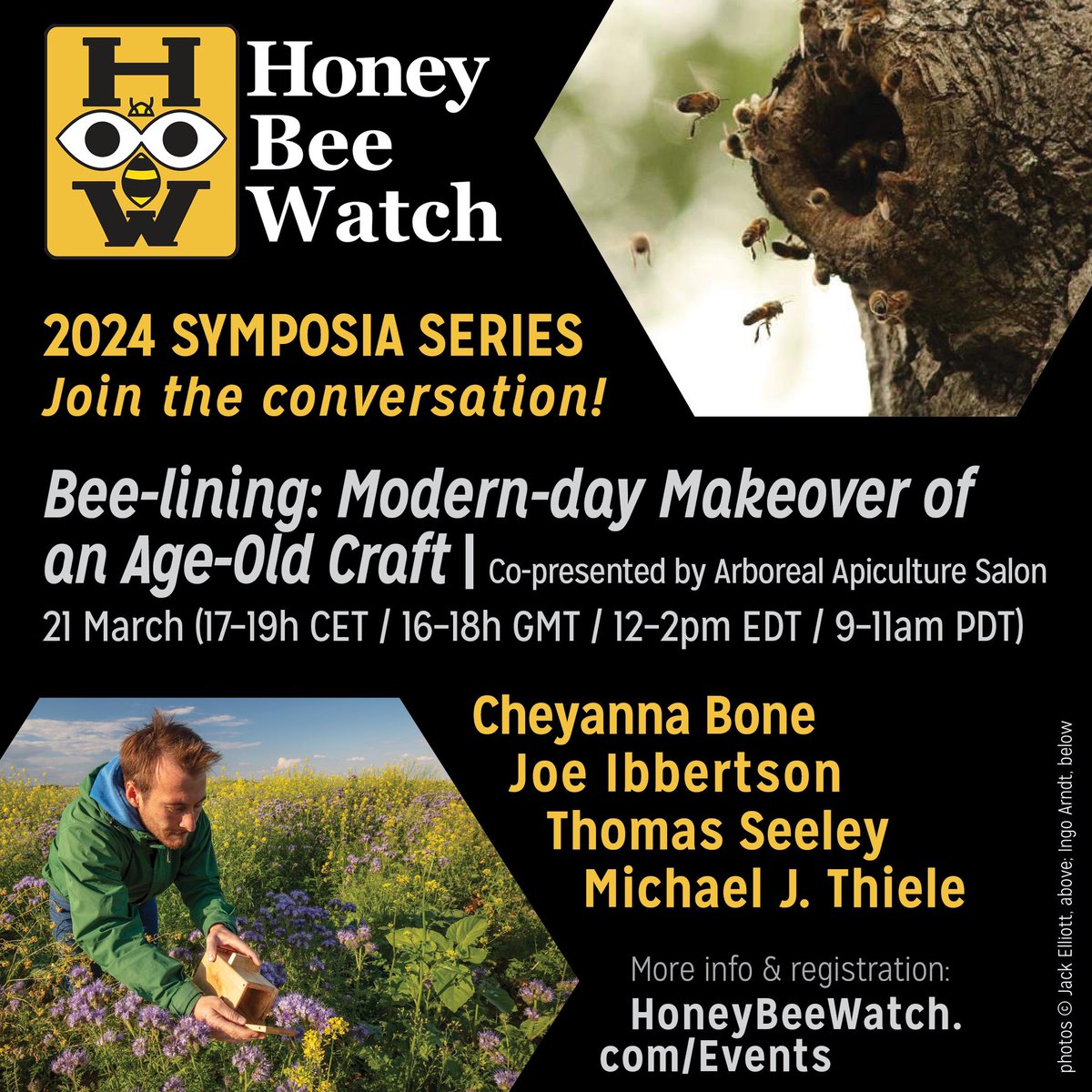
If you want to learn a little more about how those of us in conservation track and locate free living honey bee colonies, this event may be of interest to you.
Please register and join us as we discuss the finer points of how we do what we do 🐝
A great night presenting on the topic of Honey Bee hunting with Chiara Binetti, Lucas Taminem, Benjamin Rutschmann, Tom Seeley and Michael Thiele.
Our part was Environmental and Ecological indicators to find nest sites.
Very interesting research on the use of water foragers 🐝
@BeesParsonage@18_bees Definitely on the combs and on the trunk where the combs attach or near the top where the entrance could be. I don’t see anything substantial 🤷🏻♂️
@BeesParsonage@18_bees Propolis Q - I 👀 3 colonies with a good view of combs. 1 has a 450mm cavity above a split trunk. Annually swarms + builds comb outside of the cavity. 3 yrs its propolised the new external combs. 2 in horizontal cavities do the same on exposed new combs. 1 is a late swarm this yr
@BeesParsonage@18_bees I agree, humans have kept bees for around 9ka and even transported bees afar but with regards to actual selection and breeding to cause widespread genetic influence beyond their ‘ability’ to remove non beneficial genes/behaviours…..not that long.
Definitely no honey buzzards 😂
@BeesParsonage@18_bees Our technology hasn’t really taken shape to have population level impacts till the last 50-150yrs. We could eradicate a subspecies within a decade now.
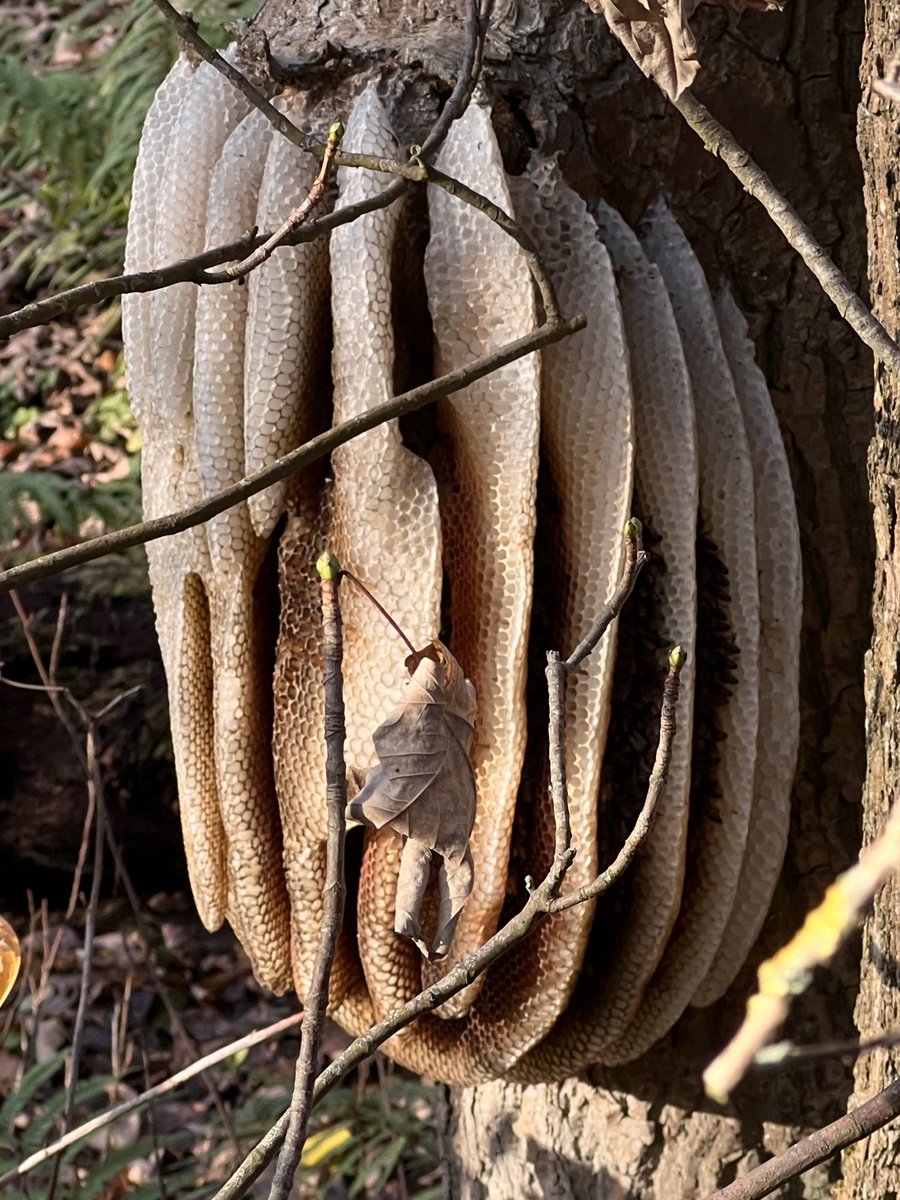
It likely did produce swarms…..of what ‘quality’? Not good signs IMO to see so much untouched comb, so little propolis
@18_bees It’s a corker but raises thoughts:
Lack of suitable habitat.
The importance of nectar/honey stores in seasonal variability.
Most importantly, the human influence on bee behaviour at a genetic level. There’s a chronic lack of propolis and much of that comb completely unused
It’s been a difficult season for the free living colonies. On top of cold and a long summer nectar dearth, there has been severe hornet pressure.
In spring I saw Queen hornets trying to enter cavities inhabited by honeybees and in some cases they’re still cohabiting