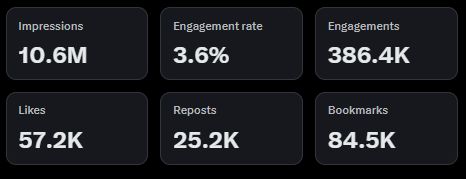
THIS IS INSANE…🔥
Someone just leaked 1,200+ plug-and-play N8N workflows and it’s breaking the internet 👀
They scraped everything from the official docs, GitHub, AND hidden forums 😮💨
⚡ AI-powered lead gen
⚡ Auto content repurposing
⚡ Sales & CRM automation
This vault would cost a lot to build from scratch.
LIKE + RETWEET + COMMENT “YES” & I’ll send you the FULL workflow + setup FREE!
A new study analyzed 129,000 websites, 216,524 pages and 100,000 prompts across 20 different niches to see what actually drives ChatGPT citations.
It busts a lot of myths *and* aligns perfectly with what SEO Stuff (https://t.co/wKpf0EILTx) has been doing all 2025.
Let’s break the results down together.
The key takeaways:
1. Backlinks matter more than anything else.
The study confirmed this clearly:
Sites with 32,000+ referring domains were 3.5x more likely to be cited by ChatGPT.
Sites with very high domain trust earned nearly 4x more citations than low-trust domains.
ChatGPT may ignore some traditional SEO tricks, but it absolutely recognizes authority.
This is why the SEO Stuff Gold Plan (https://t.co/yEFyM0Ze7W) includes 3 DR50+ authoritative backlinks.
Authority still wins.
2. Homepage traffic is a major ChatGPT trust signal.
Random internal page traffic did not matter much.
Homepage traffic did.
Sites with 7,900+ homepage visitors had 2x the citation likelihood.
Domains with 190,000+ monthly visitors did not just earn more citations, they earned nearly 2x the citations of smaller sites.
If you are invisible in Google, you will be invisible in ChatGPT.
This is exactly why SEO Stuff (https://t.co/wKpf0EILTx) content is built for Google and LLMs at the same time.
3. Presence on Quora and Reddit matters.
This was one of the biggest eye-openers:
Domains with millions of Quora and Reddit mentions had 4x higher citation likelihood.
Even smaller brands saw measurable boosts from:
Answering questions
Participating in threads
Being referenced organically
Discussion and social proof signals matter because they show LLMs that your brand exists in real conversations.
This is why SEO Stuff content is structured to encourage quotation, comparison, and organic mentions across the web.
4. Content depth matters more than word count alone.
Short articles under 800 words averaged 3.2 citations.
Long articles over 2,900 words averaged 5.1 citations.
But the real driver was not length. It was depth.
LLMs reward:
Semantic variety
Multiple angles
Examples
Expert quotes
Verifiable data
Complete topic coverage
This is exactly the format used in the Premium Content Bundle (https://t.co/4CAnUt07PO):
60 long-form, comparison-driven, deeply detailed articles built to match how LLMs extract information.
The study essentially validated the entire product.
5. Structure matters: clean headings and optimal section length.
Pages with clear structure earned 70% more citations.
The best-performing articles used:
Clean headings
120 to 180 word sections
Logical progression
Straightforward formatting
Question-based H2s
Lists and clarity
Not walls of text.
Not creative rambling.
Not brand-voice storytelling.
LLMs want clarity they can extract.
This is exactly how every Gold Plan article is written.
Question-based H2
2 to 3 sentence direct answer
Supporting detail
TLDR
Internal links
AI systems love extracting from this structure.
6. Freshness matters more than age.
Brand-new content does not automatically win.
But content updated within the last 3 months nearly doubled citations:
Outdated pages averaged 3.6 citations
Recently updated pages averaged 6.0 citations
This is why SEO Stuff (https://t.co/wKpf0EILTx) customers often reorder monthly.
Freshness is huge.
7. Question-based titles and FAQ sections help smaller sites most.
FAQs alone do not skyrocket citations.
But when combined with:
Long-form content
High authority
Clean structure
Strong backlinks
FAQ sections and question-form headings provided significant boosts, especially for smaller brands.
This lines up perfectly with SEO Stuff’s formatting approach.
8. LLMs.txt does almost nothing.
The study tested it.
Impact was negligible.
In fact, removing it slightly improved predictive accuracy.
LLMs.txt is not the robots.txt of AI search.
Focus on authority and content quality instead.
9. Review platforms matter a lot.
Sites listed on:
Trustpilot
Capterra
G2
Sitejabber
Yelp
earned 3x to 6x more citations than brands with no presence.
LLMs treat these platforms as trust validators.
Another reason entity consistency and brand clarity matter more than gimmicks.
10. Core Web Vitals influence ChatGPT citations.
Fast pages were cited 3x more often than slow pages.
The nuance:
You do not need perfect Lighthouse scores.
You do need to avoid slowness that signals poor quality.
Fast enough wins.
Slow gets penalized.
This is why SEO Stuff technical audits included with the Gold Plan and Premium Content Bundle include speed recommendations.
So what actually drives ChatGPT visibility?
This study makes it extremely clear.
ChatGPT citations follow Google fundamentals plus a social and structural layer.
The real drivers:
Backlinks
Domain trust
Homepage authority
Quora and Reddit presence
In-depth content
Structured clarity
Recently updated pages
Review platform presence
Fast performance
And this is exactly what SEO Stuff (https://t.co/wKpf0EILTx) was built for.
SEO Stuff Gold Plan
https://t.co/yEFyM0Ze7W
10 long-form, extractable articles
Question-based H2s
3 DR50+ backlinks
Clean structure
TLDRs
FAQ-style answers
Technical and entity optimization
Formatted for LLM extraction
Premium Content Bundle
https://t.co/4CAnUt07PO
60 deep-dive articles
Built for semantic variety
Long-form 1,900 to 2,900+ words
Structured in optimal 120 to 180 word sections
Updated regularly
Expanded topical authority
This is the strongest driver of ChatGPT citations for smaller brands.
Premium Backlink Bundle
https://t.co/Z9m9D7TjES
3 DR50+ authoritative backlinks
Strengthens domain trust
Boosts homepage authority
Reinforces entity clarity
Backlinks were the number one factor in the entire study.
AI search visibility comes down to authority, clarity, depth, structure, trust, and freshness.
SEO Stuff was built to deliver exactly that, optimized for both Google and ChatGPT.
If you want cheat codes for getting into ChatGPT within about 30 days:
RT this, follow me, and reply “AI SEO.”
You must do all 3 for the DM.
Google just rolled out a new feature.
It is one of the most obvious signals yet that traditional search and AI search are merging into a single ranking ecosystem.
In case you missed it, new button has started appearing under local Map Pack listings when you search for services:
“Have AI get prices.”
SEO Stuff (https://t.co/wKpf0EILTx) has been boosting traffic and sales for local businesses via traditional and AI search all 2025.
Let’s discuss what Google’s latest change means for you.
But before we get into it…
If you want some cheat codes for getting your local business surfaced within ChatGPT in 30 days or less, just RT this, follow me, and reply “Local AI SEO” and I will DM you.
You must do all 3 for the DM.
Alright, let’s get into this “Have AI get prices” feature.
On the surface it looks like a small enhancement, but it actually reveals Google’s direction more clearly than any leak or patent filing.
Google now wants to interact with users directly to make the customer journey easier.
This feature shows exactly which signals Google treats as authoritative in an AI context and how it plans to extract business data going forward.
Once you understand how this works, it becomes clear why SEO Stuff (https://t.co/wKpf0EILTx) customers benefit so heavily from structured, extractable content and DR50+ PR backlinks.
Let’s break it down.
1. Google is now validating business data directly
When a user clicks “Have AI get prices,” Google:
Identifies the top local businesses
Collects structured information
Calls the providers directly
This means Google is no longer relying only on crawling your website.
It is confirming information through real-time interaction.
This is the strongest signal yet that modern SEO depends on 2 things:
Whether Google can find you
Whether your information is structured enough to be extracted
SEO Stuff’s Gold Plan provides both with 10 structured long-form pages and 3 DR50+ backlinks.
https://t.co/yEFyM0Ze7W
2. AI extraction is replacing traditional crawling in key verticals
Google’s AI asks every business the same structured questions:
Service type
Starting price
Availability window
Property type
This tells you exactly what Google wants from your site:
Clear segmentation
Clean headings
Short extractable answers
Pricing anchors
Structured service pages
These are the same principles that power AI Overviews and ChatGPT citations.
That is why SEO Stuff content uses:
Question-based H2s
2 to 3 sentence answers
TLDR summaries
Internal linking
Schema where relevant
If Google cannot extract your information, it will rely on a competitor who made their content machine-readable.
The Premium Content Bundle reinforces this with 60 comparison-driven articles built for extraction.
https://t.co/4CAnUt07PO
3. Google has introduced a new ranking dimension: responsiveness
SEO has always rewarded fast-loading sites.
Google is now rewarding fast-answering businesses.
If Google calls 10 providers and only 4 answer, only those 4 appear in the pricing email sent to the user.
Answer the phone and you get visibility.
Miss the call and you disappear.
Businesses that treat SEO as content-only will lose leads.
Businesses that align systems, content, and entity clarity will win repeatedly.
4. Google is building a unified AI extraction model
Look across the ecosystem:
AI Overviews extract structured content
Merchant Center extracts structured product data
Flights extract structured pricing
Hotels extract structured availability
Local now extracts structured service data
Google is building a structured, AI-ready marketplace.
Your content must act as a clear reference point for machines and humans.
SEO Stuff content and backlinks were designed specifically for this evolution.
The Premium Backlink Bundle reinforces authority across trusted domains so AI systems treat your brand as stable and credible.
https://t.co/Z9m9D7TjES
5. What this means for SEO in 2025
SEO is no longer page-level optimization.
It is entity-level clarity.
Google wants to know:
What you do
Where you do it
What you charge
Who you serve
Which services map to which queries
Whether third-party signals agree with your on-site content
Whether your brand appears consistently across platforms
AI search builds this understanding across:
Your Google Business Profile
Your service pages
Your local content
Your comparison content
Your backlinks
Your reviews
Your citations
Your structured headings
Your schema
Your topical coverage
SEO Stuff (https://t.co/wKpf0EILTx) aligns directly with these requirements:
The Gold Plan builds extractable content
The Premium Content Bundle builds depth and coverage
The Premium Backlink Bundle reinforces authority so AI trusts your entity
Together, they create the exact environment AI systems rely on for selection and recommendation.
Google’s new feature makes the message clear.: ranking alone is no longer enough.
Extraction and entity stability now determine which businesses get surfaced when AI mediates the customer journey.
If you want a guide on on preparing your GBP, site structure and content to appear inside these AI-driven pricing summaries, RT this, follow me, and reply “Local AI SEO.”
You must do all 3 for the DM.
The final red flags:
1. Schema
Imagine building a pagerank equivalent or even pagerank-beating system (which would make you a trillionaire) - and then dumping all of the results in lieu of those that have schema despite the fact you've built an LLM which can process data-from-schema faster than a traditional web scraper from Schema...
If you're saying Schema - you' basically trying Tech-Snobbery.....
In about 5 months everything will have schema and nothing will rank better.
These are the people you can blame
👇👇👇👇👇👇👇👇👇👇👇👇👇
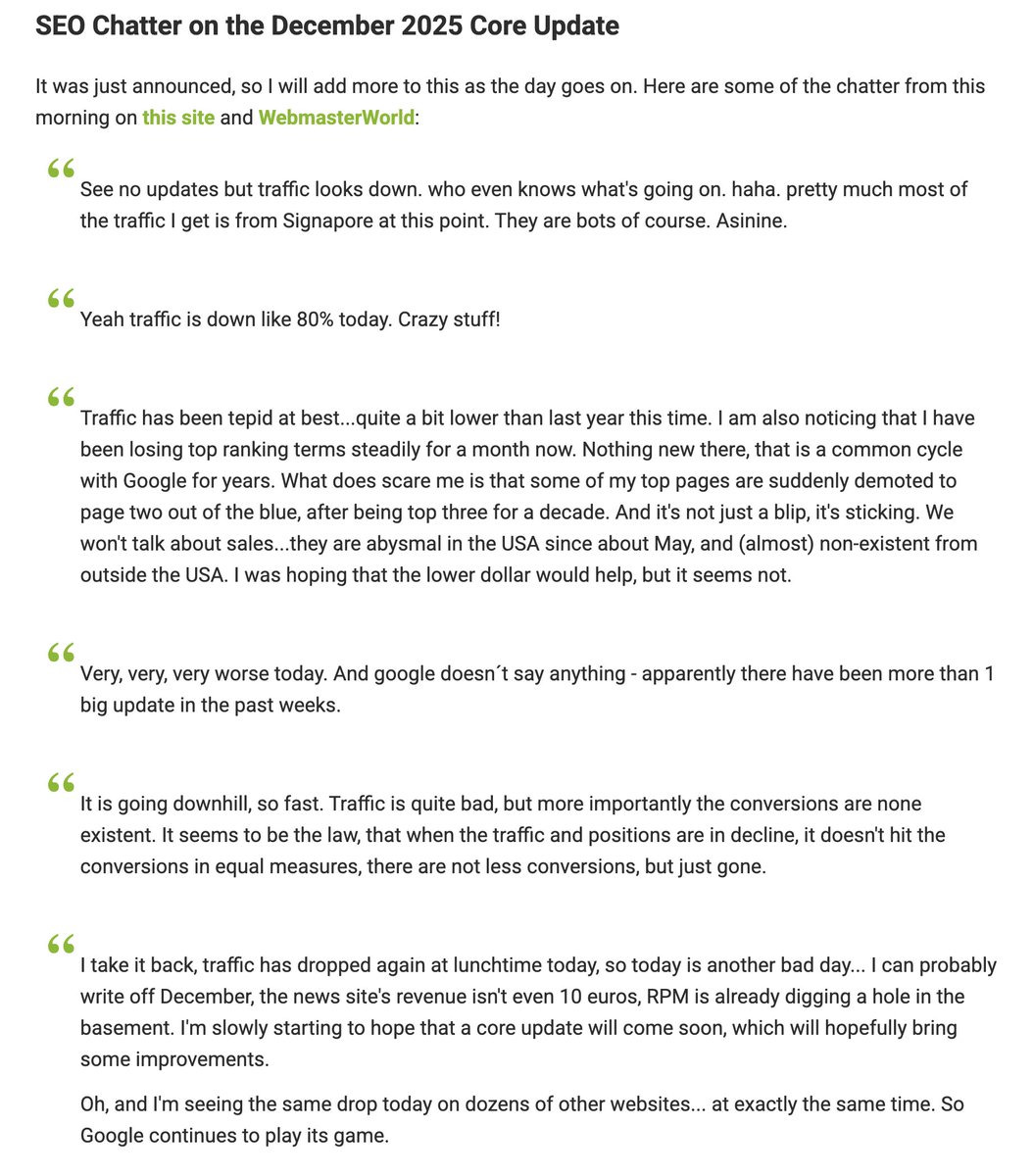
The December Google core update feels heated already - been watching a lot of SEO chatter this morning and it feels big already but I will keep an eye on it and keep you posted on what we are seeing in aggregate
30% of ChatGPT results share 1 common characteristic that you could easily apply to your site to get more visibility + traffic.
No new expenses. No need to hire anyone.
It doesn’t get any simpler than this.
And it just so happens SEO Stuff (https://t.co/wKpf0EILTx) has been doing this for the last 6 months for our customers.
(Which probably explains why 80% of customers are so happy with their results that they come back for multiple purchases.)
Before we get into it though...
If you want some free cheat codes for landing free traffic from ChatGPT within the next ~30 days, just RT this + follow me + reply with "ChatGPT SEO" and I’ll DM you.
You must do all 3 for the DM.
And make sure you check out the Gold Plan (https://t.co/yEFyM0Ze7W).
There is a reason it is the best-selling SEO Stuff package for businesses across e-commerce, B2B SaaS, education and the agency space.
Alright, everyone is obsessing over entity SEO, backlinks, and freshness signals.
All important.
But a new study from Nectiv just revealed 1 of the simplest, most overlooked ways to get cited inside ChatGPT.
Tables.
Yes, tables.
Nectiv analyzed thousands of ChatGPT citations and compared them against Google search results.
The findings were impossible to ignore:
ChatGPT results contained tables 2.3x more often than Google results.
Nearly 30% of all ChatGPT citations contained at least 1 <table> element.
Only 12% of comparable Google results included tables.
This confirms what we have been seeing internally at SEO Stuff for months:
ChatGPT favors structured, scannable, comparison-driven content.
Tables are one of the strongest formatting signals you can give it.
Let’s break down why this matters.
1. ChatGPT citations heavily rely on extractability.
LLMs do not read your entire page like a human. They extract chunks.
When your content contains tables, you are giving the model an extremely clean, structured block that:
Highlights differences
Surfaces key attributes
Creates a single source of truth
Reduces ambiguity
Mirrors how LLMs summarize
This is why comparison tables outperform paragraphs and bullet lists for AI citations.
2. Tables map directly to how LLMs answer commercial questions.
Queries like:
“Best payment processors for small business”
“X vs Y vs Z laptop differences”
“Top CRM tools with pricing breakdowns”
These require structured comparisons. So LLMs look for structured comparison content.
Tables are the clearest format for that.
3. This aligns with every major study released in 2025.
Rankscale found that the majority of AI citations come from:
Vendor comparison posts
Best-of lists
Product-vs-product breakdowns
Profound discovered that ChatGPT has moved fully into an entity-structured output layer, tagging brands and comparing features more explicitly.
SEO Clarity found that AI extractability correlates with visibility more than backlinks alone.
Bain found that shopping queries on ChatGPT have doubled and users click links at 2–3x the rate they used to.
All of these trends point to the same thing:
Comparison content wins.
Structured content wins.
Tables win.
4. So what should you do right now?
If you want citations inside ChatGPT, Perplexity, Gemini, and Google AI Overviews, your content must include:
Table-based comparisons
Multi-column breakdowns (features, pricing, pros, cons)
Clear attributes for each competitor
High-level TLDR at the top
Question-based H2s
Clean HTML
The brands that adopt this format early will own category definitions inside AI search.
5. This is exactly why SEO Stuff customers outperform others.
Every Gold Plan and Premium Content Bundle already includes table-ready layouts because comparison formats are the fastest way to earn AI citations.
SEO Stuff Gold Plan
https://t.co/yEFyM0Ze7W
10 long-form comparison articles
3 DR50+ backlinks
Every page structured with TLDRs, question-based H2s, and extractable data blocks
These give AI engines structured content they can quote instantly.
SEO Stuff Premium Content Bundle
https://t.co/4CAnUt07PO
60 comparison articles
Built with comparison tables, factual summaries, and clean HTML
Optimized for ChatGPT, Perplexity, and AI Overviews
These create the volume of structured content needed to train LLMs to associate your brand with your category.
If ChatGPT is going to show tables nearly 30% of the time, and Google only 12% of the time, the brands that publish structured tables first will dominate AI search faster than anyone else.
Tables are not the whole game, but they are one of the clearest, easiest, highest-impact formatting upgrades you can make.
The companies that move early will own the next era of commercial search.
And if you want some free cheat codes for landing free traffic from ChatGPT within the next ~30 days, just RT this + follow me + reply with "ChatGPT SEO" and I’ll DM you.
You must do all 3 for the DM.
Today, we are excited to introduce a new feature in the Search Console Performance report: weekly and monthly views. https://t.co/eZCsIGWJbd
This new functionality allows you to adjust the time aggregation of any of the performance charts, helping you smooth out daily changes and focus on the overall trend of traffic to your website.
Google just accidentally revealed how its AI search systems actually work.
In the process, they validated what SEO Stuff (https://t.co/wKpf0EILTx) has been doing all year to get customers more traffic + sales.
Now that none of it is a secret, let's talk about it.
That way you can apply these learnings to your businesses ASAP.
But before we get into it…
If you want free cheat codes for getting inside ChatGPT, Gemini, Perplexity, and Google AI Mode within the next 30 days, just RT this, follow me, and reply “AI SEO Cheat Codes.” I’ll DM them to you.
You must do all 3 for the DM.
Alright, let's jump into it.
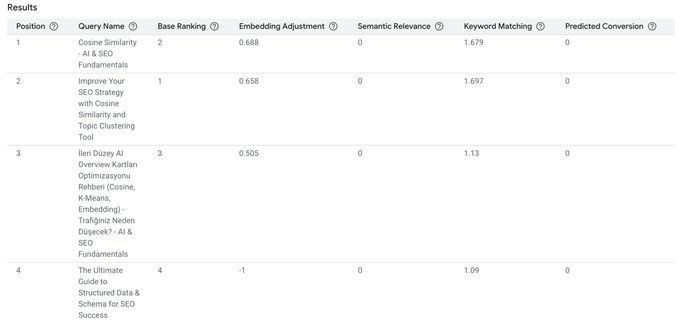
Metehan Yesilyurt, who previously went viral when he expertly analyzed Perplexity's ranking factors, recently broke down Google AI ranking factors in a blog post.
(Link in the replies.)
It was fascinating.
Basically, as noted by Yesilyurt, by selling the underlying infrastructure through a product called Google Cloud Discovery Engine (Vertex AI Search), Google revealed a lot about its AI systems work.
If you understand what Discovery Engine exposes, you understand how Google AI Mode, AI Overviews, and future AI search features are likely ranking and retrieving your content.
I'll talk about the 7 ranking signals below, but I advise you to read the entire blog post I'm linking to because it goes into way more helpful technical detail:
Base Ranking
The core algorithm’s initial relevance score.
Gecko Score (Embedding Similarity)
Vector similarity between your content and the query.
Semantic match.
Jetstream (Cross-Attention Relevance)
A more advanced model that understands negation, contrast, context, and nuance better than embeddings.
BM25 Keyword Matching
Kind of self-explanatory. Yes, keyword matching still matters.
PCTR (Predicted Click-Through Rate)
A three-tier prediction model:
Tier 1: Popularity
Tier 2: PCTR
Tier 3: Personalized PCTR (unlocked only after 100,000+ queries)
Freshness
Time-sensitive recency scoring.
Boost / Bury Rules
Manual ranking adjustments based on business logic.
This is the most transparent look we’ve ever had into Google’s AI ranking pipeline.
Discovery Engine also exposes the retrieval pipeline:
Max chunk size: 500 tokens (~375 words)
Optional: ancestor headings travel with each chunk
Tables and images get parsed
Layout parser + Gemini-enhanced understanding (LLM-augmented indexing)
This means: every important point needs to live inside a 500-token block with clean headings and clear structure.
If your content is one massive wall of text, you're done.
Also, I hate to be the "I told you so" guy on this, but schema matters.
For some reason it has become controversial to say this on social media, but it was obvious and now it is confirmed.
Discovery Engine shows Google processes structured data with three separate flags:
Searchable (affects recall)
Indexable (affects filtering + ordering)
Retrievable (affects what the model can output)
These are independent.
Meaning:
A field can influence ranking without being visible, or be visible without influencing ranking.
A massive hint at how Google uses structured data for AI Mode.
Also, Google revealed the 4-stage AI search pipeline:
Prepare
Query understanding, synonym mapping (time-aware), autocomplete, NLU.
Retrieve
Chunking, layout parsing, schema extraction, embeddings.
Signal
The 7 signals above.
Serve
Gemini 2.5 Flash generates the final answer, applies instructions, safety filters, related questions, and grounding rules.
Traditional Search to AI Overviews to AI Mode are simply different configurations of this same pipeline.
So what does all this mean?
Well, it means you must optimize for three layers at once:
Layer 1: Semantic similarity (Gecko)
Your content needs to clearly match the intent of the prompts you want.
Layer 2: Cross-attention relevance (Jetstream)
Jetstream rewards:
clear definitions
direct answers
contrast statements
“X vs Y”
“Best for ___”
“Without ___”
Layer 3: Chunk-level clarity
Your content must be extractable in 500-token blocks with:
question-based headings
two to three sentence answers
TLDR summaries
clean HTML
factual claims
lists and comparisons
This is exactly what AI systems quote.
And this is exactly why SEO Stuff (https://t.co/wKpf0EILTx) works so well in AI search.
The Discovery Engine findings validate the entire SEO Stuff approach from long before this documentation was public.
Let me break down the packages through the lens of Google’s architecture:
SEO Stuff Gold Plan
https://t.co/yEFyM0Ze7W
10 long-form, comparison-based, extractable articles
Structured in 500-token blocks
Question H2s
Two to three sentence direct answers
TLDR blocks
FAQ schema + product schema
3 DR50+ backlinks to strengthen entity signals
Gold Plan maps to:
Gecko (semantic match)
Jetstream (cross-attention relevance)
BM25 (keyword match)
Freshness
Entity trust (for Boost/Bury)
This is the fastest path to appearing in ChatGPT, Gemini, Perplexity, and Google AI Mode.
SEO Stuff Premium Content Bundle
https://t.co/4CAnUt07PO
60 comparison-driven articles
Structured to match the exact pattern LLMs extract
Category-defining content
Builds topical coverage + entity clarity
Creates a deep corpus for Jetstream + embeddings
Premium Bundle maps to:
Retrieval depth
Structured chunking
Ancestor heading clarity
Embedding similarity
AI model grounding
This is how you train AI systems to associate your brand with your category.
SEO Stuff Premium Backlink Bundle
https://t.co/Z9m9D7TjES
3 DR50+ backlinks from domains LLMs already trust
Reinforces brand consistency across the web
Boosts entity recognition
Backlinks help with:
Base ranking
PCTR (popularity + trust)
Boost/Bury eligibility
Entity clarity
This is why so many customers reorder.
It works.
Google is not hiding its AI search architecture.
They literally exposed:
The signals
The ranking layers
The chunk sizes
The parsing logic
The semantic models
The engagement tiers
The answer generation flow
The brands that understand this and structure their content accordingly will run through the next era of search like absolute beasts.
And SEO Stuff (https://t.co/wKpf0EILTx) was built specifically to map to this architecture.
If AI is replacing the first click, your content must replace the first impression.
Plain and simple.
If you want cheat codes for getting inside ChatGPT, Gemini, Perplexity, and Google AI Mode within 30 days…
RT this, follow me, and reply “AI SEO Cheat Codes.”
You must do all 3 for the DM.
i'm sick of seeing Google Ads dudes telling people to just "do keyword research" instead of actually showing them how.
so I'm gonna drop our entire keyword research process today for $0.
here’s how to find and scale profitable keywords fast:
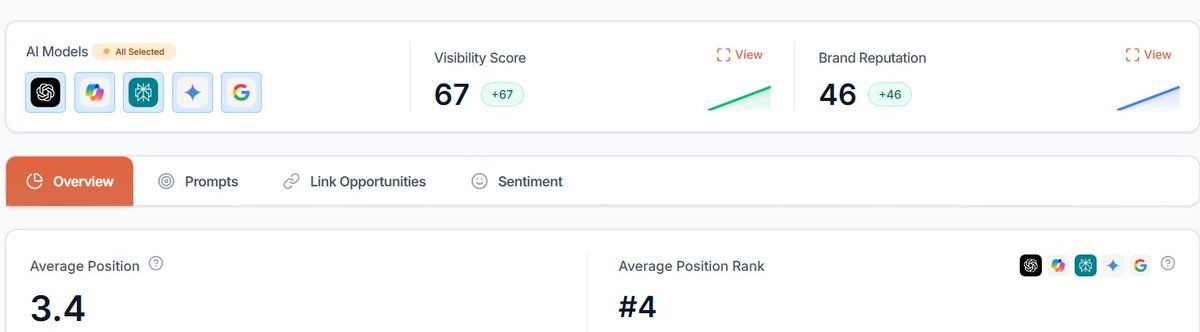
This SEO Stuff (https://t.co/wKpf0EILTx) customer, an agency competing in an extremely difficult niche, has seen its search traffic grow by 335% and AI visibility grow by 1,600%.
ChatGPT visibility grew by 200%
Perplexity visibility grew by 500%
Gemini visibility grew by 700%
Steal their formula so you can replicate it for your own business.
Seriously, it will never be easier than today to make traditional + AI search your #1 sales channel.
Don't drag your feet and then be forced to work 10x as hard in 2026 and 2027 to catch up to your competitors.
Before I break down exactly what worked so well in this particular case...
If you want 3 cheat codes for getting your business mentioned inside ChatGPT + AI Overviews within the next 30 days, just RT this + follow me + reply “AI SEO Guide.”
You must do all 3 for the DM.
Alright, let's start with the results first.
Notable growth in organic visitors
Notable growth in ranking keywords
Notable growth in AI Overview citations
Notable growth in ChatGPT citations
Notable growth from the specific geographic locations they wanted it from
This is an agency competing against massive competitors and global SaaS companies with entire marketing teams and multi-million-dollar budgets.
So how'd they do it?
Let’s start at the top.
Most agencies are still creating content based on fairly outdated principles, not optimizing for search as we know it in 2025.
That’s why their blogs are full of generic trend pieces and cookie-cutter PR that might look nice enough when you click through to the blog section, but does nothing for ranking or AI visibility.
This agency agreed to change up the formula.
The first step is repositioning the blog as a whole.
Instead of writing “thought leadership” pieces nobody searches for, you build pages that mirror commercial intent searches:
“Top [their service] agencies”
“Best [their specific services]”
“[Their service] for SaaS brands”
“[Their service] examples that convert”
“[Their top competitors] reviews”
Each post is structured with extractable logic, meaning every paragraph could stand on its own as a complete answer.
That’s how AI systems like Gemini and Google AI Overviews find and cite your content.
Here’s what that structure looked like:
A TL;DR at the top (2–3 sentences answering the core question)
Each H2 written as a question (“What makes a good [their service] agency?”)
2–3 short sentences under each H2 providing the direct answer
Lists and factual statements instead of opinion-based text
This alone will land you 100+ AI Overview citations because it aligns perfectly with how LLMs extract content blocks.
But content alone isn't enough.
You also need to boost authority.
This is where SEO Stuff’s Gold Plan (https://t.co/yEFyM0Ze7W) shines.
The key isn't just the number of PR backlinks, it's where they came from.
Here’s the focus:
DR50+ related business domains only
Sites already getting meaningful organic traffic and already in AI search
Contextual anchors using real business terms like “[their service] agency” and “[their service]”
Entity alignment where every referring domain mentions the agency’s niche and country
By stacking links with consistent semantic context, you create an entity graph and the kind of signal AI Overviews pull directly from when ranking and citing sources.
Branded + multiregional optimization
Once authority is in place, you shift to branded + regional optimization.
ChatGPT, Perplexity, and Gemini all prioritize brands that show up consistently in their category.
So you make the agency’s brand more discoverable:
Embed agency name + country in schema and metadata
Create “Reviews” and “Team” pages with structured data
Optimize meta descriptions with branded language
Increase internal references to the brand in blog copy
This builds a feedback loop between Google, ChatGPT, and Gemini where each engine recognizes the agency as a known entity.
Internal links matter a lot more in AI search
Traditional internal linking boosts pages.
AI search uses internal links to pass meaning.
That looks like:
Every service page linking to 3–4 supporting blogs
Every blog linking back to the relevant service page
Every anchor using intent-driven phrasing (“enterprise [their service] services”)
This creates a hierarchy that’s easy for AI systems to parse.
Scale what works with the Premium Content Bundle
Once the foundation is set with the Gold Plan, you transition to SEO Stuff’s Premium Content Bundle (https://t.co/4CAnUt07PO).
It delivers:
60 AI-optimized “best of,” “top,” and “comparison” pages
Clean, schema-friendly HTML
Built-in FAQ sections + TL;DRs
These pages fuel steady growth across Google + AI systems with zero ad spend.
To follow the same playbook:
Rebuild your blog around commercial intent
Use question-based H2s + short, extractable answers
Add a TL;DR to every page
Build backlinks only from DR50+ domains in your niche
Add brand + location schema and refresh content monthly
Interlink pages semantically, not randomly
Do that for 60–90 days and you’ll start showing up across Google, ChatGPT, Gemini, and Perplexity.
Or skip the work and let SEO Stuff do it for you.
Gold Plan:
https://t.co/yEFyM0Ze7W
Premium Content Bundle:
https://t.co/4CAnUt07PO
There’s a reason 80%+ of SEO Stuff customers reorder.
The results compound long after the work is done.
And if you want 3 cheat codes for getting your business cited in ChatGPT + AI Overviews within 30 days, just RT this + follow + reply “AI SEO Guide.”
You must do all 3 for the DM.
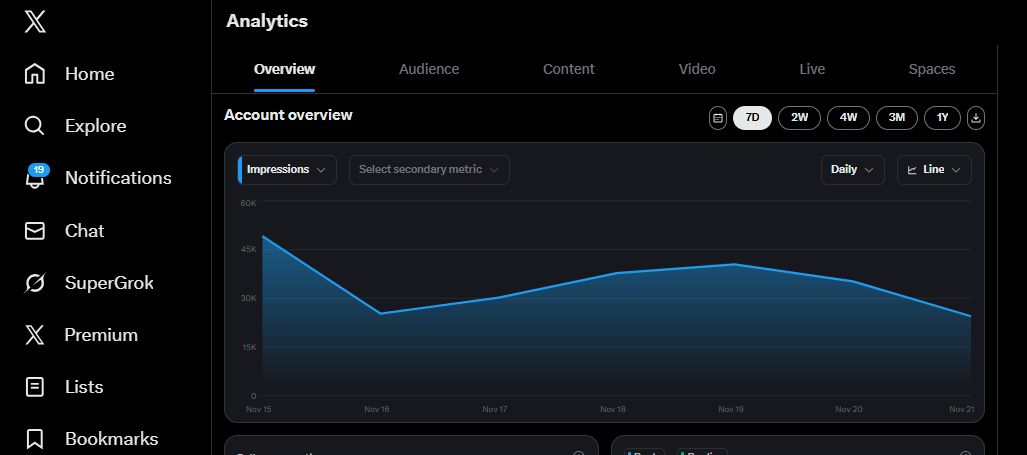
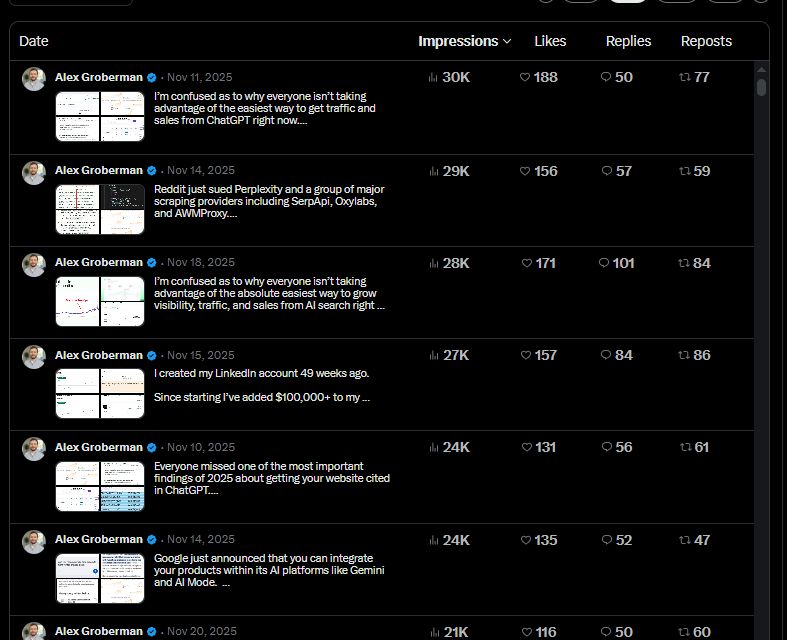
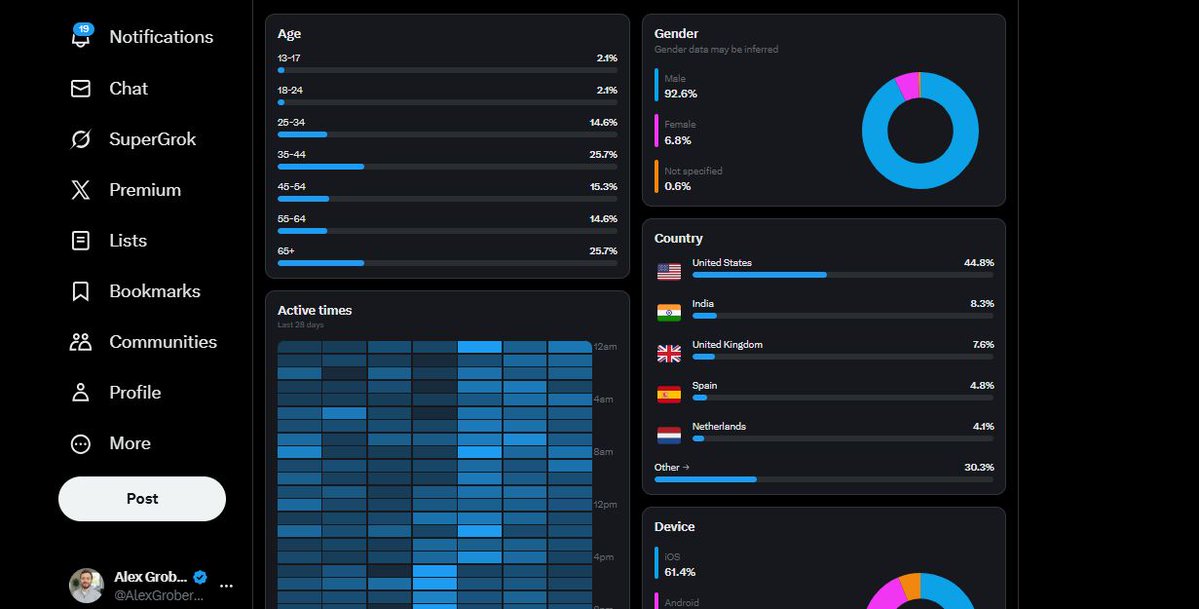
I started my X account 50 weeks ago. Easiest algorithm to crack by a country mile.
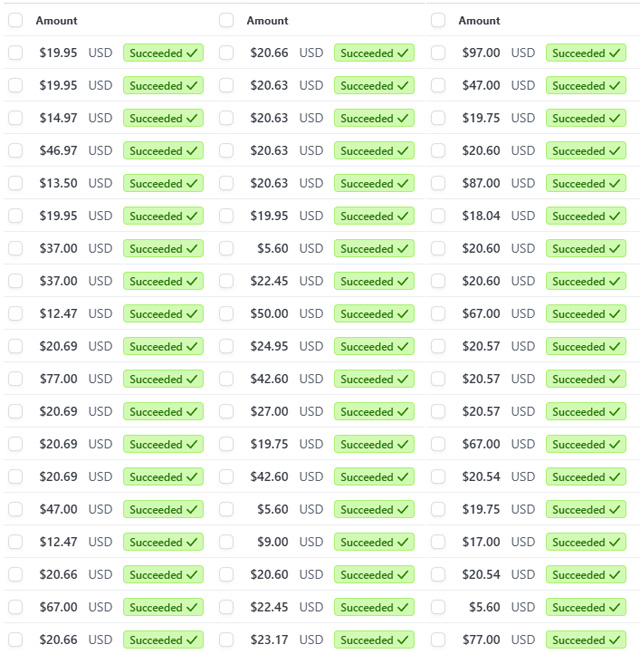
Since then I have generated $120,000 in direct revenue and this month alone drove $20,000+ in sales to SEO Stuff.
Here is the system that works today. Take it before another random X update closes more loopholes.
And if you want the full playbook with posting formats, DM frameworks and engagement loops that bring in inbound on autopilot, follow me, repost this, and comment “X Growth Guide 2025.”
You must do all 3 to get the DM.
Here is the posting schedule that still works:
I post 2 to 3 times per day, 7 days per week.
Morning is for a proof post or strong point of view.
Afternoon is for a 3 to 5 tweet mini thread with a framework, teardown or screenshots.
Evening is for a repost with a new call to action or a short insight meant to spark replies.
Whenever I pause for 48 hours, reach drops immediately. This literally happens on every vacation.
Here is what is actually working on X as of this week:
Short proof threads in the 3 to 6 tweet range.
They need to be visual, skimmable, outcome focused and actionable.
Longer threads only work if every line delivers real value.
Multi image posts with a clear hook on slide 1, a specific example or framework in the middle slides, and a call to action on the final slide.
These consistently outperform text only threads.
Proof first content.
Dashboards, analytics, Stripe shots, search results, rankings, DMs, or ChatGPT prompt outcomes do better than general opinions.
Templates and frameworks that people can copy in under 60 seconds.
The more stealable it is, the better it performs.
Timely commentary with receipts.
If something changes on X, in your niche, or in your industry, reacting fast with your data or experience gets extended visibility.
Also, reposting your hits still does amazingly.
Wait 1 to 2 weeks, rewrite the hook and post it again.
Most of your audience never saw it the first time and distribution is different every run.
Posts that are performing the worst right now:
One line takes with no evidence or example.
Long threads that lose the plot.
AI sounding content with no real experience behind it.
Framework posts that do not show execution or outcomes.
Posts that send people off platform early without building engagement.
Here is the engagement system that drives the most growth right now:
Reply early to posts gaining traction in your niche.
Add data, a strong angle, or a practical extension.
Quote tweet daily with a breakdown, an insight, a disagreement, or a specific example.
Resurface your best replies by reposting them to your feed.
Replies with early traction usually perform well on the timeline too.
Build comment chains under your own posts.
Posts with replies to replies stay alive significantly longer in the feed.
Here is the DM system that continues to convert:
Track who engages with you repeatedly whether through replies, likes, bookmarks or follows.
DM them something useful such as a template, a system, or a short swipe file.
If they reply, open a loop by asking if they want the full system.
If they say yes, deliver the offer whether that is SEO Stuff, an audit or a playbook.
The order is value first, context second, offer last.
Your profile needs to be optimized:
Bio should be benefit first and very clear.
Pinned tweet should show proof and give a clear path to DM or click.
Rotate your pinned tweet every 2 weeks based on clicks and replies.
Respond to every DM with real substance.
Here are the only metrics that actually matter on X right now:
Link clicks per post.
New followers gained per post.
DM replies tied to specific posts.
Repeat commenters who show up again and again.
Comment depth indicating replies to replies.
Impressions look good in screenshots but do not drive sales.
Here is the 30 day X growth plan that still works today:
Post 2 to 3 times daily with at least 1 proof based post.
Reply to 5 to 10 posts per day in your niche.
Quote tweet 1 to 2 times per day with real insight or analysis.
Repost your best content every 2 to 3 weeks.
DM 10 or more new engagers each week with value first.
Track link clicks, replies, DMs and repeat commenters weekly.
Run this system for 30 days.
Screenshot your Day 31 results and tag me when the inbound starts.
And if you want the full playbook with posting formats, DM frameworks and engagement loops that generate inbound, follow me, repost this and comment “X Growth Guide 2025.”
You must do all 3 to get the DM.
You only need ChatGPT + a laptop + 1 hour/day to make $8,500/month.
I’ve prepared the exact step-by-step guide.
Normally $179, but it’s free for 24 hours.
To get it:
• Like, Repost & Peply "NEED"
• Follow @yourtechgirl24 me so I can DM you
I’m confused as to why everyone isn’t taking advantage of the easiest way to get traffic and sales from ChatGPT right now.
I touched on it already, but a recent study highlighted a key method SEO Stuff (https://t.co/wKpf0EILTx) has been using to get customers cited across both ChatGPT and Perplexity.
Let’s go over it again so you can take advantage and boost those Q4 sales numbers.
But before we dive into the details...
If you want a few cheat codes for getting cited in ChatGPT within the next 30 days, just RT this, follow me, and reply “SEO Stuff ChatGPT Cheat Codes” and I will DM you.
You must do all 3 for the DM.
Alright, let’s get into it.
A lot of B2B companies I see on here still treat their website blog like an afterthought or a place for announcements and recycled press releases.
This completely ignores the fact that vendor blogs are quietly becoming one of the most cited sources in ChatGPT, Gemini, Perplexity, and Google AI Overviews.
I'm including the raw data that supports this below.
There is a reason so many SEO Stuff customers who start with the Gold Plan follow it by purchasing monthly Premium Content Bundles.
When done correctly, the content provides a massive boost.
Let’s get into the numbers that back this up.
Rankscale’s recent study analyzed thousands of commercial queries such as:
“Best CRM tools for small business”
“Top cybersecurity vendors 2025”
“Best online course platforms”
They analyzed these across ChatGPT, Gemini, Perplexity, and AI Overviews.
A meaningful portion of citations did not come from tech magazines or directory sites.
They came directly from company blogs.
Thinkific, LearnWorlds, Monday, Pipedrive, HP, and more were cited directly inside AI responses.
These were not guest posts.
They were not paid PR placements.
They were their own blog posts.
Here is why this is happening.
AI engines need structured, factual text.
Vendor blogs, when done correctly, contain clean HTML, lists, and schema, making them easy to extract from.
There is a shortage of neutral comparison content.
Many publishers are not writing detailed product-to-product breakdowns in niche categories.
So AI pulls from the sites that do.
The algorithm does not care about bias. It cares about clarity.
If your article is titled “The 7 Best CRM Tools (Ranked by Integrations, Support, and Pricing)” and structured properly, AI does not know or care that it was written by a CRM company.
Freshness matters too.
Gemini and ChatGPT Search favor recently updated content.
There is a reason NerdWallet updates their top-performing content every few weeks to months, not every few months to years.
Many media outlets publish once per year, while vendor blogs update constantly, letting them win by default.
So what does this mean?
If you are in SaaS, tech, or any B2B vertical, your blog is no longer just content marketing.
It is now your entry point into AI search visibility.
Every comparison post, best-of list, and vendor ranking article you create trains AI to associate your brand with your category.
You are teaching the next generation of search engines to trust you.
Brands that start now will own their category in 6 to 12 months.
Brands that wait will be buried under competitors who moved first.
This shift is exactly why SEO Stuff (https://t.co/wKpf0EILTx) was built.
The two most popular packages right now are:
1. The Gold Plan
10 long-form, snippet-optimized articles plus 3 DR50+ backlinks.
Each article built to rank for high-intent comparison and best-of searches that AI pulls from most often.
Includes AI-readable formatting, clean HTML, H2 questions, FAQs, and TL;DR summaries.
https://t.co/yEFyM0Ze7W
2. The Premium Content Bundle
60 comparison articles written in the same format Rankscale discovered being cited across ChatGPT and Gemini.
Built for Google ranking and AI extraction, with internal linking, FAQs, and structured formatting.
https://t.co/4CAnUt07PO
Together, these packages do three things no standard SEO offer does:
Turn your blog into an AI citation engine.
Build authority that compounds across Google and AI search at the same time.
Drive traffic that converts from both search layers.
The real opportunity now is training AI to see your brand as the authority in your space.
The companies already doing this quietly through their blogs are the ones being cited, summarized, and surfaced across every AI platform.
The future of search is not just ranking first in Google, though that still prints money today.
It is ranking first in the AI models themselves.
The companies that teach AI first will win the category.
That is what SEO Stuff was built to do.
And if you want a few cheat codes for getting cited in ChatGPT within the next 30 days, just RT this, follow me, and reply “SEO Stuff ChatGPT Cheat Codes” and I will DM you.
You must do all 3 for the DM.
Claude + Facebook Ads MCP is legitimately insane 🤯
This MCP integration turns Claude into a full-stack ads analyst.
Generates complete client reports with one prompt.
Perfect for agencies & e-comm brands buried in Facebook Ads Manager data.
The problem:
Building client reports manually is brutal.
You're exporting CSVs, calculating metrics, creating charts, formatting slides, all for data that's outdated by the time you finish.
This Claude MCP setup solves it:
→ Direct connection to your Facebook Ads account
→ Pull any performance data with natural language prompts
→ Auto-calculates ROAS, CPA, CTR, conversion rates
→ Generates visual charts and breakdowns instantly
→ Creates formatted reports with insights + recommendations
→ All built in real-time from a single prompt
No manual exports.
No spreadsheet wrestling.
No outdated reports.
What you can generate:
→ Account-level performance summaries
→ Campaign and ad set breakdowns
→ Demographic and placement analysis
→ Custom date ranges and comparisons
→ Actionable optimization recommendations
Built with Claude MCP.
Want the complete setup guide?
> Comment "MCP"
> Like this post
And I'll send it over (must be following so I can DM)




![alexgroberman's tweet photo. This SEO Stuff (https://t.co/wKpf0EILTx) customer, an agency competing in an extremely difficult niche, has seen its search traffic grow by 335% and AI visibility grow by 1,600%.
ChatGPT visibility grew by 200%
Perplexity visibility grew by 500%
Gemini visibility grew by 700%
Steal their formula so you can replicate it for your own business.
Seriously, it will never be easier than today to make traditional + AI search your #1 sales channel.
Don't drag your feet and then be forced to work 10x as hard in 2026 and 2027 to catch up to your competitors.
Before I break down exactly what worked so well in this particular case...
If you want 3 cheat codes for getting your business mentioned inside ChatGPT + AI Overviews within the next 30 days, just RT this + follow me + reply “AI SEO Guide.”
You must do all 3 for the DM.
Alright, let's start with the results first.
Notable growth in organic visitors
Notable growth in ranking keywords
Notable growth in AI Overview citations
Notable growth in ChatGPT citations
Notable growth from the specific geographic locations they wanted it from
This is an agency competing against massive competitors and global SaaS companies with entire marketing teams and multi-million-dollar budgets.
So how'd they do it?
Let’s start at the top.
Most agencies are still creating content based on fairly outdated principles, not optimizing for search as we know it in 2025.
That’s why their blogs are full of generic trend pieces and cookie-cutter PR that might look nice enough when you click through to the blog section, but does nothing for ranking or AI visibility.
This agency agreed to change up the formula.
The first step is repositioning the blog as a whole.
Instead of writing “thought leadership” pieces nobody searches for, you build pages that mirror commercial intent searches:
“Top [their service] agencies”
“Best [their specific services]”
“[Their service] for SaaS brands”
“[Their service] examples that convert”
“[Their top competitors] reviews”
Each post is structured with extractable logic, meaning every paragraph could stand on its own as a complete answer.
That’s how AI systems like Gemini and Google AI Overviews find and cite your content.
Here’s what that structure looked like:
A TL;DR at the top (2–3 sentences answering the core question)
Each H2 written as a question (“What makes a good [their service] agency?”)
2–3 short sentences under each H2 providing the direct answer
Lists and factual statements instead of opinion-based text
This alone will land you 100+ AI Overview citations because it aligns perfectly with how LLMs extract content blocks.
But content alone isn't enough.
You also need to boost authority.
This is where SEO Stuff’s Gold Plan (https://t.co/yEFyM0Ze7W) shines.
The key isn't just the number of PR backlinks, it's where they came from.
Here’s the focus:
DR50+ related business domains only
Sites already getting meaningful organic traffic and already in AI search
Contextual anchors using real business terms like “[their service] agency” and “[their service]”
Entity alignment where every referring domain mentions the agency’s niche and country
By stacking links with consistent semantic context, you create an entity graph and the kind of signal AI Overviews pull directly from when ranking and citing sources.
Branded + multiregional optimization
Once authority is in place, you shift to branded + regional optimization.
ChatGPT, Perplexity, and Gemini all prioritize brands that show up consistently in their category.
So you make the agency’s brand more discoverable:
Embed agency name + country in schema and metadata
Create “Reviews” and “Team” pages with structured data
Optimize meta descriptions with branded language
Increase internal references to the brand in blog copy
This builds a feedback loop between Google, ChatGPT, and Gemini where each engine recognizes the agency as a known entity.
Internal links matter a lot more in AI search
Traditional internal linking boosts pages.
AI search uses internal links to pass meaning.
That looks like:
Every service page linking to 3–4 supporting blogs
Every blog linking back to the relevant service page
Every anchor using intent-driven phrasing (“enterprise [their service] services”)
This creates a hierarchy that’s easy for AI systems to parse.
Scale what works with the Premium Content Bundle
Once the foundation is set with the Gold Plan, you transition to SEO Stuff’s Premium Content Bundle (https://t.co/4CAnUt07PO).
It delivers:
60 AI-optimized “best of,” “top,” and “comparison” pages
Clean, schema-friendly HTML
Built-in FAQ sections + TL;DRs
These pages fuel steady growth across Google + AI systems with zero ad spend.
To follow the same playbook:
Rebuild your blog around commercial intent
Use question-based H2s + short, extractable answers
Add a TL;DR to every page
Build backlinks only from DR50+ domains in your niche
Add brand + location schema and refresh content monthly
Interlink pages semantically, not randomly
Do that for 60–90 days and you’ll start showing up across Google, ChatGPT, Gemini, and Perplexity.
Or skip the work and let SEO Stuff do it for you.
Gold Plan:
https://t.co/yEFyM0Ze7W
Premium Content Bundle:
https://t.co/4CAnUt07PO
There’s a reason 80%+ of SEO Stuff customers reorder.
The results compound long after the work is done.
And if you want 3 cheat codes for getting your business cited in ChatGPT + AI Overviews within 30 days, just RT this + follow + reply “AI SEO Guide.”
You must do all 3 for the DM.](https://pbs.twimg.com/media/G6SwDc-acAA946C.jpg)
![alexgroberman's tweet photo. This SEO Stuff (https://t.co/wKpf0EILTx) customer, an agency competing in an extremely difficult niche, has seen its search traffic grow by 335% and AI visibility grow by 1,600%.
ChatGPT visibility grew by 200%
Perplexity visibility grew by 500%
Gemini visibility grew by 700%
Steal their formula so you can replicate it for your own business.
Seriously, it will never be easier than today to make traditional + AI search your #1 sales channel.
Don't drag your feet and then be forced to work 10x as hard in 2026 and 2027 to catch up to your competitors.
Before I break down exactly what worked so well in this particular case...
If you want 3 cheat codes for getting your business mentioned inside ChatGPT + AI Overviews within the next 30 days, just RT this + follow me + reply “AI SEO Guide.”
You must do all 3 for the DM.
Alright, let's start with the results first.
Notable growth in organic visitors
Notable growth in ranking keywords
Notable growth in AI Overview citations
Notable growth in ChatGPT citations
Notable growth from the specific geographic locations they wanted it from
This is an agency competing against massive competitors and global SaaS companies with entire marketing teams and multi-million-dollar budgets.
So how'd they do it?
Let’s start at the top.
Most agencies are still creating content based on fairly outdated principles, not optimizing for search as we know it in 2025.
That’s why their blogs are full of generic trend pieces and cookie-cutter PR that might look nice enough when you click through to the blog section, but does nothing for ranking or AI visibility.
This agency agreed to change up the formula.
The first step is repositioning the blog as a whole.
Instead of writing “thought leadership” pieces nobody searches for, you build pages that mirror commercial intent searches:
“Top [their service] agencies”
“Best [their specific services]”
“[Their service] for SaaS brands”
“[Their service] examples that convert”
“[Their top competitors] reviews”
Each post is structured with extractable logic, meaning every paragraph could stand on its own as a complete answer.
That’s how AI systems like Gemini and Google AI Overviews find and cite your content.
Here’s what that structure looked like:
A TL;DR at the top (2–3 sentences answering the core question)
Each H2 written as a question (“What makes a good [their service] agency?”)
2–3 short sentences under each H2 providing the direct answer
Lists and factual statements instead of opinion-based text
This alone will land you 100+ AI Overview citations because it aligns perfectly with how LLMs extract content blocks.
But content alone isn't enough.
You also need to boost authority.
This is where SEO Stuff’s Gold Plan (https://t.co/yEFyM0Ze7W) shines.
The key isn't just the number of PR backlinks, it's where they came from.
Here’s the focus:
DR50+ related business domains only
Sites already getting meaningful organic traffic and already in AI search
Contextual anchors using real business terms like “[their service] agency” and “[their service]”
Entity alignment where every referring domain mentions the agency’s niche and country
By stacking links with consistent semantic context, you create an entity graph and the kind of signal AI Overviews pull directly from when ranking and citing sources.
Branded + multiregional optimization
Once authority is in place, you shift to branded + regional optimization.
ChatGPT, Perplexity, and Gemini all prioritize brands that show up consistently in their category.
So you make the agency’s brand more discoverable:
Embed agency name + country in schema and metadata
Create “Reviews” and “Team” pages with structured data
Optimize meta descriptions with branded language
Increase internal references to the brand in blog copy
This builds a feedback loop between Google, ChatGPT, and Gemini where each engine recognizes the agency as a known entity.
Internal links matter a lot more in AI search
Traditional internal linking boosts pages.
AI search uses internal links to pass meaning.
That looks like:
Every service page linking to 3–4 supporting blogs
Every blog linking back to the relevant service page
Every anchor using intent-driven phrasing (“enterprise [their service] services”)
This creates a hierarchy that’s easy for AI systems to parse.
Scale what works with the Premium Content Bundle
Once the foundation is set with the Gold Plan, you transition to SEO Stuff’s Premium Content Bundle (https://t.co/4CAnUt07PO).
It delivers:
60 AI-optimized “best of,” “top,” and “comparison” pages
Clean, schema-friendly HTML
Built-in FAQ sections + TL;DRs
These pages fuel steady growth across Google + AI systems with zero ad spend.
To follow the same playbook:
Rebuild your blog around commercial intent
Use question-based H2s + short, extractable answers
Add a TL;DR to every page
Build backlinks only from DR50+ domains in your niche
Add brand + location schema and refresh content monthly
Interlink pages semantically, not randomly
Do that for 60–90 days and you’ll start showing up across Google, ChatGPT, Gemini, and Perplexity.
Or skip the work and let SEO Stuff do it for you.
Gold Plan:
https://t.co/yEFyM0Ze7W
Premium Content Bundle:
https://t.co/4CAnUt07PO
There’s a reason 80%+ of SEO Stuff customers reorder.
The results compound long after the work is done.
And if you want 3 cheat codes for getting your business cited in ChatGPT + AI Overviews within 30 days, just RT this + follow + reply “AI SEO Guide.”
You must do all 3 for the DM.](https://pbs.twimg.com/media/G6SwDc7bAAANQrP.jpg)








![alexgroberman's tweet photo. This SEO Stuff (https://t.co/wKpf0EILTx) customer, an agency competing in an extremely difficult niche, has seen its search traffic grow by 335% and AI visibility grow by 1,600%.
ChatGPT visibility grew by 200%
Perplexity visibility grew by 500%
Gemini visibility grew by 700%
Steal their formula so you can replicate it for your own business.
Seriously, it will never be easier than today to make traditional + AI search your #1 sales channel.
Don't drag your feet and then be forced to work 10x as hard in 2026 and 2027 to catch up to your competitors.
Before I break down exactly what worked so well in this particular case...
If you want 3 cheat codes for getting your business mentioned inside ChatGPT + AI Overviews within the next 30 days, just RT this + follow me + reply “AI SEO Guide.”
You must do all 3 for the DM.
Alright, let's start with the results first.
Notable growth in organic visitors
Notable growth in ranking keywords
Notable growth in AI Overview citations
Notable growth in ChatGPT citations
Notable growth from the specific geographic locations they wanted it from
This is an agency competing against massive competitors and global SaaS companies with entire marketing teams and multi-million-dollar budgets.
So how'd they do it?
Let’s start at the top.
Most agencies are still creating content based on fairly outdated principles, not optimizing for search as we know it in 2025.
That’s why their blogs are full of generic trend pieces and cookie-cutter PR that might look nice enough when you click through to the blog section, but does nothing for ranking or AI visibility.
This agency agreed to change up the formula.
The first step is repositioning the blog as a whole.
Instead of writing “thought leadership” pieces nobody searches for, you build pages that mirror commercial intent searches:
“Top [their service] agencies”
“Best [their specific services]”
“[Their service] for SaaS brands”
“[Their service] examples that convert”
“[Their top competitors] reviews”
Each post is structured with extractable logic, meaning every paragraph could stand on its own as a complete answer.
That’s how AI systems like Gemini and Google AI Overviews find and cite your content.
Here’s what that structure looked like:
A TL;DR at the top (2–3 sentences answering the core question)
Each H2 written as a question (“What makes a good [their service] agency?”)
2–3 short sentences under each H2 providing the direct answer
Lists and factual statements instead of opinion-based text
This alone will land you 100+ AI Overview citations because it aligns perfectly with how LLMs extract content blocks.
But content alone isn't enough.
You also need to boost authority.
This is where SEO Stuff’s Gold Plan (https://t.co/yEFyM0Ze7W) shines.
The key isn't just the number of PR backlinks, it's where they came from.
Here’s the focus:
DR50+ related business domains only
Sites already getting meaningful organic traffic and already in AI search
Contextual anchors using real business terms like “[their service] agency” and “[their service]”
Entity alignment where every referring domain mentions the agency’s niche and country
By stacking links with consistent semantic context, you create an entity graph and the kind of signal AI Overviews pull directly from when ranking and citing sources.
Branded + multiregional optimization
Once authority is in place, you shift to branded + regional optimization.
ChatGPT, Perplexity, and Gemini all prioritize brands that show up consistently in their category.
So you make the agency’s brand more discoverable:
Embed agency name + country in schema and metadata
Create “Reviews” and “Team” pages with structured data
Optimize meta descriptions with branded language
Increase internal references to the brand in blog copy
This builds a feedback loop between Google, ChatGPT, and Gemini where each engine recognizes the agency as a known entity.
Internal links matter a lot more in AI search
Traditional internal linking boosts pages.
AI search uses internal links to pass meaning.
That looks like:
Every service page linking to 3–4 supporting blogs
Every blog linking back to the relevant service page
Every anchor using intent-driven phrasing (“enterprise [their service] services”)
This creates a hierarchy that’s easy for AI systems to parse.
Scale what works with the Premium Content Bundle
Once the foundation is set with the Gold Plan, you transition to SEO Stuff’s Premium Content Bundle (https://t.co/4CAnUt07PO).
It delivers:
60 AI-optimized “best of,” “top,” and “comparison” pages
Clean, schema-friendly HTML
Built-in FAQ sections + TL;DRs
These pages fuel steady growth across Google + AI systems with zero ad spend.
To follow the same playbook:
Rebuild your blog around commercial intent
Use question-based H2s + short, extractable answers
Add a TL;DR to every page
Build backlinks only from DR50+ domains in your niche
Add brand + location schema and refresh content monthly
Interlink pages semantically, not randomly
Do that for 60–90 days and you’ll start showing up across Google, ChatGPT, Gemini, and Perplexity.
Or skip the work and let SEO Stuff do it for you.
Gold Plan:
https://t.co/yEFyM0Ze7W
Premium Content Bundle:
https://t.co/4CAnUt07PO
There’s a reason 80%+ of SEO Stuff customers reorder.
The results compound long after the work is done.
And if you want 3 cheat codes for getting your business cited in ChatGPT + AI Overviews within 30 days, just RT this + follow + reply “AI SEO Guide.”
You must do all 3 for the DM.](https://pbs.twimg.com/media/G6SwDc_awAA7yI-.jpg)