Pardon the long video, you need to hear the whole engagement. I am more angry than I was yesterday. 😤😡 Commissioner Khumalo took Andrea Johnson through Brigadier Mokwele's QUALIFICATIONS which she had not seen up till now!!!
Khumalo: What suitable qualifications do you say Ms. Mokwele did not have when she was appointed to this position?
Johnson: I don't know her qualifications.
There was a 4 minute pause with her trying to find the documents and look at them.
Having seen the qualifications....
Khumalo: Why make a statement under oath to this Commission that she did not have qualifications?
She has withdrawn and apologized, but Brigadier Mokwele MUST SUE HER and she MUST BE FIRED!! What a shame! 😭
#MadlangaCommission
In this part of her testimony, Advocate Andrea Johnson admitted that it was actually Mr Nkabinde, Minister Mncunu's Chief of Staff, who laid the complaint with IDAC and not Mr Adams 🤔 🙄
Justice Madlanga put it to Advocate Andrea Johnson that she is a senior prosecutor who failed to prosecute without fear, favour or prejudice. Justice Madlanga was laying the basis for Advocate Johnson's impeachment.
She is as good as gone. Advocate Andrea Johnson lived by the sword, and she will die by the sword. Not even @CowansView, @PieterDuToit and @News24 will save her. @NPA_Prosecutes
Madlanga has a way of proving to you your stupidity nicely and in very engadgin manner😂😂, How worse is Mr Padayachee situation in the IDAC
#MadlangaCommission
[WATCH] "I'm not interested in the nitty-gritty... What you just said about the plea deal is irrelevant to my question." - Justice Mbuyiseli Madlanga
Adv. Annelene van den Heever: "With the greatest of respect, it's not irrelevant. I cannot at this point distinguish what we cannot answer and what we can." #MadlangaCommission
A Russian psychologist spent 10 years proving that the act of talking to yourself out loud is one of the most powerful cognitive tools the human brain has, and almost nobody outside his field has read the work.
His name was Lev Vygotsky.
He worked in Moscow in the 1920s and died of tuberculosis in 1934 at the age of 37. He had no laboratory, no funding, almost no English readers, and a body of work that the Soviet government suppressed for two decades after he died.
He produced the foundational theory of how human cognition actually develops, and the central piece of that theory was a behavior almost every adult is faintly embarrassed about.
Vygotsky noticed that young children talk to themselves constantly. They narrate their own actions, they argue with imaginary opponents, they instruct themselves through tasks out loud.
The dominant theory at the time, from the Swiss psychologist Jean Piaget, said this was a sign of cognitive immaturity that children would eventually grow out of as they learned to think properly.
Vygotsky said the exact opposite.
He argued that this self-directed speech was the most important cognitive event in the entire developmental window, because it was the moment a child first started to use language as a tool to control their own mind. The child was not failing to think. The child was learning how to think by externalizing the process and listening to themselves do it.
He predicted that as children matured, this out-loud self-talk would not disappear. It would go underground. It would become silent inner speech, which is the running monologue every adult has inside their own head for the rest of their life.
The voice you hear when you read this sentence is the direct descendant of a four-year-old narrating their own block tower.
For 50 years almost nobody outside Russia had access to his work, and the few researchers who did pick it up could not get funding to test it. Then in the early 2000s the experiments finally started to pile up, and what they found was that Vygotsky had been right about something even more important than he knew.
The first major study came from Gary Lupyan at the University of Wisconsin and Daniel Swingley at the University of Pennsylvania in 2012. They ran a simple visual search experiment. Participants were shown 20 images at once and asked to find a specific object, like a banana or a chair. In one condition they searched silently. In the other condition they were told to say the name of the object out loud to themselves while looking for it.
The participants who spoke the target name out loud found the object significantly faster, with higher accuracy, than the participants who searched in silence. The effect was strongest when the spoken word matched a familiar object the brain already had a strong category for.
Saying the word out loud literally tuned the visual system to detect that thing better. The researchers called it the label feedback effect, and the implication was that the act of vocalizing a goal physically changes how the brain processes the world while pursuing it.
The second major study came out of the University of Michigan and Michigan State in 2017. The lead researchers were Ethan Kross and Jason Moser, and they used both EEG and fMRI to record what happens inside the brain when people talk to themselves while emotionally upset.
They asked participants to recall painful autobiographical memories and reflect on them in two different ways. Some used the first person, saying things like "why am I feeling this way." Others used the third person, referring to themselves by their own name, saying things like "why is John feeling this way."
The brain scans showed that the simple act of switching from first person to third person, even silently, decreased activity in the medial prefrontal cortex, the region responsible for rumination and self-referential pain. Within a single second of using their own name instead of the word I, participants showed measurably lower emotional reactivity. The shift required no extra cognitive effort. It cost the brain nothing. And it worked.
Kross described the mechanism in his interviews. Talking to yourself by name creates a small amount of psychological distance from your own experience. Your brain processes the situation more like a problem belonging to someone else, which means it can analyze it instead of drowning in it.
What Vygotsky had intuited in 1934 turned out to be even more powerful than the developmental theory he built it into. The voice you use to talk to yourself is not background noise. It is one of the most precise cognitive tools the brain has, and you can change how it works just by changing the pronoun you use.
People who talk through problems out loud are not anxious or unstable. They are running an externalized version of a process the rest of us are running silently and worse. The kindergartener narrating their block tower, the surgeon muttering through a procedure, the engineer pacing a hallway describing a bug to nobody, the athlete repeating a cue to themselves before a free throw, they are all using the same ancient mechanism that builds and steers human thought.
You can run the experiment yourself the next time you are stuck on something hard. Stop trying to solve it silently in your head. Say it out loud. Describe what you are seeing. Walk yourself through the steps as if you were explaining it to a colleague who is not in the room.
And when something genuinely upsets you, switch to your own name. Ask why this person is feeling this way, instead of why I am feeling this way.
The voice you have been told to keep quiet your entire life is one of the oldest pieces of cognitive technology you own.
Most people are still embarrassed to use it.
“President Mahama sent 300 Ghanaians back to Ghana. Tell me how many jobs have been created since then. These foreigners do the jobs you don’t want to do and are often underpaid. You refuse to do these so-called ‘slave jobs’ because you want jobs with benefits and pensions, yet you still claim foreigners are taking your jobs, which is not true.”
— Julius Malema, leader of the Economic Freedom Fighters (EFF), addressing South Africans, arguing that immigrants are not the cause of unemployment but rather South Africans attitudes toward low-paying work.
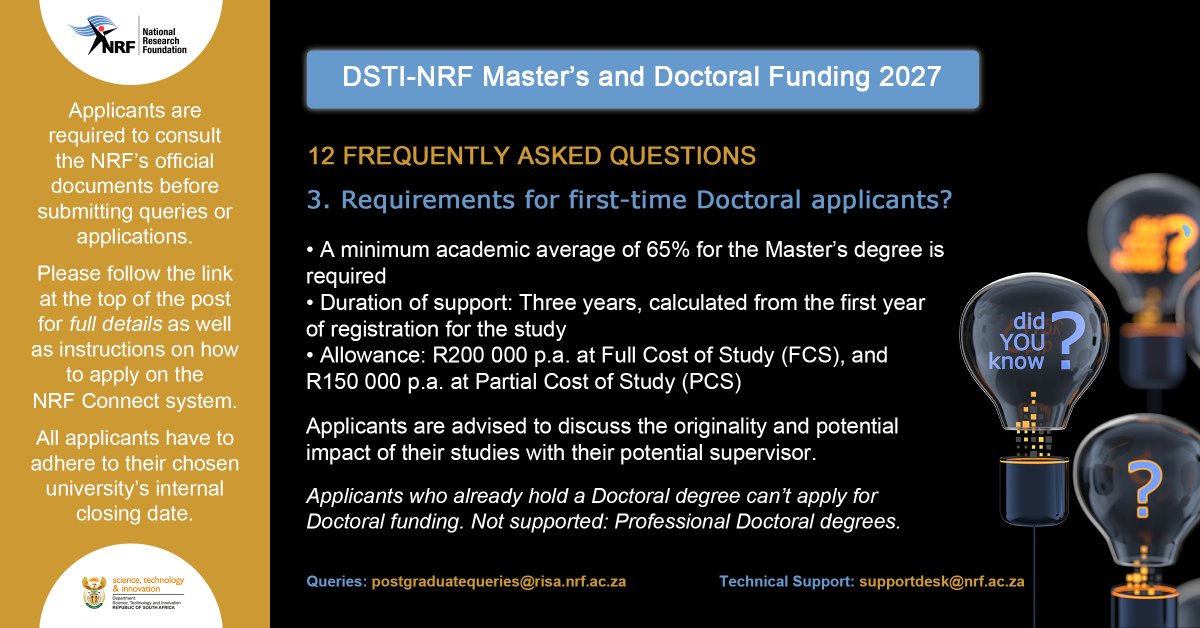
NRF Postgrad FAQ Series 3/12 | If you are interested in applying for Doctoral funding, below is some need-to-know information.
Please do not try to create an application or submit queries without reading all of the funding call documents in detail here: https://t.co/TGS6QwyZA0
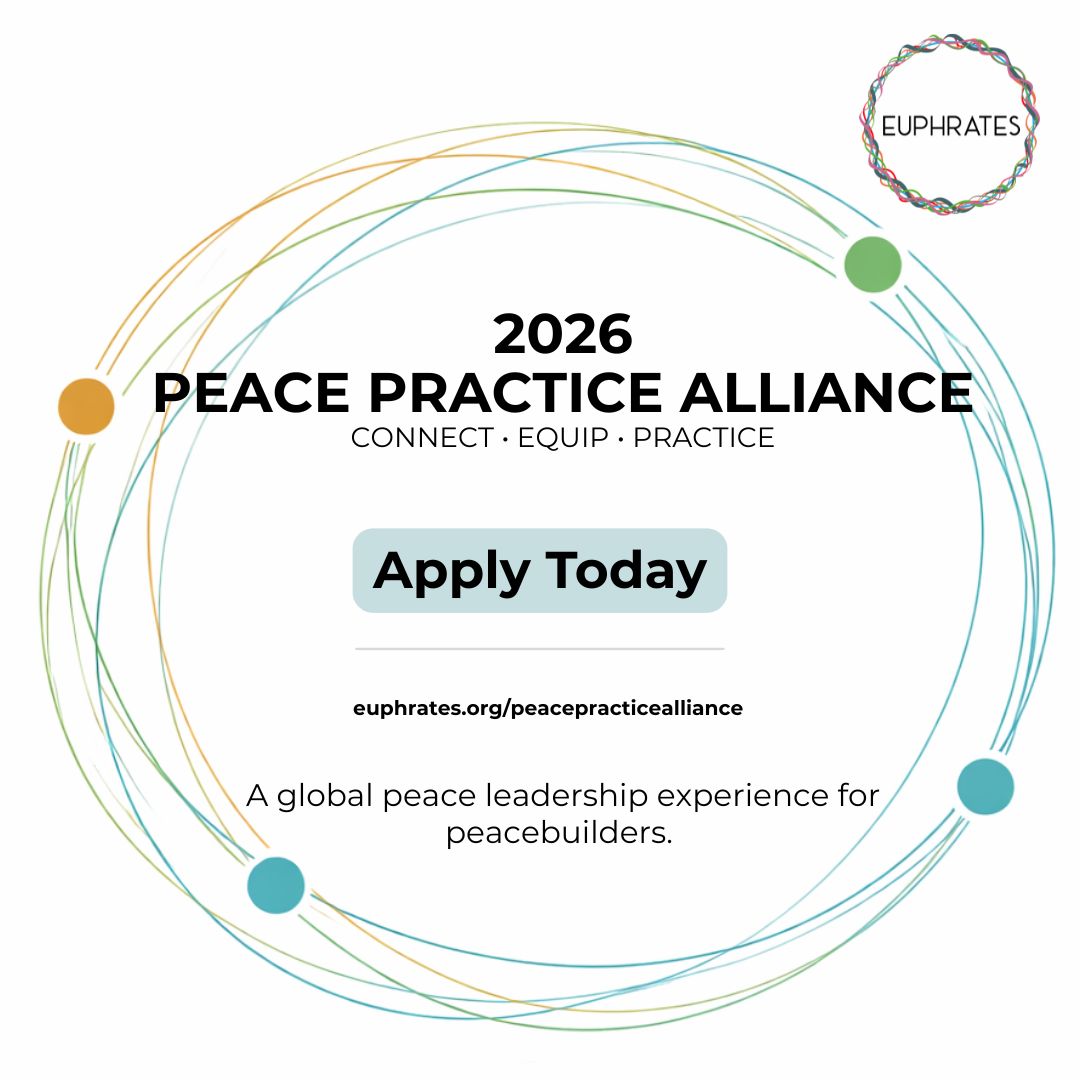
🚨 𝐀𝐩𝐩𝐥𝐢𝐜𝐚𝐭𝐢𝐨𝐧𝐬 𝐟𝐨𝐫 𝐭𝐡𝐞 𝟐𝟎𝟐𝟔 𝐏𝐞𝐚𝐜𝐞 𝐏𝐫𝐚𝐜𝐭𝐢𝐜𝐞 𝐀𝐥𝐥𝐢𝐚𝐧𝐜𝐞 (𝐏𝐏𝐀) 𝐚𝐫𝐞 𝐬𝐭𝐢𝐥𝐥 𝐨𝐩𝐞𝐧! 🌍✨
Are you passionate about peace leadership, dialogue, and creating positive change in your community?
🚨Attention Prospective Postgrad Students! 📢
Dreaming of a PhD or Masters in Multilevel Government? The Dullah Omar Institute has positions available for 2027, but the clock is ticking for funding!
🔗 Learn more and apply here: https://t.co/6jA6udwm9L
#IamUWC
Calling young researchers from Sub-Saharan Africa who are committed to improving education to apply for the Africa Fellows in Education Program (AFEP) 2026/2027
AFEP offers two-year, fully supported research fellowships for young African researchers to build expertise in education policy and evidence-based decision-making.
Details: https://t.co/EJDrpV5suK | Deadline: June 30
🚨 Applications for the 2026 edition of the #ADEL Program are now open!
📣 Are you a young leader aged 25-35 from #Africa or the wider #AtlanticBasin? Don’t miss one of our flagship initiatives: the Atlantic Dialogues Emerging Leaders Program!
⏳ Deadline: June 14
📍 The @ADEL_PCNS program will take place in #Rabat, #Morocco, from December 6-12, 2026.
🔗 Apply now: https://t.co/Z3isP9bBfx
#ADEL2026 #AD2026
‼️ CALL FOR PAPERS ‼️
3rd Annual Interdisciplinary Conference on the Commonwealth of Nations, St Mary’s University, Twickenham, UK, Friday 27 November 2026
Theme: The Commonwealth and Geopolitics
Abstract deadline: 1 July 2026
In recent years there have been an increasing number of significant challenges to the post-WWII rules-based world order: from the continued erosion of multilateralism, the unravelling of the UN, the upending of the international developmental model, increasing defiance of international law, contraction of free trade, constriction of freedom of navigation, the slide towards authoritarianism and the use of force to settle disputes in international politics.
What space and opportunities are there for the Commonwealth, a self-declared values-based association, when confronted by such fragmentation of the broader international system? When the greatest dangers to international peace and security appear to come from great powers, what tangible benefits can a highly diverse association offer its middle power members and the majority of small and Small Island Developing States?
Full details here:
https://t.co/VZWC49LcvZ
#Commonwealth #InternationalLaw #UN #FreeTrade #Multilateralism @YourStMarys Twickenham @CWRoundTable
🚨 Call for Volunteers - #APSACO2026
📣 Looking to gain hands-on experience at a high-level conference on Africa’s #peace and #security challenges? Join the 10th edition of the African Peace and Security Annual Conference (#APSACO2026), taking place in Rabat from June 11-12, 2026.
🔎 Organized by the Policy Center for the New South, APSACO 2026 will be held under the theme: “A Decade in Review: #Africa’s evolving security landscape.” The conference will bring together experts, policymakers, academics, and practitioners to discuss the transformations shaping Africa’s peace and security environment over the past decade.
🎓 Open to highly motivated students and young professionals
🗣️ Languages: English required, French & Arabic are assets
📍 Location: Rabat, Morocco
🗓️ Application deadline: May 17, 2026
🔗Apply here: https://t.co/JdGuH2HIkp
*PSA ECN Annual Conference*
Reshaping #PoliticalStudies, 7 July 2026, Online
Call for Papers
Inviting abstracts from international doctoral students & early career researchers
Deadline: 7 June 2026
https://t.co/ax8KjUTulV
45 days. Rome is calling. The Pontifical Gregorian University, one of the world's leading centers of Catholic intellectual life, will host a most important global Safeguarding conversation of 2026.
📅 June 16–19 | Rome
📩 Register: [email protected]#ISC2026#Safeguarding