“A crooked tree lives its own life, but a straight tree is turned into wood.”
- Chinese Proverb
The idea behind this proverb comes most clearly from the writings of Zhuangzi, one of the central thinkers of Daoism in the 4th century BCE.
In the Zhuangzi, a famous story tells of a large, twisted tree that carpenters ignore because its wood is unsuitable for construction. Precisely because it is considered “useless,” the tree is never cut down and survives to live out its natural life.
Zhuangzi uses the tree as a metaphor for human life. In Daoist thought, being “useful” by conventional standards can make a person vulnerable to exploitation, control, and exhaustion. Those who are unconventional, overlooked, or unwilling to fit society’s expectations may instead preserve their freedom and live on their own terms.
This from Fauci is infuriating. If he had these concerns about the second dose potentially causing fetal abnormalities or miscarriage, the duty of a public health official is to inform the public.
This instantly reminds me of a mother in Gaza who had to take 580 Heparin injections & went through hell to conceive a child via IVF, only for Israel to murder her son
She clutched to his lifeless body while shaking in terror & kept saying "forgive me son"
Anyone who had IVF would understand the huge pain involved in the process. Israel bombed Gaza's fertility clinics, burning thousands of embryos.
This is actually crazy.
Jewish Michigan State Senator Jeremy Moss got caught on tape admitting his real loyalty is to Israel, not the United States.
And the wildest part?
He just won.
So they banned Chinese electric vehicles in USA
But they allowed Waymo to import them and use their cheaper electric cars for an exorbitant taxi service meanwhile the Americans don’t get to buy cheaper electric vehicles
Peak capitalism
I was a 911 dispatcher for 11 years and this is the worst idea you could possibly think of. You have scenarios where the person can’t speak well either language barriers, injuries or if they’re in a domestic situation and they pretend to call for pizza or something you need a person. You have to be able to determine how someone feels or pick up on what they aren’t saying or how they’re saying things. Same goes for open lines and hang ups. A real person needs to answer the phone not only to ensure the correct response is sent to the right place but to offer piece of mind to the caller and makes them feel safer. Situations where I had to give CPR instructions to a mother and father who’s baby wasn’t breathing was a constant occurrence and you have to be able to calm people down, an AI is not doing that ever. Same goes for dispatching calls, AI cannot do that, in theory it sounds ok for that portion but you have to acknowledge what resources are on hand, where people are, GPS isn’t always accurate so when we started using systems to automatically reroute units who were flagged as “closer” they usually weren’t. But a real person who lives in that county and knows the area, where the stations are, who’s in a move up or coverage or areas that are blocked off due to events that aren’t always in our mapping systems. The list goes on.
Terrible idea
1903 - THE MATCH GIRLS WITH ROTTING JAWS, LONDON 🇬🇧
Look at the young women's faces. Their jaws are swollen, rotting, glowing in the dark. They are teenagers — 14, 15, 16 years old. This disease was called "Phossy Jaw."
Their job was dipping matches into white phosphorus. White phosphorus is poison. Every day they breathed it. First their teeth fell out. Then their gums turned green and black. Then their entire jawbone rotted and had to be cut out by a doctor with no painkiller. Some died screaming.
The factory owners knew. They knew since 1880 that white phosphorus kills. But it was cheap. Safer red phosphorus cost 3 times more. So they kept using white.
These girls worked 14 hours, 6 days a week, for 4 shillings. If they talked, they were fined. If they dropped a match, they were beaten. Their faces glowed at night from the phosphorus — they called them "ghosts" on the streets of London.
In 1888, 1,400 of them went on strike. All teenagers. Led by a 16-year-old girl named Sarah Chapman. They marched to Parliament with their swollen faces and said: "We would rather starve than rot."
London was shocked. And finally, in 1908, Britain banned white phosphorus — because of these girls.
This was not medieval times. This was 1903 in London, the richest empire on earth.
#drthehistories
If someone made this exact same statement -- but replaced "Muslim" with "Jew" -- their career would not only be instantly and permanently destroyed, but their families, banks, communities and employers would be relentlessly hounded until they were denounced, disowned and banned.
What barbarians/government school victims Americans still are 8 decades later.
Every year I post Ike, McArthur, Leahy, LeMay, Macnamara, Hoover, Arnold, Nimitz, Nitze, etc. etc., saying it was wrong/unnecessary to nuke Japan.
And every year the comments are all, "Nu-uh!"
America is a beautiful melting pot of monarchist Iranians, Shen Yun Chinese, Orange County Vietnamese, White Russians, Cuban gusanos, Miami Venezuelans, Afrikaners, Eduardo Bolsonaro. A rainbow of people who had their servants taken away.
Trump: When I see polls on the economy, I should have 150% approval, not 100%. This is the golden age of America. And I think people are starting to see it
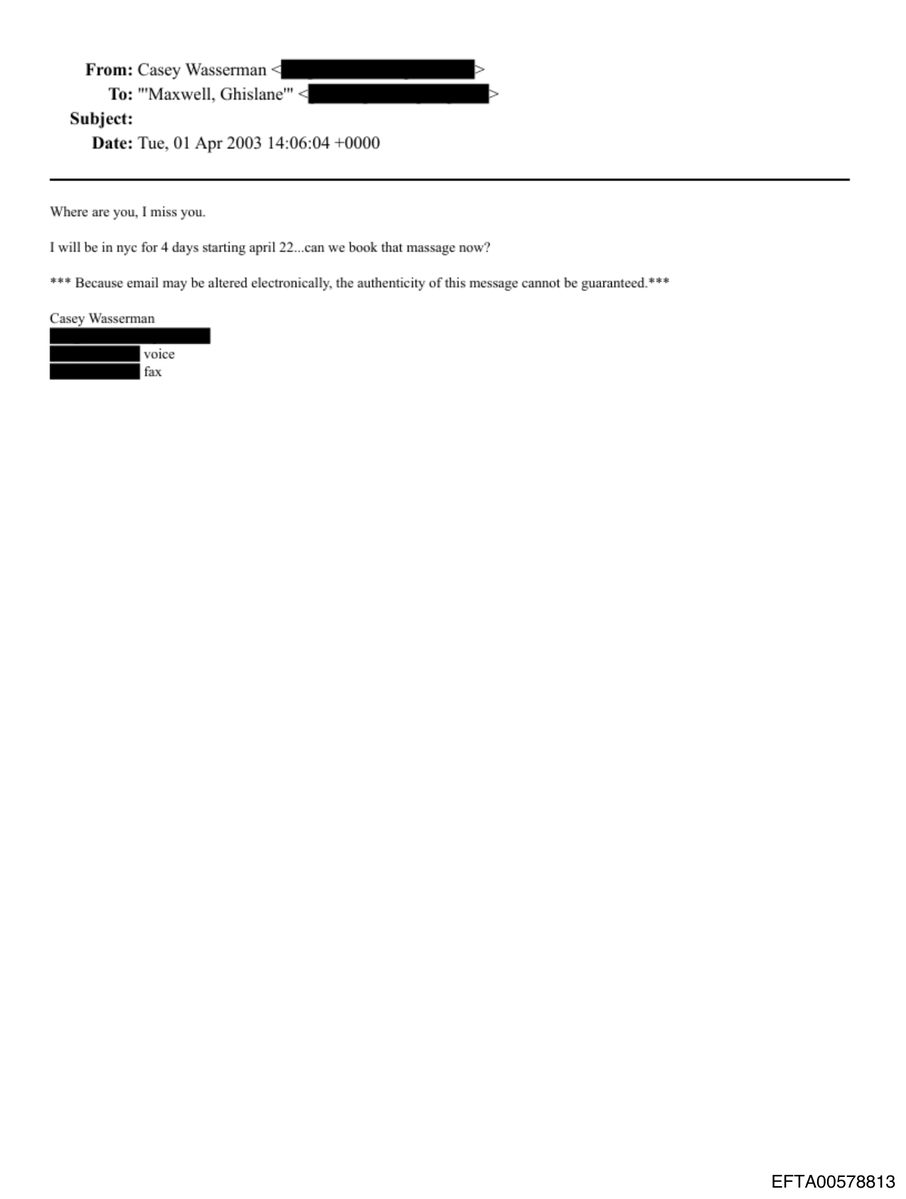
Casey Wasserman chairs the 2028 Los Angeles Olympics.
April 1, 2003. He emailed Ghislaine Maxwell: "Where are you, I miss you." Then he asked her to book him a massage for his four days in New York.
The mayor asked him to resign. He refused.
Bookmark this post a share it everywhere when JD Vance runs for president and spends weeks to months trying to convince us he was on the opposite side of Trump on this failure of a war with Iran.
NEW: An 82-year-old American has been left bleeding from his head after Israeli soldiers flashbanged him in the village of Turmusayya, in the West Bank.
Soldiers then confiscated bystander phones & deleted footage of the incident.
Trump just welcomed Netanyahu for the 8th time.
Who Opposed Nuking Japan?
“The Japanese were ready to surrender and it wasn’t necessary to hit them with that awful thing.” —Gen. Dwight D. Eisenhower
“In 1945 Secretary of War Stimson, visiting my headquarters in Germany, informed me that our government was preparing to drop an atomic bomb on Japan. I was one of those who felt that there were a number of cogent reasons to question the wisdom of such an act. … The Secretary, upon giving me the news of the successful bomb test in New Mexico, and of the plan for using it, asked for my reaction, apparently expecting a vigorous assent. During his recitation of the relevant facts, I had been conscious of a feeling of depression and so I voiced to him my grave misgivings, first on the basis of my belief that Japan was already defeated and that dropping the bomb was completely unnecessary, and secondly because I thought that our country should avoid shocking world opinion by the use of a weapon whose employment was, I thought, no longer mandatory as a measure to save American lives. It was my belief that Japan was, at that very moment, seeking some way to surrender with a minimum loss of ‘face.’ The Secretary was deeply perturbed by my attitude.” —Gen. Dwight D. Eisenhower
“The use of the atomic bomb, with its indiscriminate killing of women and children, revolts my soul.” —Herbert Hoover
“[T]he Japanese were prepared to negotiate all the way from February 1945 … up to and before the time the atomic bombs were dropped; … [I]f such leads had been followed up, there would have been no occasion to drop the bombs.” —Herber Hoover
“I told [Gen. Douglas] MacArthur of my memorandum of mid-May 1945 to Truman, that peace could be had with Japan by which our major objectives would be accomplished. MacArthur said that was correct and that we would have avoided all of the losses, the Atomic bomb, and the entry of Russia into Manchuria.” —Herbert Hoover
“MacArthur’s views about the decision to drop the atomic bomb on Hiroshima and Nagasaki were starkly different from what the general public supposed. When I asked General MacArthur about the decision to drop the bomb, I was surprised to learn he had not even been consulted. What, I asked, would his advice have been? He replied that he saw no military justification for the dropping of the bomb. The war might have ended weeks earlier, he said, if the United States had agreed, as it later did anyway, to the retention of the institution of the emperor.” — Norman Cousins
“General MacArthur definitely is appalled and depressed by this Frankenstein monster. I had a long talk with him today, necessitated by the impending trip to Okinawa. He wants time to think the thing out, so he has postponed the trip to some future date to be decided later.” — Gen. Douglas MacArthur’s pilot, Weldon E. Rhoades
“[General Douglas] MacArthur once spoke to me very eloquently about it, pacing the floor of his apartment in the Waldorf. He thought it a tragedy that the bomb was ever exploded. MacArthur believed that the same restrictions ought to apply to atomic weapons as to conventional weapons, that the military objective should always be limited damage to noncombatants…MacArthur, you see, was a soldier. He believed in using force only against military targets, and that is why the nuclear thing turned him off…” — Richard Nixon
“The Japanese were ready for peace, and they already had approached the Russians and the Swiss. And that suggestion of giving a warning of the atomic bomb was a face-saving proposition for them, and one that they could have readily accepted. In my opinion, the Japanese war was really won before we ever used the atom bomb.” —Under Secretary of the Navy, Ralph Bird
“The Japanese position was hopeless even before the first atomic bomb fell, because the Japanese had lost control of their own air.” — General “Hap” Arnold
“[Gen.] Arnold’s view was that the dropping of the atomic bomb was totally unnecessary. He said he knew the Japanese wanted peace. There were political implications in the decision, and Arnold did not feel it was the military’s job to question them. … [Arnold’s view was]: when the question comes up of whether we use the atomic bomb or not, my view is that the Air Force will not oppose the use of the bomb, and they will deliver it effectively if the Commander-in-Chief decides to use it. But it is not necessary to use it in order to conquer the Japanese without the necessity of a land invasion.” — General Ira Eaker, Deputy Commander of U.S. Army Air Forces
“The Japanese had, in fact, already sued for peace. The atomic bomb played no decisive part, from a purely military point of view, in the defeat of Japan.” — Fleet Admiral Chester W. Nimitz, Commander in Chief of the U.S. Pacific Fleet
“The Japanese had, in fact, already sued for peace before the atomic age was announced to the world with the destruction of Hiroshima and before the Russian entry into the war.” — Adm. Nimitz
“The use of this barbarous weapon at Hiroshima and Nagasaki was of no material assistance in our war against Japan. The Japanese were already defeated and ready to surrender because of the effective sea blockade and the successful bombing with conventional weapons … The lethal possibilities of atomic warfare in the future are frightening. My own feeling was that in being the first to use it, we had adopted an ethical standard common to the barbarians of the Dark Ages. I was not taught to make war in that fashion, and wars cannot be won by destroying women and children.” —Fleet Admiral William D. Leahy, Chief of Staff to President Truman
“Truman told me it was agreed they would use it, after military men’s statements that it would save many, many American lives, by shortening the war, only to hit military objectives. Of course, then they went ahead and killed as many women and children as they could, which was just what they wanted all the time.” —Adm. Leahy
“The war would have been over in two weeks without the Russians entering and without the atomic bomb. … The atomic bomb had nothing to do with the end of the war at all.” — Major General Curtis LeMay, XXI Bomber Command
“[LeMay said] if we’d lost the war, we’d all have been prosecuted as war criminals. And I think he’s right. He, and I’d say I, were behaving as war criminals. LeMay recognized that what he was doing would be thought immoral if his side had lost. But what makes it immoral if you lose and not immoral if you win?” —Robert MacNamara
“The first atomic bomb was an unnecessary experiment … It was a mistake to ever drop it … [the scientists] had this toy and they wanted to try it out, so they dropped it.” — Fleet Admiral William Halsey Jr.
“I concluded that even without the atomic bomb, Japan was likely to surrender in a matter of months. My own view was that Japan would capitulate by November 1945. Even without the attacks on Hiroshima and Nagasaki, it seemed highly unlikely, given what we found to have been the mood of the Japanese government, that a U.S. invasion of the islands scheduled for 1 November 1945 would have been necessary.” — Paul Nitze, director and then Vice Chairman of the Strategic Bombing Survey
“[E]ven without the atomic bombing attacks, air supremacy over Japan could have exerted sufficient pressure to bring about unconditional surrender and obviate the need for invasion. Based on a detailed investigation of all the facts, and supported by the testimony of the surviving Japanese leaders involved, it is the Survey’s opinion that certainly prior to 31 December 1945, and in all probability prior to 1 November 1945, Japan would have surrendered even if the atomic bombs had not been dropped, even if Russia had not entered the war, and even if no invasion had been planned or contemplated.” — U.S. Strategic Bombing Survey, 1946
“Just when the Japanese were ready to capitulate, we went ahead and introduced to the world the most devastating weapon it had ever seen and, in effect, gave the go-ahead to Russia to swarm over Eastern Asia. Washington decided it was time to use the A-bomb. I submit that it was the wrong decision. It was wrong on strategic grounds. And it was wrong on humanitarian grounds.” — Ellis Zacharias Deputy Director of the Office of Naval Intelligence
“When we didn’t need to do it, and we knew we didn’t need to do it, and they knew that we knew we didn’t need to do it, we used them as an experiment for two atomic bombs. Many other high-level military officers concurred.” — Brigadier General Carter Clarke, the Military Intelligence officer in charge of preparing summaries of intercepted Japanese cables for President Truman and his advisors
“The commander in chief of the U.S. Fleet and Chief of Naval Operations, Ernest J. King, stated that the naval blockade and prior bombing of Japan in March of 1945, had rendered the Japanese helpless and that the use of the atomic bomb was both unnecessary and immoral. — Carter Clarke
“I proposed to Secretary Forrestal that the weapon should be demonstrated before it was used… the war was very nearly over. The Japanese were nearly ready to capitulate… My proposal… was that the weapon should be demonstrated over… a large forest of cryptomeria trees not far from Tokyo… Would lay the trees out in windrows from the center of the explosion in all directions as though they were matchsticks, and, of course, set them afire in the center. It seemed to me that a demonstration of this sort would prove to the Japanese that we could destroy any of their cities at will… Secretary Forrestal agreed wholeheartedly with the recommendation… It seemed to me that such a weapon was not necessary to bring the war to a successful conclusion, that once used it would find its way into the armaments of the world.” — Special Assistant to the Secretary of the Navy Lewis Strauss
“In the light of available evidence I myself and others felt that if such a categorical statement about the retention of the dynasty had been issued in May 1945, the surrender-minded elements in the Japanese government might well have been afforded by such a statement a valid reason and the necessary strength to come to an early clear cut decision. If surrender could have been brought about in May 1945, or even in June, or July, before the entrance of Soviet Russia into the Pacific war and the use of the atomic bomb, the world would have been the gainer.” — Under Secretary of State Joseph Grew
And for what it’s worth, then-Army Chief George Marshall wanted only to hit military facilities with it, not cities.
“It will not be long before we are reduced to savagery. We are the barbarians within our own empire.” — Russell Kirk, author of The Conservative Mind
“This doctrine of progress is a most interesting instance of the blind and foolish confidence of Americans in the God Progress. … Thus far, apparently, it has been progress toward annihilation, an end to be accomplished, perhaps, by the improved atomic bomb? We have dealt more death and destruction in the space of ten years than the men of the Middle Ages, with their Devil, were able to accomplish in a thousand.” —Russell Kirk
“The atomic bomb was a final blow to the code of humanity. I cannot help thinking that we will suffer retribution for this. For a long time to come I believe my chief interest is going to be the restoration of civilization, of the distinctions that make life intelligible.” — Richard Weaver, author of Ideas Have Consequences








![scotthortonshow's tweet photo. Who Opposed Nuking Japan?
“The Japanese were ready to surrender and it wasn’t necessary to hit them with that awful thing.” —Gen. Dwight D. Eisenhower
“In 1945 Secretary of War Stimson, visiting my headquarters in Germany, informed me that our government was preparing to drop an atomic bomb on Japan. I was one of those who felt that there were a number of cogent reasons to question the wisdom of such an act. … The Secretary, upon giving me the news of the successful bomb test in New Mexico, and of the plan for using it, asked for my reaction, apparently expecting a vigorous assent. During his recitation of the relevant facts, I had been conscious of a feeling of depression and so I voiced to him my grave misgivings, first on the basis of my belief that Japan was already defeated and that dropping the bomb was completely unnecessary, and secondly because I thought that our country should avoid shocking world opinion by the use of a weapon whose employment was, I thought, no longer mandatory as a measure to save American lives. It was my belief that Japan was, at that very moment, seeking some way to surrender with a minimum loss of ‘face.’ The Secretary was deeply perturbed by my attitude.” —Gen. Dwight D. Eisenhower
“The use of the atomic bomb, with its indiscriminate killing of women and children, revolts my soul.” —Herbert Hoover
“[T]he Japanese were prepared to negotiate all the way from February 1945 … up to and before the time the atomic bombs were dropped; … [I]f such leads had been followed up, there would have been no occasion to drop the bombs.” —Herber Hoover
“I told [Gen. Douglas] MacArthur of my memorandum of mid-May 1945 to Truman, that peace could be had with Japan by which our major objectives would be accomplished. MacArthur said that was correct and that we would have avoided all of the losses, the Atomic bomb, and the entry of Russia into Manchuria.” —Herbert Hoover
“MacArthur’s views about the decision to drop the atomic bomb on Hiroshima and Nagasaki were starkly different from what the general public supposed. When I asked General MacArthur about the decision to drop the bomb, I was surprised to learn he had not even been consulted. What, I asked, would his advice have been? He replied that he saw no military justification for the dropping of the bomb. The war might have ended weeks earlier, he said, if the United States had agreed, as it later did anyway, to the retention of the institution of the emperor.” — Norman Cousins
“General MacArthur definitely is appalled and depressed by this Frankenstein monster. I had a long talk with him today, necessitated by the impending trip to Okinawa. He wants time to think the thing out, so he has postponed the trip to some future date to be decided later.” — Gen. Douglas MacArthur’s pilot, Weldon E. Rhoades
“[General Douglas] MacArthur once spoke to me very eloquently about it, pacing the floor of his apartment in the Waldorf. He thought it a tragedy that the bomb was ever exploded. MacArthur believed that the same restrictions ought to apply to atomic weapons as to conventional weapons, that the military objective should always be limited damage to noncombatants…MacArthur, you see, was a soldier. He believed in using force only against military targets, and that is why the nuclear thing turned him off…” — Richard Nixon
“The Japanese were ready for peace, and they already had approached the Russians and the Swiss. And that suggestion of giving a warning of the atomic bomb was a face-saving proposition for them, and one that they could have readily accepted. In my opinion, the Japanese war was really won before we ever used the atom bomb.” —Under Secretary of the Navy, Ralph Bird
“The Japanese position was hopeless even before the first atomic bomb fell, because the Japanese had lost control of their own air.” — General “Hap” Arnold
“[Gen.] Arnold’s view was that the dropping of the atomic bomb was totally unnecessary. He said he knew the Japanese wanted peace. There were political implications in the decision, and Arnold did not feel it was the military’s job to question them. … [Arnold’s view was]: when the question comes up of whether we use the atomic bomb or not, my view is that the Air Force will not oppose the use of the bomb, and they will deliver it effectively if the Commander-in-Chief decides to use it. But it is not necessary to use it in order to conquer the Japanese without the necessity of a land invasion.” — General Ira Eaker, Deputy Commander of U.S. Army Air Forces
“The Japanese had, in fact, already sued for peace. The atomic bomb played no decisive part, from a purely military point of view, in the defeat of Japan.” — Fleet Admiral Chester W. Nimitz, Commander in Chief of the U.S. Pacific Fleet
“The Japanese had, in fact, already sued for peace before the atomic age was announced to the world with the destruction of Hiroshima and before the Russian entry into the war.” — Adm. Nimitz
“The use of this barbarous weapon at Hiroshima and Nagasaki was of no material assistance in our war against Japan. The Japanese were already defeated and ready to surrender because of the effective sea blockade and the successful bombing with conventional weapons … The lethal possibilities of atomic warfare in the future are frightening. My own feeling was that in being the first to use it, we had adopted an ethical standard common to the barbarians of the Dark Ages. I was not taught to make war in that fashion, and wars cannot be won by destroying women and children.” —Fleet Admiral William D. Leahy, Chief of Staff to President Truman
“Truman told me it was agreed they would use it, after military men’s statements that it would save many, many American lives, by shortening the war, only to hit military objectives. Of course, then they went ahead and killed as many women and children as they could, which was just what they wanted all the time.” —Adm. Leahy
“The war would have been over in two weeks without the Russians entering and without the atomic bomb. … The atomic bomb had nothing to do with the end of the war at all.” — Major General Curtis LeMay, XXI Bomber Command
“[LeMay said] if we’d lost the war, we’d all have been prosecuted as war criminals. And I think he’s right. He, and I’d say I, were behaving as war criminals. LeMay recognized that what he was doing would be thought immoral if his side had lost. But what makes it immoral if you lose and not immoral if you win?” —Robert MacNamara
“The first atomic bomb was an unnecessary experiment … It was a mistake to ever drop it … [the scientists] had this toy and they wanted to try it out, so they dropped it.” — Fleet Admiral William Halsey Jr.
“I concluded that even without the atomic bomb, Japan was likely to surrender in a matter of months. My own view was that Japan would capitulate by November 1945. Even without the attacks on Hiroshima and Nagasaki, it seemed highly unlikely, given what we found to have been the mood of the Japanese government, that a U.S. invasion of the islands scheduled for 1 November 1945 would have been necessary.” — Paul Nitze, director and then Vice Chairman of the Strategic Bombing Survey
“[E]ven without the atomic bombing attacks, air supremacy over Japan could have exerted sufficient pressure to bring about unconditional surrender and obviate the need for invasion. Based on a detailed investigation of all the facts, and supported by the testimony of the surviving Japanese leaders involved, it is the Survey’s opinion that certainly prior to 31 December 1945, and in all probability prior to 1 November 1945, Japan would have surrendered even if the atomic bombs had not been dropped, even if Russia had not entered the war, and even if no invasion had been planned or contemplated.” — U.S. Strategic Bombing Survey, 1946
“Just when the Japanese were ready to capitulate, we went ahead and introduced to the world the most devastating weapon it had ever seen and, in effect, gave the go-ahead to Russia to swarm over Eastern Asia. Washington decided it was time to use the A-bomb. I submit that it was the wrong decision. It was wrong on strategic grounds. And it was wrong on humanitarian grounds.” — Ellis Zacharias Deputy Director of the Office of Naval Intelligence
“When we didn’t need to do it, and we knew we didn’t need to do it, and they knew that we knew we didn’t need to do it, we used them as an experiment for two atomic bombs. Many other high-level military officers concurred.” — Brigadier General Carter Clarke, the Military Intelligence officer in charge of preparing summaries of intercepted Japanese cables for President Truman and his advisors
“The commander in chief of the U.S. Fleet and Chief of Naval Operations, Ernest J. King, stated that the naval blockade and prior bombing of Japan in March of 1945, had rendered the Japanese helpless and that the use of the atomic bomb was both unnecessary and immoral. — Carter Clarke
“I proposed to Secretary Forrestal that the weapon should be demonstrated before it was used… the war was very nearly over. The Japanese were nearly ready to capitulate… My proposal… was that the weapon should be demonstrated over… a large forest of cryptomeria trees not far from Tokyo… Would lay the trees out in windrows from the center of the explosion in all directions as though they were matchsticks, and, of course, set them afire in the center. It seemed to me that a demonstration of this sort would prove to the Japanese that we could destroy any of their cities at will… Secretary Forrestal agreed wholeheartedly with the recommendation… It seemed to me that such a weapon was not necessary to bring the war to a successful conclusion, that once used it would find its way into the armaments of the world.” — Special Assistant to the Secretary of the Navy Lewis Strauss
“In the light of available evidence I myself and others felt that if such a categorical statement about the retention of the dynasty had been issued in May 1945, the surrender-minded elements in the Japanese government might well have been afforded by such a statement a valid reason and the necessary strength to come to an early clear cut decision. If surrender could have been brought about in May 1945, or even in June, or July, before the entrance of Soviet Russia into the Pacific war and the use of the atomic bomb, the world would have been the gainer.” — Under Secretary of State Joseph Grew
And for what it’s worth, then-Army Chief George Marshall wanted only to hit military facilities with it, not cities.
“It will not be long before we are reduced to savagery. We are the barbarians within our own empire.” — Russell Kirk, author of The Conservative Mind
“This doctrine of progress is a most interesting instance of the blind and foolish confidence of Americans in the God Progress. … Thus far, apparently, it has been progress toward annihilation, an end to be accomplished, perhaps, by the improved atomic bomb? We have dealt more death and destruction in the space of ten years than the men of the Middle Ages, with their Devil, were able to accomplish in a thousand.” —Russell Kirk
“The atomic bomb was a final blow to the code of humanity. I cannot help thinking that we will suffer retribution for this. For a long time to come I believe my chief interest is going to be the restoration of civilization, of the distinctions that make life intelligible.” — Richard Weaver, author of Ideas Have Consequences](https://pbs.twimg.com/media/HPDPksWWQAE3eOs.jpg)





