global brand & comms | @tiktokcomms • @spotify • @netflix • @airbnb • @uber | podcaster | one curious cat with a short attention span | musings here are my own
AI companies are racing to build superintelligence...without knowing how to control it.
Let's take our future back from Big Tech.
Join the call for a ban on superintelligence, until it can be done safely with public buy-in.
#KeepTheFutureHuman https://t.co/kZej3zyPpL
I read Ogilvy on Advertising for the 3rd time
A list of ideas from the book:
1. The beginning of greatness is to be different and the beginning of failure is to be the same.
2. Down with committees. Committees can criticize, but they cannot create.
3. Search the parks in all your cities; you’ll find no statues of committees.
4. Advertising which promises no benefit to the consumer does not sell. (That is the most important sentence in this book.)
5. The more you tell the more you sell. Long copy sells more.
6. Long copy conveys the impression that you have something important to say, whether people read the copy or not.
7. You aren’t advertising to a standing army; you are advertising to a moving parade.
8. Include the price of your products in your ads.
9. Consider how you want to position your product. Positioning answers (1) what the product does and (2) who it is for.
10. Have humility in the presence of a good idea.
11. At the beginning good ideas are fragile. Nuture — don’t kill.
12. Make the product the hero.
13. Make the product different.
14. If you and your competitors all make excellent products, don’t try to imply that your product is better. Just say what’s good about your product – and do a clearer, more honest, more informative job of saying it.
15. Repeat your winners. If you write a good advertisement repeat it until it stops selling. (Most campaigns are abandoned far too early)
16. The good ones know more. I asked an indifferent copywriter what books he had read about advertising. He told me that he had not read any. This willful refusal to learn the rudiments of the craft is all too common. A blind pig can sometimes find truffles, but it helps to know that they are found in oak forests.
17. It is not uncommon for a change in headlines to multiply returns ten times over.
18. Poets see an ad as an end. Killers as a means to an end. If you are both killer and poet you get rich.
19. You are a human being writing to another human being. Neither of you is an institution. Be personal, direct and natural.
20. Friction polishes you.
21. Pressure refines you.
22. Write down your principles.
23. Don't put profit before service. (Money comes naturally as a result of service)
24. Focus on value not price.
25. Be upfront about your weaknesses. People will like you — and your product — more.
26. Five times as many people read the headlines as read the body copy. Unless your headline sells your product, you have wasted 90% of your money.
27. The headlines which work best are those which promise the reader a benefit – like a whiter wash, more miles per gallon, freedom from pimples, fewer cavities.
28. Do not address your readers as though they were gathered together in a stadium. When people read your copy, they are alone. Pretend you are writing each of them a letter on behalf of your client. One human being to another.
29. Your ads must be entertaining and informative. You can’t save souls in an empty church.
30. You cannot bore people into buying your product.
31. It pays to write short sentences and short paragraphs. Avoid difficult words.
32. Promise is the soul of an advertisement.
33. Don’t waste time on problem babies. Back your winners. Abandon your losers.
34. Concentrate your time, your brains, and your money on your successes.
35. Pricing is guesswork.
36. The higher you price your product the more desirable it becomes in the eyes of the consumer.
37. Advertising is a production cost, not a selling cost. It should not be cut back on when times are hard.
38. Study the history of your industry. Get to know the pioneers.
39. Advertising is salesmanship in print. If you can write copy that sells your product nothing else is needed.
40. Great achievements are generated in an atmosphere of dynamic tension.
41. Believe in the dogmatism of brevity. We are both in a hurry.
42. Human nature hasn’t changed for a billion years. It won’t even vary in the next billion years. Only the superficial things have changed. It is fashionable to talk about changing man. A communicator must be concerned with unchanging man.
43. Steep yourself in your subject, work like hell, and love, honor, and obey your hunches.
Being a lifelong learner isn’t about taking pride in your knowledge. It's about having the humility to know what you don’t know.
My top 23 insights from 2023 🧵
Let's scroll down memory lane with #YearOnTikTok! From chart-topping music to captivating effects to small business successes, we’ve had an incredible 2023, all thanks to YOU 🥳 Discover the year's most memorable trends, creators and moments with us 🫶 https://t.co/P8SrvbExBy
📣 From your For You page to the big stage 📣 catch your favorite TikTok artists, creators, and special guests at #TikTokInTheMix, our first-ever global live music experience 🤩🎤🎶Join us on Dec. 10 in Mesa, AZ, or LIVE on TikTok! Learn more and register: https://t.co/Dcn6zQYuKZ
Don’t focus on writing a book. Focus on writing a good sentence.
Don’t focus on getting healthy. Focus on cooking a healthy meal tonight.
Don't focus on reading a big book. Focus on finishing the next chapter.
No, our company is not like a family.
Stop telling me your company is like a family.
It’s not. When was the last time you fired someone from your family?
“Son, your mother and I have been talking, and we’ve decided to outsource ‘taking out the trash’. I’m afraid we’re going to have to let you go.”
At Netflix, for example, we never thought of ourselves as a family. We always considered ourselves more like a sports team. And not a Little League team, where everyone gets to play and at the end of the season everyone gets a trophy.
No, we were a professional team playing at the highest level, and my responsibility as manager wasn’t to make sure everyone got playing time. It was to make sure I put the best possible team on the field for every game. I did that because I owed that to the team owners. I owed it to the fans. And most importantly, I owed it to the other players.
I learned a long time ago that what the best players want is not just a friendly attitude in the locker room. They want to know that everyone excels at their position. They want to know that everyone will be trying as hard as they can. They want to win.
That’s why a manager’s job is not just to hire well and motivate your team to be the best they can be. It’s also to make sure that when someone isn’t holding their end, you’re the person who sits them down and explains why you’re sending them down to the minors.
This is especially hard in a startup, because in almost every case, the players you start with aren’t going to be the ones you finish with. At the beginning, you’re looking for generalists. Since you don’t yet know what they will need to be great at, you want people who are good at a lot of things. You want people who are comfortable with the fact that their job description is going to change weekly. You want people who are motivated by the adventure, rather than by stability.
That first team is going to give you everything they have. They’ll leave better paying jobs with great benefits to work for a fraction of their salary. They’ll work nights and weekends. They’ll do everything you ask—and then some.
So it’s especially brutal when your company is just starting to take off, and you have to sit someone down and tell them that they won’t be coming with you on the next stage of the journey. Or that you’re bringing in a more experienced executive over them.
That part is neither easy nor fun. But it’s the job. And if I can’t do that, I don’t deserve to be in my position either.
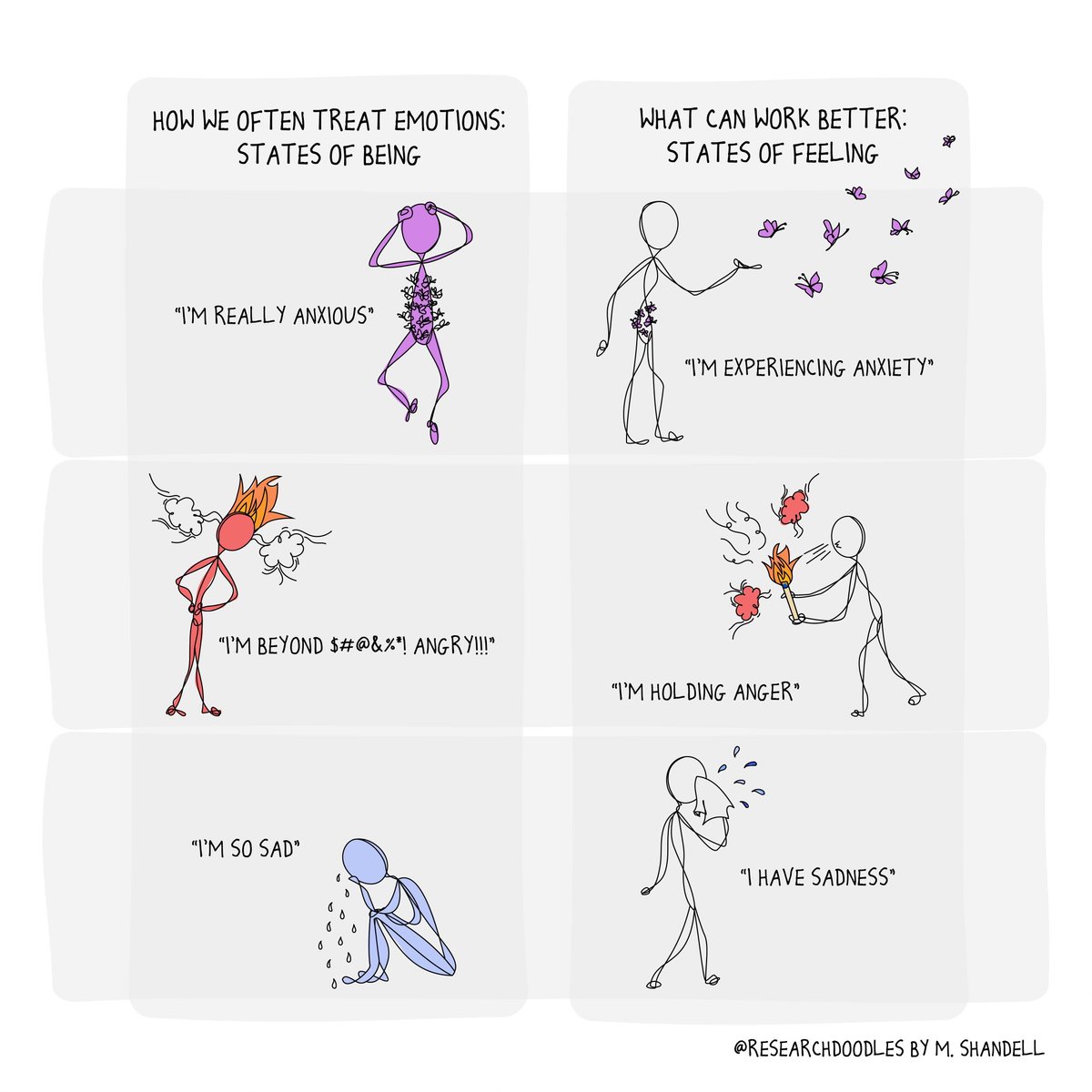
A key to regulating emotions is to treat them like visitors in your home.
"I'm angry" lets a feeling take permanent residence. "I'm hosting some anger today" is a reminder that not all guests are welcome.
Emotions may drop in unannounced, but we decide which ones get to stay.
The consistent person outperforms the intermittent person every time.
If you want to be consistent, you need strategies to keep you going when things get hard.
One of the best strategies to stay consistent is to tell yourself that you can quit tomorrow but not today.