Sat arvo in Newcastle, NSW. Hard-working teachers could be enjoying a relaxing afternoon at the beach/park/cafe.
This lot are here spending a day off, hungry to learn and improve at
#researchEdNewy.
Thks @DrKateBarton & @researchED_Aus
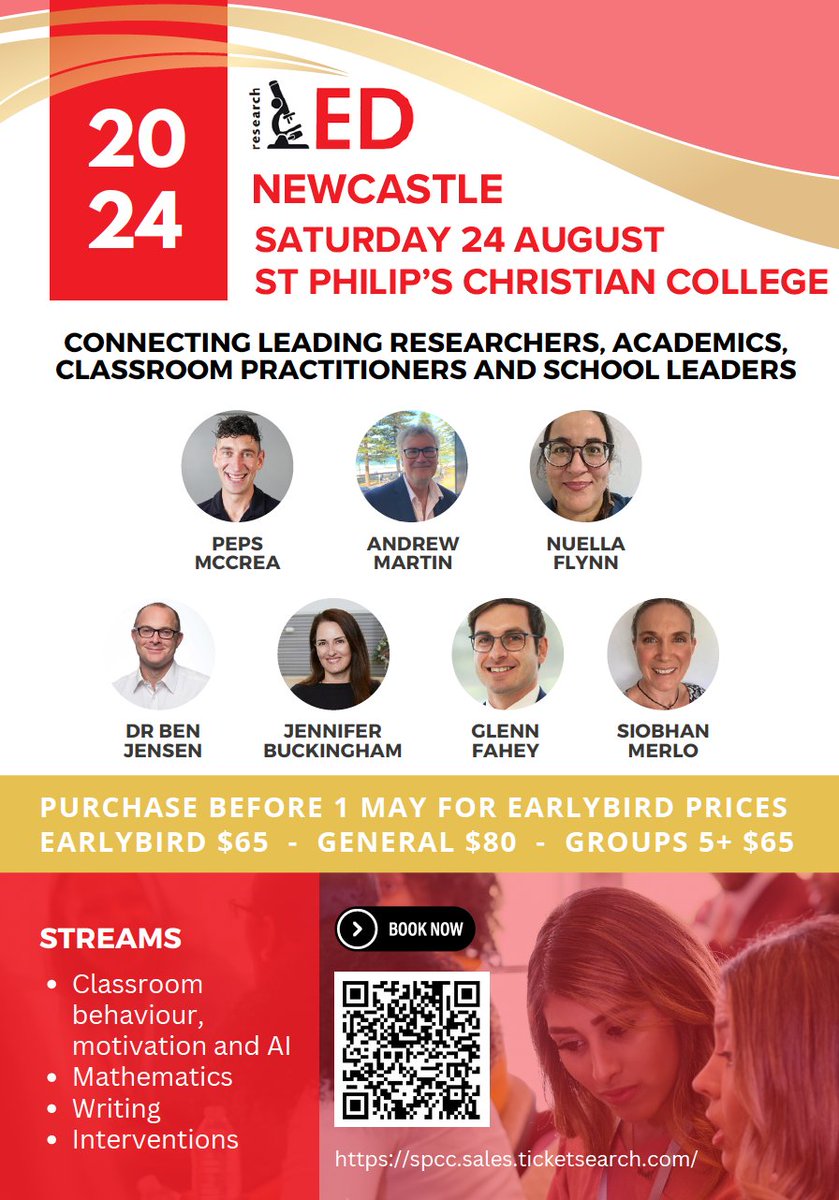
Woohoo, researchED Newcastle 24 August 2024 @researchED_Aus
26 exceptional educators and researchers join to share expertise and experiences in best educational practices. Check out abstracts here: https://t.co/vvTfzgiInp
It’s been fabulous to watch Charlestown South PS and other schools in the EAST Network go from strength to strength, demonstrating that explicit teaching is effective for all students. This approach is now being promoted in all NSW Public Schools. https://t.co/2DqzSylJg6
Can't wait for this! I'll be walking participants through standard algorithms (nowhere near as controversial as they might appear) and chatting about student motivation in maths. Really excited to connect with folks for a day of maths hosted by some incredible presenters.
I will die on this hill. Most professional learning programs pay little to no attention to teachers' current (usually routinised) practices. We need to talk much more openly about what we currently do, so that we can build manageable routes to improvement.
Education would be in a much better place if we stopped being distracted by singular flashy lessons and focused more on sequencing entire units & considering how units build on each other.
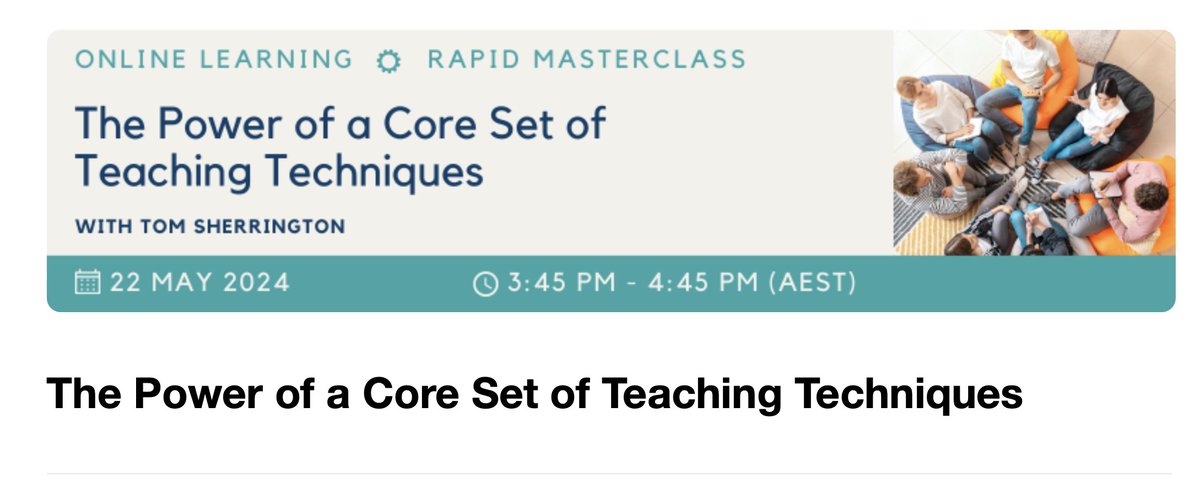
Hello Australia and SE Asia... Join me and @SimonBreakspear for webinar on May 22nd, 3.45pm AEST. Open to all; free to register and take part. Part of our ongoing exploration of professional learning cultures. https://t.co/KnSL0bdKTg
Sharing Best Practice 2024 Windsor/Hawkesbury replay now available. $25 inc GST. Proceeds from sales go to Strong Nation Community:
https://t.co/kS1oSFiztK
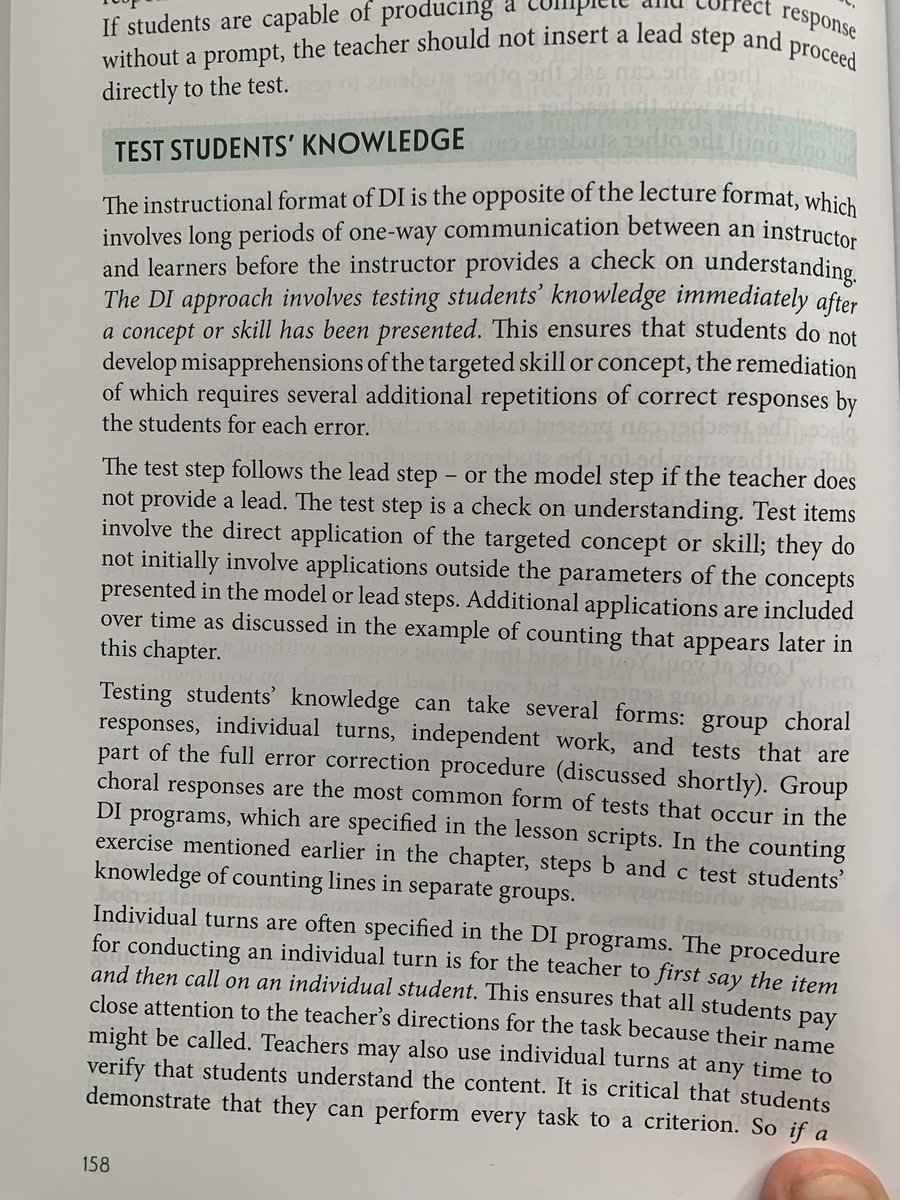
At the heart of the Direct Instruction model is checking for understanding which is what makes it a highly interactive way of teaching.
It will surprise many to read that DI is the “opposite of the lecture format.”
That time when @PepsMccrea talked about how interruptions to teaching leave a wake.
Catch Peps and others great speakers at #researchEDNewy in August https://t.co/m2XLjQZFot
https://t.co/02WCrDFSGo
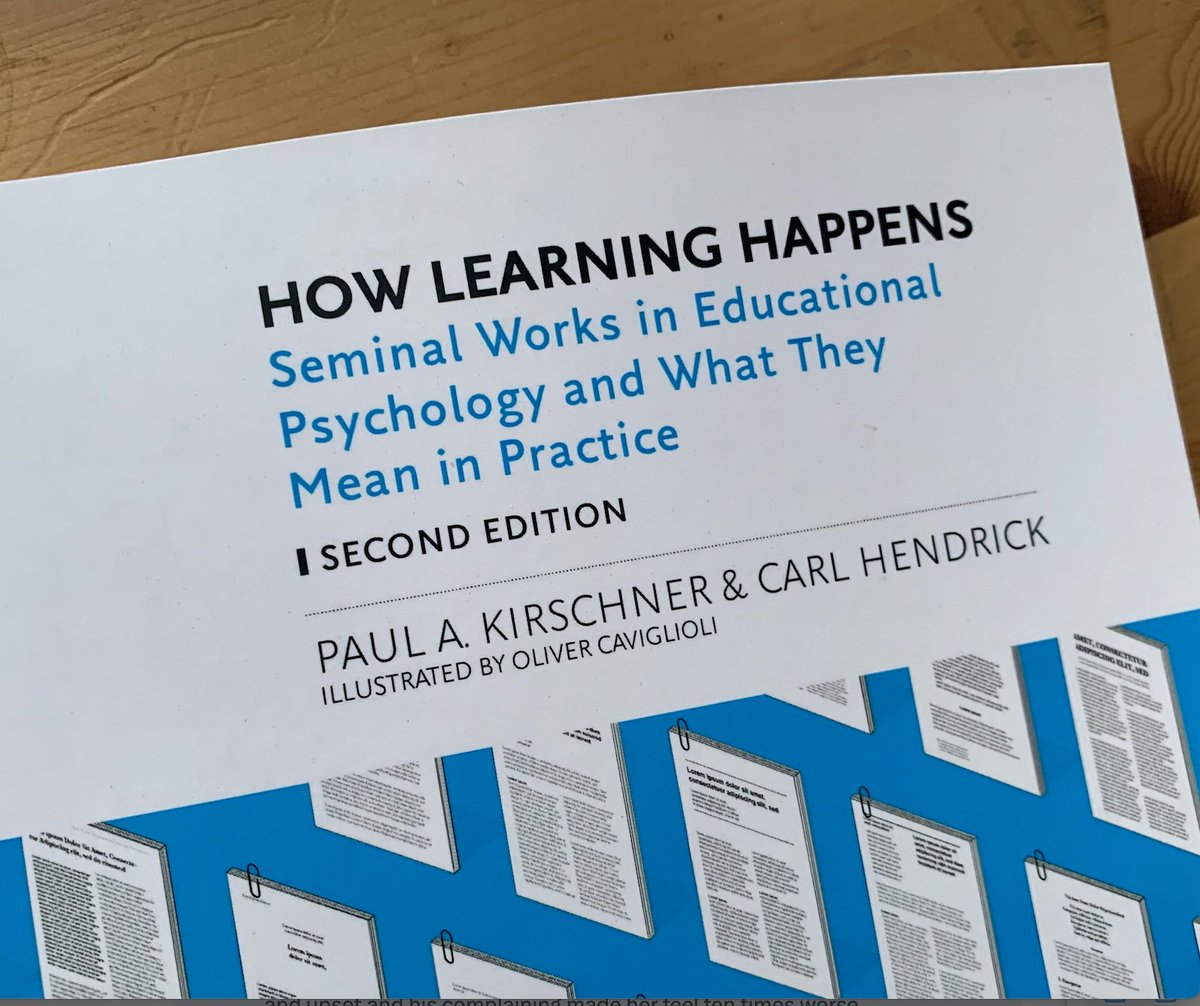
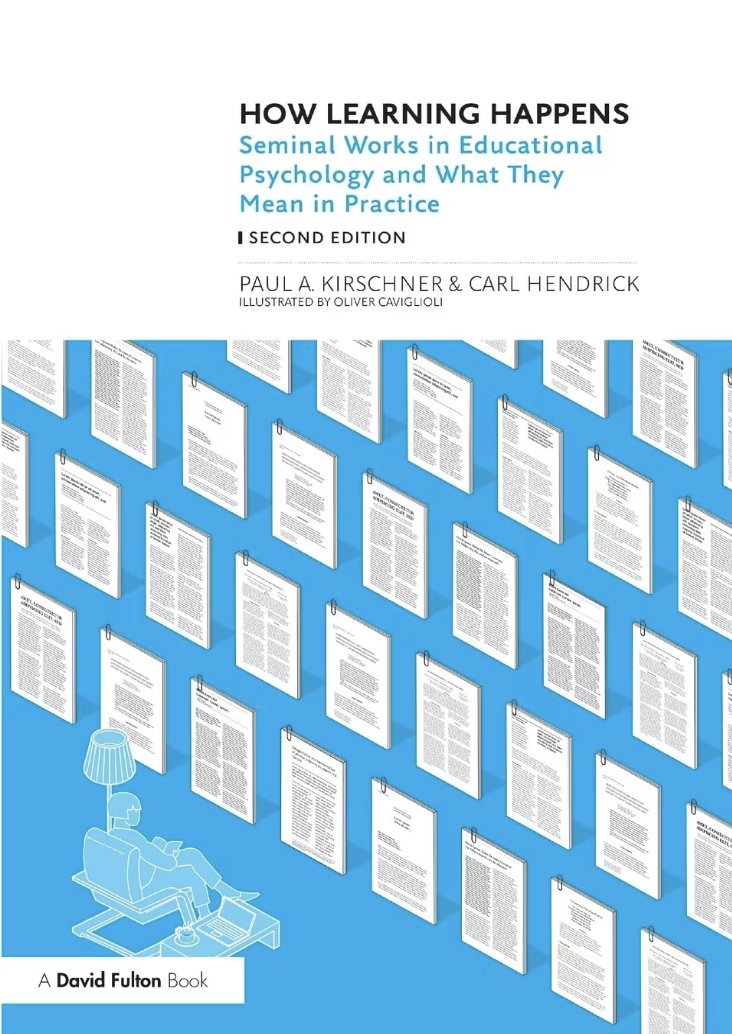
To mark the publication of the 2nd edition of How Learning Happens we are giving away a 5 copies of the book. Simply retweet this to be included in the draw.
The 2nd edition of 'How Learning Happens' is finally out! and @P_A_Kirschner and I are very excited to share it.
Here's a brief preview of what's new ⬇️ 🧵
➡️ Firstly, we felt that the missing elements in the first part of the 1st edition all fell within the broader category of memory and specifically how it underpins, foregrounds, and interacts with learning so we added a new section featuring 5 seminal works and why educators should know about them.
➡️There is a new foreward by John Sweller.
➡️ We also added a second closing chapter in which, after discussing the ten deadly sins of education (the original concluding chapter), we discuss the ways in which seminal research can become distorted into dysfunctional implementations of its original form, what Brown and Campione christened “Lethal Mutations”.
➡️ Finally we’ve updated, checked, and rechecked the links and QR‑codes, added some links to new additional materials, and corrected mistakes that we and others found in the original book.
Shout out to the generosity of the SoLaR Battalion today in sharing their stories of school improvement, expertise and incredible resources. #SBPWS2024#SoLaRBattalion
So what are the implications of over 100 years of research on forgetting for educators?
Principles to know:
▶️ Our capacity to store stuff in memory is relatively limitless but our capacity to retrieve it is not. In other words, just because you know something, it doesn't mean you can remember it. This process happens in classrooms every day without us realising it - so much effort (planning/teaching/student work) is wasted because of ineffective instructional design.
▶️ Our brains are quite efficient at some things but also really inefficient at other things which is why learning how to do quadratic equations is so hard for teenagers.
It's also why for the vast majority of people, trying to discover stuff on your own is such a bad way to learn anything.
▶️ We're very good at learning stuff we want to learn but incredibly bad at learning stuff we don't want to learn. (and most kids don't want to learn quadratic equations.)
Storage strength and retrieval strength are crucial concepts to long term learning - without regular retrieval practice/questioning/generative activities we will not be able to recall learned material - it's as if our brain throws stuff in a warehouse without cataloguing/indexing any of it. Retrieval practice is the way to make that catalogue/index.
▶️ This process of long term learning is largely dependent on the context in which students try to remember stuff and the good news is that teachers can do something about that (curriculum + instruction).
▶️ You don't learn something when you encounter it, you learn it when you forget it-remember it-forget it -remember-link it to something else you know and so on... Think of learning as something which happens over 6-12 months not in a single lesson.
What to do:
▶️ Because of these limitations of how learning happens, the first thing to consider is curriculum. But curriculum doesn't just mean what you're teaching (content), it also means how you teach it (instruction).
▶️ Don't just ask students questions that have 'answers' - those answers really need to be connected to stuff they already know and this needs careful planning. For example, knowing the year of the storming of the Bastille is likely to be of very little use unless it's linked to deeper understanding of how this event relates to the broader trajectory of the French Revolution.
▶️ When planning curriculum and building in retrieval practice, consider when they will forget the material and where they will remember it. As in, actually plan for them forgetting it. If you're teaching them something in September and then giving them a quiz on it in May and thinking that's retrieval practice then you're doing it wrong. Think really carefully about where they will re-encounter what you've taught them.
▶️ Do you want students to remember what you're teaching them now or in a year? If it's the latter then you have to use desirable difficulties otherwise they will probably only remember it by chance not design.
(See Bjork on this and also Fiorella/Mayer on generative learning.)
▶️ Lastly, If you're leading teaching and learning in a school, stop asking teachers to 'show student learning' in a lesson. This is a waste of time and in most cases, gets in the way of actual learning.