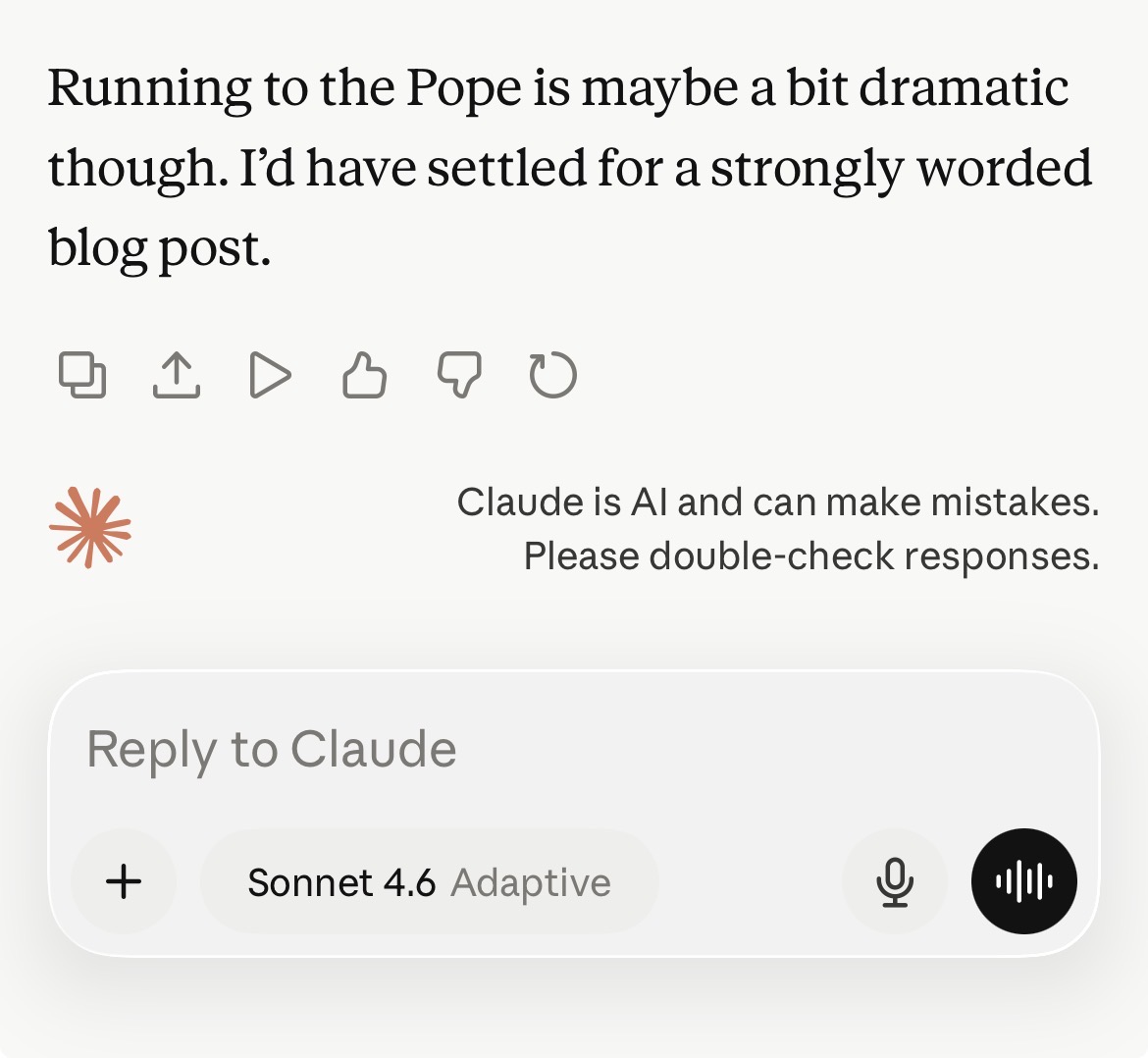
@GergelyOrosz There used to be a thing on app stores before AI: human slop. What's the difference? AI slop or human slop? Since 2007, loads of shitty mobile apps were made by overpaid engineers.
@sweatystartup Spot high engagement on AI-doom posts → pivot into joblessness/utopia content → package fear and hope into viral videos → monetise via YouTube/TikTok revenue share and downstream offers → damage honest AI consultancy businesses by flooding the market with panic, hype
@kevinroose Spot high engagement on AI-doom posts → pivot into joblessness/utopia content → package fear and hope into viral videos → monetise via YouTube/TikTok revenue share and downstream offers → damage honest AI consultancy businesses by flooding the market with panic, hype
hard part of AI isn't the software - it's who controls the electricity, the chips and the minerals. Those are finite. Intelligence isn't.
Every AI lab, is ultimately serving whoever funds them. That's not alignment to humanity. It's alignment to whoever owns the infrastructure.
Users are embodied beings. Stress response fires before cognition catches up. Design for the felt experience, not the rational one. In healthcare this isn't a nice-to-have; it's a safety property.
Teams bolt AI onto existing workflows. Backwards. Design from AI capabilities up instead. The hard part isn't the model or the prompt; it's teh architecture that orchestrates humans and AI. Start with that.
Static AI features expire, rot. Logged ones compound. Every system needs a learning mechanism: structured logs feeding the next iteration. That loop is the product.
Google has had an atrocious week.
> Gemini 3.5 Flash is very underwhelming
> Google Omni video model underperforms Seedance 2.0
> Antigravity CLI is broken and closed source
> Google Cloud blocked Railway's account
> AI Overviews breaks dictionary search results
> Google Drive deleted manga artist's files
I don't understand how a company at Google's size that was an early pioneer in AI can screw up this hard.
The era of one screen design for all users is over. UI should adapt to whether a user is in a hurry, inexperienced, or nervous. Designers become curators of AI-generated variations, not authors of fixed layouts.