@e_philalethes@TamithaSkov This is true, but there might be more data from the recent event which has forced them to hurry up a fix. However, this is of course speculation
@CaptBob_Nomadic A typical transatlantic flight is offered touted as the equivalent of a chest x-ray.
We have a prototype webpage at https://t.co/DZEdJ1HVb2 where you can see the modelled dose in real-time. For reference, 0.1-0.2uSv/hr is the ground rate in the UK.
@CaptBob_Nomadic Typical rates at cruising altitude are 10-20x on the ground and the particles are such high energy that the fuselage doesn't shield against them.
The largest radiation storm measured was a 50x increase at ground level, so altitude would have been far worse.
@SimonCalder Our research group at Surrey Uni has been warning about potential issues like this. In fact there was a recent solar radiation storm which has likely exacerbated the response to the issue seen on the 30th Oct
@BBCBreaking Our research group at @SpaceAtSurrey have been warning about the impacts of radiation on avionics for decades. We have data to suggest memory systems could be highly susceptible. There was a recent radiation storm too 2 weeks ago
@williemossop@metoffice@UniOfSurrey@KNMI This was the first time ever that radiation data has been collected across a spectrum of altitudes during a GLE. The method is not new, but the data from this event was
@karen_aplin@metoffice@UniOfSurrey@KNMI This was the first time data was collected at the full range of altitudes during a GLE. Yes balloons and radiosondes have been used for years, but not with specialised neutron sensors during a solar radiation storm
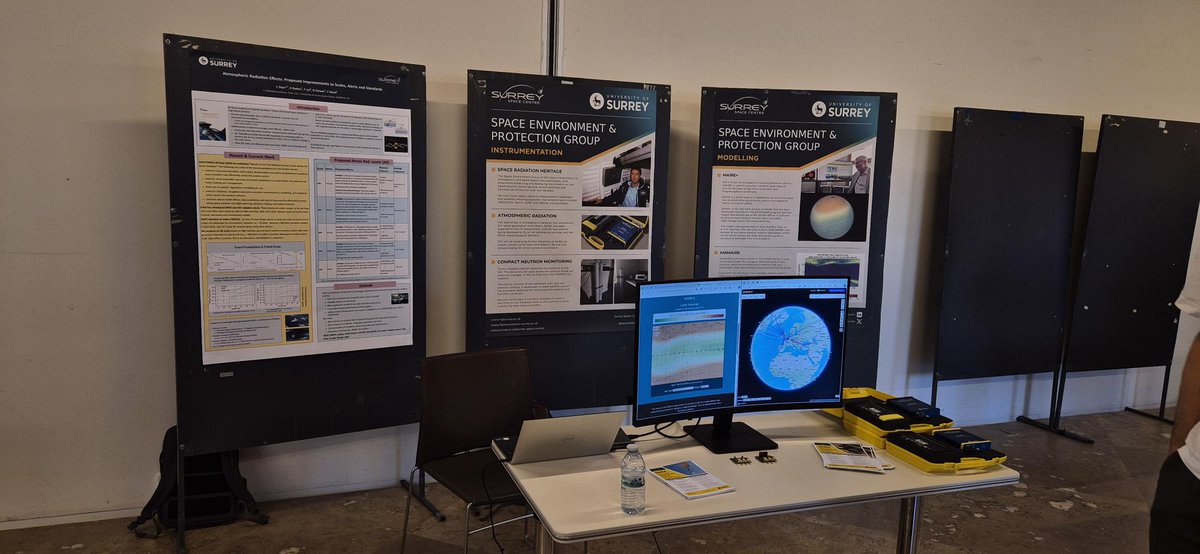
Pop by the @SpaceAtSurrey stand at #ESWW2024 this afternoon. Unfortunately I can't be there, by my colleagues will demonstrate our new SAIRA radiation instruments and our model MAIRE+