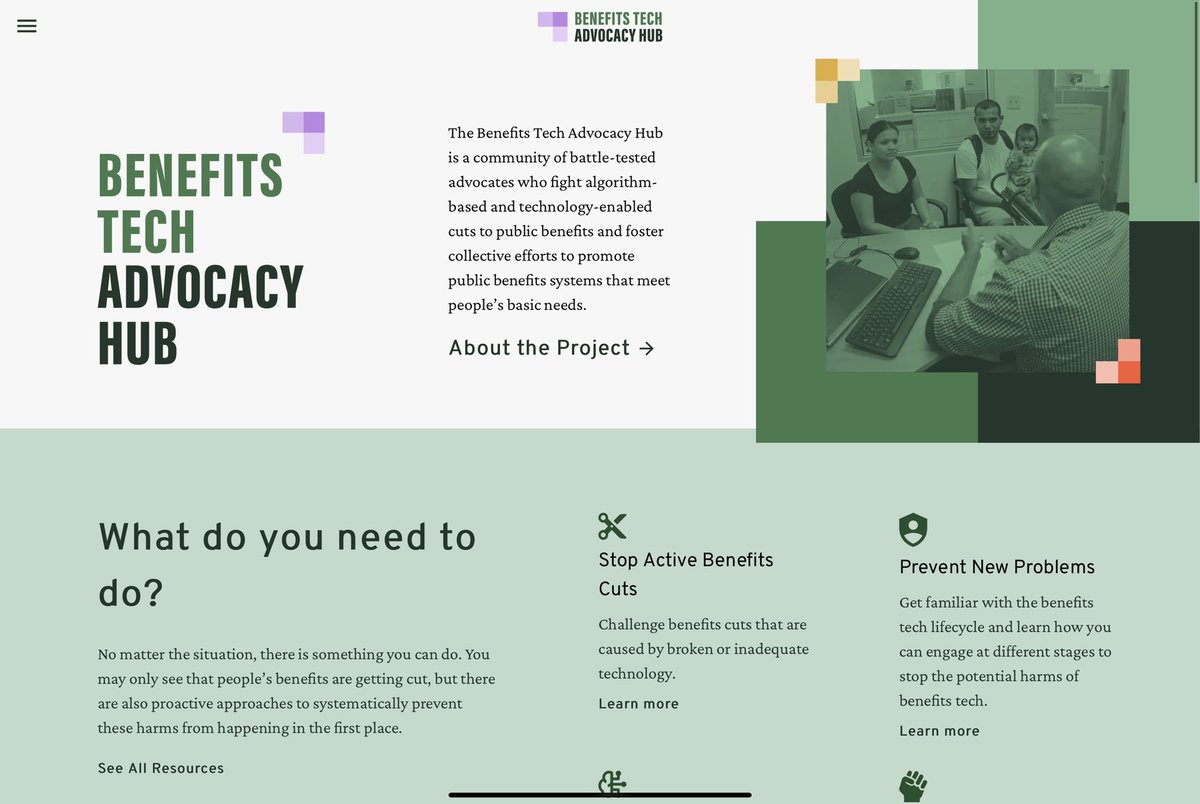
Hello to all tech justice folks from the Benefits Tech Advocacy Hub! We’re technologists, lawyers, + others uniting to fight government use of algorithms to cut public benefits like Medicaid, Unemployment, + SSI. Follow us here, check the site (https://t.co/eTyVv0gbjf), join us!
Groundbreaking court win from one of our co-founders for unconstitutional benefits cuts using tech-enabled systems. They won money for the clients and program changes for the 11,000 people on the program!
GREAT news to share on tech justice, disability justice, qualified immunity, + algorithms. On behalf of 3 clients, Legal Aid of Arkansas got a historic $500K settlement w/ our state Medicaid agency that also makes program improvements benefitting 11,000 others. Read along…1/x
Our work is inspired by everyone fighting for economic security + fair public benefits systems. Hub member @kevindeliban recently spent time with one of our intellectual heroes, the ever-inspiring @daniellecitron, at a @UCLAtech event for her new book. A duo of due process!
Gov’ts use similar tech-enabled traps to discourage voting as they do to discourage public benefits access:
—Data-match purges
—Automated letters requiring info they already have
—Few doors in, long waits, few fixes
It’s almost as if voting + economic security go together.
All advocates should know the term “private right of action.” It means that a law gives a person the right to sue. In tech+elsewhere, companies + gov’ts often oppose this right to escape accountability. Today, US Supreme Court decides whether Medicaid has it. Big impact beyond.🧵
If there’s a law on the books and someone breaks it and hurts you, you can sue them, right? Nope. Not that simple.
Learning this—after I became a lawyer—blew my mind.
Here’s a 🧵 on why you should care. Tomorrow, the Supreme Court hears a case that affects Medicaid + more. 1/
New report from our friends @PopTechWorks and @EPICprivacy about the many ways the DC gov’t uses algorithms and related tech for education, health, housing, public benefits, and the criminal legal system. Check it out!
NEW REPORT: @EPICprivacy & Virginia Eubanks today released a new report cataloguing the automated scoring and screening tools used across D.C agencies! Check it out!⬇️⬇️⬇️ #AI
Read it at: https://t.co/2hnt5FfpII
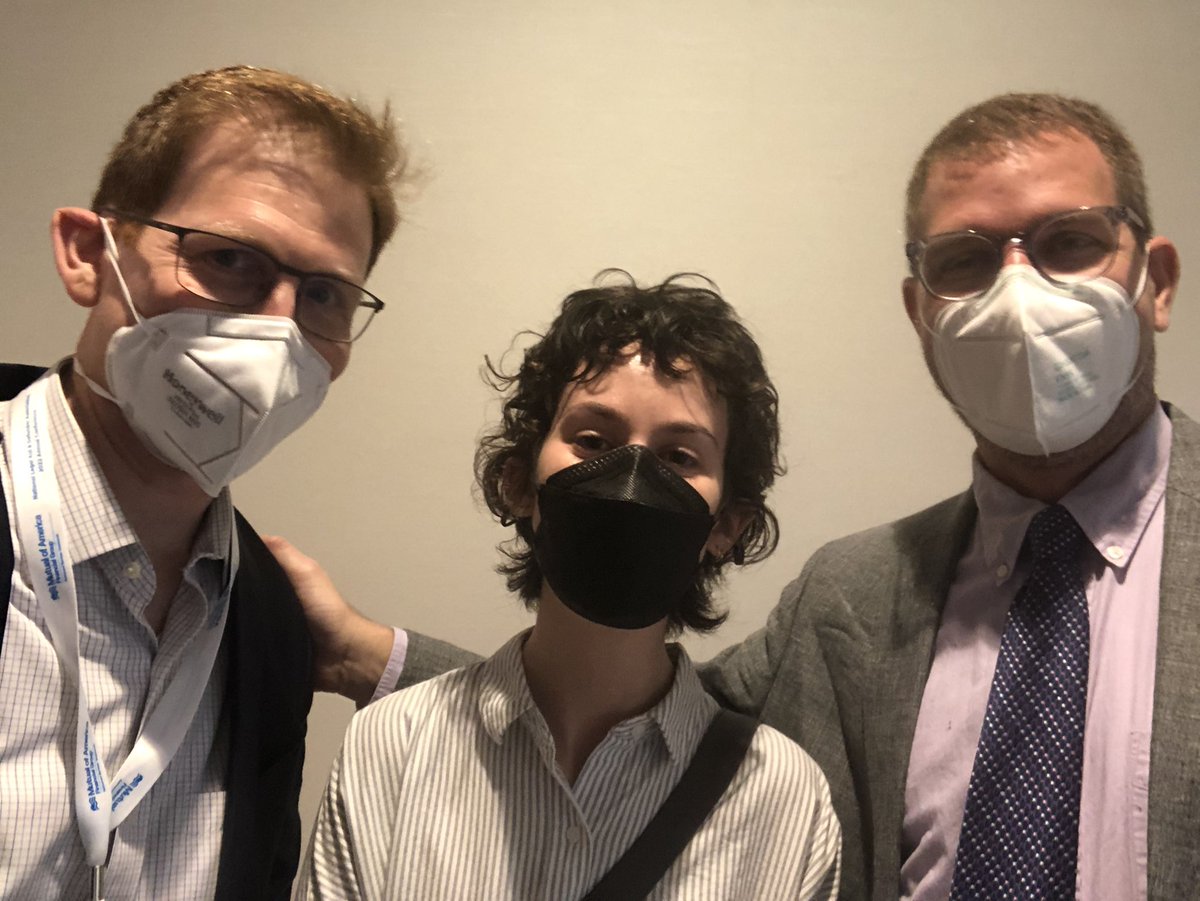
Our teammates @eiweil, @machledtDC, and @kevindeliban presented on fighting algorithms and bad tech in public benefits systems at the @NLADA conference in DC! Thanks to all the devoted legal aid attorneys who came out. Join the fight at https://t.co/eTyVv0xelf!
Members of the Hub team will be DC through Saturday for the @NLADA conference (and some of us live here). If you’re not at the conference, feel free to reach out. If you are, our session “Algorithmic Advocacy Evolved” is on Friday at 8:30 am. Come join us!
And, as always, if you have a specific situation you want to think through, contact us through the Hub’s website. We offer no-cost assistance and strategy (caveat: we can’t provide legal advice or representation). https://t.co/LaXCqB8nH5 END/
Do you want to get to the more risqué side of FOIA + public records? You’re right where you need to be.
We’ve already talked about making a good request (10/3/22 thread). Once you do that, how do you manage and use the info the government gives you?
🧵 on best practices 1/
Also, the fact that an agency withheld info can be an issue apart from whatever the bad tech is actually doing—it may look like the gov’t has something to hide. Consider using this to focus attention on the underlying issue, engage affected people, or attract media interest. 13/