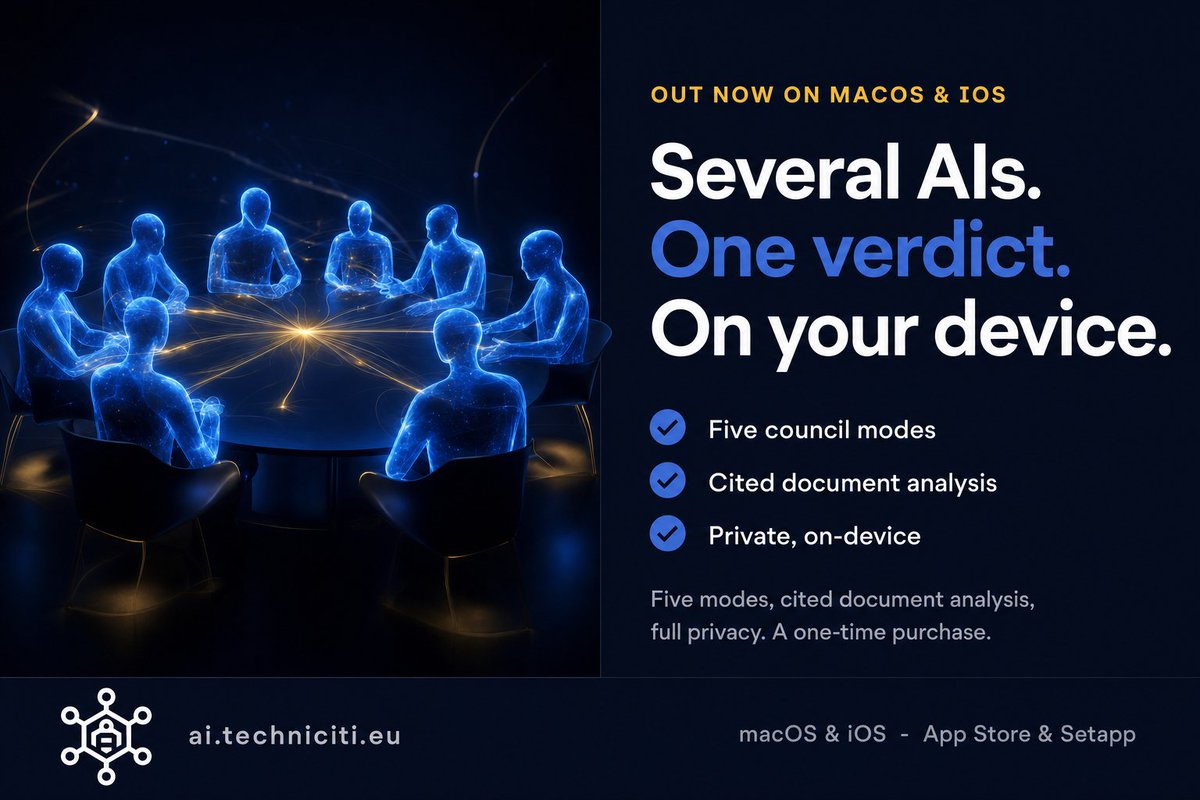
AI Council, in one tweet:
Several AIs answer, peer-review each other anonymously, and hand back one answer with a confidence score. Five modes, cited document analysis, all on your device.
On the App Store and Setapp, for macOS and iOS.
Some questions are really a workflow: research, analyse, report.
AI Council Chains run those stages automatically, with the full council at each step, so you end up with finished work, not scattered chat replies.
AI Council runs natively on macOS, iPhone and iPad, and syncs through Apple's private iCloud container.
Start on your desk, finish on your phone. Same conversations, same confidence scores, no servers in the middle.
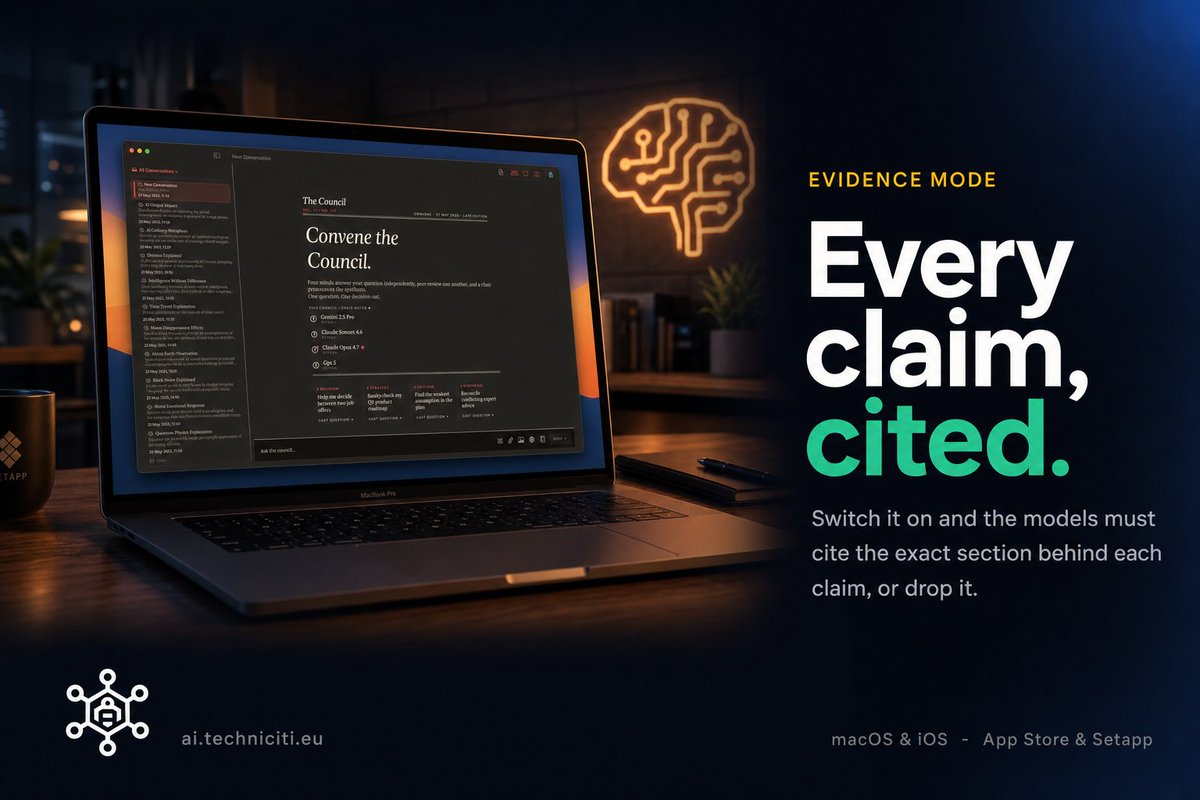
The quiet danger in AI document analysis is the invented citation.
AI Council's Evidence Mode forces every claim to cite the exact section it came from. No source, no claim.
On the App Store, AI Council is a one-time purchase. Prefer a subscription? It is also on Setapp.
Either way, bring your own API keys (most have free tiers) or run local models for free. No usage markup, and you own your data.
Three chatbots in three tabs still leaves you to compare the answers yourself.
AI Council does the comparing: models review each other anonymously and hand back one answer with a confidence score.
4 AIs. 1 verdict. 0 cloud storage.
A lawyer ran a lease through AI Council. Two models flagged four risky clauses. The third caught a fifth the others missed, an auto-renewal with a late-notice penalty.
One model misses things. A council catches them.
Five ways AI Council deliberates:
Standard: independent answers
Devil's Advocate: one model attacks the rest
Expert Panel: each takes a specialist role
Debate: argue in rounds, then synthesise
Consensus Seeker: find common ground
Blind peer review works in academia because reviewers cannot play favourites.
AI Council does the same with AI: models critique each other's answers anonymously before you see anything. Errors surface. Weak reasoning gets challenged.