"All space operators should be to required to be evaluated by one common and global standard for environmentalism and sustainability," writes @moribajah in his latest column. Here's what he suggests.
https://t.co/ucOTVXUbDe
An unambiguous comment about space litter: “We must not rely on industry self regulation or soft best practices,” says Viasat’s John Janka at the Secure World event at #38SPACE.
NASA astronaut Victor Glover shared his take on the overview effect at #38SPACE. "I’m looking at the beauty of Earth. And that machine keeps us alive.... That’s our spaceship. We gotta take care of it....And we’ve got to take care of each other."
The artist rendering on this one was a nice touch, for those who look closely. Our contributor Paul Marks really dug in.
Harvesting sunlight in space https://t.co/guD9qxpF5Q via @aiaa
Our December issue is live! Don't miss the annual roundup of the biggest milestones in the aerospace industry, as told by the @aiaa technical and integration committees.
https://t.co/iGIrYnpiQU
The preps for the Artemis I launch have me thinking about the moon, and I'm recalling this article with ran offering a very different take on lunar resources. https://t.co/F84ucoh9GD via @aiaa
Blue passenger @DrGeorgeNield - Pictures don't do justice between the black sky & the curvature of the earth, having fun tumbling around. A thrilling experience of a lifetime. It was everything hoped for in your entire career fighting for this, getting more people going to space.
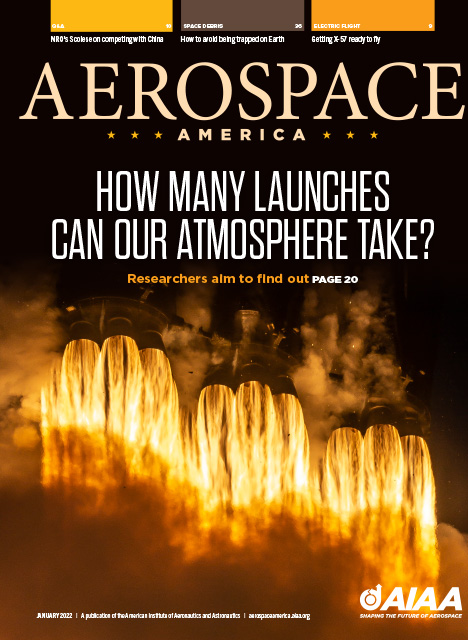
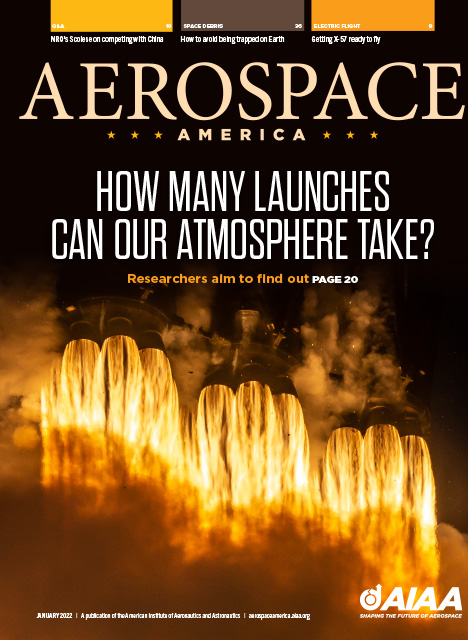
Our January issue is the perfect way to kick off the first Monday of 2022. Read up on why some scientists are calling for further study of rocket emissions, progress on NASA's all-electric X-plane and more.
https://t.co/7wKybhzVv4
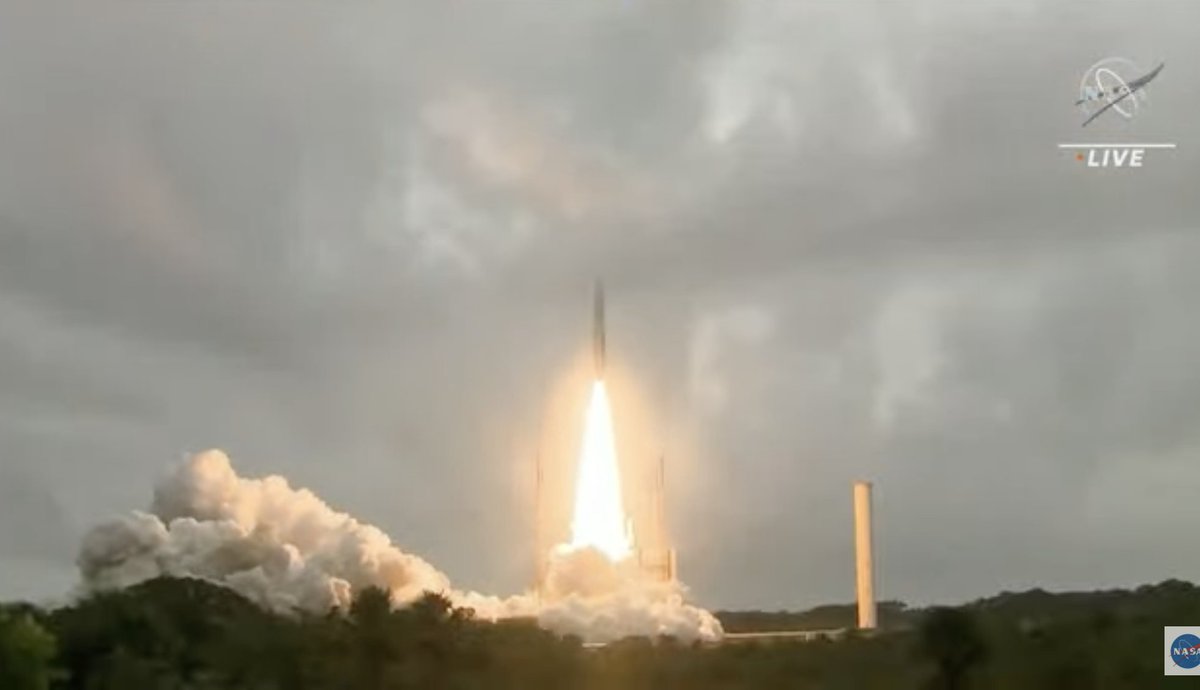
After 25 years of development, NASA's $9.7 billion James Webb Space Telescope has begun its monthlong journey to its orbit around the L2 Lagrange point, propelled by an Ariane 5 rocket. https://t.co/T2HS7uKsvc
Predictions from a Webb science briefing today… In its first year, the telescope will find the reason Jupiter’s Great Red Spot is red and will find a galaxy even older than the current record holder—GN-z11 at 13.4 billion years.