@EYakoby That appears to be the Florya Food Court, which has been bombed and destroyed. If that’s true, this is an outright lie.
Even if this is true, what are you saying? That there isn’t any famine in Gaza?
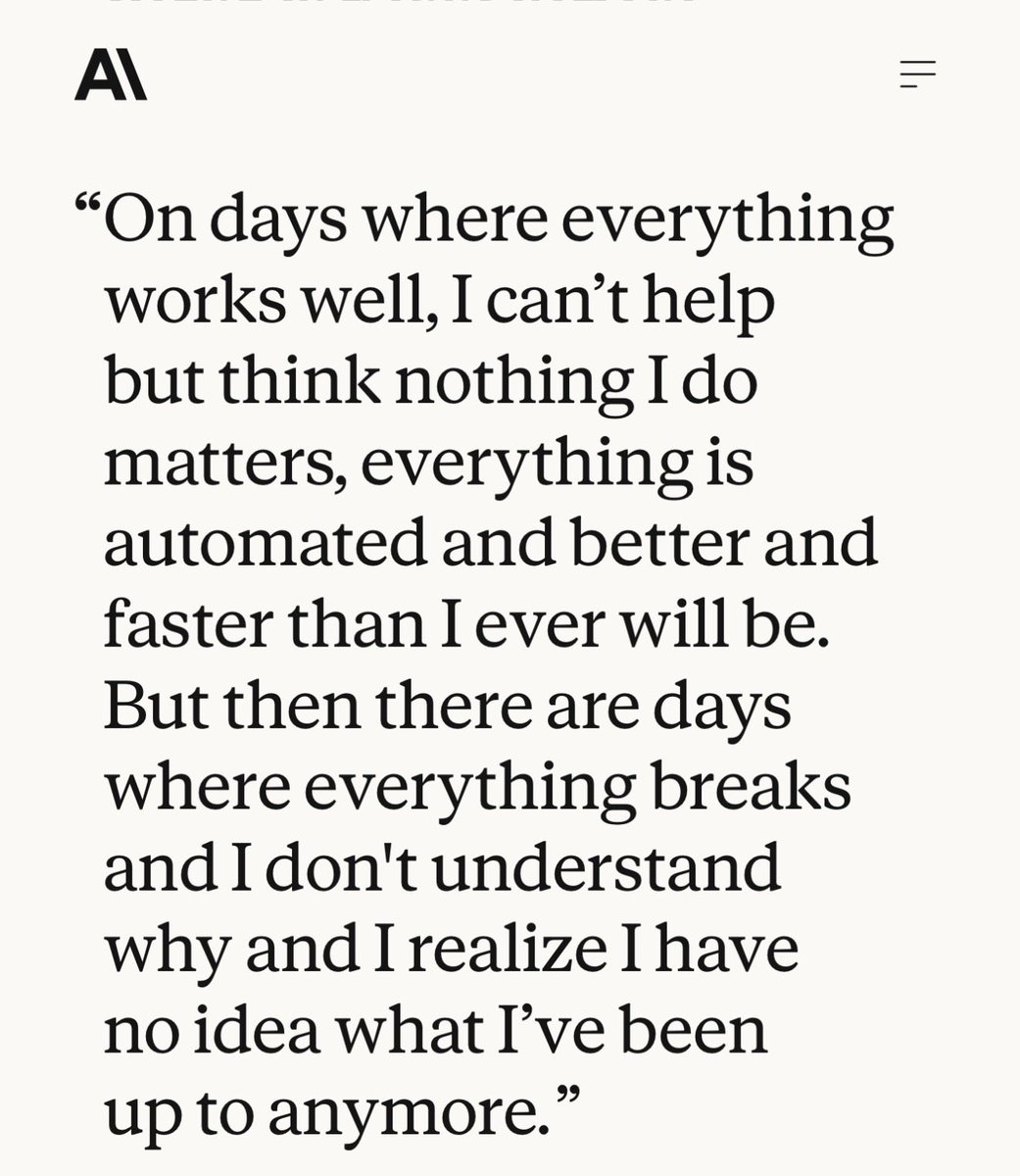
@rstchristopher Hard agree. One of the biggest differentiators between LLMs and human intelligence is our facility for comprehending and progressing towards multiple goals (that usually conflict) simultaneously. Gradient descent can’t solve for that level of complexity and never will.
At SFO… line 10 deep for Peet’s Coffee while zero interest in robot barista. RoBa is ~3% cheaper. Both have self-ordering. Both have full menu of drinks and baked goods.
Interested in hypotheses on “Why?”
A few of mine:
a) CafeX tried for novelty and poor quality? (Disproven by personal taste, but others may disagree)
b) Inferior UI with no backup human (contributing imho)
c) Price differential not enough to lead to switch (leading candidate)
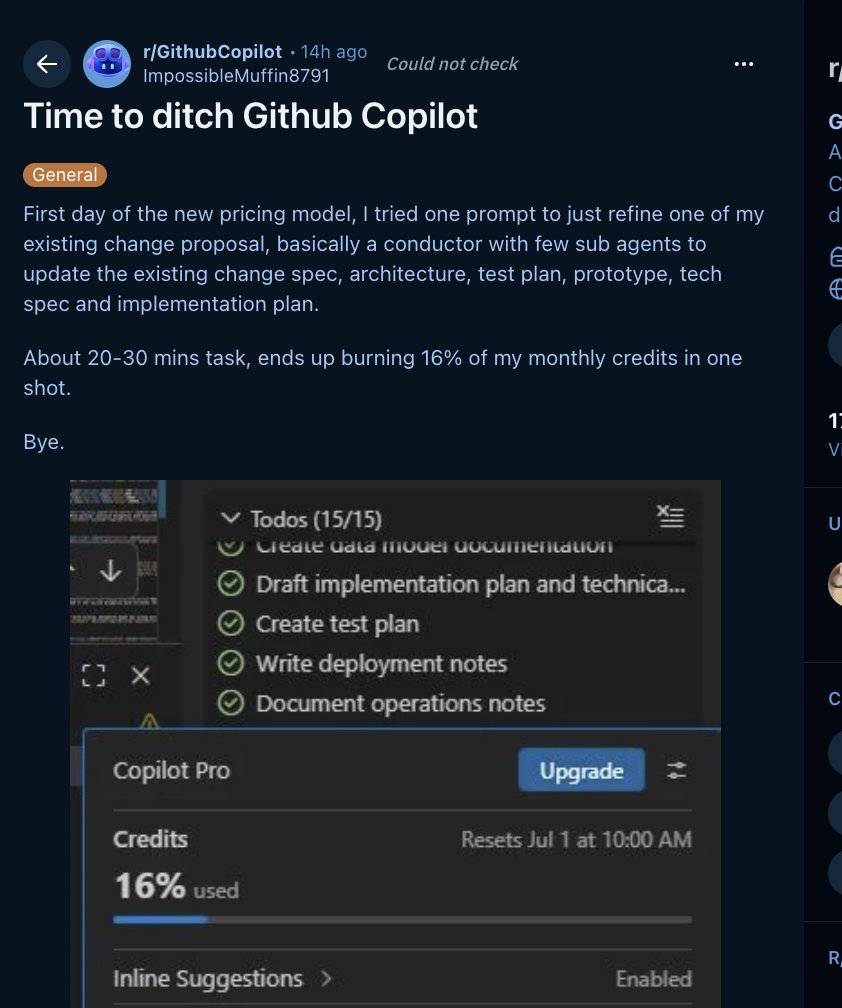
@Shaughnessy119 Distilled open-weight MoE models will win the market long-term. $25/mtok is deeply unsustainable and idk how folks haven’t seen that. Outside of specialized usage, it’s doubtful that folks need SOTA inference. Jen from marketing and Subha the SWE will be fine with GLM 5.1
The most basic way AI could blow up imo. I'm not saying it does but this is the most obvious way I can see it happening
- Per seat subscriptions are massively subsidized. The flat fee was priced way below what heavy usage actually costs
- For real business use you have to move to the API anyway. Data protections, work integrations and compliance officer approval
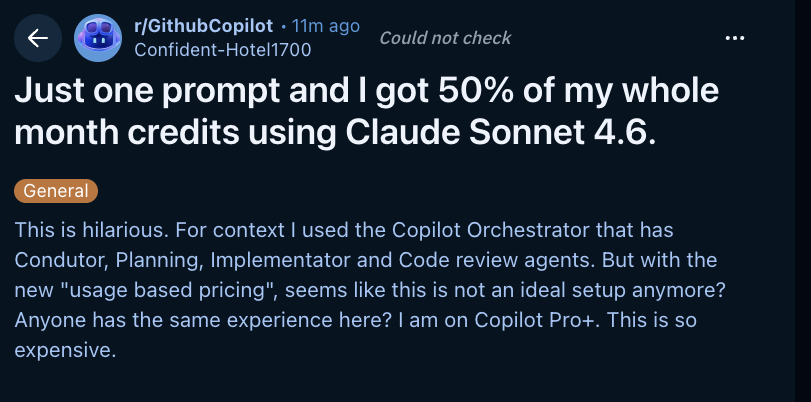
- On the API you pay metered rates, and businesses are burning credits way faster than the per seat pricing ever led them to expect
- This is everywhere right now. Internally for us, Codex users, Uber torching its entire 2026 AI budget in 4 months, the Microsoft comments. Just go try an API
I shared more on this here: https://t.co/iZrqrCAIRW
- And I don't think most businesses have the money to keep paying increasing API rates without a real change to how they operate (caps needed)
- Because they have a cheap alternative. They can reach open source models through any aggregator (OpenRouter, Venice, Baseten, Together) and still get strong privacy. Venice private data centers, or E2EE/TEE serving GLM 5.1.
More on open source inference provider raises here: https://t.co/7kf56P44yQ
- And the discount is enormous. DeepSeek V4 codes within a hair of Opus on SWE bench at roughly 1/30th the price, and the cheapest open models run closer to 1/100th
- Chinese labs open source frontier grade models. The model is the single biggest cost an inference provider has, and they get it for free
- This idea dies if China goes closed source. That is actually bullish web2 AI labs, because if everyone is closed you pay up for the best intelligence. China goes closed source if they are tired of giving away an asset and they want the revenue and data flow to train new models
- Is this showing up in web2 AI lab revenue yet? No. Revenue is off the charts. Anthropic went from 9B to 47B run rate in five months
- So go forward, what happens?
- I think revenue slowly starts leaking to the open source inference providers (see Venice usage, OpenRouter's $113M raise, Baseten is raising at $11B or triple its valuation in three months, on revenue that went from $200M to $600M annualized in a single quarter)
- It doesnt move overnight, but it caps the labs ability to raise prices, and margins are already deeply negative. OpenAI is reportedly running near negative 122%
- With margins that bad there is no cash flow, so the labs are fully dependent on outside capital to buy GPUs, train models, and keep subsidizing usage (I.e. see Google tapping $80b equity sale, granted 30b for employee RSU taxes. Clearly they think Equity is overvalued or you wouldn't sell it)
- The break comes when that capital stops. Pricing is capped so margins cant improve, and the moment investors lose conviction on payback, the whole flow reverses
- Why would they lose conviction on payback? Back to the start - the inability to improve margins or get businesses to pay more
- This is also limiting, if we start making new drugs with AI or create entirely new businesses, you better believe people will pay up to the max for AI usage
@MrEncouragement@jonbrooks You can continue to blame the problem on buyers demanding too much, but it doesn’t change the fact that home prices have increased by between 35-55% in the last 5 years. “If people would just buy less home” isn’t going to work.
@VanJones68 Hey CNN contributor Van Jones, rather than repeating the same talking point ad nauseam, maybe you can give us an example of a business built by one person and 40 agents that’s approaching a 1b valuation?
@JohnnieM I hope and pray that one day you will be held to account for your involvement in the GHF and possible knowledge of the conditions which resulted in the deaths of over a thousand civilians in Gaza. If not in this life, then the next.
If you turned on the TV in another country and saw the leader's daughter-in-law giving him a softball interview on a major "news" channel, you would rightfully assume that country is a tinpot dictatorship.
@Kepler_L2 To be fair, you can’t really do math to figure out the ROI on present-day AI, especially given the way it’s evolved over time. But they could have identified trends quite a bit earlier.
@AskYoshik My bet is an American open weight lab shipping lower-cost MoE models. Maybe Reflection labs if they get the pricing right. I think we’re seeing that $25/m output tokens is deeply unsustainable, but $2/m might be a decent target.