I develop buildings. It’s not your typical real estate investing; it’s a massive value-add approach. And I’ve been doing it for over three decades. My journey started back in the early '90s as a painting contractor in NYC. I worked my way up hands-on, learning every trade in home building as a General Contractor. In ’98, I started fixing and flipping historic houses – though we didn't call it flipping back then! I was restoring old historic homes and turning a profit, earning a few awards along the way.
At some point, I realized I wanted to grow beyond fixing and flipping houses. So, I moved into ground-up development and converting larger existing buildings. At the time, I didn’t even know what a developer was, but over time, I realized I was becoming one. Over the years, I've built plenty of ground-up buildings and taken on some unique existing historic projects, like transforming a derelict church into luxury condos and turning an old gymnasium into a world-class music/theater venue. Now, I’m developing ground-up mid-rise mixed-use multi-family housing with 70- and 82-unit projects in progress.
Here are some of my favorite projects:
White Eagle Hall – This is the gymnasium turned concert venue I mentioned. This building sat abandoned for many years. After the crash of 2008, I was able to purchase it for a deep discount. Over the next five years, I learned all the ins and outs of the entertainment business and what goes into creating a world-class entertainment venue. I even won an award for historic excellence. https://t.co/RMq1bbGO51
St. Boniface – This abandoned historic church was another calculated purchase made in the wake of the 2008 market crash, acquired at a massive discount. I turned it into nine luxury condos. I saw one of the original condo owners a few weeks ago, and they are still very happy with their purchase. https://t.co/Iv0YlVoHDk
333 Flats – A unique ground-up mixed-use project. This project contains 18 micro-units, office space, and retail space on the ground floor. There’s a lounge inside and a rooftop deck with NYC views. The micro-units provide a lower-cost alternative in a prime location. I demolished a one-story motorcycle shop to develop this. https://t.co/2VVprlpkM1
In Progress
Hilltop St. Johns – Historic and ground-up. This is another historic church from circa 1820 that is in progress to become an 82-unit development, with 16 units in the church and 66 units in a new building next door. https://t.co/53Uc662nIh
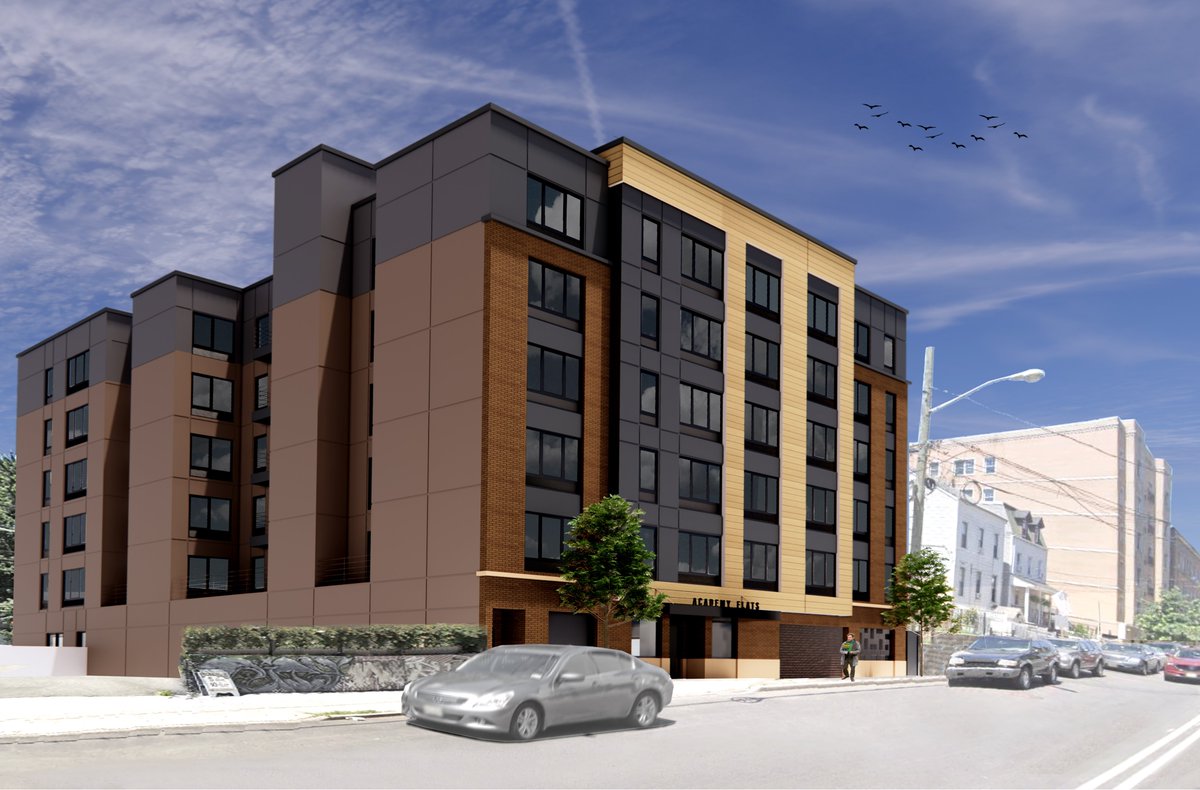
Academy Street – A 70-unit ground-up construction project. This project will be completed over the next three years. I’ll be sharing the progress of this project on social media through vlogs, so be sure to follow along to see what really goes into a real estate development project. The NYC views from the rooftop deck will be amazing. https://t.co/HjmxvDLL7g
I set up this Twitter account a few years ago but never really used it – I was too deep into real estate development and raising a new family with my wife. Now, with a larger staff and my kids grown up, I have more time to share my experiences with everyone in this thriving community. So, I’m kind of new to this social media thing. At any rate, I’m sharing stories, insights, and deep dives into all aspects of real estate development – especially all the mistakes made so you can learn from them. I hope you find my stories useful and share them with others.
Reach out anytime.
If you're thinking about developing your property for the first time, the biggest risk isn't always the market or construction costs.
It's often the decisions you don't know you have to make.
After more than 30 years in real estate development, Ben shares why experience can save property owners far more than it costs.
Read the full article below.
https://t.co/gYGh7A0y3Y via @LinkedIn
What actually makes a great city?
It's more than good architecture. It takes collaboration between developers, architects, planners, and the communities they're building for.
In this episode of the Developing Now Podcast, I had the chance to sit down with artist and activist Duda Penteado to explore the future of housing, urban design, and how we can create better places to live.
If that sounds interesting, I'd love for you to check it out.
🎙️ Watch here: https://t.co/fpPFtgLdaK
This project didn’t get approved on the first try…
or the second…
or the seventh.
Here’s what it really takes to get a building approved.
https://t.co/d3yAeS8Gj6
If you’re into real estate at any level, you should be listening to Developing Now.
We talk about what actually goes on behind the scenes—deals, mistakes, and everything in between.
Full episodes are on Apple Podcasts, Spotify, and YouTube (Ben LoPiccolo channel).
Imagine buying a building for $1…
In the 70s, that was real.
Guys would show up to city hall with a check for 10% of the purchase price…
10 cents.
And today we’re all debating affordable housing.
Different time—but it makes you think.
That’s the kind of perspective we get into on Developing Now.
Real conversations with people who’ve actually been through it.
Full episodes on Apple, Spotify & YouTube (Ben LoPiccolo)
If your construction interest budget goes from 5% to 9%… you’re done.
That’s the kind of risk people don’t see when they look at real estate from the outside.
Deals don’t usually fail overnight—they get stuck.
And being sideways on a project for 2–3 years can break even experienced developers.
That’s the stuff we talk about on Developing Now.
Real conversations with people actually in the business.
Full episodes on Apple, Spotify & YouTube (Ben LoPiccolo)
🎙️ New episode of Developing Now is live!
I sat down with Wendy Paul for a really great conversation about what’s actually happening with housing right now — why we’re millions of homes short, what’s slowing development, and how policy and rising costs are affecting real people on the ground.
If you’ve ever wondered why housing keeps getting more expensive (or you’re in real estate yourself), I think you’ll enjoy this one.
And if you like the content, consider subscribing where you watch video podcasts — it helps a ton and keeps you up to date on future episodes.
#developingnowpodcast #realestate #realestatedevelopment #realestateinvesting #developingnow
I don’t worry about things going wrong on a deal — I assume they will.
That’s where inexperienced developers get caught. They’re optimistic instead of prepared. The issues aren’t always obvious, but if you’ve been through enough projects, you know what to plan for ahead of time.
Experience doesn’t eliminate risk — it just makes it visible early. And in development, seeing problems early is everything.
#retwit #realestatedevelopment
When concrete is poured in freezing temperatures, you can’t treat it like a normal day on the job.
Cold-weather concrete requires special additives — typically accelerators — that help the concrete hydrate and gain strength faster before the cold can damage it. Without them, the water inside the mix can freeze, weakening the concrete permanently.
The insulation blankets serve two critical purposes:
• On the fresh concrete, they trap heat so the concrete can cure properly and reach design strength
• On the ground, they prevent the soil from freezing so forms stay stable and the concrete has a solid base to sit on
None of this is optional. If concrete freezes during curing, it can lead to cracking, reduced strength, and long-term structural issues.
These are the invisible decisions developers make every day to protect the building before anyone ever sees a finished floor.
Soon, we’re going to post the exact cost of the additives and insulation blankets.
Follow along for the real, behind-the-scenes process of building a 70-unit project — no filters, no fluff, real numbers.
#retwit #realestate #realestatedevelopment #Construction
Here is a clip from my new podcast "Developing Now".
If you are into development, real estate, and how our cities are built, have a listen to this show.
You can find the podcast on all major platforms — or watch the video version on YouTube.
#retwit#podcast#realestate
🎙️ Big news — my new podcast, Developing Now, is finally live!
This project has been in the works for a while. I’ve spent years in real estate development, meeting people with incredible stories — developers, investors, city officials, and others all working to shape the places we live. I wanted to create a space to share those stories, and that’s how Developing Now was born.
The first two episodes are out now:
🏗️ Daniel J. Mirabel & Brenly Tolentino — Two young developers who started building in their 20s and share how they got their start.
🏙️ Alex Hamilton — A conversation about how development can work with a city and its residents to create something better for everyone.
You can find the podcast on all major platforms — or watch the video version on YouTube.
If you check it out and enjoy it, I’d really appreciate if you subscribed or left a review — it helps a lot as we get this off the ground.
Appreciate all the support — can’t wait to share more conversations with you all.
https://t.co/aaQUdgdpfh
Most people put this info behind a paywall.
I put it on YouTube for free.
📍 5-part series on the steps of a feasibility study—the exact process developers use to see if a project makes sense.
If you’re into real estate development, this is a must-watch.
https://t.co/SOm4PMEPf3
Toronto is in the middle of a building boom—and it’s no accident. Canada is facing a serious housing crisis, and unlike in some cities where development is blocked or stalled by excessive red tape, Toronto is leaning in.
What you’re seeing in this video is the result of a pro-development approach: skyscrapers rising out of historic facades, block after block of new housing going up—all while preserving the character of the city’s streetscape.
Developers here are encouraged, not restricted. The government understands that the only way to bring housing prices down is to increase supply. That means letting builders build—especially in high-demand urban areas where people actually want to live.
Projects like these show how it’s possible to honor a city’s history while building for its future. Facades are carefully preserved, then reinforced and incorporated into new towers that deliver the density this city desperately needs.
When cities allow for growth, developers compete, and renters win. More units, more options, more affordability.
Toronto is proving that you don’t have to sacrifice charm to make room for progress.
What’s your city doing to address the housing crisis?
#retwit #toronto #RealEstate #RealEstateDevelopment
Construction is often the biggest variable in any development project. It looks good on paper, but once you’re in the field—delays, labor shortages, material costs, and change orders can wreck your budget.
Here is how I stay under budget.