Hi, views expressed here are mine alone. People often ask where are we going? We are going to ACE. ‘Cause ACE is the place with the special software they/them.
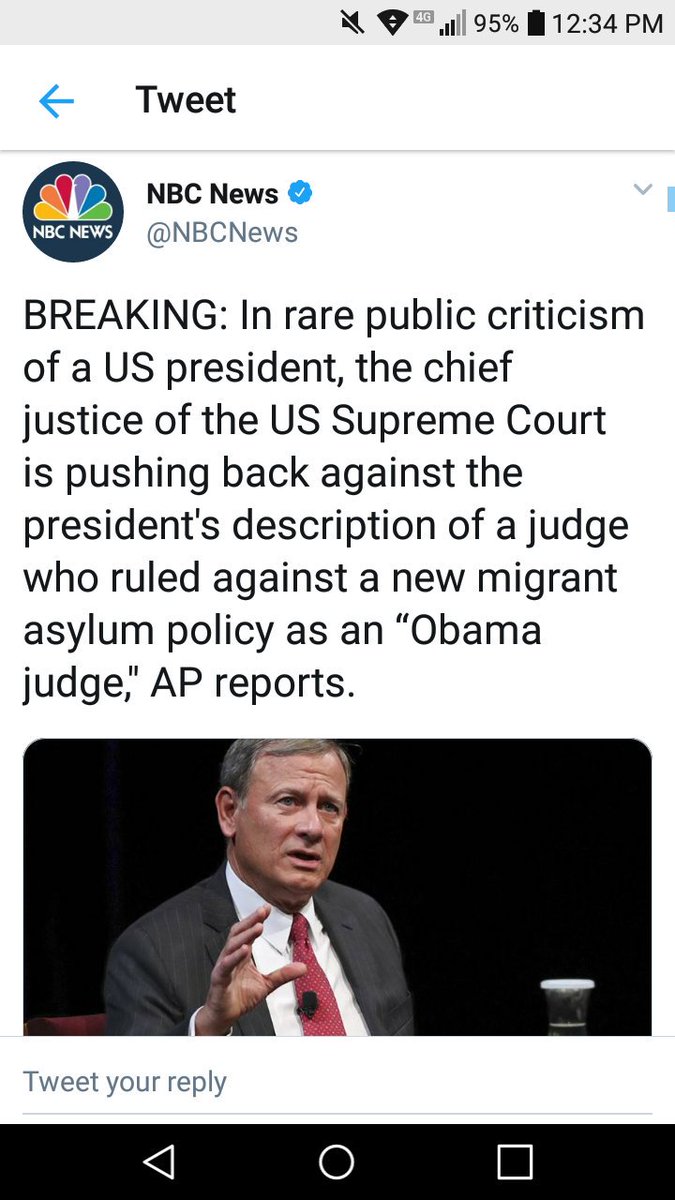
What a joke. This guy is not an independent jurist. He was compromised yrs ago while on the highest court ofthe land. He also has yet to rebuke FISA court, which he oversees, permitting unconstitutional spying on Americans. Roberts is a cancer on the US legal system & must resign
In 1976, Mark "The Bird" Fidrych put together a historic rookie season for the Tigers.
On his way to AL Rookie of the Year honors, he became just the second Tigers player aged 21 or younger to make the All-Star team, following Al Kaline in 1955. Kevin McGonigle joined this group by making the 2026 All-Star team, 50 years after Fidrych.
What if Dylan Larkin’s trade request wasn’t simply “I’m 30 years old and want to go chase a Cup somewhere else?”
What if it was the culmination of years of frustration with the direction of the organization and, more specifically, a loss of confidence in Steve Yzerman as the guy who was eventually going to get this team over the hump?
What if Larkin asking out caused ownership to start asking some uncomfortable questions behind the scenes?
Why does the captain want out? How did it get to this point? Is this just Dylan, or is this how other players in the room feel too?
What if, once those conversations started happening, ownership discovered Larkin wasn’t necessarily alone?
Not that half the locker room was demanding trades. Not that everyone hated Yzerman. But what if other important players shared some of the same frustrations? What if there was a broader feeling that the players were being asked to take the next step while management remained unwilling or unable to take that step with them?
What if ownership still wasn’t ready to move on from Yzerman?
So they let him run the draft. They let him navigate free agency. They gave him another opportunity to show what the next phase of the Yzerplan actually looked like.
And what if, after watching that unfold, ownership still didn’t see enough?
What if the question was no longer simply:
“Has Steve Yzerman built a playoff team?”
They already knew that answer in April and could’ve moved on then.
What if the question had become:
“Does Steve Yzerman still have the confidence of the players we’re building this team around?”
Maybe that explains why a decision that could’ve easily been made in April somehow gets made in the middle of July instead.
And maybe Larkin never told anyone, “Fire Steve or trade me.”
Maybe it was much simpler:
“If this is still the direction of the Detroit Red Wings, I don’t believe we’re going to win, and I want an opportunity to go somewhere that will.”
Now the direction has fully changed as we enter August 2026. The Wings need new hockey operations leadership and the future of 71 doesn’t seem guaranteed to go one way over the other at this time.
Does all of that mean anything?
Maybe not.
But what if it does?
Just some random Red Wings hypotheticals.
In 1984, 16-year-old Mary Lou Retton made history as the first American woman to win Olympic all-around gold in gymnastics, becoming a beloved national icon.
Nearly 40 years later, in October 2023, Retton was admitted to an intensive care unit with a rare, life-threatening form of pneumonia. The public was stunned to learn that "America's Sweetheart" did not have health insurance. Retton cited a costly 2018 divorce, lost speaking income during the pandemic, and the financial toll of 30 past orthopedic surgeries as the reasons she could not afford coverage.
Her daughters launched a $50,000 crowdfunding campaign to help cover her medical care. The response was overwhelming, raising over $450,000 in a matter of weeks.
While Retton survived, returned home on oxygen, and subsequently secured health insurance, her ordeal ignited a broader national debate about the American healthcare system, the Affordable Care Act, and the startling reality that a historic Olympic champion had to rely on the charity of strangers to stay alive.
UM is keeping this story in the news The no written report demand was made public several days ago. However UM did not reference that fact in the canned statement. Now the media finally confirm there is no written report, but there must be PPT or presentation docs. Drip drip.
I'm increasingly becoming convinced that one cannot simply pick up and read philosophy safely, but this will be misread as me saying people shouldn't read philosophy or that I want to dictate how they read philosophy.
The point I'm making is also especially true for the increasingly ideological philosophy that started to emerge in the later Renaissance period, through the Enlightenments, and certainly afterwards, especially in the Modern Era and since. The reason for this is instructive to my point (and requires elaboration).
For example, while I do think most people should eventually read Marx to understand what he actually said and argued, I would recommend that literally NOBODY read Marx until they're at least conversant in the significant errors in thinking he presents. I'm not saying this to poison the well but because the well is actually poisonous, and knowing you're about to drink the poison is necessary for conducting a correct (and safe) reading of the text.
In general, I'm against blank-slatism in reading philosophy, especially ideological philosophy. These texts do not exist in the academic ether as pure, unsullied expressions of ideas to be engaged on their own terms as they appear on the pages. They are profoundly otherwise, and knowing this matters a lot for how one engages such a text.
I think it can generally be taken for granted, especially through the Medieval Period (though imperfectly), what an author's ideological dispositions and presuppositions would have been in this older stuff (which may reverse as we get back toward Antiquity). It is usually Catholic, in fact, although other stuff, including esoterica, existed.
As we get to the Renaissance and Enlightenments (note the plural!), the idea of a return to a "universal" philosophy, which is in some sense broadly "secular" (or secular-ish) kind of emerges, and it sort of dominates by the time we're getting into the Modern Era and since. The idea emerges that people aren't speaking universal truths within a religion but universal truths without one, or without one in particular. That's a dangerous and important shift.
When you pick up a piece of philosophy, there are a lot of assumptions baked in. There are also views and agendas, not some kind of blank-slate universal background such that the words on the page simply say what the words on the page seem to say, especially in the more esoteric thinkers, like the Romantics and the Idealists.
I do not think we can rightly approach this kind of philosophy without understanding what's going on with the people who wrote it and the context in which they were writing. We should also be aware of esoteric hidden content or content that's meant to seduce the reader into an ideological frame while looking like it is merely stating facts (what Eric Voegelin called "grimoires," or books of spells and spellcasting).
This sounds like I'm trying to impose something upon the text, but it's more accurate that I'm saying these texts actually require exegesis (and not eisegesis, but knowing generally, say, that a Communist book is full of crazy Communist shit that should be read extremely skeptically is a fair "lens" to apply). It's very similar to how the Reformation began to ask people to read the Bible.
I don't know about you, but if you have ever picked up a Bible fairly naively and started to try to read it, it's not only really challenging but a ton of it just doesn't make sense. As the Bible was being written, its authors took for granted that the people who would be reading it (ultimately, Jews, then Christians) would have the underlying historical, geographical, and cultural context to know what an Amalekite is, for example. Without knowing this kind of stuff, the Bible is a confusing and at least slightly horrifying book.
Atheists often get this pretty twisted. They do a "blank-slate" read of the Bible and see some pretty horrifying stuff, and when they sit down with an informed Christian or Jewish thinker or apologist who can explain the context, which usually makes it make contextual sense, they see it as covering up what seems to plainly be there. It's the atheist, though, who is reading the text wrong (naively), though, even though it is always possible for the religious person or apologist to be engaging in motivated reasoning in interpretation.
Philosophy, even in the highest of the high Modern "post-Enlightenment" circumstances, is not written on a blank slate any more than human beings are blank slates. To read philosophy, especially of that era, in such a way is to read it completely wrongly, and it is therefore very often to get taken in by it, with all the negative connotation that phrase carries.
One way to say this is that rather than being neutral, much philosophy (especially Enlightenment(s) and post-Enlightenment(s)) is heavily polemical while hiding the fact of being a polemic. Much is also "socio-esoteric," which is to say some form of esotericism, occultism, or magic, posing as though it is not by appearing to be some kind of socio-political or socio-economic analysis. If you don't understand these things, you cannot read these works correctly and will fall for them.
This is why I get uncomfortable when I see things like the video going viral today, ostensibly encouraging us to read more deeply in the Western canon and to develop a broader and deeper vocabulary from that reading while casually recommending the work of people like Schiller, Carlyle, and Ruskin. Those works were not chosen arbitrarily (alongside Plato). They align, and where they point carries an agenda. The suggestions weren't made casually but deliberately, and the purpose of suggesting them is left hidden, as though you'd have to be crazy to point it out.
Schiller, to be fair enough, as a kind of romantic German idealist, has important work he did on beauty and its relevance to human society and development. Carlyle and Ruskin, however, for whatever else they said, are some of the most vicious early critics of free societies and free enterprise ("capitalism") in the writing of the time. Their inclusion in the list was deliberate. It was to subtly introduce to people who care about restoring "the West" that abandoning the post-Enlightenment(s) projects, including capitalism, is a necessary part of the project.
Someone who is unfamiliar with those ideas is not likely to engage them with the necessary skeptical lens, and thus there's a propaganda being done. I don't like it. I don't like it when anyone does it, in fact, for any hidden purpose, passing off sweeping philosophical (ish) nonsense like it's some kind of neutral presentation and exploration of ideas when it actually has ideological, polemical, or even mystifying purposes.
@m_bultman Well it appears Stevie did not pass the biggest test of his GM career. Unfortunately he put himself in that difficult situation. I wish him the best. #LGRW
@m_bultman Well it appears Stevie did not pass the biggest test of his GM career. Unfortunately he put himself in that difficult situation. I wish him the best. #LGRW
One of the great American speeches of the 20th century was Calvin Coolidge's for the 150th anniversary in 1926: "There is something restful about the Declaration of the Independence." Wilfred McClay highlights it in The Thread of Liberty and then points out that Progressives are reactionaries. They want to go back to a time before 1776, a time that had nothing to do with consent of the governed or our Constitutional Republic.
Let me tell you something about the dynamics of the room. Unless you're in it, a part of it, you have ZERO clue what you're talking about. You can make assumptions based on your own anecdotal workplace environments but NHL rooms aren't that. And I know this for fact. Not one guy in that room thinks Larkin quit on them. Not one.
Today, on the 250th birthday of The United States of America, a thread of the extant homes of the signers of the Declaration of Independence.
1. Richard Henry Lee and Francis Lightfoot Lee
- Stratford Hall
1776 was the brainchild of teacher Sherman Edwards, who wanted to make a musical about the creation of the Declaration of Independence.
Most of the original Broadway cast joined the film including William Daniels who calls the role of John Adams "the best of his career."