Performance scientist and co-founder of Pylot . Improving cognitive performance to help you design your day for success. A love of sport and productivity.
@jpmartin I am a bit late on a response here but the lack of OCR in Notion PDFs was a killer for me, so I developed a solution. Let me know if this would help: https://t.co/qLcHdBsh5U
@andyflisher@NotionHQ@evernote I had the same challenge. Lack of OCR in Notion PDFs was a huge frustration, so I made a solution. Let me know your thoughts: https://t.co/qLcHdBsh5U
@ionamath@tylertringas@NotionHQ@coda_hq@agenda I'm a bit late to the party here but this lack of OCR in Notion PDFs was a huge frustration for me also, so I made a solution. Let me know your thoughts: https://t.co/qLcHdBsh5U
@ZsoZsoBln@NotionHQ I'm a bit late to the party here, but the lack of OCR in Notion PDFs caused me to develop my own solution. Let me know your thoughts: https://t.co/qLcHdBsh5U
Read our new interview with @benwisbey, founder of @TryPylot, to learn about:
• The definition of mental energy
• How it impacts our performance
• Managing energy fluctuations
• ... and more! 👇
https://t.co/vnomLrnUgK
@Jason Rescue time (https://t.co/TYbBdfEdKd) is established in this space. Rise (https://t.co/JnZdwckNE9) is a newer option, while Pylot (https://t.co/uar75RUTt0) is a completely new approach to monitoring productivity by tracking cognitive performance
Week 3 of my productivity experiment was a short one, but next week will be the first change in routine to see what improvements I can make.
Experiment 1 - start work by 6 am each morning
Follow along here: https://t.co/SaaTDbAR2P
And I should probably cap each work session at 90 minutes.
A 90min work block with a 20min break? My productivity experiment will see if that is optimal for me.
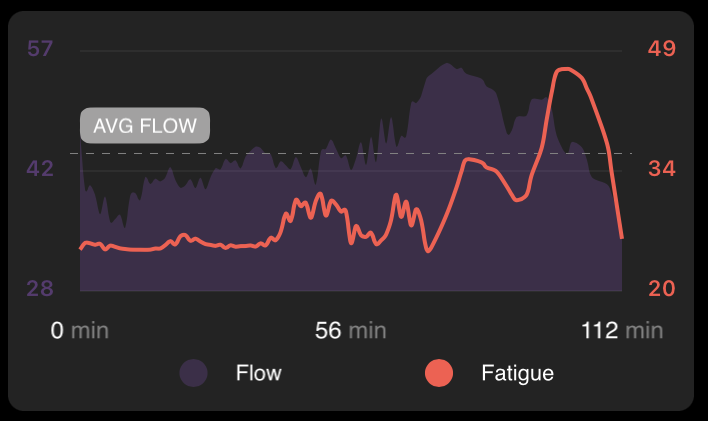
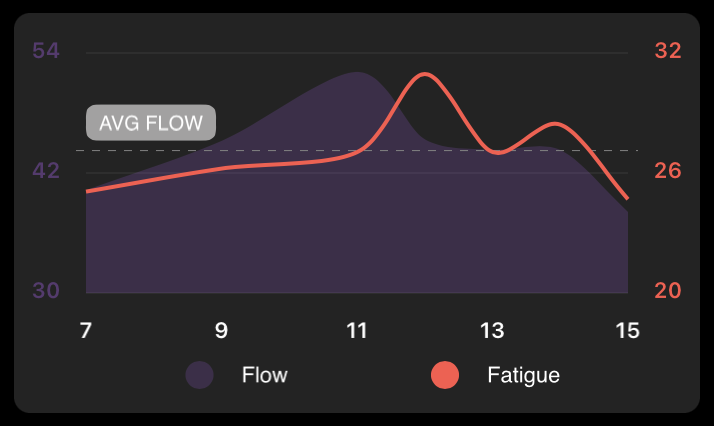
Did you know you can track when you are in flow.
Flow isn't some mythical goal. It is a real state which can be measured by changes in brain wave activity. And best of all, it is associated with improved performance.
Productivity isn't about hours.
It's about spending 4-5 hours in intense focus and the rest of the day taking care of your health, defining your purpose, and doing things that bring you happiness.
You can't create more time; use it wisely.
The daily routine of Japanese author Haruki Murakami:
Wake up at 4 AM
Write for 5-6 Hours
Run and/or swim in the afternoon
Read & listen to music
Bed by 9pm.
"The repetition itself becomes the important thing"
This is a personal favorite of mine. Go hard early, then relax.
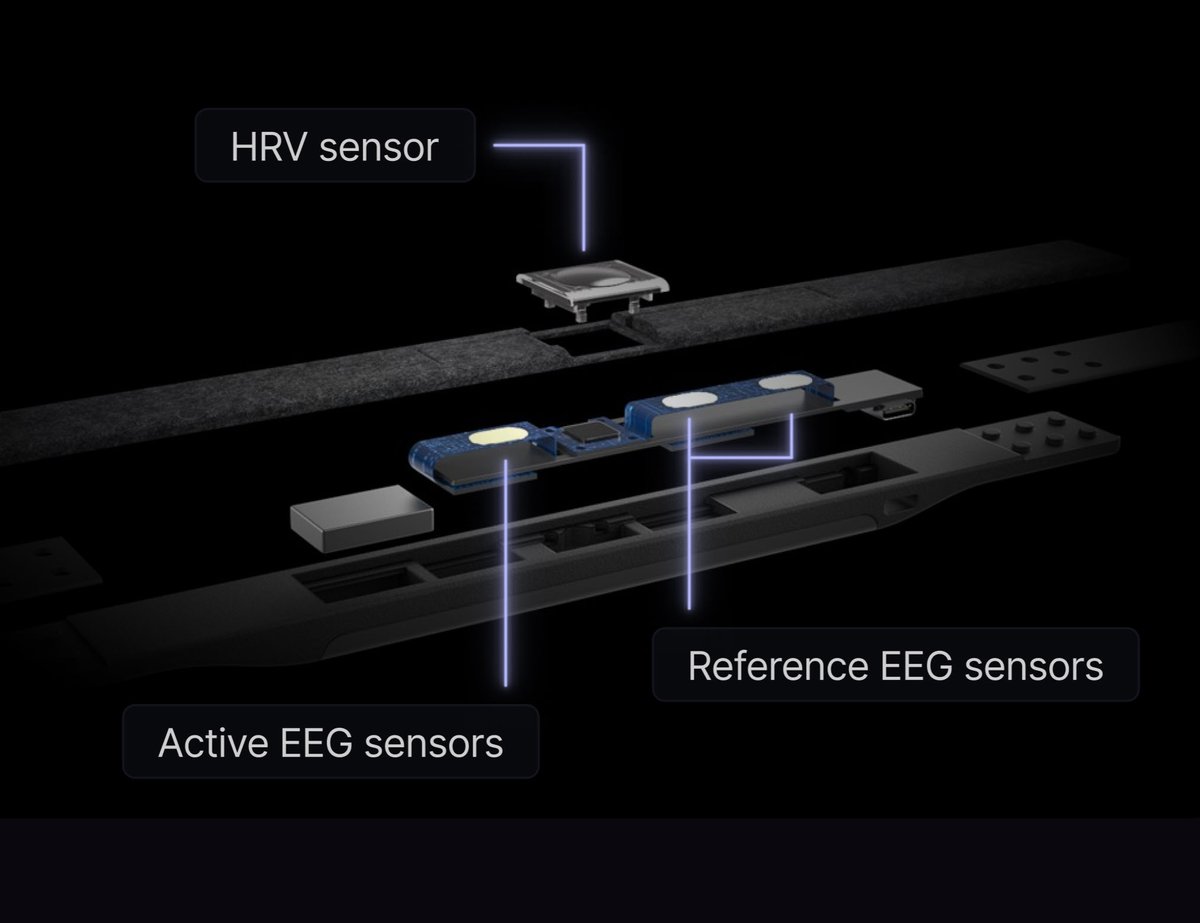
This has been a focus of my life for the last four years. Making a wearable that uses EEG and HRV to track your flow and fatigue.
It helps you identify what time of day you work best, how long your work blocks should be, and when you need a break.
https://t.co/qbGyWa7dEQ
5) Read every day.
It helps improve your vocabulary, writing style, and creativity.
If you want to become a great writer, you need to be an avid reader first.
Peek behind the curtain of the modern writer.
How does the best of them do it without burning out?
They offer great learnings for the rest of us.
Here are five daily routines of best-selling authors:
4) Take breaks.
Writing can be mentally taxing.
Take breaks to recharge and step away from the work.
Some writers take a 10-20 minute break every hour, while others prefer longer less frequent breaks.
Find what works best for you.