Antes, el problema de la música era el dinero; web3 lo resolvió. Ahora, el problema dentro de web3 es la fragmentación.
Demasiados smart contracts haciendo cosas parecidas, muchas copias de la misma información,
y muy poca certeza sobre cuál es la fuente de verdad de una canción.
Si te interesa cómo se resuelve eso,
seguí este hilo🧵👇
One thing I realized after participating in hackathons like the Zora Coinathon by @encodeclub on Base:
Hackathons are less about having the perfect idea…
and more about discovering what YOU are capable of under pressure 🧵 @SuperteamNL
Cada canción es una copia o una nueva versión.
Estamos bailando al viejo estribillo.
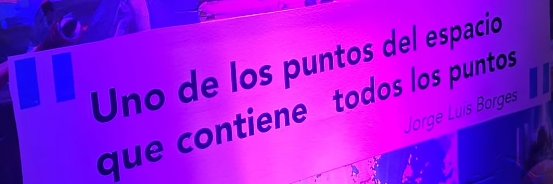
Al borde de la singularidad, en un mundo de ecos que no podemos romper.
Sin-gu-la-rity 🎶🎶
Una playlist puede funcionar como esa primera puerta.
No solo ordena canciones: reúne artistas, le da contexto a un sonido y puede activar ingresos si esa música recibe apoyo.
@nicoproducto Algunas cosas las podes descentralizar pero al final del día las personas solo quieren que todo sea más fácil, entendible y no aprender tanto para utilizar una app
Por eso no alcanza con registrar música sobre smart contracts sueltos.
Si cada proyecto rehace el registro por su cuenta, la infraestructura musical se vuelve más fragmentada, no menos.
El verdadero desafío está en ordenar metadata, identidad y trazabilidad para construir una descentralización.
Una lástima lo de @ninaprotocol.
Nina demostró algo importante: la música independiente necesita más contexto, relación directa con fans y mejores caminos de monetización.
Desde @tuneportxyz_en sigo insistiendo: web3 ayudó con el problema económico, pero el gran problema pendiente es la fragmentación de la data musical.
Por eso @Allfeat_IP me parece tan interesante: si resolvés metadata, identidad y trazabilidad desde la raíz, podés construir muchos rieles encima.
La música necesita infraestructura, no solo más plataformas.
Today, we’re sharing the decision that we are winding down Nina Protocol.
The site will be winding down in phases over the next six weeks. You should use this time to withdraw your earnings and export your releases, purchases and connections.
Our goal is to make it easy for you to take your Nina activity with you before the site goes offline. After July 15th the site and app will be fully offline. We’re looking into options to archive Nina Editorial online and will share a link to that once we do.
May 28 - June 15:
- Uploads and purchases on Nina will be shut off
- Site will remain browsable
- Tools for exporting published and purchased releases, withdrawing funds, and exporting social graph will be made available for offboarding
June 15 - July 15:
- Site will no longer be browseable and only offboarding tools will be available
July 15:
- Site will be shutdown
In 2021, we saw musicians’ growing fatigue in the face of streaming’s one-size-fits-all payments, context-collapse, and algorithmic discovery. We set out to build infrastructure for independent music that allowed musicians to sell their music, create their context, and connect with listeners on their own terms.
Our goal was to release independent music from the grips of Big Streaming, which we felt unfairly tilted outcomes to benefit the major labels.
- Over the last five years, we’ve built new models for:
Releasing music direct-to-fans
- Helping artists contextualize their music
- Elevating listeners from the role of passive consumer to active collaborator
- Bringing editorial and curation directly into the discovery experience
While our work created meaningful connections and helped foster listeners’ love for new music, we were unable to find a revenue strategy that would give Nina a path to sustainability at its current size.
We looked at our options for how to fund the platform and continue working on it, and saw no viable paths forward that would allow us to continue developing, or responsibly maintain Nina the way it runs today.
We are disappointed at this outcome and our inability to get Nina to long-term stability, as this has been a labor of love for the last 5 years, but remain honored to have played a role in supporting and highlighting incredible corners of the music community.
We are immensely grateful to all who supported Nina, released music, listened, supported artists, attended shows, and wrote about music on Nina. Big Streaming has the benefit of convenience, but mostly at the expense of the artists big and small who don’t win the attention lottery. We continue to be inspired by platforms like Bandcamp, Soundcloud, Untitled, Subvert, Cantilever, Tidal, Qobuz.
The work of a musician changes with each phase of technology. Anyone who brings more context to artists and provides direct paths to revenue and fans should be supported. We are optimistic and look forward to seeing how those who continue to build for independent music will improve our corner of the world.
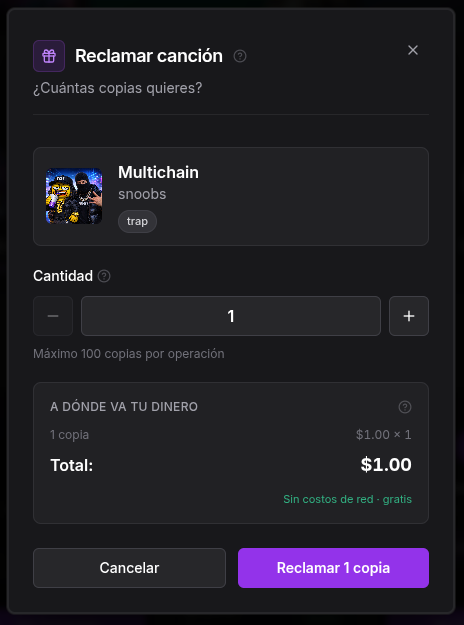
Una parte interesante es esta: la canción no tiene que quedar sola arriba.
Puede convivir con tip directo, una edición limitada
o contenido exclusivo sin mandar a la gente a cinco lugares.
Se parece más a publicar una etapa
que a soltar un link y perder el resto.
La lógica es simple: primero una fuente de verdad descentralizada y después una mejor forma de mover valor alrededor de la música.
Más descentralización.
Menos fragmentación.
Más oportunidades para artistas independientes.
Cuando los datos viven dispersos, todo se vuelve más frágil:
- La autoría
- Los roles
- Las referencias
y cualquier intento de distribuir mejor el valor que esa música genera.
El momento más raro de un release no es cuando nadie llega.
Es cuando sí llega alguien y solo le podes ofrecer play.
Capaz quiere apoyar.
Capaz quiere llevarse algo de esa etapa.
Capaz quiere dejar más que una escucha.
¿Y si el problema no es la falta de interés, sino lo poco que la música puede hacer con él?