I have a friend I'm trying to hire who's basically unemployable and homeless however like, once u start knowing her you basically get roped into her life as if it's a tv show. Like, she causes insane amounts of property damage (one time she accidentally poisoned me) but her existence as living art is so enjoyable and also funny like she gets kicked out of everyone's house and then eventually ppl get sad and want her back so she basically circulates around like, I'm fairly certain this wud be a job in the medieval times but how does one employ someone like this ? I feel like I have an unusually large amount of unemployable but brilliant friends. Is there a healthier way for society to support these figures?
It's like Socrates syndrome
The nature of the smallest vegetable or animal is a hundred million times more difficult than that of the soul and all the intellectual notions of numbers, geometry, metaphysics, etc. These intellectual researches are in our power. They are in some way in us. - Leibniz #leibniz
People don’t actually believe you can learn subjects by reading books anymore. The popular model of learning is ‘learning by doing’ and video is second hand ‘learning by doing‘. Software developers (the first illiterate technical class) pioneered this worldview.
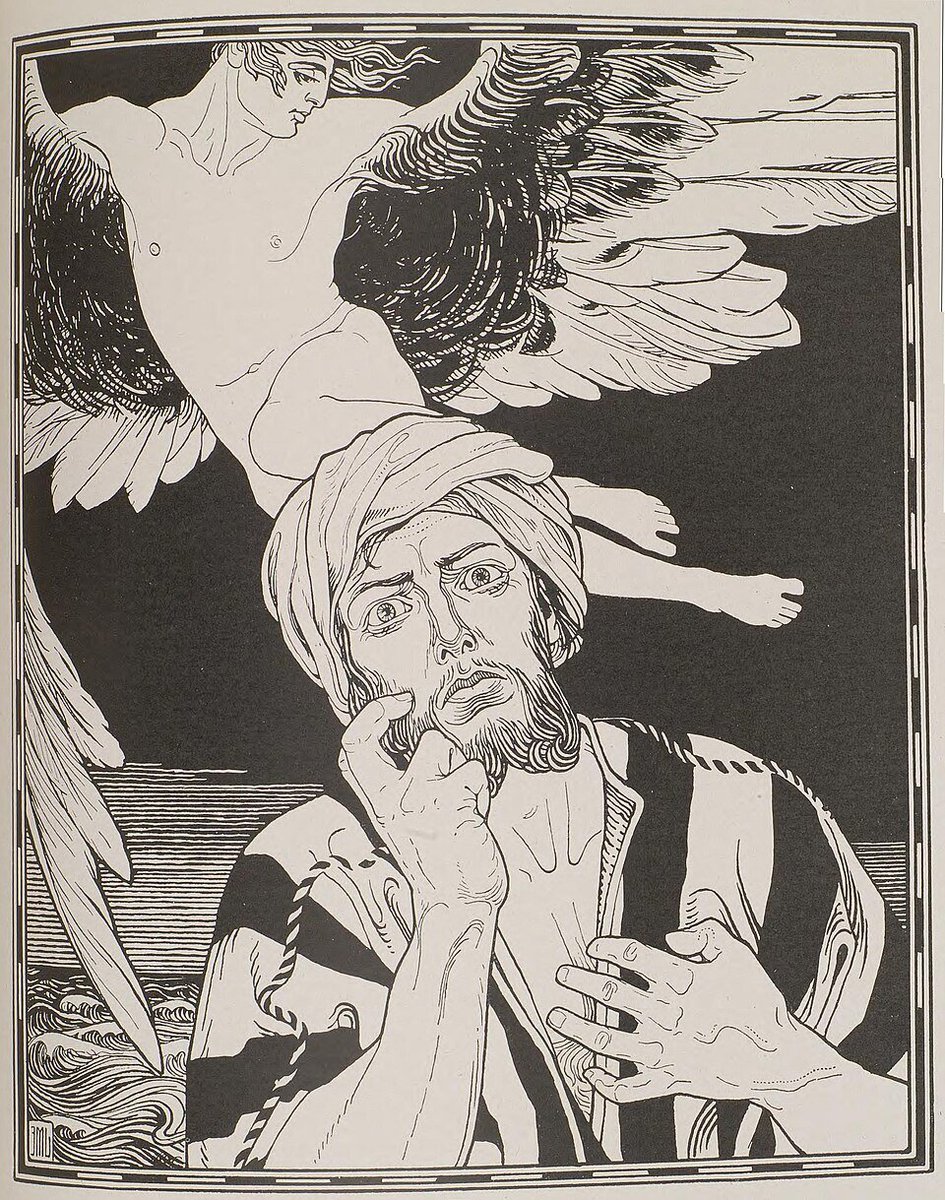
In 1259 BC after the massive Battle of Kadesh and a decade and a half of war Egypt and the Hittites agreed to sign a treaty of "brotherhood and peace forever." The treaty did not just establish peace; it was also the first recorded mutual defence pact:
"If another enemy comes [against] the land of Hatti… the great king of Egypt shall send his troops and his chariots and shall slay his enemy...If a foreigner marches against the country of Egypt… then Hattusili, king of the country of Hatti, shall send his troops and his chariots and kill his enemy."
While the defence clause of the treaty was never activated by either power, peace was maintained. And when the Hittites suffered a large famine in the late 13th century, Egypt is recorded to have sent "grain to be taken in ships, to keep alive this land of Hatti."
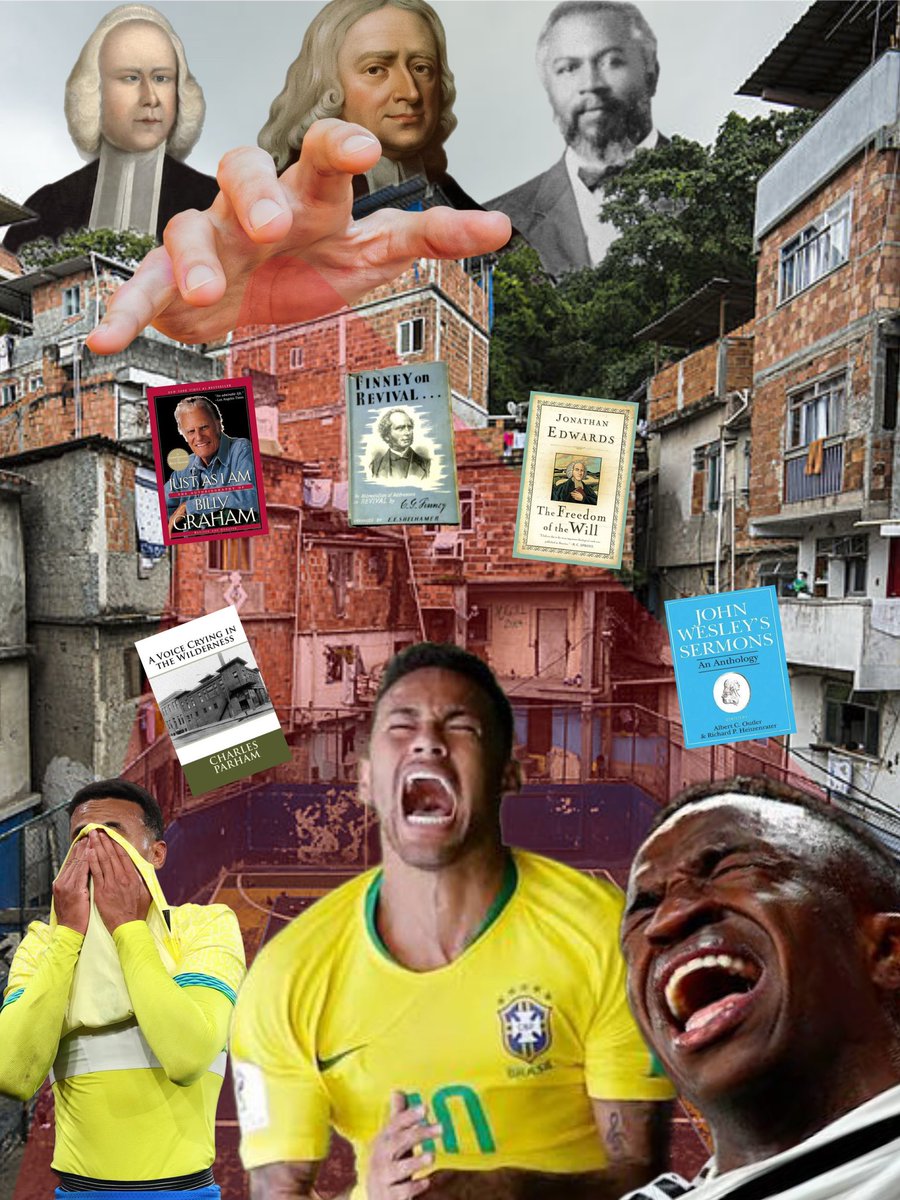
EVANGELICALISM AND THE DECLINE OF BRAZILIAN FOOTBALL 🇧🇷
After yet another World Cup defeat Brazil is again soul searching - “Why has Brazil become so bad at one of the only things it still used to be good at?”
One of the most popular explanations among Brazilians this time is the rise of evangelicalism in Brazil, especially Pentecostalism. The argument goes that this has ‘spiritually’ undermined the Brazilian team. At the 2022 census about 27% of Brazil’s population over 10 identified as evangelical Protestants. In 2000 the percentage was 15.4% and in 1980 6.6%. A common explanation for this growth is that Pentecostal and evangelical churches were able to expand so rapidly over the past half century because they offered a new version of Christianity that prioritised close-knit local communities, energetic worship and a ‘message of personal transformation’ (and some also say in a derisive sense more ‘accessible’ ‘lower barrier to entry’ version of Christianity, with everything that entails) that especially resonated with ‘urban and lower-income’ Brazilians during Brazil’s comparatively economically and culturally stagnant recent history. In particular, with the kinds of demographics who lived in or adjacent to Brazilian favelas that football wunderkinds used to be drawn from
This is a kind of version of the other main explanation I have heard for Brazil’s decline; that it lost its swag, its samba, its Latin flair - or ‘duende’. You can’t really empirically prove these claims of course and both arguments (see more of this other argument below) make different root claims but the commonality they share is that Brazilian football used to have a kind of playful Latin - maybe you could say Catholic - magic to it. It was very flashy and improvised but it was also a sort of highly skilled dance that you ‘flowed’ with, it was almost liturgical. (Argentina for instance a team that still has a bit more of this)
The Evangelical argument extends into how it has affected social dynamics in the favelas too. I can’t really speak on how accurate these claims are but apparently it has made families more cautious and less communal, less inclined to ‘let kids go out and play’ ie play football with other favela kids - the focus is instead on ‘staying safe’ and ‘individual hard work at school’. For the players from this new milieu that still do get selected for top-flight football then the effect is it makes them more individualistic, less inclined to cooperate, less likely to see it as ‘a group dance’ and more inclined instead to ‘just charge in’ etc
This is what they say! You are free to buy into that however much you want. Possibly a lot of this is just ‘cope’ so-called from a country that maybe too much ties its entire identity to football. Does seem to me that part of the finger-pointing too is you can spin it as a kind of neo-colonialism, in a cultural sense. That it comes from America, from the West. You can see quite extreme left wing Brazilian accounts repeating this claim so you do have reason to be a little sceptical in that
In any case the decline is obviously multi-causal - you can also point to the rise of European football, lack of money, bad tactics or coaching, changing tactics worldwide that no longer favour Brazil, everybody else is just that good now etc. On the right, you will hear too that the decline is related to the decline of the Brazilian nation generally ie greater incompetence all round. It isn’t just that lost their Latin - or Catholic - flair, it is that they became more ‘Third World’. Evangelicalism in this sense then would be less a problem of Calvinist Predestination Teutonic Weberian Protestant Work Ethic Protestantism - more a problem of, in the extreme, Sub-Saharan African village church with a corrugated iron roof Evangelicalism
Either way there is a general feeling that the death of Brazil football represents the loss of a version of the national soul - that Brazil has now somehow changed for the worse
The decline of the Brazilian national team is mirrored by the decline of Catholicism in the country. This team lacks joy, replaced by dour Protestant work ethic that is alien to their culture.
Vou torcer para os países COLONIZADORES. Vou torcer para a ARGENTINA e NÃO para o Messi. Vou torcer para MAIS pausas de hidratação. Vou torcer para MAIS problemas de visto. Vou torcer para os Estados Unidos ganharem permissão para jogarem com ARMAS de FOGO.
@HenriqueSTO1 Se formos parar um pouco para pensar, às vezes a seleção está tomando no cu justamente por ser assim.
Quase uma punição divina por ser retardada e arrogante.
Erling Haaland spent $134,000 on a book he'll never read.
Then gave it away.
Last December, he and his father quietly bought the 1594 edition of Snorri Sturluson's Kings' Sagas at auction — the most expensive book ever sold in Norwegian history.
Only one copy exists on earth.
They donated it to the public library in Bryne.
The town where Haaland grew up.
One condition: it stays open. Anyone can walk in and read it.
What actually is this book?
Written in 1230, it chronicles Norwegian kings from the age of gods through medieval history — warriors, farmers, kings from the exact coastal region Haaland calls home.
The 1594 edition was the first time it was ever printed in Norwegian.
Before that it lived in manuscripts, locked away from ordinary people for 350 years.
He bought the moment his people's history became something they could hold — and handed it to the next generation.
"I want the book always to lie open so people can read about those who came from where I come from."
He scored twice for Norway today in his first ever World Cup match.
The kings in that book would've approved.




![lefineder's tweet photo. In 1259 BC after the massive Battle of Kadesh and a decade and a half of war Egypt and the Hittites agreed to sign a treaty of "brotherhood and peace forever." The treaty did not just establish peace; it was also the first recorded mutual defence pact:
"If another enemy comes [against] the land of Hatti… the great king of Egypt shall send his troops and his chariots and shall slay his enemy...If a foreigner marches against the country of Egypt… then Hattusili, king of the country of Hatti, shall send his troops and his chariots and kill his enemy."
While the defence clause of the treaty was never activated by either power, peace was maintained. And when the Hittites suffered a large famine in the late 13th century, Egypt is recorded to have sent "grain to be taken in ships, to keep alive this land of Hatti."](https://pbs.twimg.com/media/HMvPzebWAAAJOu3.png)


![lefineder's tweet photo. In 1259 BC after the massive Battle of Kadesh and a decade and a half of war Egypt and the Hittites agreed to sign a treaty of "brotherhood and peace forever." The treaty did not just establish peace; it was also the first recorded mutual defence pact:
"If another enemy comes [against] the land of Hatti… the great king of Egypt shall send his troops and his chariots and shall slay his enemy...If a foreigner marches against the country of Egypt… then Hattusili, king of the country of Hatti, shall send his troops and his chariots and kill his enemy."
While the defence clause of the treaty was never activated by either power, peace was maintained. And when the Hittites suffered a large famine in the late 13th century, Egypt is recorded to have sent "grain to be taken in ships, to keep alive this land of Hatti."](https://pbs.twimg.com/media/HMvP4bYXgAAz6f2.png)