@AdvocateAda Is there a reason you are on such a tear against World Mobile? I mean sure the token price has underperformed… but you seem hyper focused on shitting on it.
Today I was invited by a local college to speak with students about entrepreneurship. The thing that stayed with me is that these young people have real dreams, but even at this age they are already scared to go off track.
I told them the World Mobile story. We started in Zanzibar with a few hundred users and one simple idea: people should own the network they pay for. Operators told us it couldn't be done. Regulators told us it couldn't be done. Plenty of investors told us it couldn't be done. Today that idea has connected more than 3 million previously unconnected adults and 300,000 children across three continents.
The "you can't" has never stopped, and the last few weeks have been louder than ever. After the bridge attack, people rushed to write us off. Numbers have been twisted, history has been rewritten, and things have been said about me and this company that are simply not true. Some of it has come from people who once stood beside us.
So here is what I told the students, and it's what I'm telling our community. Your life will be full of people telling you what you can and can't do: loved ones, friends, business partners, investors and complete strangers. Some will even lie about you. Listen to criticism that makes you better. Ignore the people who only want you to stop or want you to fail.
There will be times when it looks like you're failing. That is a moment in time, not the end of the story. Stick to your guns. Bring the drive, the determination and the grit, and make sure the idea underneath it all is logical and sound. What matters isn't where you are today. What matters is where you end up.
World Mobile isn't stopping, and neither should those students. We are building, and I want them building too. Every one of them will hear "you can't" more times than they can count. We hear it every day. The answer is the same for all of us: keep going and smash through everything in your way.
@GuntherEagleman You retards thought Saddam kept winning every election with 99% of the vote. Saddam said the quiet part out loud… your meltdown is epic.
Get ready for a demonstration that is going to blow your mind and give the crypto industry a brand new set of rails to keep their funds secure. @JoshMinsNet and I will be running a video session within the next 48hrs. This is for retail, companies and institutions.
@GuntherEagleman The Trump admin is responsible for 30% of the entire National Debt. Y’all are as bad as Democrats… because we elected a former Democrat who is addicted to spending.
This was Herculean effort by the @WorldMobileTeam to contain this issue with their partners. Most projects would have folded. Financial capital didn’t save $WMTX; it is the Human Capital and the Intellectual Capital that allows the project to move forward and keep growing. The team, their partners, and the community. This is what resilience looks like. Onwards. Upwards. Together. Unstoppable. Well done. I’m grateful for each and every person who did their part. @MrTelecoms@em_bee_cee@wmchain
The future of base:0x3e31966d4f81c72d2a55310a6365a56a4393e98d is on @Base.
We’re moving from incident containment into recovery, with Base at the centre of what comes next:
- @Coinbase, @Krakenfx and @Bitvavocom support Base base:0x3e31966d4f81c72d2a55310a6365a56a4393e98d
- World Mobile Chain is built on @Base and accessed through Base base:0x3e31966d4f81c72d2a55310a6365a56a4393e98d
- base:0x3e31966d4f81c72d2a55310a6365a56a4393e98d staking continues on Base
- @HydrexFi now holds the largest onchain liquidity pool for base:0x3e31966d4f81c72d2a55310a6365a56a4393e98d, anywhere sitting in the top 5 pools for rewards on their $100K/week for 15 weeks bonus program
- New single sided ICHI incentives are live on @HydrexFi. Buy base:0x3e31966d4f81c72d2a55310a6365a56a4393e98d, supply single sided, and start earning. https://t.co/7CYTSoCEaQ
Ethereum base:0x3e31966d4f81c72d2a55310a6365a56a4393e98d will be permanently deprecated. Do not trade, transfer or transact with it. Eligible holders identified through the pre exploit snapshot and chain analysis will receive the corresponding base:0x3e31966d4f81c72d2a55310a6365a56a4393e98d on Base.
We’re working with exchanges to restore trading and will announce confirmed reopenings through our official channels.
This is where we build. Thank you for holding with us through this. Our next chapter is bigger. We're unstoppable.
Full holder guidance below.
Base, BNB Chain and Cardano holders:
- No token remediation action is required. These versions were not affected by the unauthorized -Ethereum minting.
- Locked tokens in staking contracts and liquidity pools continue to operate as normal.
@GuntherEagleman Read the US Constitution. You can only have two terms. I know you commies don’t care about that, and it’s only love and loyalty to Trump. I get it … Trump over country… but also… not kindly, but fuck off.
Your next connection could be around the corner.
World Mobile × https://t.co/Y0vrlG0Evn
AirNode trials are underway in Austin, with the Bronx planned next.
We’re starting with the neighborhood stores people already know.
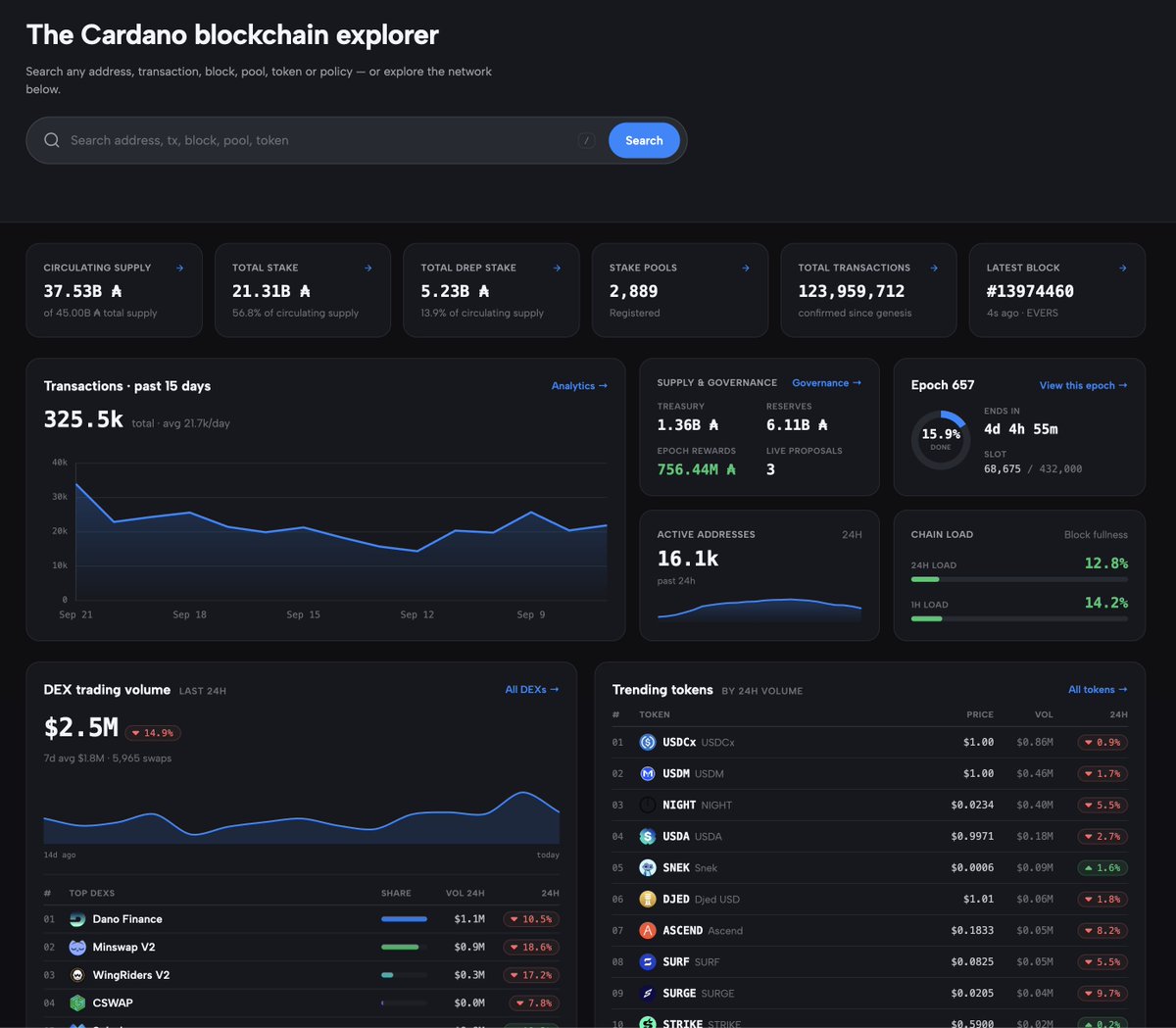
Cardanoscan is no longer the Cardanoscan you remember.
That is not an easy sentence to write.
We’ve moved beyond the old homepage.
Today, we’re unveiling a redesigned Home Page with DeFi, chain stats, network activity, and more.
New home. Same chain.
https://t.co/f7Q5u3VYBx
@GuntherEagleman How do we stop communism from Republicans and stop the anti capitalist policy if we allow Repubs to remain? We have a 2 trillion dollar deficit and Trump adds more debt than any US president. Why do the deserve the chance to keep screwing us?
Having healthy people in the pool paying is the only way insurance works. It’s like we have people trying to bankrupt the system. Oz has repeated this notion that people who haven’t filed claims are fraud. What would we expect with entertainers trying to administer a healthcare system.