@HalBoone2@thecyrusjanssen if you believe one child policy worked well for the past 40 yeats, what makes you not to believe that CCP can reverse to 4-child policy and force everyone to make more babies for next 40 years if they want to? do that math.
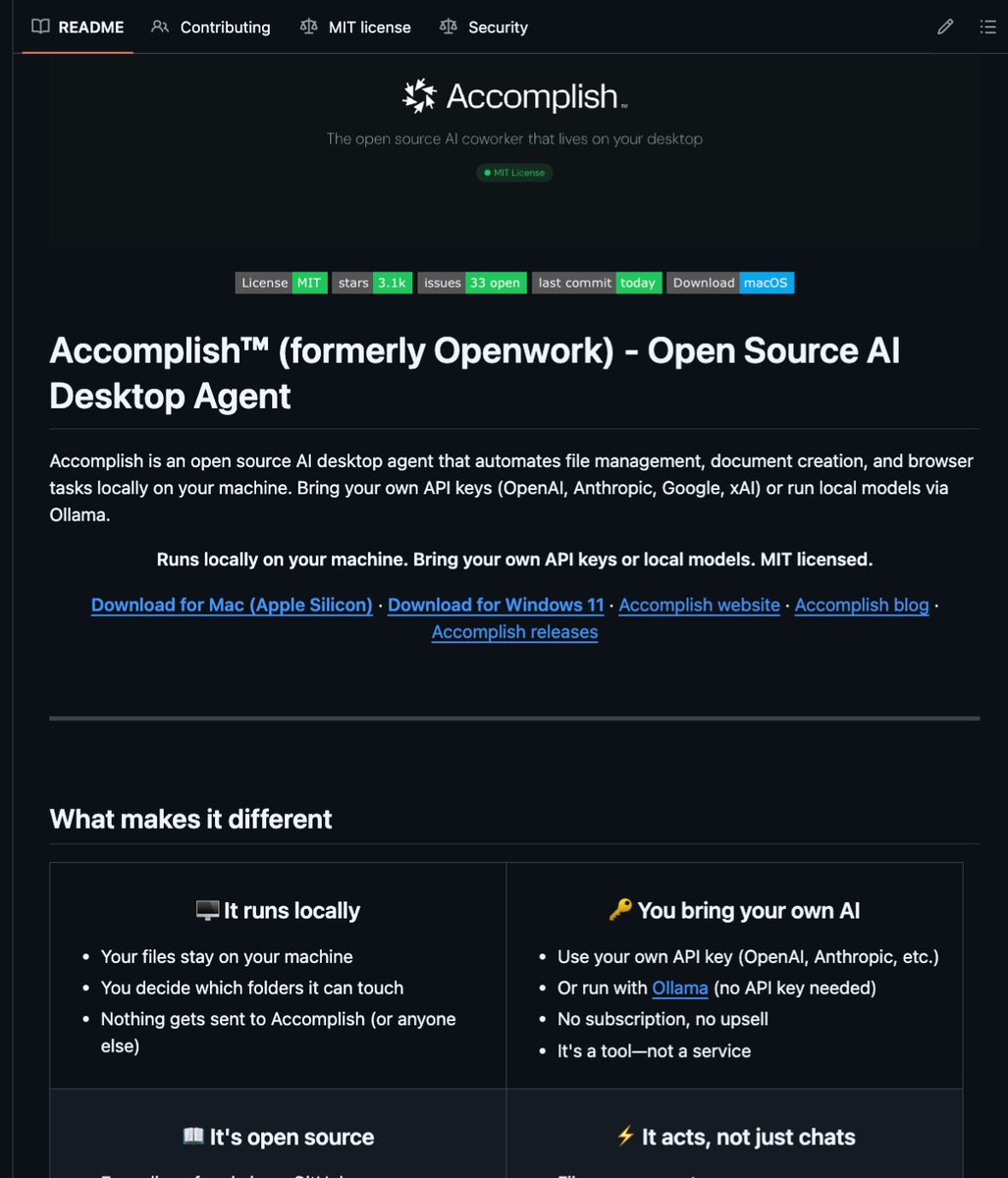
BREAKING: Someone just built an AI that codes and browses the web at the same time.
It's called Accomplish and it runs locally without burning through API credits.
No Claude Desktop. No Cursor. No monthly subscriptions.
100% Opensource.
This is probably the single feature that makes China most unique as a civilization in human history: it is pretty much the only one where religion never had a say in political affairs.
We often wrongly believe that China's secularism came with Communism but this couldn't be more wrong. The roots are far, far more ancient than this.
Think about any other civilization - India, Persia, ancient Egypt, European civilization, the Incas: they all had a priestly class that held considerable political power. China? Never.
Never, ever? Actually China, in its very early history, had a brush with theocracy during the Shang dynasty in the 2nd millennium BC. And it is precisely this episode - or rather what came afterwards - that decisively de-linked religion from government affairs.
How so? Because around 1046 BC, the Zhou overthrew the Shang and immediately faced a big problem of legitimacy. The Shang had claimed to rule because Heaven had chosen them. If that were true, then the Zhou had just committed the ultimate act of sacrilege. How do you justify going against God’s will?
The answer the Duke of Zhou (who can thus be credited as the - perhaps unwitting - inventor of secularism) came up with was essentially to say that Heaven's mandate is not a birthright but a contract - conditional on the virtue of the ruler and good governance.
It might not sound like much but this idea completely changed the whole equation: suddenly the legitimacy of power didn’t rest on God’s will but on man’s moral judgement, on whether the ruler had virtue (德, Dé) and governed well. Which meant that, ultimately, the people - as opposed to a God - became the arbiter of whether a ruler is legitimate.
If there is one single decision that most shaped China's destiny as a civilization, it's probably this one. And, as I explain in my latest article, it ultimately shaped all of us in profound ways: through a chain of events involving Jesuit missionaries, Voltaire, and what French Enlightenment thinkers called "l'argument chinois" ("the Chinese argument"), it is this very idea that ended up secularizing Europe too and drove the Enlightenment movement.
That's the topic of my latest article: the origins of China's secularism, how it shaped three thousand years of Chinese civilization, and why - far from being a belief in nothing or an absence of belief as it's all too often depicted - it's on the contrary a faith in humanity itself.
Read it all here: https://t.co/XLwhKFlaNl
马斯克的百万美元悬赏,怕是要被Dan Koe直接拿下了。
他这篇《How to fix your entire life in just one day?》在X上阅读量已破1.7亿了。
这不是短视频,而是一篇上万字、读完需近1小时的长文,干货密度极高。我也花了小半天才读透,确实值的一看。
最反常识、最狠的一句:
“你不需要每天工作12小时,只需每天专注1小时就够了。”
别急着反驳,逻辑很完整。Dan Koe给普通人最实用的三个观点,我翻译并直接总结一下:
1. 身份切换才是第一性原理,自律是loser的幻觉
靠意志力“坚持”迟早崩。改身份才行。
戒烟例子:说“我在戒烟”还在吸烟者身份里挣扎;说“我不抽烟”拒绝就成自然反应。
李笑来戒40年烟就靠每天重复“我是一个从来不抽烟的人,烟味儿很臭,I am a person who never smokes”。
想做副业/自媒体?别说“坚持每天写文拍视频”,而是说“我是一个每天帮别人解决问题的内容创造者”。身份一变,努力就理所当然。
2. 你现在的拖延/摆烂,其实在完美服务“安全感”这个隐藏目标
留在烂工作、烂婚姻、不敢发失败帖,都是怕“别人眼中的完美形象”崩塌。
雷军说过类似一句话比较出名
“我们就悄悄做,没成功就当没做过”。
建议:别all in,别公开喊大目标,先做低风险、可复利的小实验。
普通人最强两个无需许可杠杆:code 和 content,睡觉都能赚钱,复利爆炸。
3. 成功不需要更努力,而是把时间从“维护”切到“创造”
大部分人忙的全是重复琐事(维护),真正改变人生的创造性工作(从0到1)却没时间。
Dan拆成三件事:Create(创造)、Maintain(维护)、Recover(恢复)。成功者每天至少留1小时给Create,其他时间维护+恢复(散步、洗澡、发呆、睡觉——突破想法常在这里出现)。
人生像游戏:厌恶的未来=失败惩罚,想要的生活=通关奖励。清醒一天,重启就够。
一句话:真正的改变,往往只需要彻底清醒的一天。
从今天起,每天铁打1小时纯创造,其他时间别碰。
五年后你想成为谁?评论区说说。