Hi @hubermanlab@SusannaSberg1! For those interested, I have done once again an AI generated short summary of your highly interesting podcast episode (by using #chatgpt @OpenAI)
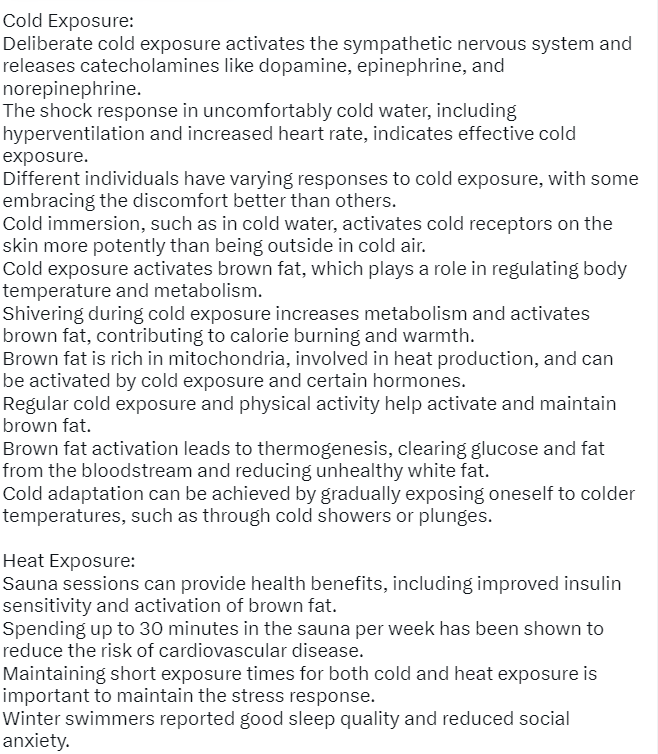
Cold Exposure:
Deliberate cold exposure activates the sympathetic nervous system and releases catecholamines like dopamine, epinephrine, and norepinephrine.
The shock response in uncomfortably cold water, including hyperventilation and increased heart rate, indicates effective cold exposure.
Different individuals have varying responses to cold exposure, with some embracing the discomfort better than others.
Cold immersion, such as in cold water, activates cold receptors on the skin more potently than being outside in cold air.
Cold exposure activates brown fat, which plays a role in regulating body temperature and metabolism.
Shivering during cold exposure increases metabolism and activates brown fat, contributing to calorie burning and warmth.
Brown fat is rich in mitochondria, involved in heat production, and can be activated by cold exposure and certain hormones.
Regular cold exposure and physical activity help activate and maintain brown fat.
Brown fat activation leads to thermogenesis, clearing glucose and fat from the bloodstream and reducing unhealthy white fat.
Cold adaptation can be achieved by gradually exposing oneself to colder temperatures, such as through cold showers or plunges.
Heat Exposure:
Sauna sessions can provide health benefits, including improved insulin sensitivity and activation of brown fat.
Spending up to 30 minutes in the sauna per week has been shown to reduce the risk of cardiovascular disease.
Maintaining short exposure times for both cold and heat exposure is important to maintain the stress response.
Winter swimmers reported good sleep quality and reduced social anxiety.
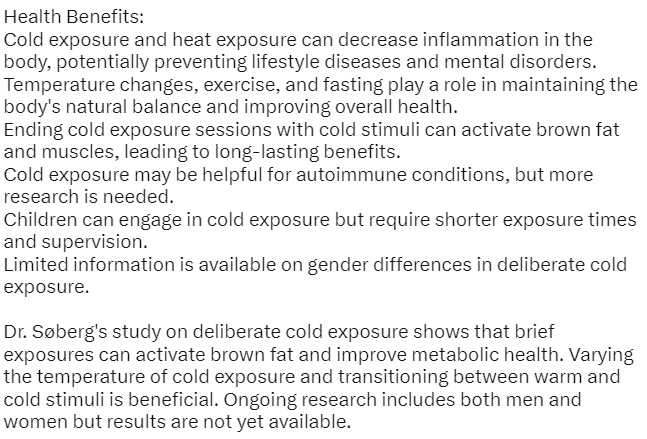
Health Benefits:
Cold exposure and heat exposure can decrease inflammation in the body, potentially preventing lifestyle diseases and mental disorders.
Temperature changes, exercise, and fasting play a role in maintaining the body's natural balance and improving overall health.
Ending cold exposure sessions with cold stimuli can activate brown fat and muscles, leading to long-lasting benefits.
Cold exposure may be helpful for autoimmune conditions, but more research is needed.
Children can engage in cold exposure but require shorter exposure times and supervision.
Limited information is available on gender differences in deliberate cold exposure.
Dr. Søberg's study on deliberate cold exposure shows that brief exposures can activate brown fat and improve metabolic health. Varying the temperature of cold exposure and transitioning between warm and cold stimuli is beneficial. Ongoing research includes both men and women but results are not yet available.