The early bird deadline for Microbiome Anchor is just one week away (March 31st)!
https://t.co/5blrd0UsOH
☑️ Microbiome Conference
☑️ Great speaker list
☑️ Amazing sponsors
☑️ Ocean Views
Let me introduce Microbiome ANCHOR, a conference to bring together researchers implementing and developing novel methods for studying microbial communities. June 8-10, 2026 Save the date and join the mailing list, registrations opening in January. https://t.co/5blrd0V0Ef
I’m not sure how many people still use this app, but I’m pleased to share our new preprint! @BetaScience
https://t.co/y4P2S5oypS
I started thinking about how we could make the PICRUSt2 database easy to update and add new functions to about five years ago now…
Christmas came early for the https://t.co/hROOViBy3F! This should replace our two old MiSeqs and provide higher quality reads (for the full 2x300bp) and double our average number of reads per sample for the same price. Thanks to Andre Comeau, IMR Manager, for the photo op.
Big moves happening at @BetaScience’s #IMR. First @illumina MiSeq i100 Plus in Canada will start to churn data in the new year, adding to 17B reads already generated on their MiSeqs. Congratulations!
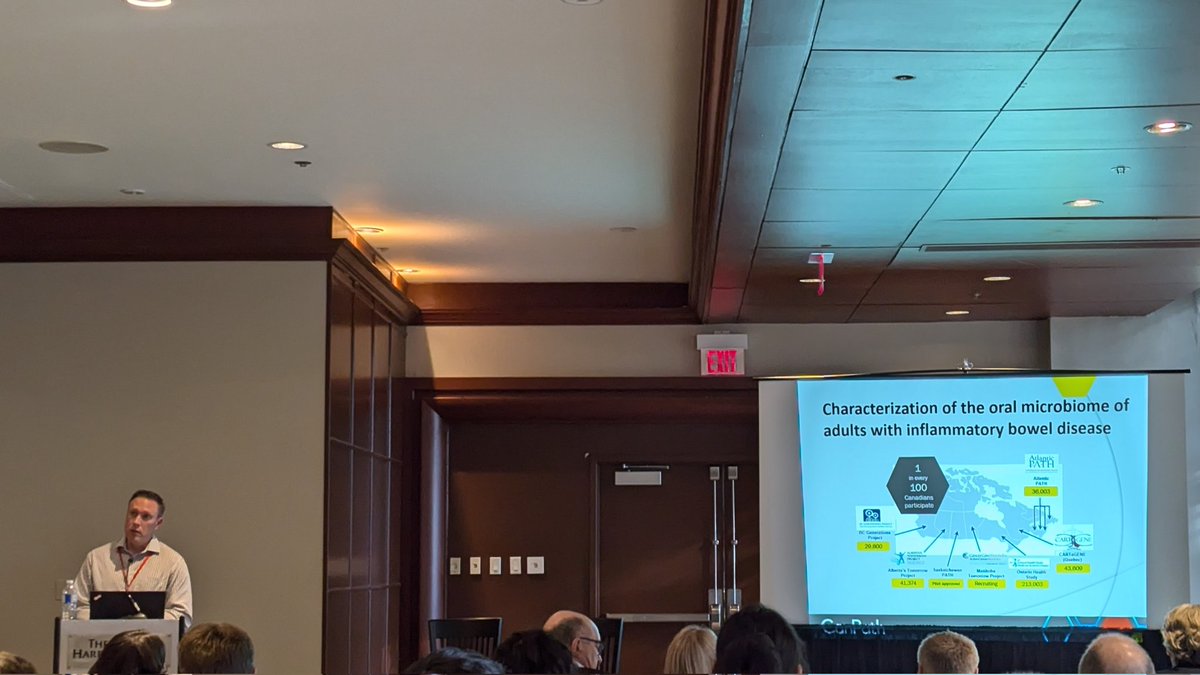
Thanks to Dr.@BetaScience for sharing how his team uses advanced computational tools (e.g. AI) to understand the different bacteria that make up human microbiome! It's a growing field and lots to uncover! 🔬👩🏾💻
Advanced #Microbiome Analysis, class of 2024! We had participants from across Canada and as far as Mexico and Kazakhstan. As always, our materials are open-access... 🧵
The Integrated Microbiome Resource (IMR) is proud to be a Gold Sponsor of #HavingIMPACTT2024. Learn more about the various sequencing and bioinformatic services offered at https://t.co/lxhntPbqJL
My MSc student @benfish404 decided to dress up as me today for Halloween! I wasn't in the office today, so he took the opportunity to take over my office and have a photo shoot, lol
This a honest and accurate description of maintaining a bioinformatic tool. The # of hours maintaining, documenting, and supporting a tool greatly outnumber the hours to build and publish it. Kudos to those that strive to make *usable* bioinformatic tools.
Today I noticed that dRep, a program I first wrote in 2016, has 1000 citations on Google Scholar! 🎉I want to share a thread on why I think the program "caught on" what I've learned maintaining it for ~7 years
Discussing the new Greengenes2 manuscript in journal club which is OA in Nat Biotech, which depends heavily on on new phylogenetic method uDance in same issue. uDance is not OA and my institution doesn't have access! Frustrating that this is still an issue in today's science.
Working on the human microbiome? @_Faecal_Matters and @BugsInYourGuts highlight human microbiome myths and misconceptions in a new Perspective
https://t.co/Rl5tJcDHfT
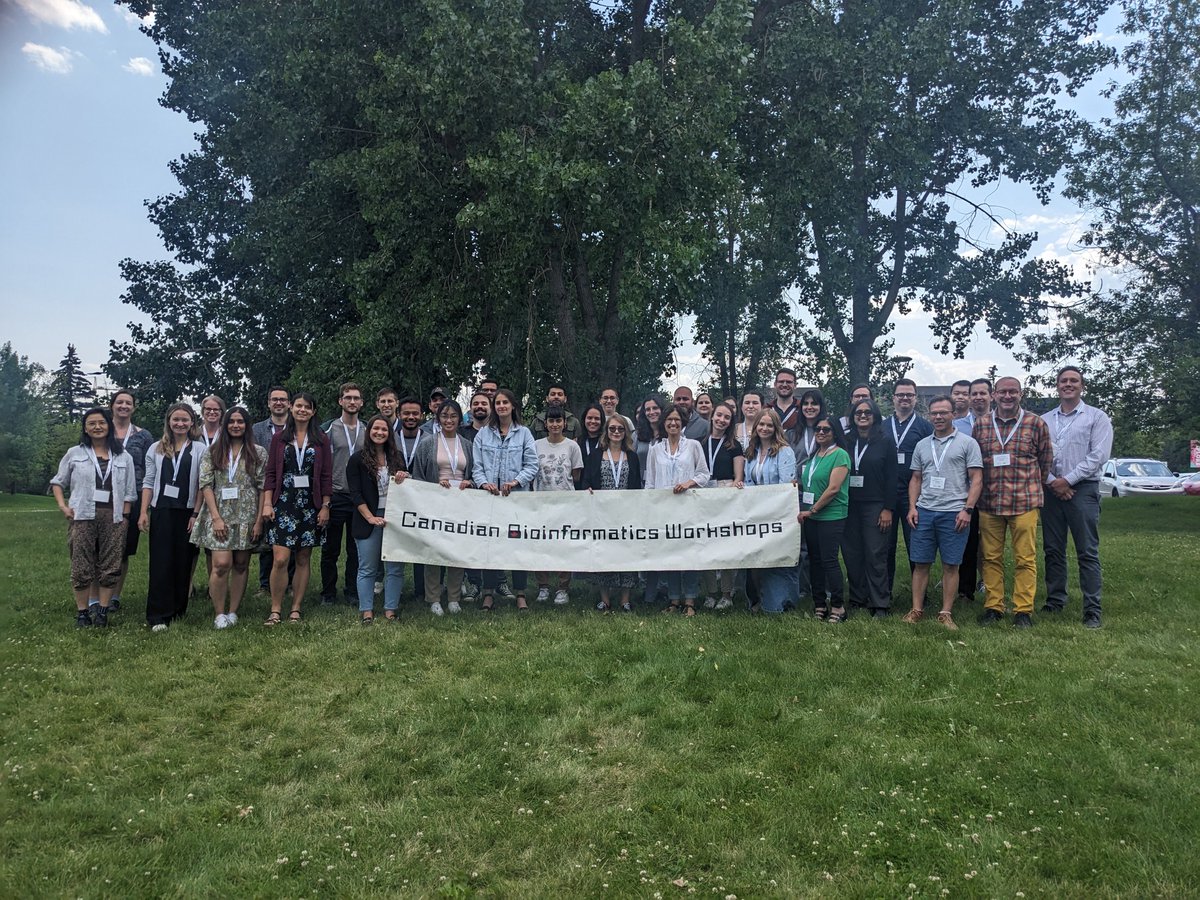
Another very successful microbiome bioinformatics workshop! An absolutely terrific group of trainees. Thanks to @IMPACTT_Canada for sponsoring again this year.
...then the CBW-@IMPACTT_Canada#Microbiome Analysis workshop in Calgary taught 36 students everything from marker gene taxonomic analysis and metagenomic sequencing to the details of setting up a clinical microbiome study...