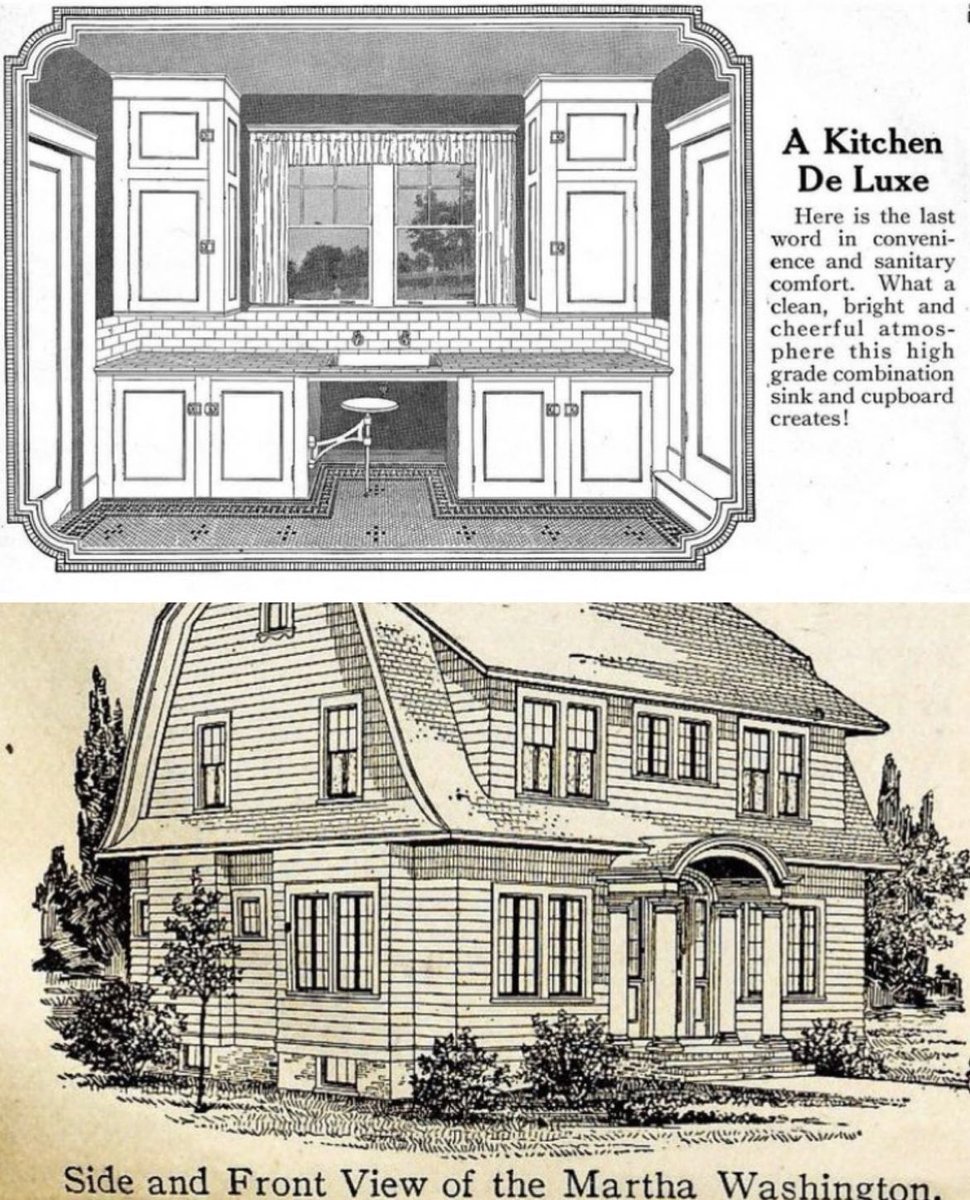
During a certain period, Sears offered complete houses in large do-it-yourself (DIY) kits through their catalogs. These kits were transported by train and encompassed around 30,000 components, including wiring, plumbing, and heating, which collectively weighed over 25 tons.
Customers had the option to choose from more than 370 designs, and each kit included a 75-page instruction manual. Sears asserted that an individual with "average" skills could construct the entire house within a span of 90 days.
Between 1908 and 1940, Sears managed to sell over 70,000 DIY homes at prices ranging from $600 to $6,000 (approximately equivalent to $8,400 to $84,000 in today's currency). One notable model, known as the Martha Washington (as depicted in the accompanying images), was sold for $3,028 (equivalent to $45,538 today) in 1921.
In 2016, the same Martha Washington model was purchased for $1.06 million in Washington D.C. Remarkably, almost 70% of these Sears DIY houses are still standing today.
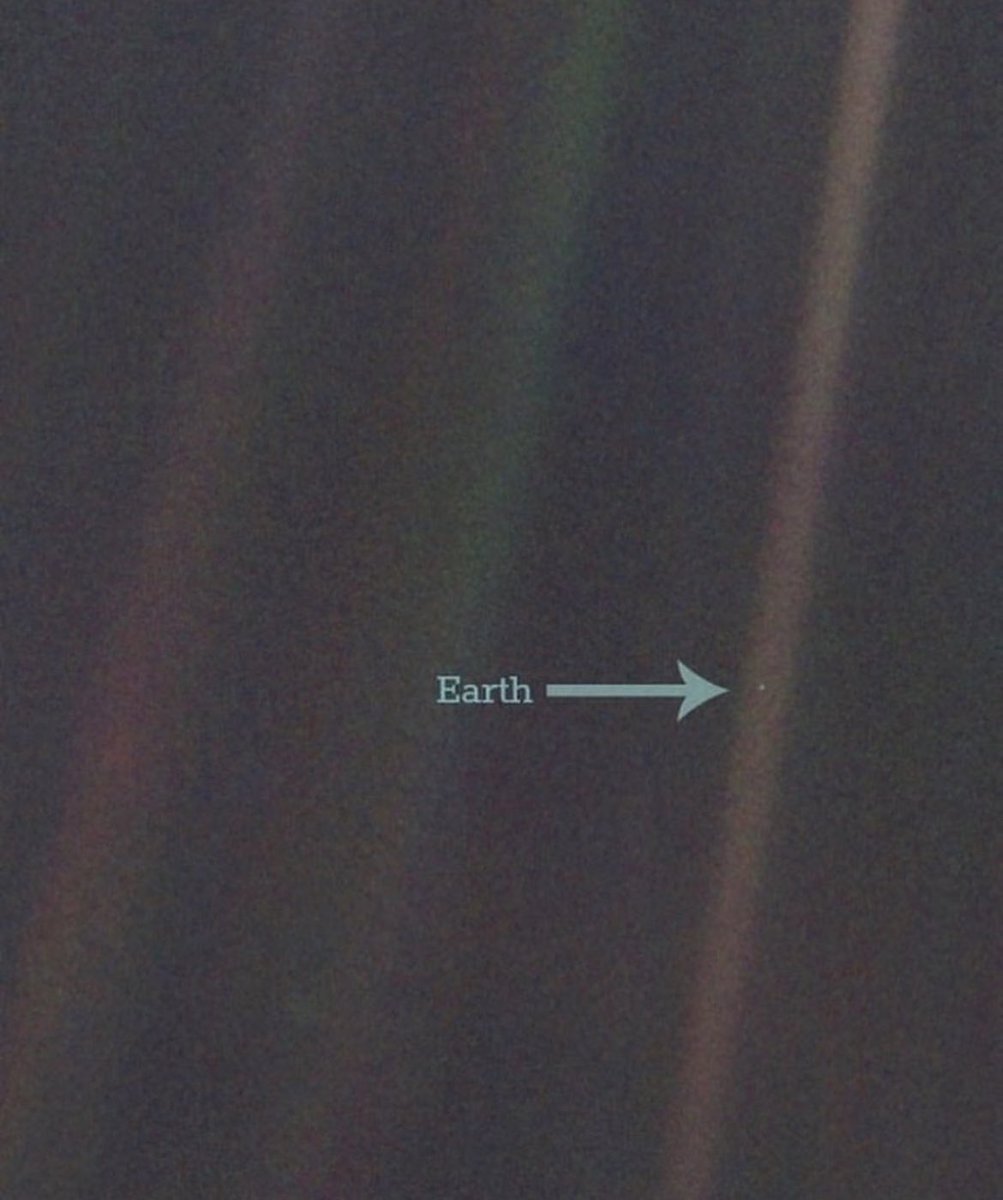
Pale Blue Dot is a photo of Earth that was taken by the Voyager 1 space probe in 1990 from a distance of about 6 billion kilometers (3.7 billion miles) as it was leaving our solar system. This is what Carl Sagan said about the photo:
"Look again at that dot. That's here. That's home. That's us. On it, everyone you love, everyone you know, everyone you ever heard of, every human being who ever was, lived out their lives. The aggregate of our joy and suffering, thousands of confident religions, ideologies, and economic doctrines, every hunter and forager, every hero and coward, every creator and destroyer of civilization, every king and peasant, every young couple in love, every mother and father, hopeful child, inventor, and explorer, every teacher of morals, every corrupt politician, every 'superstar,' every 'supreme leader,' every saint and sinner in the history of our species lived there — on a mote of dust suspended in a sunbeam.
The Earth is the only world known so far to harbor life. There is nowhere else, at least in the near future, to which our species could migrate. Visit, yes. Settle, not yet. Like it or not, for the moment the Earth is where we make our stand. It has been said that astronomy is a humbling and character-building experience. There is perhaps no better demonstration of the folly of human conceits than this distant image of our tiny world. To me, it underscores our responsibility to deal more kindly with one another, and to preserve and cherish the pale blue dot, the only home we've ever known.”