‘God Save Me’.
That was the graffiti (pictured below) imprinted on a car by an unknown African migrant held hostage at a trafficking house in Ghut Shaal, Janzur, in north-western Libya.
In truth, only God can save any migrant who gets stuck in Libya after abandonment by heartless Libyan traffickers and kidnappers or arrest and detention by the police. But the mortal that I only am, I am determined to save as many migrants as possible from asking God to save them after embarking on an ill-advised trip to Libya.
Therefore, starting tomorrow and for the next 20 days, I’ll be on a campaign of short videos enlightening the public on why they should steer clear of Libya. These videos will be on all social media platforms, but my primary targets are Tiktok and Facebook, where traffickers often hoodwink unsuspecting youth with fake promises of a better life.
For the first 10 days, my messages will be released in English (morning) and Pidgin (evening).
The final 10 days will be made in Hausa (morning), Igbo (afternoon) and Yoruba (evening), consequently eliminating language barriers among subliterates and illiterates, who constitute the prime target groups of traffickers.
I know some will only learn by experience and will proceed to Libya regardless of advisories to the contrary, but I also know many would stay put in Nigeria if they had access to credible information.
Migrants like ‘Para’ and Samuel who told me “I wouldn’t have come if I knew I would suffer this much”, those are my targets. So help me God!
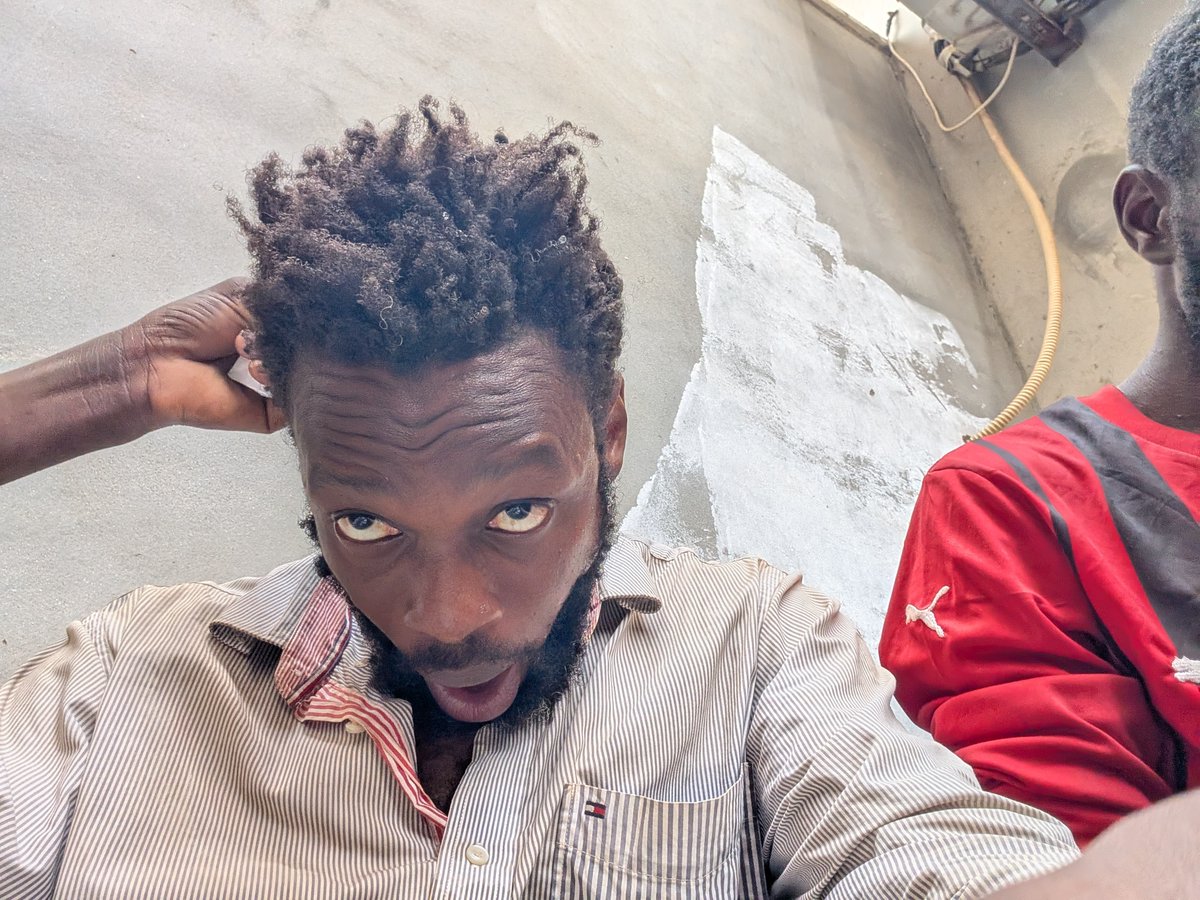
Five days into my next undercover investigation, set to be released by @fijnigeria later this week, I sent the picture in Frame 1 to my three-man backroom team. They all laughed at me, one of them remarking I looked “like a fisherman”.
The pictures in frames 2 and 3 are from my 44th day on the field. Nobody was in ebullient mood this time. They all screamed instead. None of them could say it, but I knew I could pass for a mad man on the streets.
Meanwhile, Frame 4 is who I was before I embarked on the project.
It is the first time ever that I’ve given the public a glimpse into the making of an undercover investigation. I do it this time to contextualise public understanding of the physical, material and mental cost of investigative reporting. Behind every daring work of investigation you have read is several weeks, sometimes months, of self-sacrifice by the journalist.
Of higher importance, I do it to remind younger journalists that investigative journalism isn’t the white-collar stardom propeller many seem to think it is; more often than not, it is about getting your hands dirty while still believing this is hands down the best job in the world!
It feels good to be fully back on social media after nearly five months out…
They keep showing you this figure, telling you that Nigerians in the United States send over $20 billion home every year, as though it is simply a story about how well Nigerians are doing in America.
But ask yourself why you are constantly shown this figure.
Americans are not constantly being shown how much Americans living abroad send back to the United States. Nigerians are shown how much Nigerians abroad remit home because the number helps create a particular image that, Nigerians who leave are succeeding, making money and living better, so you should also take your talent and labour over there.
What they rarely advertise is the other side of the equation.
How much do Nigerians spend on visas and immigration processes every year? How much do Nigerians contribute to the American economy through their labour, taxes, businesses, consumption and professional skills? How much human capital leaves Nigeria every year? How much productive capacity is Nigeria losing?
They show you the money coming back while rarely showing you the value and talent going out. That is the part people need to understand.
You are being encouraged to look at migration from the perspective of what you can personally gain, while ignoring what happens to the nation when large numbers of its most educated, skilled and productive people are separated from the process of nation building.
This advertisement is simply telling you to bring your talent here. Bring your labour here. Build our industries. Work in our hospitals. Fill our universities. Work in our technology sector. Pay taxes into our economy.
Then send some money back home so everyone can celebrate the remittances.
That is how brain drain can be presented as a success story.
The question Nigerians should be asking is not only, “How much money are Nigerians abroad sending home?” Also ask, how much talent, labour, capital and productive capacity are we sending out every year, and who is benefiting from it?
I know some of you will say, “But the nation does not value their talent, so they had to leave.” I hear you.
But if the best of us keep leaving, eventually we won’t have a country anymore. The countries many of us want to run to did not become what they are because everyone who faced difficult conditions abandoned them. People fought, organised, sacrificed and built the countries they have today.
We can do the same for ours.
We can fight for a Nigeria that values its talent.
Leaving may improve your individual circumstances, and I understand why people do it. But we should also be honest about the collective cost when an entire generation of skilled, educated and productive Nigerians is encouraged to take its talent elsewhere.
I was heartbroken to learn about these students today.
Their dad had both kidneys fail and no one could fund their education. They were forced to drop out of school in December last year.
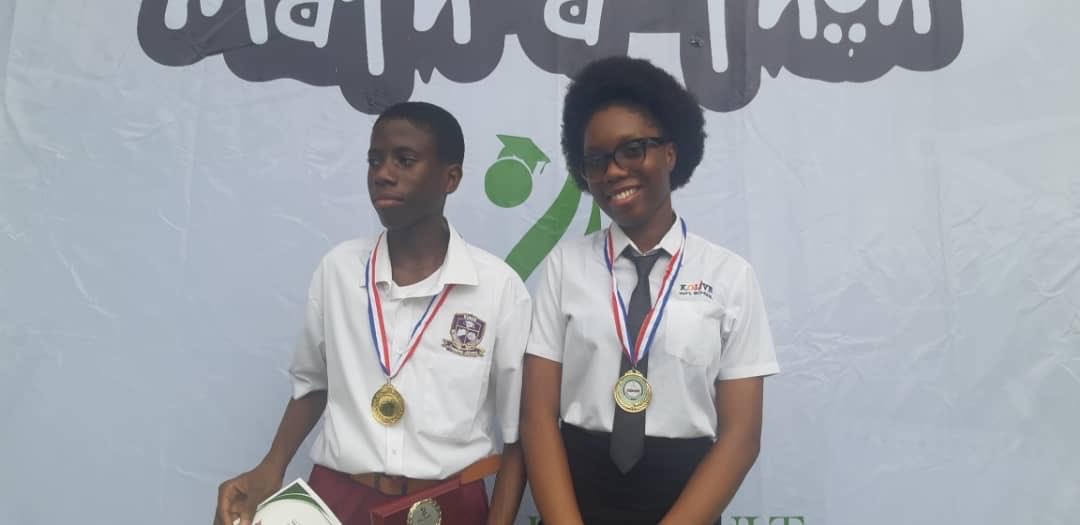
Their names are Emmanuella Ngaha and Jason Ngaha. They came by themselves from Owerri to Enugu this morning to attend our 2-week intensive bootcamp.
They were both high-flying students at Ambassador College, Ota. The boy was the best in Maths and Chemistry in SS1, and the girl has won so many national awards.
Today they are out of school with no hope of continuing.
They decided to use their last ₦24,000 to take a bus to Enugu to attend the bootcamp.
Unfortunately, this morning they were defrauded of the ₦24,000, which left them with no option but to beg for transport support until someone helped them.
A lot of young, bright children are going through a lot that is beyond their control.
We can’t let these bright stars lose their shine because of challenges beyond their control.