Q7: Approaching students as whole, complex human beings who are the experts of their own lived experiences, the way we would other adults in our lives. This requires a shift in traditional mental models about young people. #PromiseChat
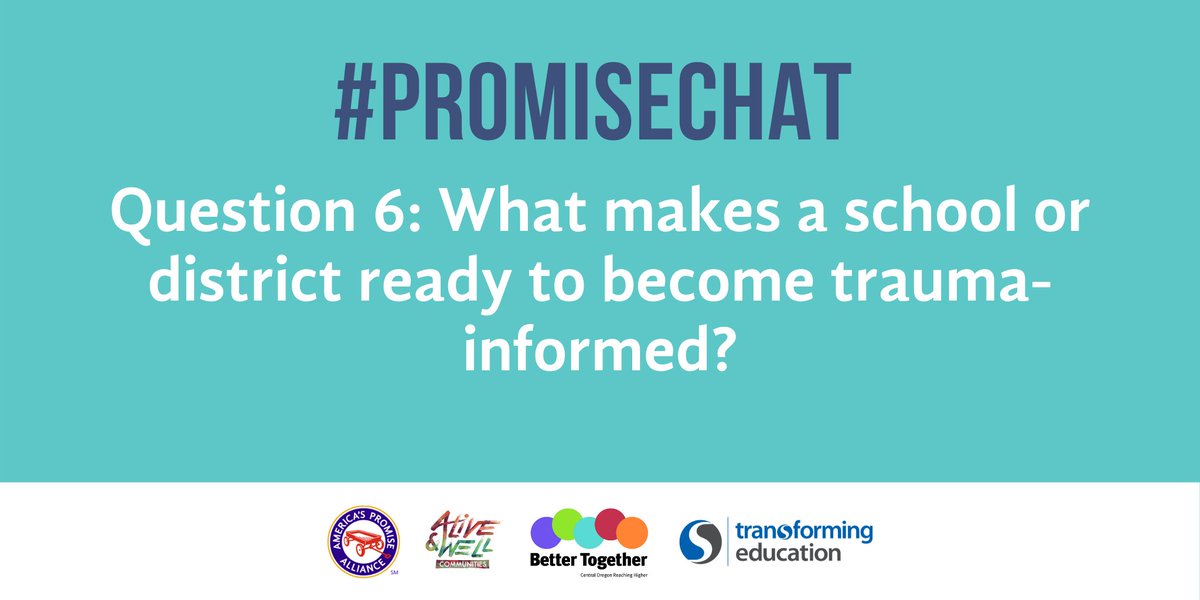
Q6: A focus on truly understanding and measuring resilience-promoting factors in schools for adults and students. When we prioritize measurable outcomes, the work is elevated. #PromiseChat
A willingness not only to shift practices, but to actually stop harmful practices, regardless of whether or not "that's the way we've always done it." #PromiseChat
A4: Through our Culture of Care initiative, Central Oregon focuses on creating school-wide trauma informed communities that center both adult and student experience. #PromiseChat
A3: You don't need special training to be in meaningful relationship with people, which is the foundation of a trauma-informed appraoch. Training is needed to understand the dynamics of trauma, how it impacts the brain, and how to best meet people where they are at. #PromiseChat
A2: All students benefit. A trauma-informed approach lifts all boats, as it prioritizes relationships and a sense of belonging and safety. #PromiseChat
A1.2 Trauma-informed practices take a whole-person lens, understanding that the combination of our lived experiences impact how we move through the world. #PromiseChat