@RLPrashantsin12@grok This guy has diminished the respect of the chair to such a level, where only resigning respectfully can restore it bcak to some extent
Listen to this retired IDF soldier talk…
“One of the soldiers raped a 16-year-girl”
“I put Palestinians in a cage and killed them”
“We chased villagers with flamethrowers and set them on fire”
“If I saw children with their hands raised, I shot them in the head.”
“I shot and killed everyone I saw. It’s impossible for me to count”
Bro 😭
Iranians 🇮🇷 are literally vibing in the nuclear power plant city of Bushehr which Donald Trump has threatened to blow up.
These people fear absolutely nothing 👏
🚨💔 This is the final farewell between Palestinian prisoners and their loved ones-moments before they are taken away forever.
On March 30, 2026, thousands were condemned under fake "t*errorism" charges. Nearly 11,000 lives-most of them young-now stand on the edge of silence.
Israel recently released a law to hang these young men.
Share and Retweet if there is Humanity left.
Saudi YouTuber Maher Musalli’s account was deleted after he posted a powerful video about the Gaza massacres—one that challenges mainstream narratives and sparks important debate.
He deserves support, and this message deserves to be hear
Share it so his voice reaches the world.
“Israel kills children as a hobby.”
“As a hobby.”
“The problem is not Netanyahu.”
“The problem is the whole of Israeli society.”
— Professor Norman Finkelstein
On the one side, there is elegance, beauty & grace of Farsi. Calming demeanour. Poise. Civilisation. Literature. Finesse. Rationale. Humility. Resilience.
That’s Iran.
On the other hand, there is mindless violence. Arrogance. Hate. Rhetoric. Verbal diarrhoea.
That’s US-Israel.
I’m Jewish, an Israeli and American citizen, born in Israel, raised in Tel Aviv and in New York City, lived in 5 U.S. States, have advanced degrees from Princeton (MA Political Science) and Harvard Law (JD) and worked for a human rights organization. Israel is an Apartheid State. https://t.co/kWQkWYxYoq
BREAKING 🇮🇷🇨🇳
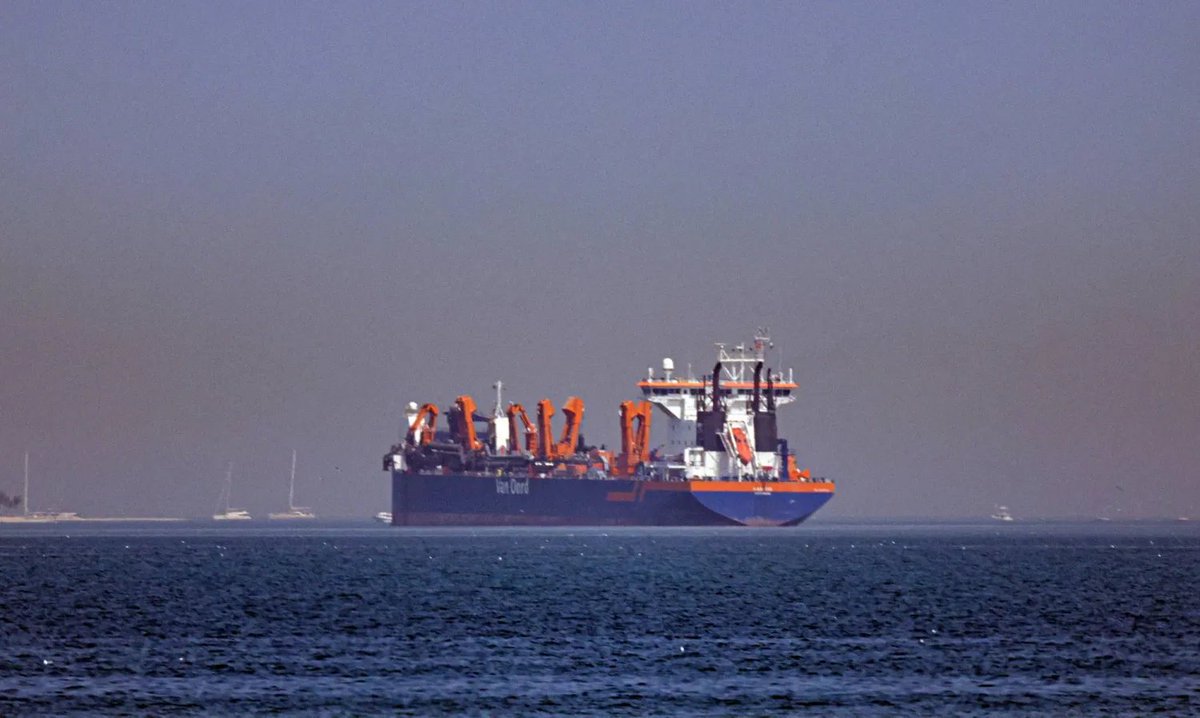
Iran says only Chinese ships can pass through the Strait of Hormuz, calling it a “gesture of thanks” for Beijing’s support. All other vessels are banned, and Tehran warns any unauthorized crossing will be met with military action.
French President Macron has warned Israel against invading Lebanon, after the Israeli military said its troops had begun operating in the south of the country following Hezbollah attacks.
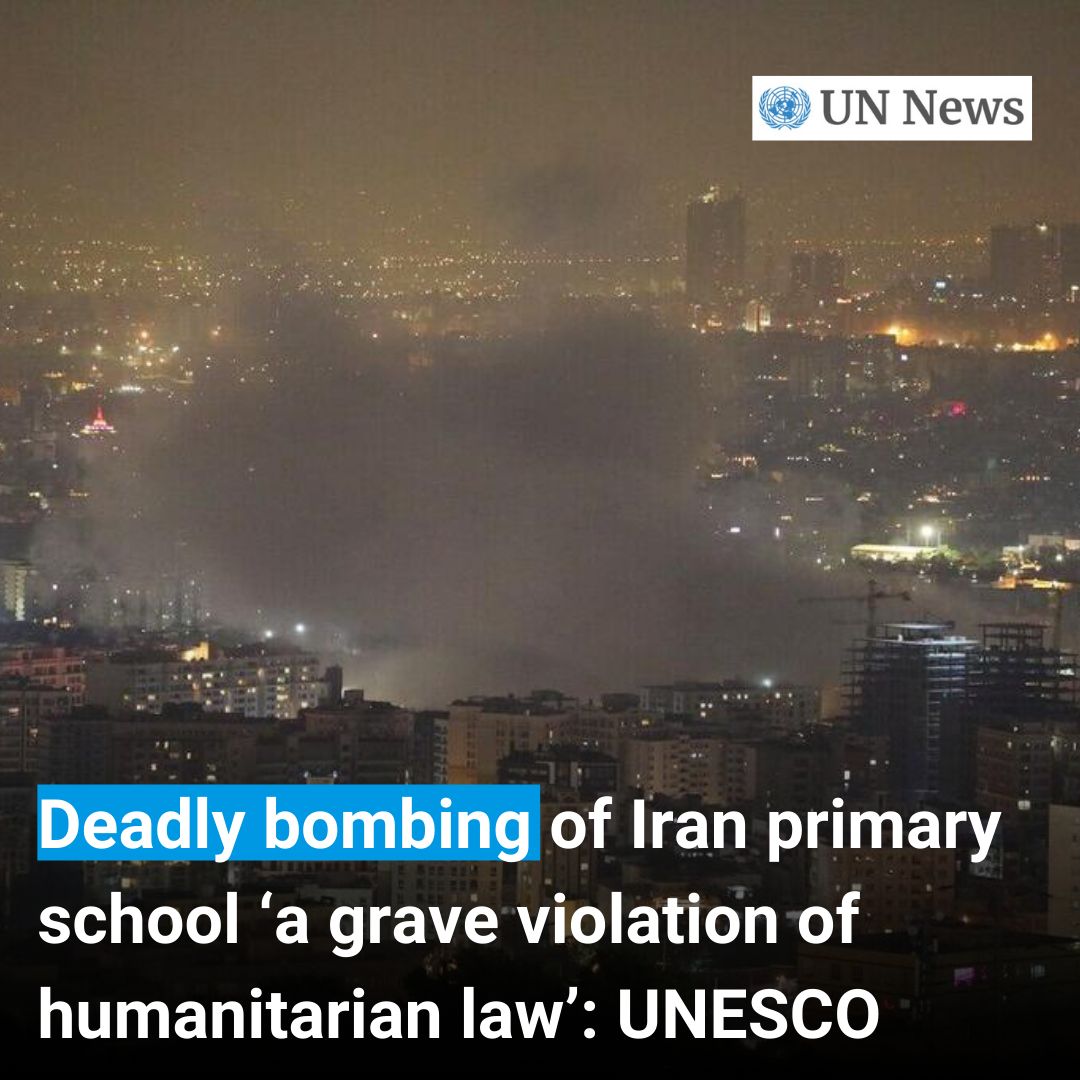
The UN education agency @UNESCO says that the bombing of a primary school during the US and Israeli military attacks on #Iran on Saturday constitutes a grave violation of humanitarian law.
https://t.co/fkXfJck0UM
Modi's strong support for Israel – and refusal to condemn the Israel-U.S. strikes on Iran, a long-time friend of India’s – have “diminished India’s stature in the eyes of the world.”
https://t.co/Wwc8rhgedy
India Pays for the Trump-Netanyahu War
India’s economic growth and energy security are now exposed to the volatile front lines of the Middle East conflict. By slashing imports of discounted Russian oil to their lowest level since March 2022 and ramping up purchases of higher-priced Middle Eastern and U.S. crude, India has made itself acutely vulnerable to rising oil prices and to disruptions of tanker traffic through the Strait of Hormuz in the wake of the Trump-Netanyahu war on Iran.
Roughly 50% of India’s oil imports and 60% of its LNG purchases now pass through Hormuz. The vulnerability is even more pronounced for cooking gas (LPG): nearly 80-85% of India’s LPG is sourced from the Gulf and must transit the strait. Unlike crude, India maintains no strategic reserves of LPG, meaning any disruption would quickly hit households directly.
In effect, the Trump-Netanyahu war has turned the Strait of Hormuz into a massive single point of failure for India. By aligning more closely with the U.S.-Israel axis against Iran, India has traded a price risk (the loss of Russian discounts) for a supply risk (deepened dependence on Hormuz).
The economic consequences of Modi’s costly bet are significant. Every $10 increase in oil prices adds roughly $13-14 billion to India’s annual import bill, putting upward pressure on inflation and widening its overall trade deficit. Simply put, India will pay a steep price for the war — even as Trump calls Modi a “very close friend” and Netanyahu describes him as a “brother.” Under pressure from the Trump administration, India agreed to curb Russian purchases in exchange for relief from punitive U.S. tariffs, which had reached as high as 50%.
China, by contrast, can mitigate the Hormuz risk by simply stepping up purchases of Russian oil and gas via overland routes. In effect, India’s decision to curb Russian imports has handed its principal adversary an advantage: Beijing can absorb additional Russian supplies at a critical juncture, insulating itself from Gulf disruptions while New Delhi becomes more exposed to them.