Making sense of what's really happening in our country. Author of How Civil Wars Start. Member of the NAS. Prof at UCSD. I write Here Be Dragons on Substack.
Musk Thinks We’re All Idiots
“I’m not MAGA,” Elon Musk says now.
At Trump’s Madison Square Garden rally in 2024, he said, “I’m not just MAGA. I’m dark gothic MAGA.”
Does he think we’ve already forgotten?
We saw him wave a chainsaw while his team slashed federal jobs. We saw him pour more than $150 million to try to elect Ken Paxton. Texans elected James Talarico anyway. And now Musk says it’s “good to have some balance of power."
Give me a break. Musk moved to Texas and took Tesla’s headquarters with him to get out of California, thinking Texas would stay ruby red. But suddenly he’s living in an almost solidly blue Texas with a target on his back.
I bet he’s shitting bricks.
Over the next few months, watch how many tech billionaires suddenly discover they’ve always “liked” the Democrats. Musk, brazenly, is just the first to move.
He spent a fortune trying to keep Democrats out of power. Now he’s counting on them to forget what he did.
Let’s not forget.
ttps://www.wsj.com/politics/policy/elon-musk-feels-foolish-for-midterms-spending-says-im-not-maga-25838049?st=jGR18z via @WSJ
Would You Let Trump Walk Away?
If Donald Trump agreed to leave power peacefully in 2028, would you let him spend the rest of his life playing golf in Florida?
That would mean no prison. No criminal trials. An easy and rich retirement for a man who has committed many crimes.
Countries have faced this dilemma throughout history: do you offer a leader who has done terrible things but still has power a safe retirement to get him to leave? Or do you threaten retribution and risk convincing him fight to the end?
Humans have a tendency to want revenge. To make people pay for their crimes. We want stolen money returned. We want justice.
We also want future presidents to understand that the government isn’t their personal piggy-bank, and that they can’t trample democracy and get away with it.
But consider the situation from the President’s side. If leaving the White House means going to jail and losing your fortune, clinging to power at all costs can become very attractive. Exit panic can lead to a scorched-earth exit.
Leaders who have abused their power have good reason to fear what happens when they leave. Saddam Hussein was captured, tried, and executed. Qaddafi was captured and killed. Leaders worry that they will pay a high price for stepping down.
To avoid that fate, leaders sometimes go to terrible lengths to stay in power: start a war, jail their opponents, or manufacture domestic unrest as an excuse to declare martial law. A crisis can give them a way to rally support or allow them to claim emergency powers to prevent being removed.
This is exactly what Israel has experienced since 2019 - the year Israel’s Attorney General brought corruption charges against Prime Minister Netanyahu, threatening to send him to prison. Suddenly, Netanyahu faced an existential crisis. If he stayed Prime Minister he could use all his power to avoid jail, but if he left he’d be much more vulnerable. One of the ways he maintained power, according to a New York Times investigation, was to prolong the war in Gaza (as well as start another war against Iran). It worked, for a while, but boy have Palestinians, Israelis, and Iranians paid a heavy price.
Do you see the dilemma? The threat of punishment can make a leader harder to remove. We don’t want presidents to think that their only way to stay out of prison is to stay in the White House.
History offers one way out: a safe, comfortable retirement. Think of it as a golden exit ramp. Ferdinand Marcos fled the Philippines and settled in Hawaii. Jean-Claude Duvalier spent nearly 25 years in exile in the south of France. Their citizens didn’t get the justice they deserved. But neither man ever ruled again.
Is this fair? Absolutely not. But is it better than a prolonged fight? In some cases, yes.
For Trump, the golden exit ramp would likely mean protection from prison and protection for his wealth. He could go back to Mar-a-Lago richer than he has ever been.
But that bargain carries a danger. The next wannabe kleptocrat could conclude that he, too, can plunder America and retire rich. Reward bad behavior and you risk getting more of it.
So what would a safer bargain look like? Trump would get to keep the substantial immunity he has already been given by the Supreme Court. And he would get to keep his money. But we would make sure that future presidents don’t get the same protection.
That would mean a constitutional amendment that ends presidential criminal immunity for future conduct. We should also require presidents to sell their businesses and publish their tax returns. Make it harder to profit from the presidency and give investigators the power to enforce those rules.
I know many of my readers will hate this idea. I hate it too. But history gives us reasons to consider it - clear cases where hated dictators really did disappear into golden retirements. Forever.
And think of the added benefit. The newly empowered Democrats could then focus on lowering gas prices, improving affordability, making it easier for people to buy houses, rather than fighting Trump and continuing to give him a stage.
In the end, this is what will win them votes in 2028 and make America’s future better.
What Would Nature Do?
Here’s the second lesson I learned at Bellagio.
It came during a presentation by one of the residents - a mechanical engineer - who was working on bringing refrigeration to the world’s poorest people.
It seemed like a great idea. If every family or community had a refrigerator, food would last longer, there’d be less waste, and people would have more to eat.
But the other residents had lots of questions.
How would people with very little money afford a refrigerator? Where would the electricity come from? Where would they get replacement parts when it broke? And wouldn’t refrigerators replace cheaper ways of preserving food without electricity?
The engineer did his best to answer.
After several minutes, another fellow, Ravi Venkatesan, raised his hand and calmly asked: “What would nature do?”
That question stopped the room in its tracks. Hot climates and rotting food aren’t new problems. They’ve been around forever. What could we learn from nature and ancient people about preserving food before electricity?
I loved this.
We, as human beings, have come to increasingly believe that the best solutions to problems are technological. And technology companies have every interest in convincing us that this is true.
But in a world of increasing global warming, limited energy supplies, and constant pressure to buy new things, the most revolutionary question we can ask ourselves is:
What would nature do?
Go Small.
We live in a world where everyone tells us to think big. Scale up. Reach more people. Sell more products. Make more money.
But what if we have it backwards?
Two lessons really stuck with me from my month at Rockefeller's Bellagio Center.
The first is: Go small.
It came from a magical woman who has dedicated her life to championing traditional crafts and connecting artisans directly with buyers.
Whenever someone told a resident that they should “scale up” an idea, her response was always, “What if you went small?”
It blew my mind.
Her point was simple. When we try to make everything bigger, faster, and more efficient, we usually end up destroying the very thing that made it special. This includes the local knowledge. The craftsmanship. The relationships of people working together. The sense of community and pride in creating a unique product.
My fellow resident believes that as AI and technology take over our lives, the things we'll eventually crave most are the things that make us human. That includes making things with our hands, knowing the people around us, and being part of something real. It isn’t in things that we have “scaled up”.
So, whenever I hear someone say, "Let's go big," I now find myself thinking, "What if we went small instead?"
It's a surprisingly liberating way to think about life.
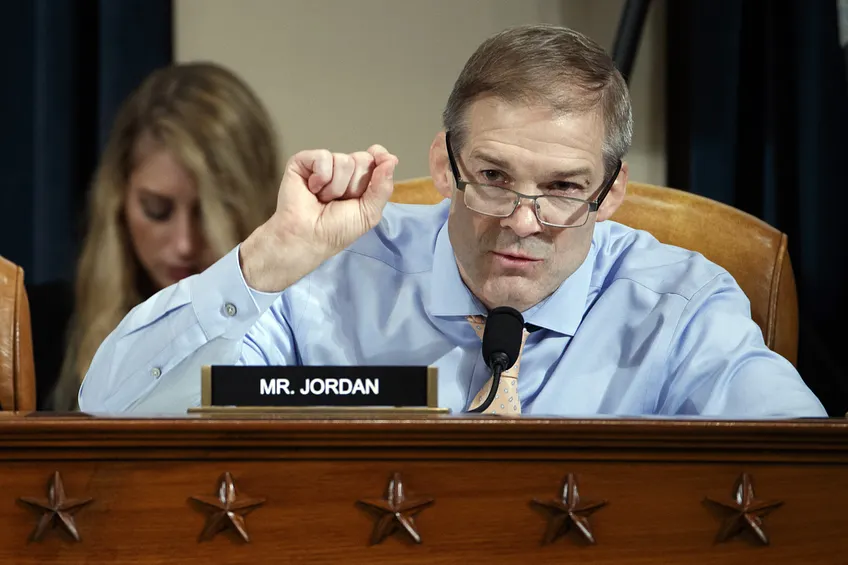
Jim Jordan Wasn’t Chosen to Win You Over
I get why Trump picked Stephen Miller as his chief of staff. When cornered Trump goes into attack mode and Miller knows how to attack. https://t.co/ka2jy7xFkw…
But House Republicans? Voters just rejected their policies. Why pick Jim Jordan, one of the Right’s loudest defenders, to lead them? Won’t this piss off voters even more?
It will. But right now, they’re more worried about Democratic investigations than winning voters back.
Democrats are about to start issuing subpoenas and putting Trump officials under oath. That’s a scary prospect and Republicans need their own pit bull to fight back. Jordan is their attack dog.
Also…keep in mind that the Republicans that are left in the House are more conservative than the ones who just lost their seats. In that respect, Jordan is also their man.
So why pick Jordan? They chose him to protect themselves, not to try to regain the voters the party just lost.
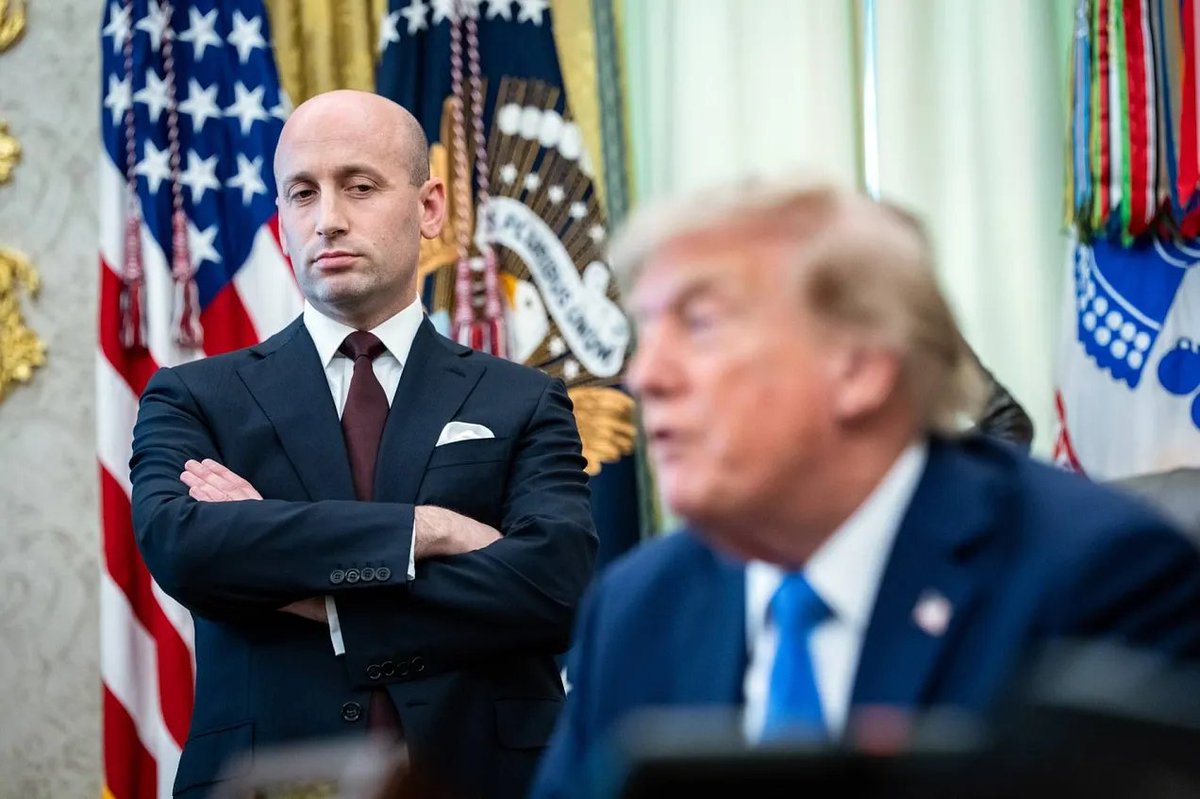
I'm Thrilled Stephen Miller is Chief of Staff
It’s a big, fat gift to Democrats
Democrats should send Stephen Miller flowers.
Donald Trump just handed him the biggest staff job in the White House. Trump probably did this because that’s what narcissists do when they’re humiliated - they go on the attack. And Stephen Miller is the cruelest, most aggressive attack dog he knows.
What Trump doesn’t realize is that he just gave Democrats a gift: someone who will unify them quickly and teach them how to fight.
A big victory can be dangerous for the victors. Everyone feels vindicated and free to pursue their own agenda. Moderates want compromise. Progressives want change. Presidential hopefuls want attention. Everyone thinks there’s room to jockey for position within the new majority.
Meanwhile, the thing that brought them together - the desire to defeat the incumbents - is gone. The result is often infighting and paralysis.
But then Trump elevates Stephen Miller. What???
No one is better than Miller at reminding Democrats, every morning, why they need each other, and why they need to learn how to fight. He’ll make their differences feel small compared with what’s at stake.
Trump could have chosen someone who knew how to peel off a few Democrats. Offer one senator money to keep a rural hospital open. Help another keep a military base open. In return, ask to vote yes on something Trump wanted. Give a few Democrats a win back home, and suddenly working with the White House looks okay.
Pick them off. One by one by one.
But Miller wasn’t chosen to compromise, cooperate, or meet anyone halfway. He was chosen because he will never back down, ever, even in the face of resounding defeat. He will just bare his teeth even more and bite down harder.
That’s what makes him such a huge gift to Democrats. They don’t agree on much. But Stephen Miller? They all hate him.
Miller is going to keep pushing his and Trump’s favorite projects: mass deportations, terrorizing immigrants and their children, ending birthright citizenship. Most Americans HATE these policies. Trump could hardly have picked a better person to bring Democrats together and teach them to take the gloves off.
Research supports this. The pick-off strategy is real. It’s also a strategy most lame-duck Presidents would likely pursue (even though Trump probably won’t). Political scientist Diana Evans found that Congress members can be convinced to vote with the other party if they are given something their constituents want. But Stephen Miller isn’t going to give Democratic voters anything they want.
Another political scientist - Berker Kavasoglu - found that a strong opposition party is less likely to work with a country’s leader, especially when the two are far apart ideologically. Miller is going to remind Democrats every day just how wide that gap is.
I think this is all good news for the Democrats.
First, Trump and Miller are going to double down on the policies that drove voters away. That gives those voters a reason to stick with Democrats in 2028.
Second, Democrats will have to come together quickly to halt Trump/Miller policies or else they will be partly blamed for them in 2028. This will require them to focus, and focus will bring unity, and unity will bring power.
Third, Trump and Miller will use every dirty trick in the book to get their policies passed, and they will be a formidable adversary. Democrats will have to learn how to beat them, and they’ll have to learn fast.
None of this means Miller won’t do damage. He will and it will hurt our most vulnerable people. That’s why Democrats will have to fight them with every ounce of power voters just gave them.
Miller will give them plenty of practice fighting. Now, they need to get good at winning.
Republicans Are Losing More Than Elections in the South
Democratic victories in the deep red South are even worse for Republicans than they think.
Tuesday’s election signals that conservative white voters no longer have a hold on who is elected in Dixie. Real Democrats are actually coming to power who will pursue real Democratic policies. That’s a big change from the past.
In Texas, Gina Hinojosa supports expanding Medicaid and keeping public money in public schools. In South Carolina, pediatrician Annie Andrews campaigned on protecting Medicaid and rural hospitals. These are Democrats winning on policies that today’s Republican Party (and Democrats from the old Confederate South ) would have fought.
The political heirs of the Confederacy may finally be losing their grip and it’s about time.
Eight Things We Just Learned from the Midterms
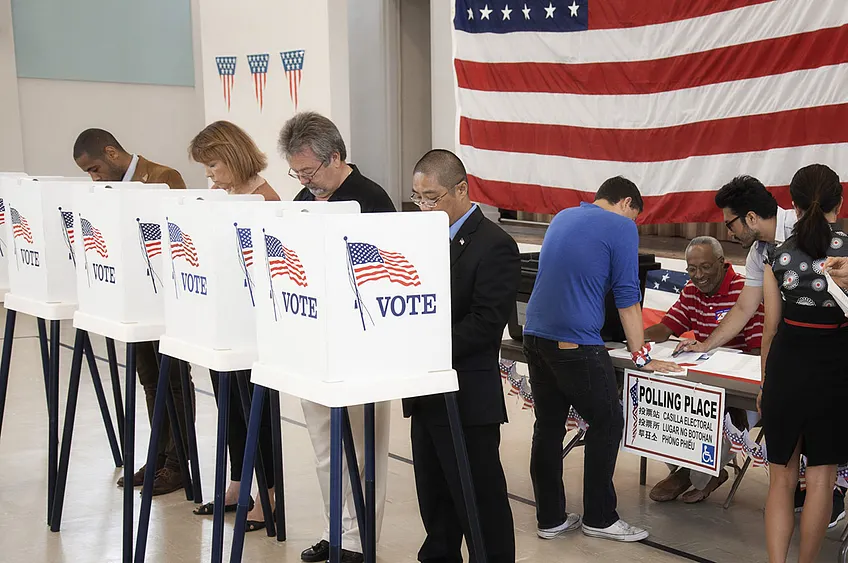
The day before the election, I wrote about eight things I wanted to learn on Tuesday. The first was who would show up. Would more Americans vote? And would some of them be people who usually sit out midterms? If they did, Republicans could be losing a new group of voters and a facing a much longer term problem.
I was also interested in whether the Republicans were starting to lose their base. Donald Trump and Republicans have gotten away with a lot of shit because white men and women in deep red states would faithfully vote for them no matter what. Was that finally changing?
I was also particularly interested in whether Trump would try to reject the outcome in some way, like he did in 2020 after he lost. Was America heading to a new norm where the loser of elections always contested them?
Here’s what we learned:
1. Did more Americans vote?
Yes. Americans turned out in huge numbers. Michael McDonald at the University of Florida’s Election Lab estimates that 124.3 million people voted, about 12 million more than in 2022. That’s almost 50 percent of eligible voters. If that number holds, it would be the second-highest midterm turnout rate since 1914, just behind 2018 when Trump was also in the White House.
We don’t yet know if more Democrats turnout out to vote than Republicans (although I suspect they did). But we do know that the young people who turned out to vote went overwhelmingly for the Democrats - about 7 in 10 voters under 30 voted for the Democratic candidate running for Congress. Damn that’s big.
If I were a Republican leader this would signal an all-hands-on-deck moment since their party appears to have lost the youth.
2. Are Republicans losing the Latino voters they gained?
Also yes. About six in ten Latino voters backed Democrats for the House, up significantly from 2024. The shift was especially striking in Texas.
My main focus was Latino men because Trump made gains with them in 2024 to many people’s surprise. They went the other way this time, backing Democrats for the House by 58 percent to 39 percent. Latina women moved even more. Their support for Democrats jumped 11 points this year.
This is a second all-hands-on-deck moment because any party that wants to win elections in the future has to attract young people and Latinos - that’s where the votes will be. And the Republicans are pushing both away.
And if Latinos are turning their backs on the Republican party because of its harsh immigration and deportation policies - which they will not soon forget - they might never come back. This is what happened with Latinos in California after Prop 187 and its what turned the state deep blue.
3. Did white women break with Republicans?
They did. Two years ago, Trump won white women by about ten points. On Tuesday, white women gave Democrats a narrow edge in the House vote. It’s taken white women a long time to get fed up with the Republicans, but it is finally happening.
The one group that’s stuck with Republicans has been white evangelical Christians. Even in this terrible year for Republicans, over eight in ten of them voted Republican. But again if this is the only group that’s staying with you, your party’s kind of fucked.
4. Did disillusioned Republicans stay home or vote Democratic?
We still don’t know. We do know that a few Republican voters crossed over and voted Democrat (about 7%). But most Trump voters who showed up on Tuesday stuck with Republicans.
Interestingly, we do know that Democrats got help from people who hadn’t voted in 2024 - they made up about 15 percent of Tuesday’s voters. 59 percent of them voted for the Democrats, versus 36 percent for Republicans. If those voters keep showing up and voting this way, Republicans could also be screwed for a long time.
5. How far did the backlash reach?
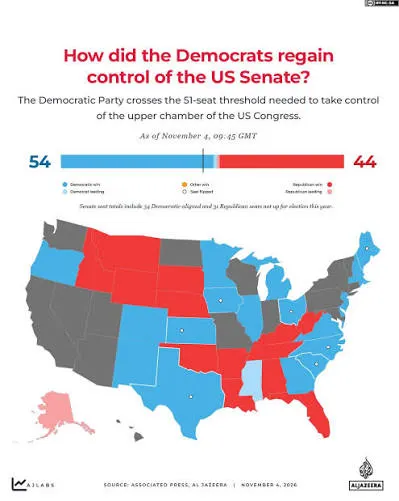
Shockingly far. All the way to Texas, South Carolina, Kansas, Ohio, Iowa, Georgia, Indiana, Kentucky and possibly Mississippi. South Carolina! Texas! Mississippi!!! These are all places that most people think of as safe, safe territory for Republicans. If you are also losing these deep red states, you are in deep, deep trouble.
6. Did the loss turn Republicans against Trump?
I suspect it will. So far, Republicans are arguing about what went wrong. JD Vance has been blaming the election on the war in Iran and likely setting up Pete Hegseth as the fall guy. Good riddance. House Republicans are also fighting over who should lead the party now that their only leader - Trump - has imploded the party
I’ll be watching to see what Republicans in Congress do when Trump asks them to back an unpopular policy. I suspect they’ll ignore him.
7. How much power did Democrats gain in the states?
A lot. Democrats won governorships, flipped legislative chambers, and picked up secretaries of state, and attorney generals.
Democrats gained full control of state government in Michigan, Minnesota, Nevada, Pennsylvania, and Wisconsin. They also broke Republican control in Georgia, Iowa, Ohio, and Texas. This matters because the rules for voting, counting and certifying election results happens in the states, and this will allow them to protect their state democracy through at least 2028.
8. Were there shenanigans on Tuesday?
None. Election Day went smoothly. The Justice Department did send more than 900 monitors to polling locations, but there were no reports of troops being sent to the polls, and the Homeland Security secretary said he hadn’t deployed ICE agents there. There did not appear to be any intimidation, and losing Republicans conceded races across the country. Trump also publicly stated on Tuesday night that he would accept the results. Democracy worked.
Why? I think the same reason that Orban accepted his recent defeat in Hungary. Turnout was just too damn high to contest.
It turns out that if a tsunami of voters speak, you have little choice but to listen. Go America!
We’re Going to Learn a Lot Tonight
Here are the eight things I’ll be watching as the results come in:
1. Will anger at Republicans convince more Americans to vote? Tuesday night will tell us if Americans are galvanized to vote like never before. I’m especially interested in people under 30, who have the lowest rate of voting of any demographic. Will we see a generational wave of new voters pissed about what’s happening and finally getting involved? Could have long-term positive implications for democracy.
2. Are Republicans losing the Latino voters they gained? I’m especially interested in Latino men who shifted to Trump in 2024 but have since seen their community terrorized by ICE. Will this drive Latino voters to the Democrats for years, the way Pete Wilson’s anti-immigrant Proposition 187 did in California? Has Trump started something similar nationally? One election won’t reveal that for sure, but it could be the beginning.
3. Will white women finally break with Republicans? I’ll be watching female Independents in particular. Republicans may be pro-white, but they are not pro-female. Will white women finally start voting for the party that better protects their rights and freedoms or at least doesn’t take them away?
4. Will disillusioned Republicans stay home or vote Democratic? It’s one thing to refuse to vote for your party. It’s another to help the opposition win. Will Republicans unhappy with Trump actually go that far and leave the party, or will they just sit this one out?
5. How far does the backlash against Trump’s policies reach? Dems usually gain ground in the mid-terms when a Republican is in the White House. But Tuesday night will tell us if deep red voters are beginning to shift. That would suggest that the disillusionment with Republicans could be getting deep.
6. Will a big Republican loss turn the party against Trump? Republicans have stuck with Trump because they feared losing voters without him. If they start losing Latinos, women, young voters, and even Republicans in deep red states because of him, will they finally break with him?
7. Will Trump loyalists win or lose at the state level? Watch the races for governor, secretary of state, and state legislatures. The winners will help decide how the 2028 election is run and how easy or hard it will be for Trump and his team to interfere in that key election.
8. What will Trump do on Tuesday and afterwards, especially if Republicans lose? Will he send troops or ICE agents to polling places? Pressure election officials to change the count? Push Republicans to block certification or keep Democrats from taking their seats? Watch what happens at polling places today for an early indication.
That’s it for now.
See you on the other side.
The Oldest Trap in the Spybook
I once heard people with long experience in intelligence describe the “honeypot”- using sex to get secrets or to blackmail - as one of the best tools in espionage.
Once you know that, you see it everywhere. It was Epstein’s business model and it made him very, very rich. Now this.
It’s so obvious and avoidable. And yet still shockingly effective.
Nvidia Chief Seen as Target of Chinese Spy Plot https://t.co/8dxIH1HPqV
What Happens If Democrats Win and Trump Refuses to Accept It?
Winning the election will be the easiest part.
With less than a week until the midterms, it looks like Democrats are going to win control of the House. Maybe even the Senate.
In normal times, this wouldn’t be particularly interesting. Americans tend to vote against the president’s party in midterm elections. It’s one way we like to keep our presidents in check.
But these aren’t normal times. We have a president who’s already shown us that he will challenge elections that don’t go his way.
So what happens if Democrats win on November 3?
Here’s what I’ll be watching.
1. Will Democrats actually be allowed to win?
The first test comes immediately after Tuesday night.
After losing the 2020 presidential election, Trump called Georgia’s Republican secretary of state, Brad Raffensperger, and asked him to find 11,780 votes. That was one more vote than Trump needed to win the state.
Raffensperger refused.
Trump could try something similar next week.
In states with close House or Senate races, Trump could pressure Republican election officials to reject ballots, change vote totals, or refuse to certify Democratic victories. Alaska, Iowa, Ohio, Texas, Maine, and Michigan are all expected to be close.
He could also encourage Republican candidates to challenge close races in court, claiming fraud or “problems”. Legal challenges are a normal part of elections but they can also be a strategy to delay certification or throw out valid votes.
There is one more possibility.
The Constitution gives each chamber of Congress the power to judge the elections of its own members. Republicans could try to use that power to prevent disputed Democratic winners from being seated and thus hold on to their majority.
How likely is this?
Well, it wouldn’t be easy. Much will depend on the thousands of state and local officials who administer our elections. Trump can pressure some of them, but he doesn’t directly control them. It will also depend on what courts do if Republicans cross legal lines.
And the more seats Democrats win, and win big, the harder it will be to overturn enough results to change control of Congress.
So, the first test of American democracy will be whether those Democrats who win will be allowed to take office.
2. If Democrats take control of Congress, will they have any real power?
This is where things get interesting.
We tend to assume that if you gain a majority in the House and/or Senate, you get real power.
But that isn’t always the case. Look what happened in Venezuela.
In December 2015, Venezuelan voters handed President Maduro a crushing defeat. The opposition won 112 of the 167 seats in the National Assembly, giving it a two-thirds supermajority.
Maduro actually acknowledged the results. Initially.
But before the new legislature could take office, the outgoing pro-Maduro assembly appointed Maduro-loyalists to the Supreme Court. The Court then blocked three opposition lawmakers from taking their seats, thus erasing the supermajority. When the opposition seated the lawmakers anyway, the Court declared the legislature in contempt, and said all its subsequent decisions would be invalid.
The opposition won the election, but Madura and his party kept all the power.
Could something similar happen in the United States?
Kind of, but not in exactly the same way. America’s constitutional system is different, and Trump would not have the same control over Congress that Maduro had over Venezuela’s legislature.
But a Democratic Congress would face a serious problem.
Trump would still control the executive branch.
He could veto legislation, continue issuing executive orders, and direct federal agencies to pursue his priorities. He could fight congressional subpoenas in court and resist investigations into his administration.
This could have two effects.
First, it would make it difficult for Democrats to deliver on their promises, leading voters to potentially see them as ineffective and punish them for it in 2028.
Second, it could lead to a constitutional crisis. What happens if Congress issues a subpoena, a court orders the administration to comply, and the administration refuses? What happens then?
At the very last, a Democratic victory could slow Trump’s quest for absolute power. But it’s unlikely to reverse it.
3. What if the election actually works?
There’s a third, happier possibility.
Democrats win. Republicans accept the results. The new members take their seats in January. And Congress begins doing what Congress is supposed to do: check the president.
Trump won’t like it. He will probably deal with it by vetoing Democratic legislation. He will likely try to thwart their agenda whenever he can. But there is a scenario where Congress reasserts itself as an independent center of power, Republican leaders begin distancing themselves from Trump, and the party starts looking for a candidate and a message that can win in 2028.
In other words, democracy works.
So what should Americans expect?
I think Democrats are likely to win control of the House, and I think they’ll probably be allowed to take their seats.
That doesn’t mean Trump won’t try to challenge close races. In fact, he’s already trying to do that in Alaska and the election hasn’t even happened.
What’s more likely, I believe, is that Democrats take control of the House and Trump continues to govern as aggressively as possible through the executive branch. This is what he did his first two years, but that was before he faced a Democratic House and possibly Democratic Senate. With the Democrats in Congress, Trump will now, potentially, have a check on his power if the Democrats are willing to wield it.
Remember: Congress has a LOT of power. It controls federal spending. It can investigate the executive branch. It can subpoena witnesses and documents. It can refuse to pass legislation. And, it can impeach a president.
But winning seats is one thing. Using them is another.
Democrats will have to wield their new-found power aggressively. Creatively. They will have to take the gloves off if they are to match the aggressiveness, cunning, and ruthlessness of Trump and his team. Otherwise, they themselves will be lame ducks.
So Tuesdays election results are likely to set up an enormous fight between Congress and the Executive Branch for the heart and soul of American democracy.
That’s where the action is going to be in the next two years. It’s going to be Congress versus the President, baby.
Let’s hope the Democrats are willing to fight.
Billionaires Don't Need to Capture the Entire Government
Just the parts that keep them rich.
When people imagine oligarchy, they tend to imagine billionaires running the government.
But billionaires don’t want to run the government. That would be difficult, expensive, and a bad visual.
Instead, all they need to do is control the parts of government that guarantee their wealth.
A tech billionaire doesn’t want to control agricultural policy. All he wants is a government that doesn’t enforce antitrust laws, takes a hands-off approach to AI, gives his company lucrative government contracts, lowers taxes on his wealth and investment income, lets him to collect and use his customer’s personal data, and protects his company’s intellectual-property.
An oil billionaire doesn’t want to run the Department of Education. All he wants is a government that opens more land to drilling, guts environmental regulations, and makes it easier to build the pipelines he needs to sell his oil.
A hedge-fund billionaire doesn’t want to oversee the National Park Service. But he does want a government that stays out of the financial markets, keeps capital-gains taxes low, and lets him keep as much of his investment profits as possible.
They just want to control the particular policies that matter to them.
The economist Mancur Olson had a great metaphor for this. In 1993, he introduced the idea of the “stationary bandit.”
Imagine two bandits.
The first rides into a village, steals everything he can, and leaves. Olson called him a “roving bandit.” Since he never expects to return, he has every incentive to rape and pillage as much as possible.
The second bandit is smarter. He quietly takes control of the village and stays in order to extract wealth over time. He wants farmers to keep farming, merchants to keep selling, and workers to keep producing goods. That’s because a prosperous village generates more money than a ruined one.
Olson called this person the stationary bandit.
The strategy of today’s billionaires in the U.S. is to be stationary bandits.
They want the village to survive, and by village I mean the federal government. They need courts to enforce their contracts, and police to protect their property. They need roads, ports, and airports. They need schools and universities. They need a stable dollar and functioning financial markets. They need patents to protect what they invent and a military to defend their country. Most of all, they need the rule of law because their businesses and fortunes depend on it.
So billionaires need the state to keep working even as they take more from it. And they can usually get away with it because most of what they take happens out of public view.
Most Americans aren’t following the details of an antitrust case, a change in the capital-gains tax, an environmental rule, or an obscure provision buried in the tax code. But those decisions often divert billions of dollars away from the public and into the hands of a wealthy few.
Billionaires also have an enormous advantage in getting what they want. They can hire the best lobbyists and lawyers, underwrite political campaigns, and pay people to game the system. The result is a government that listens much more to the rich than to everyone else. Political scientists Martin Gilens and Benjamin Page looked at almost 1,800 policy fights in the U.S. and found that when wealthy Americans wanted a policy, it tended to become law. When ordinary citizens wanted a policy, it rarely did.
This seems all well and good for stationary bandits, but there’s a potential complication.
A single stationary bandit tends to restrain himself because he competes with no one.
But when you have lots of bandits exploiting the same village, restraint breaks down - each fears that they will lose out if they stop. This is the classic tragedy of the commons: no one wants to destroy the village, but together they inadvertently do.
America doesn’t have one bandit. It has thousands.
Why should the oil billionaire accept stricter regulation if the hedge-fund billionaire is still getting his tax break? Why should the tech billionaire stop fighting antitrust enforcement if the pharmaceutical billionaire is still fighting limits on drug prices?
So everyone keeps taking. And there is no natural stopping point.
What happens next?
The billionaires’ strategy only works as long as the village remains healthy and the villagers are willing to live with the arrangement. But the more they take, the weaker the village becomes.
Eventually, the villagers notice. The rich keep getting richer. The government stops working for them. Their own lives get harder, not easier.
That’s when the pitchforks come out.
What Americans Get Wrong About Immigration
There are many myths swirling around out there about illegal immigration in America.
Myth #1: Most illegal immigrants are Mexican.
They're not.
In 2007, almost 60% of undocumented immigrants in the US were from Mexico. Today, it's only about 30%.
The rest come from all over the world, with Guatemala, El Salvador, Honduras, India and Venezuela coming next.
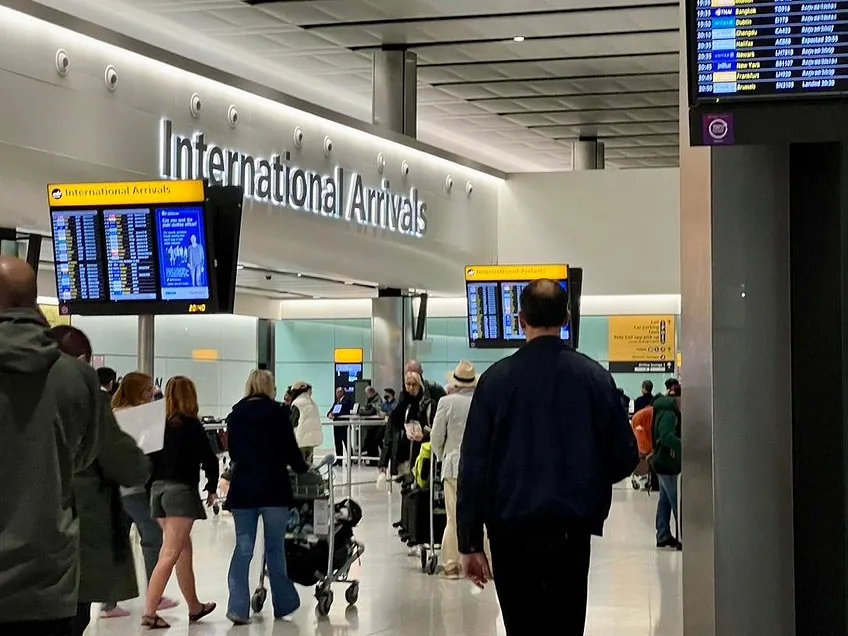
Also, millions of illegal immigrants didn't sneak across the Mexican border. They flew here on temporary tourist, student, or work visas. They are visa-overstayers.
This misconception matters because much of our immigration debate (and enforcement) has been around stopping foot migration from the south.
But building a wall won’t stop someone flying into JFK, LAX, or Miami airport with a valid visa and then never leaving.
I'm going to spend the next few Notes looking at what Americans get wrong about immigration.
Because it's hard to have a serious debate about policy if we don't have an accurate picture of what immigration actually looks like today.
For more, see: https://t.co/ysSp9kqKqP