🎬 Backrooms (2026)
One of the internet's greatest success stories.
In May 2019, an anonymous user on 4chan posted a grainy photo of an empty room. Sickly yellow walls, harsh fluorescent lighting, damp carpet, and an overwhelming sense that something was deeply wrong. Someone added a caption claiming that if you're not careful, you can "noclip out of reality" and end up trapped in an endless maze of identical rooms known as the Backrooms.
Nobody knew where the photo was taken. For five years, the image spread across forums, Reddit, YouTube, and social media, evolving from a creepy image into one of the internet's most fascinating pieces of modern folklore.
Then, in May 2024, four users on Discord finally traced the image using the Wayback Machine. The photograph originated from a 2002 renovation photo taken inside a former furniture store at 807 Oregon Street in Oshkosh, Wisconsin. But by then, the truth hardly mattered. The myth had already become bigger than its origin.
The Backrooms entered a completely new phase in January 2022 when a 16-year-old filmmaker named Kane Parsons uploaded a nine-minute short film called The Backrooms (Found Footage). Having taught himself Blender and VFX techniques, Parsons transformed a niche internet creepypasta into something cinematic and terrifyingly believable. The video exploded in popularity and quickly became one of the defining horror projects of YouTube's generation.
Hollywood took notice.
Just a few years later, A24 greenlit a feature film adaptation and handed the project to Parsons himself. Operating under the codename Effigy, the production built a massive 30,000-square-foot Backrooms maze in Vancouver. The crew reportedly tested dozens of shades of yellow to recreate the unsettling atmosphere that made the original image so iconic, while the scale of the set became a story in itself.
Born in 2005, the same year YouTube launched Kane Parsons became A24's youngest director ever. At only 20 years old, he achieved something almost unimaginable: turning an internet urban legend into a major theatrical event.
The story of Backrooms is remarkable not because of where it started, but because of what it became. An anonymous image posted on a forum evolved into a collaborative online myth, inspired millions of viewers, launched the career of a young filmmaker, and eventually became a global horror phenomenon.
Few pieces of internet culture have made the journey from obscure message board post to mainstream cinema. The Backrooms did.
All because of a single photograph and a simple idea that tapped into a universal fear, the feeling of being lost in a place that looks familiar, yet somehow feels completely wrong.
Of all the references to paan/betel roll I’ve encountered in years of research, ⬇️ from 18th c. Jodhpur is my fav:
A groom tried offered his bride paan. She rejected it saying: Am I your father’s goat, forever munching on leaves? (nit nit patta khain, thare baap ri bakri hun?)
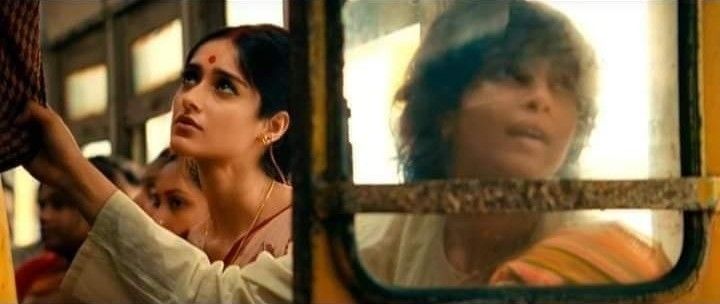
Ritwik Ghatak on whether Indian Mythological and dramatic traditions influenced him:
"There is an epic tradition which dominates the Indian mentality. It has seeped into the Indian subconscious. It is no surprise, therefore, that Indians are attracted to mythologicals. I am a part of it. I cannot think of myself without the epic tradition.
I am all for it. It is in our civilization since time immemorial. In my films I rely mainly on the folk form. The Great Mother image in its duality exists in every aspect of our being. I have incorporated this in 'Meghe Dhaka Tara' (1960)"
("Cinema and I", Ritwik Ghatak, 1987)
P.S: On this day, 66 years ago, 'Meghe Dhaka Tara' (1960) was released in India.
It feels like a quick recap of 2,000 years of history crammed into a few weeks:
- The Pope and the King are squabbling
- Persia is fighting its existential war
- (New) Rome has a mad king
- There’s a naval blockade
- There’s bloodshed around Jerusalem
- The Ottomans are flexing
- Small Arab states are squabbling with
each other
- Hungary has just overthrown its ruler