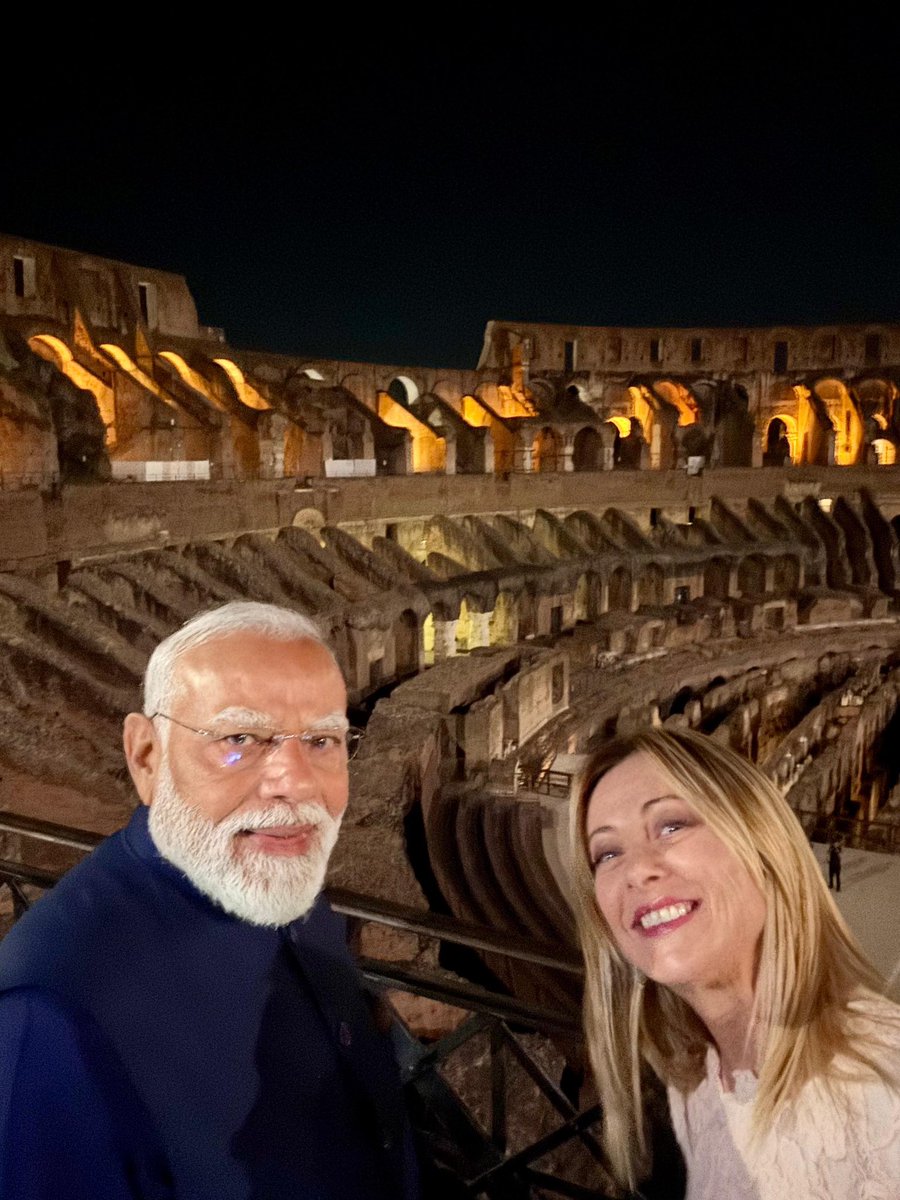
12 years of steady reforms have delivered visible results. The shift from old controls to growth policies has strengthened the economy by making it more predictable and business-friendly. Real progress toward Viksit Bharat. What stands out most? #LongestServingElectedPMModi
Congratulazioni a @narendramodi che oggi diventa il Primo Ministro eletto più longevo nella storia dell’India.
È stato un piacere ritrovarci a Roma nelle scorse settimane e lanciare assieme un Partenariato Strategico Speciale che guarda al futuro per creare nuove opportunità per le nostre Nazioni e i nostri popoli.
FIIs have been consistent sellers while DIIs absorb most of it effectively. This domestic support has helped Nifty stay relatively stable today without sharp moves. It’s becoming a reliable buffer against foreign outflows. https://t.co/UOXKGAPvnC #Nifty
Last one on this topic, and I have been holding this in myself for a while.
For centuries, class divides kept the labor of the poor invisible to the rich. Factory workers toiled behind walls, farmers in distant fields, domestic help in backrooms. The wealthy consumed the fruits of that labor without ever seeing the faces or the fatigue behind it. No direct encounter, no personal guilt.
The gig economy shattered that invisibility, at unprecedented scale.
Suddenly, the poor aren't hidden away. They're at your doorstep: the delivery partner handing over your ₹1000+ biryani, late-night groceries, or quick-commerce essentials. You see them in the rain, heat, traffic, often on borrowed bikes, working 8–10 hours for earnings that give them sustenance. You see their exhaustion, their polite smile masking frustration with life in general.
This is the first time in history at this scale that the working class and consuming class interact face-to-face, transaction after transaction. And that discomfort with our own selves is why we are uncomfortable about the gig economy. We want these people to look our part, so that the guilt we feel while taking orders from them feels less.
We aren't just debating economics. We are confronting guilt. That ₹800 order might equal their entire day's earnings after fuel, bike rent, and app cuts. We tip awkwardly, or avoid eye contact, because the inequality is no longer abstract. It's personal.
Pre-gig era, the rich could enjoy luxury without moral discomfort. Labor was out of sight. Now, every doorbell ring is a reminder of systemic inequality. That's why debates explode. It's not just policy. It's emotional reckoning. Some defend the system (“they choose it”), others demand change (“this isn't progress, its exploitation”).
And here’s the uncomfortable twist: the unsaid ask of clumsy ‘solutions’ isn’t dignity. It is about returning to invisibility.
Ban gig work and you don’t solve inequality. You remove livelihoods. These jobs don’t magically reappear as formal, protected employment the next day. They disappear, or they get pushed back into the informal economy where there are even fewer protections and even less accountability. Over-regulate it until the model breaks, and you achieve the same outcome through paperwork instead of slogans: the work evaporates, prices rise, demand collapses, and the people we claim to protect are the first to lose income.
And then what happens?
The rich get their old comfort back. Convenience returns without faces. Guilt dissolves. We go back to clean abstractions and moral posturing from a distance. The poor don’t become safer, they become invisible again: back in cash economies, back in backrooms, back in shadows where regulation rarely reaches and dignity isn’t even debated.
The gig economy just exposed the reality of inequality to the people who previously had the luxury of not seeing it. The doorbell is not the problem. The question is what we do after opening the door.
Visibility is the price of progress. We can either use this discomfort to build something better (which we keep doing continuously as delivery partners are our backbone), or we can ban and over-regulate our way back into ignorance. One of those choices improves lives. The other simply helps the consuming class feel virtuous in the dark.
Lee Kuan Yew nailed it. Started loving Nehru, then spotted those messy policies. Singapore flew high, India stumbled till we fixed it. Hard lesson!
#EconomicWakeup
Former Singapore PM Lee Kuan Yew :
"I deeply admired Pandit Nehru in my teen years"
"Then I understood, Nehru adopted the wrong economic model for India"
"India’s choice of heavy state control and central planning slowed growth, while Singapore took a different, market-oriented path that accelerated its development"
@buddhimedia Dhurandhar's success shows people love such realistic cinema, ditching silly fantasies. Bollywood needs more of these to push back on outside meddling and fire up patriotism. #Dhurandhar
Certain Indian elites rely on eloquent English to cloak their lack of novel ideas. Yet, as English proficiency grows widespread, its allure as a mark of distinction fades. True value lies in originality of thought. #BharatRising
Starmer seems to be having a charged discussion with Modi but does Modi understand any of it?
I guess he was intelligent enough this time to prevent himself from laughing out loud, done when he has no clue.
Do Indians deserve to watch this clown show?
@zoo_bear@MohammedZubair Are you mocking Autobiography of a Yogi?
Big mistake.
It’s a spiritual gem that shaped yoga, impressed Jobs and its take on karma—like Ms. Bedi’s point on the #AirIndiaCrash—offers depth, not derision.
Shows your bias, “fact-checker.” #AutobiographyOfAYogi