A podcast that explores the underlying principles of complex systems - systems that defy our rational view of the world. By Sean Brady (@BradyHeywood).
In this video, we examine whether you are investigating the right incidents and events inside your organisation from a fatality prevention perspective.
If we want to understand causation in complex systems, we need to understand the role of Positive Feedback.
In simple systems, we expect linear relationships between cause and effect - big causes result in big effects, and vice versa.
However, in complex systems, big effects can be caused by seemingly small causes. Positive feedback is one of the reasons why this occurs.
#complexsystems #highreliabilityorganisations
"When you can't measure what's important, you make what you can measure important."
This week's video examines how we sometimes choose metrics inside our organisations because they are the only thing we can measure, not because they are a good measure.
But just because we can measure it, doesn't mean it's meaningful. Using the TRIF as a measure of how well we are managing fatality risk is a classic example.
Are organisations in high hazard industries going about managing psychosocial risk in an effective manner? Many organisations will have programs, but what are these programs actually designed to achieve?
#highreliabilityorganisations#psychosocialrisk
Hear @ChrisWLynn from @Yale on the latest episode of #SimplifyingComplexity.
How can we use the ideas of information theory and statistical mechanics to better understand the brain?
Apple: https://t.co/Us2eSLxkyk
Spotify: https://t.co/eirdH0TFPk
#complex#complexity #ComplexSystems #ComplexityScience
The Florida International Bridge Collapse in 2018 resulted in 6 fatalities.
To check out our forensic discussion of the failure, check out our 30 minute video: https://t.co/6n9RDrOVJy
#forensicengineering#complexsystems
In our latest episode of #simplifyingcomplexity, @NGruen1 and @rorysutherland go head to head to debate the virtues (or not) of 'systems thinking'.
One of the most entertaining episodes we've ever recorded.
Apple Podcasts https://t.co/OXZDSycN1N
Spotify https://t.co/gQxl4gSQKq
I talk quite a lot about the importance of taking a 'complex systems' approach to understanding certain systems, such as big organisations or the economy. This approach also provides us with a different way to think about why these systems fail.
#complexsystems #highreliabilityorganisations #safety
What causes fatalities in the mining industry? In this short video we discuss one of the key findings from our review into mining fatalities.
#mining#highreliabilityorganisations
Part 2 of our episode with @psmaldino for #simplifyingcomplexity is now live.
How cultural evolution shapes us - Part 2
Apple Podcasts https://t.co/OXZDSycN1N
Spotify https://t.co/gQxl4gSQKq
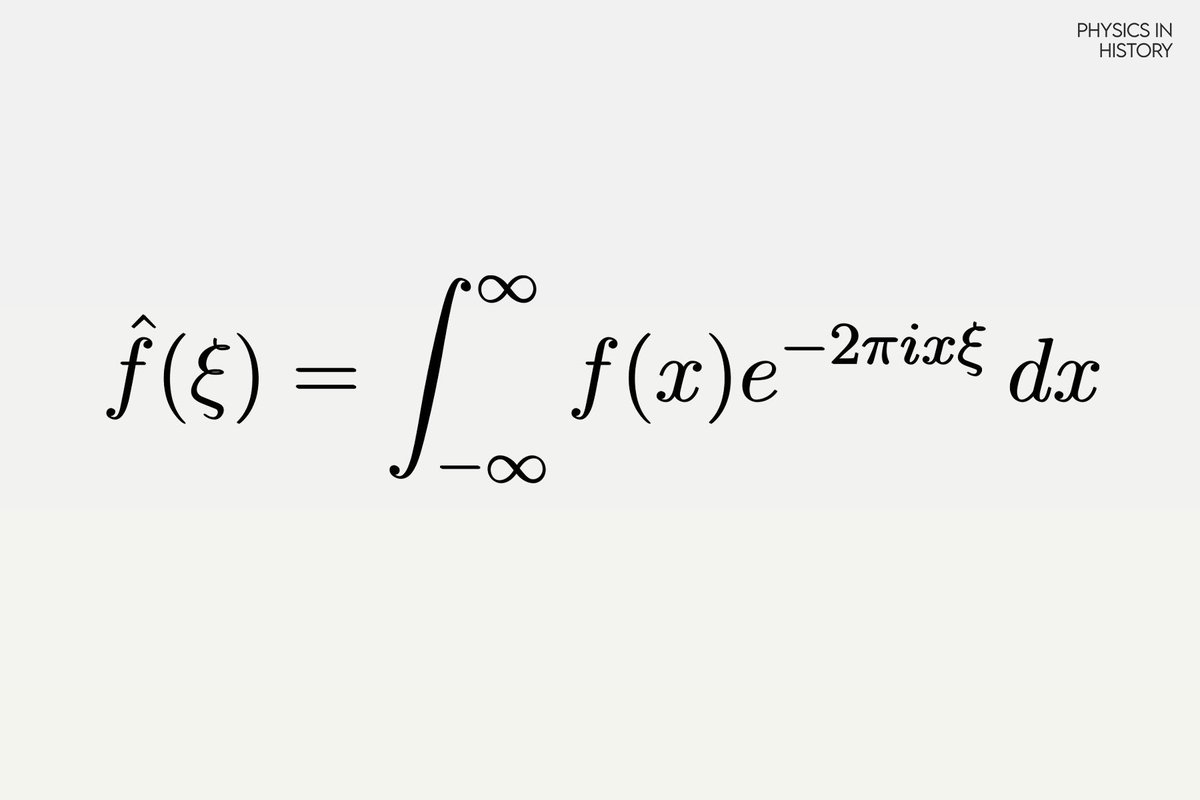
The Fourier Transform is a mathematical operation that transforms a function of time (or space) into a function of frequency. In essence, it decomposes a complex signal into its constituent sinusoidal components, each with a specific frequency, amplitude, and phase. This is particularly useful in many fields such as signal processing, physics, and engineering, because it allows for the analysis of the frequency characteristics of signals. The Fourier Transform provides a bridge between the time domain and the frequency domain, enabling the analysis and manipulation of signals in ways that are more intuitive and computationally efficient. The result of applying a Fourier Transform is often represented as a spectrum, showing how much of each frequency is present in the original signal.