The biggest challenge for hiring managers isn’t knowing what to ask,
it’s staying consistent and objective during interviews.
When you’re juggling back-to-back interviews, it’s easy to:
↘️ Drift into unstructured, free-form chats that favor more talkative personalities
↘️ Let your gut feel or first impressions outweigh the facts you’ve gathered
↘️ Slip into off-script questions that introduce bias or legal risk
So here it is:
The Ultimate Job Interview Cheat Sheet for Hiring Managers
#hiringmanagers #jobinterviews
Y Combinator isn’t just investing in startups,
they’re predicting the future of work.
Every year, YC puts out a call for the types of companies they want to fund.
The latest batch?
It's all about AI, but not in the way you might expect.
They’re not looking for tools.
They’re looking for entire companies built from the ground up with AI at the core.
This matters if you're figuring out your next move;
what job to go after, what skill to train for, or what company to join.
Here are the 12 company types you’ll see—and the skills and roles you’ll want to target:
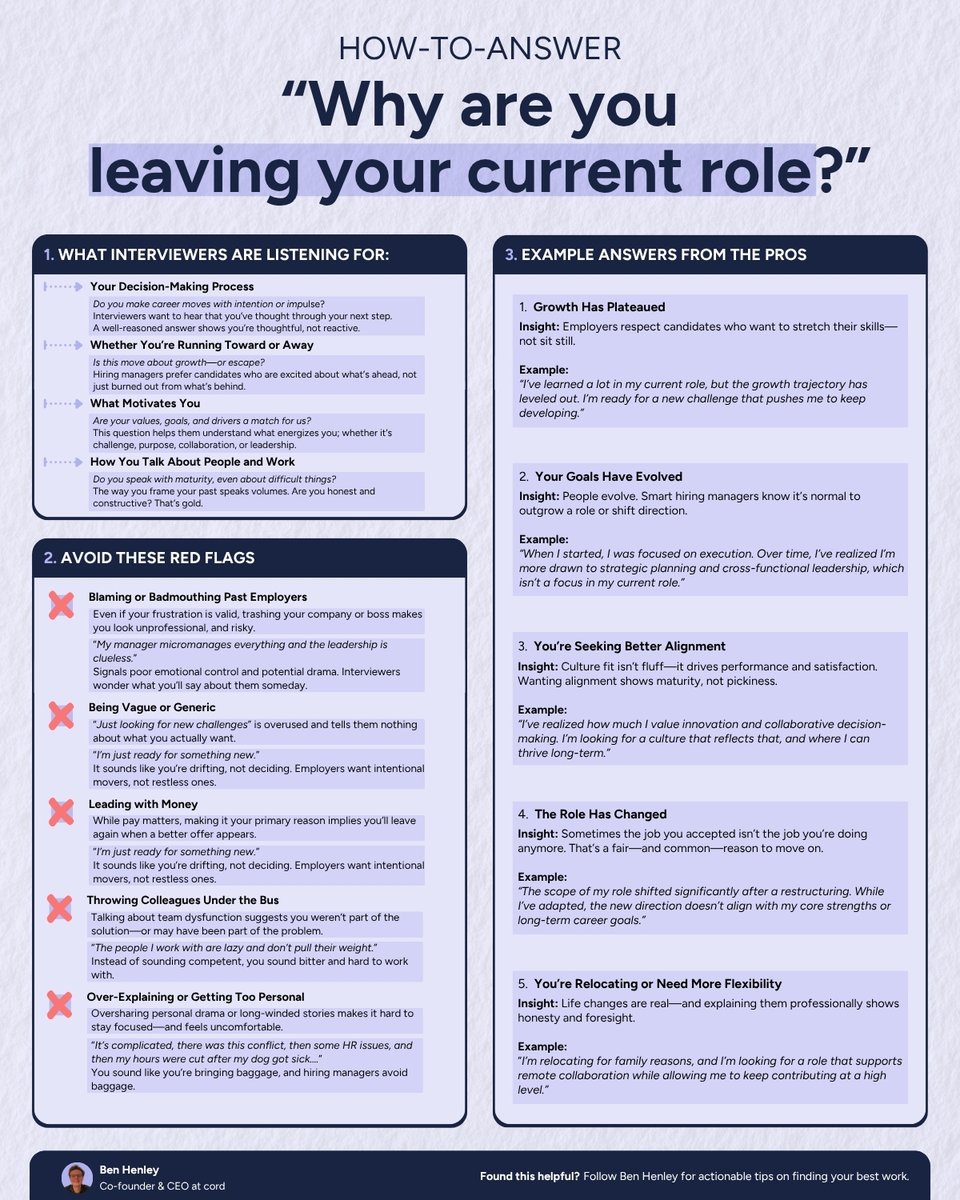
“So… why are you leaving your current role?”
Your answer to this question says more about you than an application form ever could.
It can either build trust or quietly raise red flags.
It reveals your judgment, mindset, and emotional intelligence—all in 20 seconds.
That’s why getting this right matters.
This is what it means for our career's:
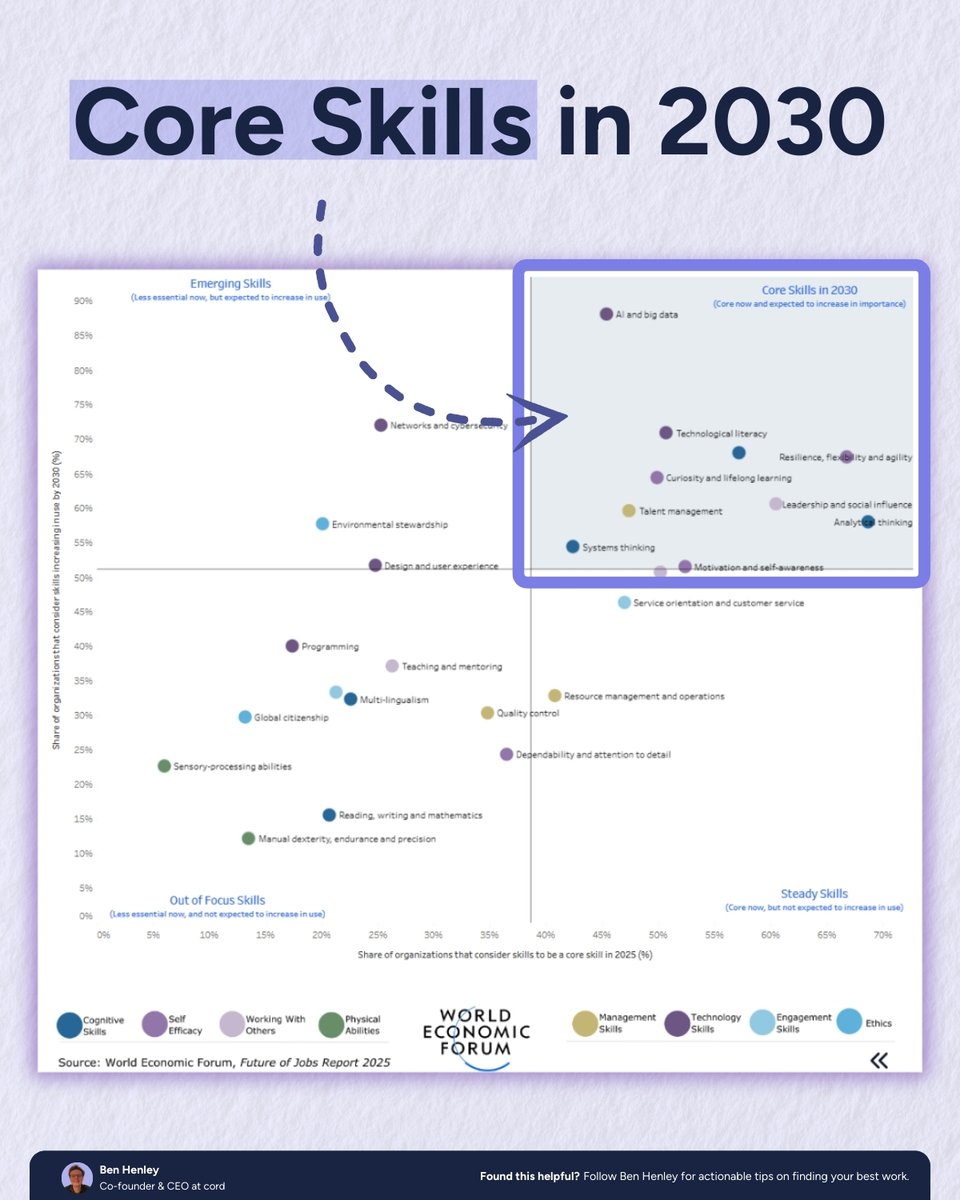
1️⃣ AI literacy and data fluency are now core skills, not bonuses.
2️⃣ Soft skills like resilience, creative thinking, and systems-level problem-solving are rising fast in demand.
3️⃣ Leadership that can think with AI - strategically, ethically, and creatively - will define the next generation of executives.
4️⃣ The hiring process is shifting. Recruiters are screening for adaptability, not just credentials.
5️⃣ In interviews, it’s not only what you know, it’s how quickly you can learn, adapt, and lead in a tech-driven world.
We’re not preparing for the future of work.
We’re living in the middle of it.
AI isn’t just a tool anymore.
It’s a professional skill. A mindset. A career.
According to the World Economic Forum:
↳ By 2030, 170 million new jobs will be created, but 92 million will disappear. ↳ Nearly 40% of today’s skills will be obsolete. ↳ And 59% of workers will need reskilling.
Your ability to work with it, not around it, will determine how relevant you stay.