📢 Update : The BHWRC is transitioning its focus to LinkedIn! While we'll still be active on this platform, our main updates and insights will be shared on LinkedIn. Follow us there for a more in-depth view of our research and news: https://t.co/PMYkOulRSh
New projects from our partners at @bhworkforce focus on timely issues facing the behavioral health workforce, such as clinician supervision and retention, use of crisis services, and the cost of running outpatient private practices. Learn more here: https://t.co/E1CVpmFCrq
A new study from researchers at @bhworkforce found that only 32.7% of substance use disorder treatment facilities offered perinatal programs. Learn more about their findings here: https://t.co/OyIUniAtrQ
A new study from researchers at @bhworkforce found that only 32.7% of substance use disorder treatment facilities offered perinatal programs. Learn more about their findings here: https://t.co/cB5h5idogG
"We need to design the behavioral health workforce to meet the needs of the community rather than having the community try to fit the current workforce."
--Dr. Brianna Lombardi at the @samhsa OBHE Workforce Policy Summit
@bhworkforce
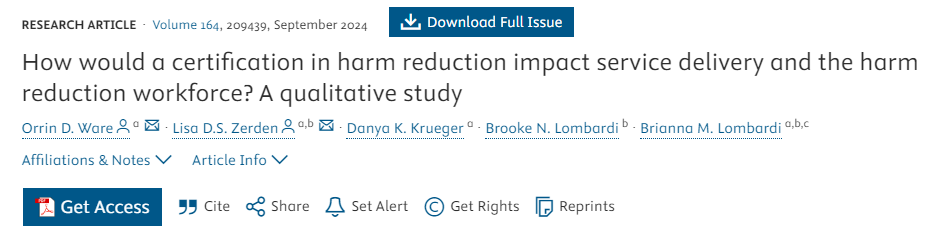
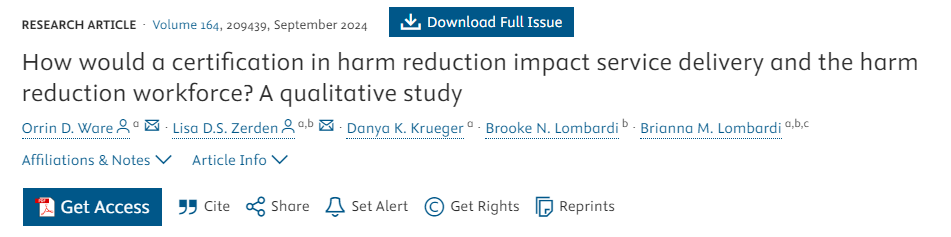
How would a harm reduction certification impact service delivery and the workforce? A new study in @JSATjournal from the @bhworkforce explores both sides of the debate, highlighting the potential benefits and challenges. https://t.co/mvYkjfbW47
How does the diversity of roles within the harm reduction workforce influence service outcomes? A new study from @bhworkforce explores this critical question, focusing on behavioral health services and referral processes across the U.S. https://t.co/3W75oo5gsn
What do harm reduction professionals think about certification? A new study from @bhworkforce reveals mixed opinions on how certification could affect service delivery and workforce development. Learn more in @JSATjournal: https://t.co/mvYkjfbW47
The composition of the harm reduction workforce is key to effective service delivery. A new study from @bhworkforce reveals insights on who provides crucial behavioral health services and how referrals are managed within harm reduction organizations. https://t.co/3W75oo5gsn
Certification in harm reduction: helpful or a barrier? A new study from @bhworkforce reveals diverse perspectives from the workforce, with key themes on standardization, exclusion, and the role of lived experience. Read more in @JSATjournal: https://t.co/mvYkjfbW47
A new study from @bhworkforce highlights the diverse roles of the harm reduction workforce in the U.S. Explore how different roles from peer specialists to behavioral health providers impact service delivery and referrals in harm reduction organizations. https://t.co/3W75oo5gsn
Before understanding, behavioral health, workforce solutions, you need to have a good understanding of the current distribution of behavioral health providers.
Love seeing this kind of research!
@BHECN1@bhworkforce@samhsagov
Read @bhworkforce’s “Behavioral Health Workforce Distribution in Socially Disadvantaged Communities” study on the geographic distribution of behavioral health clinicians: https://t.co/uu3n9qCQrY
Read the full study from @bhworkforce exploring findings and policy windows to help Behavioral Health Clinicians meet the needs for vulnerable communities: https://t.co/uu3n9qCQrY
Where is behavioral health workforce? A @bhworkforce study unveils the importance of an equitable distribution of behavioral health professionals, especially considering rural vs. nonrural areas: https://t.co/uu3n9qDohw
A new study by Lombardi finds fewer behavioral health clinicians (BHCs) in disadvantaged U.S. communities. Areas with high need have fewer BHCs per 100k people. Equitable workforce distribution and regulatory reforms are needed to improve access. https://t.co/CgxAu9khj2
🚨 Publication Alert 🚨
Understanding the Pathway from Undergraduate to Graduate Degrees in Social Work to Diversify the Behavioral Health Workforce was published in the the Journal of the Society for Social Work and Research: https://t.co/YnIZmTuDuM.
this study used the National Survey of College Graduates to understand the pipeline of diverse Bachelor of Social Work graduates to Master of SW programs in order to assess how student demographics, educational programs, and loan debt burden impact pathways into the profession.
Lombardi in @STFM_FM finds COVID-19 reshaped Integrated Behavioral Health in primary care, leading to new team structures, tech reliance, async collaboration, & telehealth use. Understanding long-term impacts & updating clinician training is essential. https://t.co/UxSGwX0Ggd