Your Bible doesn't say fight sexual immorality.
It says flee.
Run. Not stand your ground. Not manage it. Not install an accountability app and white-knuckle through another Tuesday night.
Flee.
"Flee fornication." — 1 Corinthians 6:18
You know why God didn't say fight?
Because the men who tried to fight it are the same men who lost everything.
Samson could kill a lion with his bare hands. Rip city gates off their hinges. Slaughter a thousand men with a jawbone.
He couldn't say no to Delilah. She shaved his head while he slept in her lap. The strongest man who ever lived — blind, chained, grinding grain like an animal.
David killed Goliath as a teenager. Wrote the Psalms. God called him "a man after mine own heart."
He saw a woman bathing and couldn't look away. Nine months later he'd committed adultery, murdered her husband, and buried a son.
Solomon asked God for wisdom and got more than any man in history.
Seven hundred wives. Three hundred concubines. They turned his heart after other gods. The wisest man who ever lived died an idolater.
The strongest fell.
The wisest fell.
The man after God's own heart fell.
"Wherefore let him that thinketh he standeth take heed lest he fall." — 1 Corinthians 10:12
You're not stronger than Samson. You're not wiser than Solomon. You're not closer to God's heart than David.
Stop fighting. Start running.
During an interview in 1974, Corrie ten Boom shared how she once encouraged fellow believers in Africa with one of her father's memorable lessons on why Christians need not fear being strong enough to endure suffering:
"I once said to my father (I was still a little girl), 'Daddy, I will never be strong enough to suffer for Jesus.'
And Father said, 'When you go to travel with a train to Amsterdam, when do I give you the train ticket? Three weeks before?'
I said, 'No, Daddy, the day that I go to travel.'
And Father said, 'That's what God does. Today, you do not need to have strength to suffer for Jesus, but the moment you will have the honor to suffer for Him, He will give you all the strength.' And then I was confident.
And I said to these people, 'When you have to suffer for Jesus, the Lord will give you the train ticket.'"
Why would God compare rebellion to witchcraft?
1 Samuel 15:23,
“For rebellion is as the sin of witchcraft…”
Rebellion is not just disobedience.
Rebellion is when God has spoken… and we knowingly choose our own way instead.
It’s when God says “Stop,”
But we say, “Just this once.”
It’s when God says “Let it go,”
but we keep holding on.
King Saul thought partial obedience was enough.
He kept what God told him to destroy, and then tried to justify it.
The real issue is not whether we hear God’s word…
The real issue is whether we obey it.
Be honest.
Is there any area in your life where God is saying no, but you are still saying yes?
The Holy Spirit is one of the most powerful presences in the Bible, and Joel 2:28-29 gives a stunning promise: God will pour His Spirit on all people. This is monumental because, until then, the Spirit was given only to prophets, kings, and priests. But now, God’s Spirit would touch everyone—men and women, young and old, even servants. Joel says, “Your sons and daughters will prophesy, your old men will dream dreams, your young men will see visions. Even on my servants, both men and women, I will pour out my Spirit in those days.” This isn’t just words; it’s a revelation of God’s heart. The Spirit would bring dreams, visions, and prophecy—direct encounters with God Himself. This prophecy found its fulfillment on Pentecost, after Jesus rose from the dead. The apostles were gathered, and the Spirit came like tongues of fire. Peter explained, “This is what was spoken by the prophet Joel” (Acts 2:16). Pentecost marked the birth of the Church, a new era where God dwells among His people through the Spirit. The Holy Spirit continues to guide, comfort, and strengthen believers. He leads us into truth, empowers us to witness, gives spiritual gifts, and transforms our hearts. But the Spirit’s work is not only for today. Joel also speaks of future signs: wonders in the heavens and on the earth, the sun turning dark and the moon to blood, preparing the world for the coming of the Lord. The Holy Spirit is still at work, preparing the Church for Christ’s return. Pentecost was only the beginning. God’s promise is alive: “Everyone who calls on the name of the Lord will be saved” (Joel 2:32). The Spirit calls, transforms, and prepares each of us for the day when Jesus will come again. God’s Spirit is not distant. He is moving, revealing, and shaping His people, reminding us that the story of salvation is ongoing, full of wonder, and alive today.
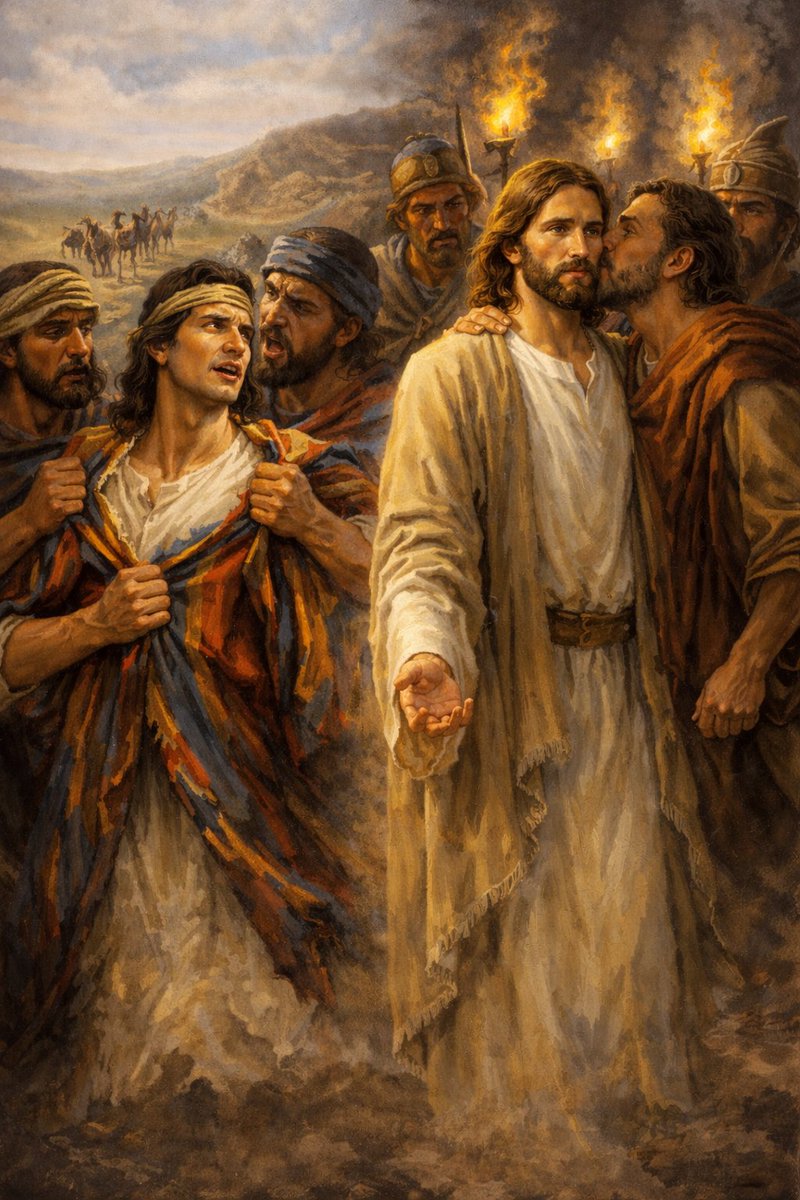
One of the most sobering ways in which the story of Joseph points us to Christ occurs before he ever reaches Egypt. His brothers see him coming across the fields and begin plotting what to do with him. Genesis 37 is chilling in its straightforward statement: “When they saw him afar off… they conspired against him to slay him.”
Joseph is not approaching them as an enemy. He has been sent by his father to check on their welfare. Yet the very brothers he has come to help see him instead as a threat. This moment introduces one of the recurring patterns in scripture, the righteous servant who is rejected by those he comes to bless. The story resonates because the most Righteous of Servants, Christ, experienced it Himself
Like Joseph, Jesus was the Beloved Son sent by His Father. Like Joseph, He came seeking the welfare of His brothers and sisters. And like Joseph, He was rejected.
The New Testament captures this tragedy with painful clarity: “He came unto his own, and his own received him not.” (John 1:11) .It is important to read passages like this carefully and faithfully. The Savior’s rejection was not the story of one people rejecting Him. Jesus Himself was Jewish. His earliest followers were Jewish. The first witnesses of His resurrection were Jewish. The earliest Christian church was overwhelmingly Jewish.
Rather, the story of Christ’s rejection is a universal human story. Throughout history, people of every nation, including our own communities and even our own hearts, have struggled to recognize and receive God when He comes in ways we do not expect.
Joseph’s brothers illustrate that pattern vividly. Their jealousy distorts their vision. Instead of seeing their brother, they see a rival. Instead of hearing his dreams as divine possibility, they hear them as a threat to their status. So when Joseph finally reaches them in the fields of Dothan, they strip him of his distinctive coat, throw him into a pit, and eventually sell him to passing traders for silver. The symbolism is difficult to miss.
Centuries later, Jesus Christ would also be betrayed for silver. He, too, would be rejected by people who misunderstood His mission and feared the implications of His message. Yet one of the remarkable truths that emerges from Joseph’s story is that God can transform betrayal into redemption. Joseph’s suffering eventually places him in a position where he will save many lives, including the very brothers who betrayed him. Their worst act becomes, in God’s hands, the pathway to preservation.
The same redemptive pattern lies at the heart of the Atonement of Christ. Humanity’s rejection of the Savior led to the cross. Yet through that suffering, Christ accomplished the holiest act of redemption, salvation, and exaltation the world has ever known. In both stories, we see a profound gospel truth: God’s purposes are not defeated by human weakness. Sometimes they are worked out through it.
Joseph’s brothers could not see the future when they cast him into the pit. But God already could.
And the same is true of the cross.
#ComeFollowMe
#SundaySchool
#SaintsOnX
What was the truth 5,000 years ago was the same truth 2,000 years ago, was the truth 100 years ago, is the truth today, and will always be the truth forever.
God's Word is the perfect, holy, infallible truth forever and will never change.
The Lord Jesus Christ is the Truth and will never, ever change.
Satan has the vast majority of believers today are, as we speak, well and blinded by false spiritual experiences and emotional enthusiasm. And the closer we are to eternity, the more truth is rejected for deception. Only those who really study the Word, and love it, and live by it will see what is happening. Everyone else will be swept up in feelings and spiritual hype.
I’d rather have Jesus Christ than anything this world has to offer.
I don’t need the big house or a lot of money or the fancy cars or jewelry.
Having Jesus Christ is far more valuable than those things.
Everything on this planet will perish, but our souls live on for eternity, and it’s either in Heaven or Hell.
I choose Jesus Christ, not this world.
Who’s with me? 🙏🏻✝️💙
This is probably the best answer I've ever heard to the question, "Why did God create evil?"
A professor at the university asked his students the following question:
“Everything that exists was created by God?”
One student bravely answered:
“Yes, it was created by God.”
The professor asked :
“If God created everything, then God created evil, since it exists. And according to the principle that our deeds define ourselves, then God is evil.”
The student became silent after hearing such an answer. The professor was very pleased with himself. He boasted to students for proving once again that faith in God is a myth.
Another student raised his hand and said:
“Can I ask you a question, professor?”
"Of course," replied the professor.
“Professor, is cold a thing?”
“What kind of question is this? Of course it exists. Have you ever been cold?”
Students laughed at the young man's question.
The young man answered:
“Actually, sir, cold doesn't exist. According to the laws of physics, what we consider cold is actually the absence of heat. A person or object can be studied on whether it has or transmits energy.
Absolute zero (-460 degrees Fahrenheit) is a complete absence of heat. All matter becomes inert and unable to react at this temperature. Cold does not exist. We created this word to describe what we feel in the absence of heat.”
The student continued:
“Professor, does darkness exist?”
“Of course it exists.” said the professor.
“You're wrong again, sir. Darkness also does not exist. Darkness is actually the absence of light. We can study the light but not the darkness. We can use Newton's prism to spread white light across multiple colors and explore the different wavelengths of each color. You can't measure darkness. A simple ray of light can break into the world of darkness and illuminate it. How can you tell how dark a certain space is? You measure how much light is presented. Isn't it so? Darkness is a term man uses to describe what happens in the absence of light.”
In the end, the young man asked the professor:
“Sir, does evil exist?”
This time it was uncertain, the professor answered:
“Of course, as I said before. We see him every day. Cruelty, numerous crimes and violence throughout the world. These examples are nothing but a manifestation of evil.”
To this, the student answered:
“Evil does not exist, sir, or at least it does not exist for itself. Evil is simply the absence of God. It is like darkness and cold—a man-made word to describe the absence of God. God did not create evil. Evil is not faith or love, which exist as light and warmth. Evil is the result of the absence of Divine love in the human heart. It’s the kind of cold that comes when there is no heat, or the kind of darkness that comes when there’s no light.”
🙏🏻❤️🙏🏻
Have we observed that in Scripture, whenever sexual intercourse between a husband and wife is mentioned, the language used is “he knew his wife”? For example, in Genesis 4:1, it says, “And Adam knew Eve his wife.” That wording is intentional. God did not describe sex as mere activity. He described it as knowing.
The use of “knew” shows that sex is the height of intimacy in marriage. It is not just physical contact. It is deep experiential knowledge. It is vulnerability. It is oneness. It is covenant expressed physically.
That is why in Genesis 2:24, Scripture says the two shall become one flesh. Sex is the physical expression of that one flesh reality. It was never designed to be casual. It was designed to be covenantal.
Throughout Scripture, covenant is serious and often associated with blood, as seen in Exodus 24:8. In the same way, sexual union carries weight. It joins two people in a way that is spiritual, emotional, and physical. In some cases, blood may be involved during a woman’s first sexual experience. While this is not universal, it can serve as a reminder that sex is not a trivial act. It involves vulnerability, intimacy, and something deeply personal.
Now imagine giving that level of intimacy to just anyone. Imagine creating that kind of one flesh bond outside the safety of covenant. Sex was never designed to be casual. It carries spiritual, emotional, and physical weight.
SAY NO TO SEX BEFORE MARRIAGE.
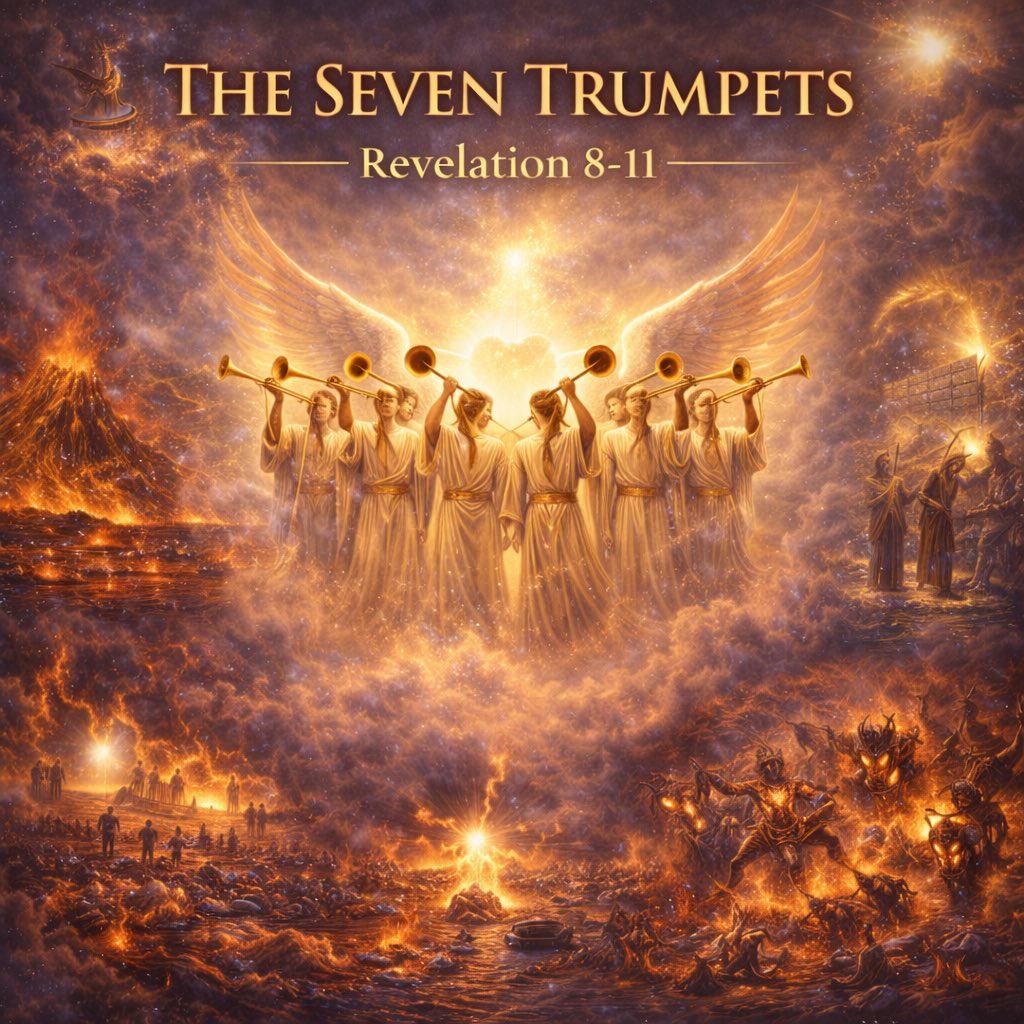
The Seven Trumpets — Revelation 8–11 Overview
Progressive judgments intensifying wrath
Introduction
When the Holy Ghost opens Revelation 8, He is no longer speaking in soft suggestions and Sunday school sketches. The Lamb has taken the book, the seals have been opened, and heaven is done tolerating man’s rebellion. What follows is not “poetic symbolism” about political stress or personal anxiety. What follows is the wrath of Almighty God stepping into history in measured stages, like a Judge who has listened long enough. The seven trumpets are not God “trying to get man’s attention” the way modern preachers talk. They are God taking the world apart piece by piece because it refused His Son, mocked His Book, and worshipped the creature more than the Creator. The trumpets are the sound of a court sentence being carried out.
And notice how the Lord does it. He does not drop the whole thing at once. He escalates. He intensifies. He turns the screws tighter with each blast. That is exactly what Revelation 8–11 is: progressive judgments that increase in severity, scope, and directness. The first four trumpets strike creation itself, like God slapping the table of the earth so hard that everything on it trembles. The last three are called woes because they aim more directly at men, not just their environment. “Woe, woe, woe, to the inhabiters of the earth” (Revelation 8:13). That is not a metaphor. That is a warning label.
If you cannot handle that, then you have not yet settled something basic. God is holy. God is patient. But God is also a consuming fire. “It is a fearful thing to fall into the hands of the living God” (Hebrews 10:31). The seven trumpets are God proving that He meant what He said when He warned the world about sin, judgment, and the day of the Lord. They also prove that the Tribulation is not the Church Age, and the wrath in Revelation is not some vague spiritual warfare in the believer’s mind. This is literal judgment on a literal world, during a literal time of trouble, preparing the literal return and reign of Jesus Christ. “For then shall be great tribulation, such as was not since the beginning of the world to this time, no, nor ever shall be” (Matthew 24:21).
1. Silence in Heaven and the Prayer Bowl Turning into Fire
Revelation 8 begins with a strange thing for heaven: silence. “And when he had opened the seventh seal, there was silence in heaven about the space of half an hour” (Revelation 8:1). Heaven is not silent in Revelation. Heaven is usually singing, shouting, praising, and declaring the worthiness of the Lamb. So when heaven goes silent, it is the hush that falls in a courtroom right before the sentence is read. It is the pause right before the hammer drops. It is God letting every created intelligence feel the weight of what is about to happen.
Then you see the mechanics of judgment, and it is not human politics. “And I saw the seven angels which stood before God; and to them were given seven trumpets” (Revelation 8:2). These are not church trumpets. These are not the trump of God for the blessed hope. These are angelic trumpets of war and wrath. At the same time, the Holy Ghost shows you something that makes religious people uncomfortable: prayer is involved. “And another angel came and stood at the altar, having a golden censer… and the smoke of the incense… ascended up before God out of the angel’s hand” (Revelation 8:3–4). In other words, God has heard the cries of His people. He has heard every martyr under the altar asking, “How long, O Lord” (Revelation 6:10). He has heard the groaning of Israel in Jacob’s trouble. He has heard the prayers of saints that were laughed at on earth.
And then the scene turns violent on purpose. “And the angel took the censer, and filled it with fire of the altar, and cast it into the earth” (Revelation 8:5). What was incense becomes fire. What was prayer becomes judgment. That is a doctrine modern Christianity will not preach,
Self. Dying to SELF.
Dying to self doesn’t mean you stop being a person or lose your personality. It means you stop letting your selfish wants run the show and start letting God lead your life.
Before following Christ, most of us live by “what I want, when I want it.” After choosing Him, the question changes to, “Lord, what do You want?” That shift is what the Bible calls dying to self.
Jesus said if we want to follow Him, we have to deny ourselves and take up our cross daily. In everyday terms, that means choosing what’s right over what’s easy, choosing obedience over convenience, and choosing love over pride.
It’s not a one-time decision. It’s daily, and sometimes hourly.
Dying to self sometimes mean holding your tongue when you want the last word, forgiving someone who hurt you, doing the right thing even when no one sees, choosing kindness when you’re tired and irritated, and letting go of pride and admitting you were wrong.
It’s less about grand gestures and more about quiet choices. It is sometimes very difficult to do because our natural instinct is to protect our ego, chase comfort, and avoid sacrifice. That’s the struggle. The old way of living doesn’t go away quietly.
Even the apostle Paul admitted he sometimes did what he knew was wrong instead of what he knew was right. If he wrestled, we will too.
But, we are not meant to do it alone. This is where the Holy Spirit comes in. God doesn’t say, “Fix yourself.” He says, “Walk with Me.” The Spirit gives strength to resist selfish impulses and grow into a more loving, patient, humble person.
The truth is that change happens from the inside out, and we gain so much by letting go. I know it sounds backward, but when we stop living only for ourselves we actually find a deeper, fuller life.
We gain peace instead of constant striving, freedom from guilt and resentment, stronger relationships, a clear conscience, and a sense of purpose. Jesus said that whoever loses their life for His sake will find it. In other words, when you release control, you finally discover the life you were meant to live.
Remember, dying to self isn’t about becoming less human. It’s about becoming the person God designed you to be. It’s a daily surrender, a quiet reshaping of the heart, and a lifelong journey of choosing love, humility, and obedience over selfishness. The beautiful part is this that every small “yes” to God brings more life, not less.
God bless you!
If we are going to speak biblically - then let us speak biblically:
Isaiah the prophet foretold that the Messiah would suffer and die for the sins of the world:
“But He was wounded for our transgressions,
He was bruised for our iniquities;
The chastisement for our peace was upon Him,
And by His stripes we are healed.
All we like sheep have gone astray…
And the Lord has laid on Him the iniquity of us all.”
• Isaiah 53:5–6 (NKJV)
“Yet it pleased the Lord to bruise Him…
When You make His soul an offering for sin…”
• Isaiah 53:10 (NKJV)
The suffering of the Messiah was not accidental. It was ordained.
Jesus Himself declared:
“For I have come down from heaven, not to do My own will, but the will of Him who sent Me.”
• John 6:38 (NKJV)
“No one takes it from Me, but I lay it down of Myself. I have power to lay it down, and I have power to take it again.”
• John 10:18 (NKJV)
The cross was voluntary obedience to the Father.
It was not forced. It was not stolen. It was laid down.
And the apostle Paul, speaking of unbelieving Israel, wrote:
“Concerning the gospel they are enemies for your sake, but concerning the election they are beloved for the sake of the fathers. For the gifts and the calling of God are irrevocable.”
• Romans 11:28–29 (NKJV)
Irrevocable - not temporary.
Irrevocable - not transferable.
Irrevocable - not replaced.
So when someone claiming to be a Christian says:
• “The Jews killed Jesus.”
• “God replaced them.”
• “They are no longer His people.”
That is not the testimony of Scripture.
Peter preached in Jerusalem:
“Him, being delivered by the determined purpose and foreknowledge of God, you have taken by lawless hands, have crucified, and put to death.”
• Acts 2:23 (NKJV)
Notice the order -
First: the determined purpose and foreknowledge of God.
Then: human responsibility.
The cross was the sovereign plan of God.
Sin put Him there - all of us.
And Paul asks plainly:
“I say then, has God cast away His people? Certainly not!”
• Romans 11:1 (NKJV)
Certainly not.
God is faithful to His covenants.
The Messiah came as promised.
He laid down His life as foretold.
And the calling of Israel remains - because the character of God does not change.
🚨‼️Most Christians read the Song of Solomon like it wandered into the Bible by accident. They blush, skim it, and run back to Romans where things feel safer. But the Holy Ghost did not misplace a love song. He put it there on purpose. If you remove Song of Solomon, you remove God’s own definition of covenant affection, not soft, not sentimental, but jealous, exclusive, and strong as death. The Church has reduced love to a mood. God defines it as a seal on the heart and a fire that will not go out.
When the bride says, “Love is strong as death” (Song 8:6), she is not exaggerating. Death takes everything from a man, reputation, wealth, strength, breath. At Calvary, love went head-to-head with death and refused to surrender. That cross was not romance. It was war. And the resurrection was the proof that divine love is not fragile. If your idea of love cannot survive betrayal, wounds, silence, and a tomb, it is not biblical love.
The Song also exposes something modern Christianity avoids, jealousy. “Jealousy is cruel as the grave” (Song 8:6). Jehovah’s name is Jealous (Exod. 34:14). He does not share His bride with idols, trends, politics, or religious systems. When Israel played the harlot, He chastened her. When the Church flirts with the world, He disciplines her. Love that refuses to confront is not holy; it is weak. The grave does not negotiate, and neither does divine jealousy.
The Song of Solomon is not in your Bible to decorate weddings. It is there to show you that God’s love is covenantal, consuming, and unstoppable. Many waters cannot quench it. Floods cannot drown it. Not exile. Not Rome. Not apostasy. Not your worst failure. And if that kind of love has sealed you, then you are not called to casual Christianity. You are called to lean on your Beloved, guard your vineyard, and live like someone claimed by a King.
If you think Paul's shipwreck was just a survival story, you missed why the storm was allowed.
Acts 27 is one of the most terrifying travel log in the Bible. Paul is under custody, going to Rome to testify. Jesus had already told him in Acts 23:11 that he Paul would testify in Rome. So this trip was not a mistake. Paul is in the center of God's will. And yet, he sails straight into a hurricane called Euroclydon.
We like to think that if we are "in the will of God," the sun will shine and the wind will be at our backs. But here is the great Apostle Paul, perfectly in God's will, and yet that doesn't cancel the storm but rather anchors him in it.
Paul warned them earlier, but the centurion listened to the captain instead. Then the hurricane hit. For 14 days, they saw no sun, no stars. They started throwing their own gear overboard, probably writing their death notes. When seasoned sailors start dismantling their own ship, hope is officially gone. Survival level has reached critical point.
The situation was humanly impossible to manage. But in the middle of the chaos, Paul stands up, and calmly told them that an angel of God he belonged to stood beside him, and told him not to be afraid, that he’d stand before Caesar, and because he was there, God had "granted" him the lives of everyone on board. Such audacity of faith.
Their survival was tied to a prisoner. Paul was in chains, yet Heaven was backing his presence. Obedience did not calm the sea, but it surely secured the outcome. The ship was smashed by the waves, and soldiers almost executed the prisoners. But all 276 reached land.
God didn’t save the ship, but the people. Sometimes you're praying for the business, the plan, Ministry or the image to stay intact. But the proof you were sent isn't a "smooth ride"; it’s "preservation" in the chaos. Take note of that. Your comfort may be destroyed, but your calling won't.
And it doesn’t end at the shore. It got even worse.
On Malta, shivering by a fire, a viper latches onto Paul’s hand. The locals immediately assumed he was a dead man walking. First a storm, now venom. But to their amazement, Paul just shook it off into the fire and went on with his business. To him, since Jesus said he would be in Rome, there was ABSOLUTELY NOTHING that could destroy him. He believed Jesus 100% despite the deadly experiences.
See, Your obedience might be shielding people who don't even know your name. Your presence in that office, that family, or that crisis might be the only reason the whole thing hasn't gone under yet. You think you’re barely surviving, but Heaven sees it differently: "I’m keeping them because you’re there."
Obedience doesn't stop the ship from breaking. It just keeps you steady while everything else tears loose. So when your ship in life is wrecked by storms of failure, disappointment, heartbreak, sickness, and loss, and you’re standing on the shore breathing, don't call it luck, remember the promises Jesus gave you in the Word.
Are you mourning the comfort God allowed to break, or are you allowing Him use the wreckage to reach souls and get them to shore?
#Christianity #BiblicalTruth #StormsOfLife #Survival
Ellis Enobun
My Testimony–
I grew up an atheist.
Never knew Jesus, never learned about Jesus, and never really cared to either.
I was happy.
I had great friends, a healthy family, and a good education. I excelled in sports, enjoyed playing video games, and loved to eat ice cream.
It never seemed like I needed anything, but always felt like I was missing something.
Even as a young child, I would lie in bed wondering What’s it all for?
An infinite universe, a finite existence, and a lack of higher purpose.
God had set eternity on my heart (Ecclesiastes 3:11). And I wasn’t all that interested in the “straight path” the world had to offer.
Yet, my life felt like a movie in which I was the main character.
In high school I won state championships, made the all-conference teams, had an attractive girlfriend… I was the man.
Then God humbled me.
When I was 17, I was distracted driving and struck and killed my family’s dog. My mom woke me up the next morning with tears in her eyes and informed me that my classmate had overdosed on drugs and died. That same day I played the worst basketball game of my life and threw the state championship for my team. Then two weeks later, Covid struck in the spring of my senior year of high school, and everything was canceled.
No prom, no graduation, no lacrosse season, no parties, no girlfriend.
Also during that time, my uncle who I looked up to as a father figure was diagnosed with stage four cancer. The architecture school I was enrolled in went completely virtual and required a vaccination for attendance. I started smoking daily, drinking heavily, craving sexual immorality, and falling into depression.
I was no longer the main character, no longer the man, no longer happy.
Then, in desperation, I began to pray to a God I did not yet know.
And he answered me.
Not with some dream, or vision, or miraculous healing. He answered me by placing people into my life who were willing to help me become the man he wanted me to be.
I started studying the Bible daily, praying constantly, going to church frequently.
And then on April 30th of 2023, I was baptized.
It’s been over two years now, and I’m happier than ever.
I have eliminated all the bad habits from my life, built friendships that will last an eternity, and got married last year to a true woman of God.
I finally found a higher purpose—to teach others the same gospel that changed me, and help them become the men God wants them to be. My wife and I lead a ministry of around 100 people together, and I hope to eventually lead larger groups and play a significant role in winning this world for Christ.
My content on here is part of that mission. The best way you can support is by giving me a follow so that the gospel can reach even more souls.
Thank you for reading my story.
Oliver Matthew Burdick
God has provided us a free trip to Heaven through His grace, when Jesus died to atone for our sins. Where we can fellowship with Him for eternity. All you need to do is believe that Jesus is the Son of God, and that he died and rose again. Surrender your self completely to Jesus, with all your hear, all your soul, and all your mind.