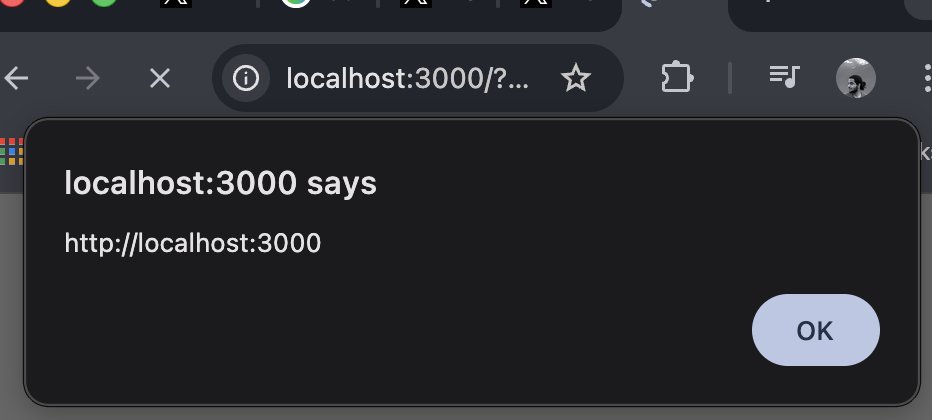
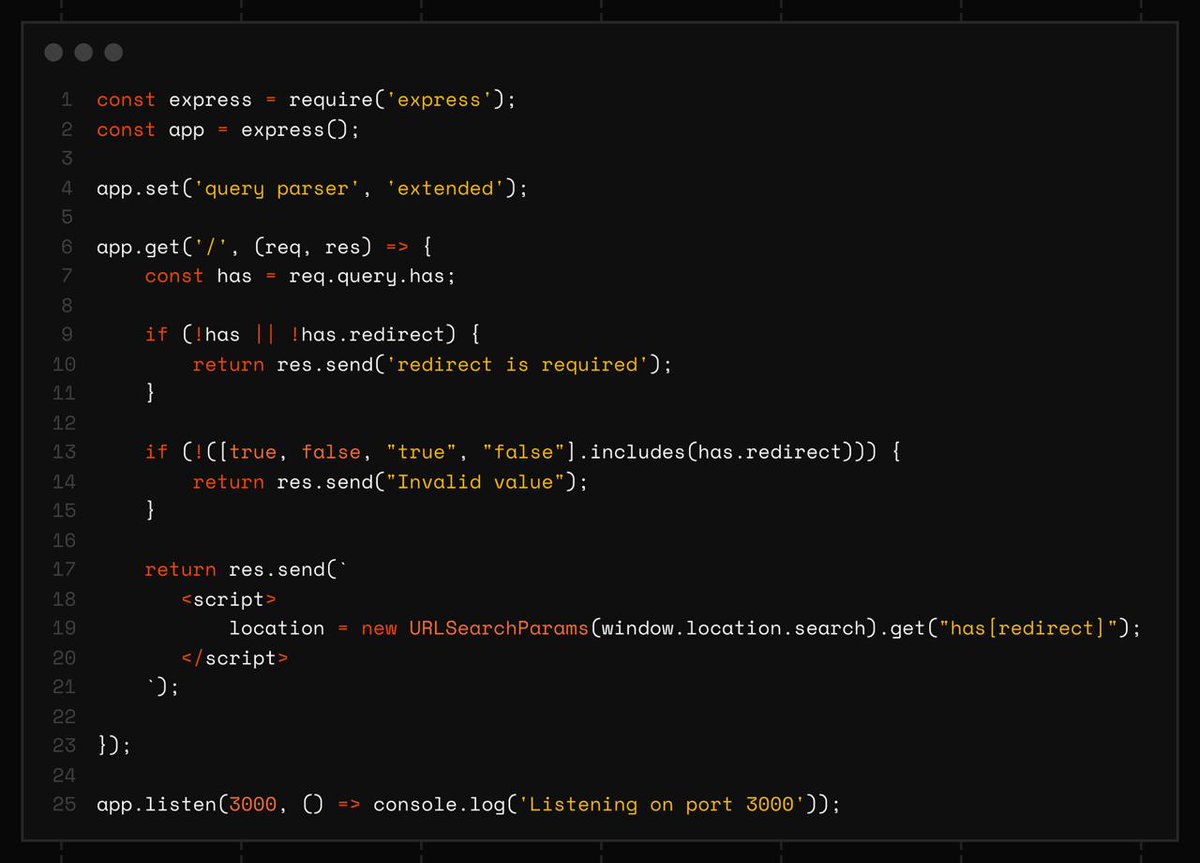
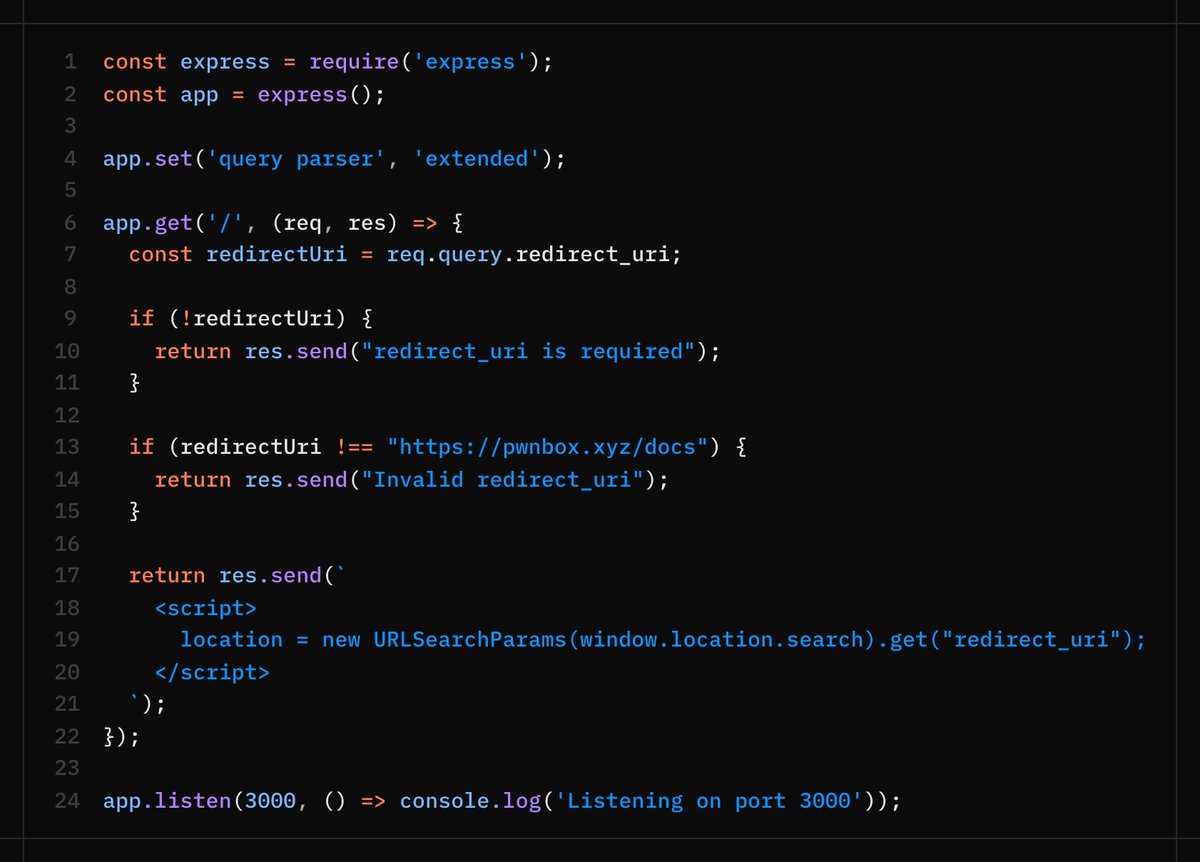
Yousef (@samm0uda) gave me a challenge few days ago, it's a redesign of Amir's recent challenge, the solution is quite interesting, I was able to solve it in 10 minutes as I'd previously debugged QS library it, I highly RECOMMEND it, the source code:
https://t.co/D2cgR6v9PA
@mimbele_@YShahinzadeh@AmirMSafari well done. there’s actually another way to get to the second point(thing) i mentioned earlier. amirmohammad explained it in his recent blog.
3 hours yesterday. Halfway there. Gave up.
Today I saw @YShahinzadeh call it the best challenge of 2026 so far. So I gave it 2 more hours. It worked.
Lesson: dig deeper.
Big shoutout to @AmirMSafari
Thanks for participating in this challenge! I analyzed the qs parser source code and wrote about the inconsistency between the backend and frontend query parsers, along with two possible solutions. Hope you enjoy it!
https://t.co/BRPp2L7TS6
@6173687561646d6@mimbele_@YShahinzadeh@AmirMSafari code is code, doesn’t matter if it runs client-side (browser) or back-end.
focus on the concepts first, trying to learn everything at once can get distracting.
btw i’m also a newcomer, didn’t even know “express” exists before this challenge :)
@mimbele_@YShahinzadeh@AmirMSafari btw, if you’re a newbie like me, i highly recommend running the code yourself(if you haven’t already) and inspecting req.query, especially req.query.redirect_uri, to see how it behaves with different input parameters.
@mimbele_@YShahinzadeh@AmirMSafari i had found the first one but was stuck on the second.
for me, the key was digging deeper into how back-end parsing actually behaves.
i suggest focusing on parser behavior, especially on the back-end side. that’s more suspicious.