BREAKING: Pentagon approaches GM, Ford and other large auto manufacturers to discuss shifting from auto development to weapons and military supply production.
@Portenio1950@Sauronlordking I’m curious as to what similarities you see between Australia and Argentina post world war 1. Because I honestly can’t. Australia is in no way anywhere near pre Milei Argentina and has not been similar to Argentina since the Great Depression
@QBCCIntegrity@IanBatchelor11 Where are you getting this number? I’m seeing 4.58 billion litres a month based on 55 billion litres a year. Just curious
BREAKING: Initial details are emerging as the US and Iran conduct their first direct meeting since 1979.
Details include:
1. The Strat of Hormuz remains a point of "serious disagreement"
2. US military says 2 US warships have transited the Strait of Hormuz today
3. "Mood swings" are being seen on both sides in talks, per Pakistani mediators
4. The US will be assisting Iran in removing mines from the Strait of Hormuz
5. Talks are expected to continue tonight and may extend into tomorrow
We expect to receive much more detail in the coming hours.
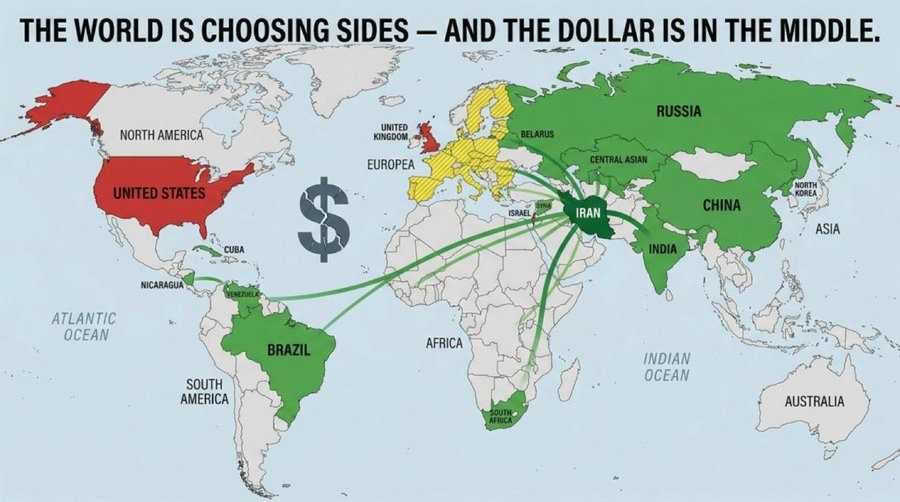
🚨🚨🚨 Irán acaba de ofrecer a Europa el acuerdo del estrecho de Ormuz. No se imaginan la magnitud del desastre que ha desatado.
En apariencia, Irán ha ofrecido a la Unión Europea el derecho de paso por el estrecho de Ormuz. Parece un simple gesto diplomático. Pero no lo es.
Esto es una bomba de relojería financiera.
El 20% del petróleo total del mundo pasa por el estrecho de Ormuz.
La factura energética de Europa aumentó en 16.200 millones de dólares en tan solo 30 días.
El precio del gas natural en Europa aumentó un 100%, mientras que el precio del petróleo aumentó un 60%. El precio del diésel es de 200 dólares por barril.
Las reservas de dólares cayeron del 70% al 56,9% en 25 años.
⚠️ Si Europa acepta este acuerdo, pagará en euros, no en dólares.
⚠️ Un solo acuerdo petrolero importante que no se realice en dólares sería suficiente para demostrarle al mundo que es posible.
El petrodólar es el sistema financiero más poderoso de la historia. Nacido en 1974, obligó a todos los países del mundo a mantener dólares para comprar petróleo. Este es el fundamento del dominio financiero estadounidense.
Si este sistema colapsa, el crecimiento del grupo BRICS se acelerará, los estados del Golfo reconsiderarán su posición, la demanda del dólar se desplomará y Estados Unidos no podrá financiar su deuda de 34 billones de dólares en condiciones favorables.
El miembro del consejo del Banco Central Europeo, Panetta, declaró el 2 de abril: "Aunque la guerra con Irán termine, el daño ya está hecho".
Te están mostrando una guerra por las armas nucleares y la seguridad regional.
No te están mostrando que la verdadera guerra gira en torno a quién tiene derecho a imprimir la moneda de reserva mundial.
← Irán cierra el estrecho de Ormuz a los Estados Unidos y lo abre a la Unión Europea mediante acuerdo.
← La Unión Europea, exhausta y agobiada por la deuda, está considerando seriamente aceptar el acuerdo.
← El acuerdo se concluye en euros o yuanes, no en dólares.
← Todos los países están monitoreando la situación: los países BRICS, los países del Sur Global y los países del Golfo, observando lo que está sucediendo.
← "Si la Unión Europea puede superar al dólar, nosotros también podemos."
← La demanda de dólares disminuye. Las reservas se desploman. La inflación aumenta en Estados Unidos.
Si Estados Unidos es tan poderoso, ¿por qué la Unión Europea consideraría un acuerdo con el país que Estados Unidos está bombardeando?
Silencio absoluto.
Esto ya no es solo una guerra en Oriente Medio.
Esto es un ataque directo contra el petrodólar.
Prepárense bien.
Trump is seeking to pay for his new $1.5 trillion military budget by cutting the following:
$510 million - Grants for farmers and agricultural research
$82 million - Loans for rural small businesses (Fully eliminated)
$61 million - Support for farmers and food markets (Fully eliminated)
$240 million - School meals and food education for children abroad (Fully eliminated)
$659 million - Community building grants
$47 million - Support for minority-owned businesses (Fully eliminated)
$449 million - Economic development grants for communities
$1.6 billion - Weather forecasting, fisheries, and coastal protection (NOAA)
$993 million - Scientific research and technology standards
$150 million - Support for American exports and trade
$2.2 billion - Broadband and internet access programs
$8.5 billion - Funding for public schools
$1.5 billion - Vocational training and adult education (Fully eliminated)
$2.7 billion - College access and higher education support
$15.2 billion - Roads, bridges, and infrastructure projects
$1.1 billion - Home energy efficiency and clean energy programs (Fully eliminated)
$1.1 billion - Scientific research funding
$386 million - Environmental cleanup programs
$150 million - Cutting-edge clean energy research
$4 billion - Help paying home heating and cooling bills for low-income families (Fully eliminated)
$768 million - Refugee resettlement assistance
$819 million - Care and shelter for migrant children
$775 million - Local anti-poverty programs (Fully eliminated)
$5 billion - Public health programs, mental health services, and disease prevention
$5 billion - Medical research (NIH)
$129 million - Healthcare quality and safety research
$356 million - Emergency preparedness and disaster response
$1.3 billion - FEMA community disaster preparedness grants
$707 million - Cybersecurity protection for critical infrastructure
$52 million - Airport and transportation security
$40 million - Protection against chemical and biological weapons threats
$53 million - Funding for homeland security operations
$3.3 billion - Community development block grants for local neighborhoods (Fully eliminated)
$1.3 billion - Affordable housing construction grants (Fully eliminated)
$393 million - Programs to reduce homelessness
$529 million - Housing assistance for people living with HIV/AIDS (Fully eliminated)
$489 million - Housing and services for Native American communities
$50 million - Grants to help communities build more housing (Fully eliminated)
$60 million - Enforcement of fair housing and anti-discrimination laws
$58 million - Homebuyer and renter counseling services (Fully eliminated)
$45 million - Renewable energy development programs (Fully eliminated)
$1.7 billion - Grants for local law enforcement and public safety
$20 million - Civil rights mediation and legal access programs (Fully eliminated)
$1.6 billion - Job training for at-risk youth (Fully eliminated)
$395 million - Jobs program for low-income seniors (Fully eliminated)
$234 million - Worker safety and labor protection programs
$101 million - Enforcement of equal pay and workplace anti-discrimination laws
$46 million - Programs to combat child labor and forced labor abroad
$2 billion - International humanitarian aid
$1.2 billion - Food aid for hungry families abroad (Fully eliminated)
$4.3 billion - Global health and disease prevention programs
$2.7 billion - Funding for the United Nations and international partnerships
$642 million - International economic and treasury programs
$315 million - Democracy and anti-corruption programs abroad
$486 million - Grants for public transit projects
$4.2 billion - Electric vehicle charging infrastructure
$372 million - Airline service for rural and small communities
$145 million - Grants for sustainable and equitable infrastructure
$204 million - Loans and investment for underserved communities
$1.4 billion - IRS taxpayer services and enforcement
$100 million - Air pollution monitoring and reduction programs (Fully eliminated)
$1 billion - EPA grants to states for environmental protection
$2.5 billion - Clean drinking water and wastewater infrastructure funds
$90 million - Grants to reduce diesel pollution (Fully eliminated)
$3.4 billion - NASA space and earth science research
$297 million - NASA technology innovation programs
$1.1 billion - International Space Station operations
$143 million - STEM education programs
$309 million - Small business development and entrepreneurship programs
$170 million - Small Business Administration operations
$158 million - Loans for small businesses
@Matt_Camenzuli Definitely time to pursue both options and not be so singularly focused on technology that clearly can’t power our nation yet. This isn’t zero sum, both can exist and benifit our nations energy security
Are we suggesting these should be state owned and operated projects? Given current climate and capital costs in Australia this simply is not flnancially viable to any private entity? $10-15 billion capital outlay with no returns for 10+ years and depend on oil prices staying above $80pb
There is a pipeline that connects Saudi Arabia's Eastern Province to a refinery town in Yanbu. Until this war, the highest throughput was approximately 2 million barrels per day. And now the Saudis have demonstrated that they've upgraded it to 7 million barrels per day.
As news goes for the region, this is positive because it suggests that of the 22 million barrels of crude oil a day that used to flow out of the Strait of Hormuz, we are now only looking at a reduction of about 10 to 12 BPD. The Iranians are getting their 2 million barrels per day, which is actually an increase from pre-war output levels through their sector of the Gulf. And then you've got this bypass pipeline that is taking about 7 million barrels per day and shipping it west.
We should take the good news where and while we can because I don't expect this to last. The Iranians have already proved that Yanbu is within range. Now, Houthis in Yemen are involved, and they have demonstrated the ability to use missiles and drones to hit things up and down the Saudi coast over and over and over again.
#iranwar #crudeoil #crude #geopolitics
@AngledCdl@GavinBrx@blowingtom2 Was an exaggeration, but cheap labour is an understatement. Black workers during the 50’s and 70’s when these plants were built were next to nothing.
@GavinBrx@blowingtom2 A comparison to South Africa’s Sasol plants is flawed as these were built during the Apartheid era with heavy use of slave labour… cheap capital
@GavinBrx@blowingtom2 Curious, having looked into this previously it seems this option is simply not feasible with Australian capital costs. How would you propose the Aus gov implements this?