There have been 13 Trans People who have been murdered since April 1, 2026
April:
April 5: Davonta Curtis
April 12: Daniella Analee Escobedo
April 13: Dannielle Spillman
April 17: Aleanna Belcher
April 18: Luca Redbeard Knapp
April 28: Lanessa Rodriguez
1/2
May:
May 13: Juniper Blessing
May 17: Eryka Caldwell
May 20: Nathaniel Potts
May 21: unidentified trans woman (Charlotte, NC)
May 24: Murry Foust (missing since April 27)
May 24: Leia Trysiss Ali
May 25: Persia (last name unknown) (Brays Bayou, Texas)
2/2
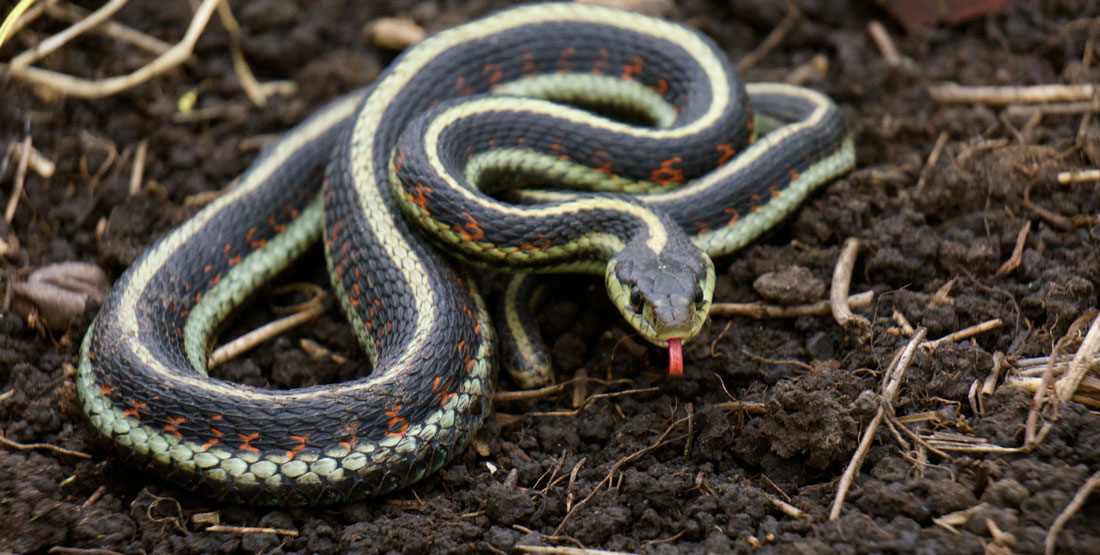
This snake just ate the mouse that was chewing a hole in your wall.
Garter snakes eat slugs, snails, grubs, grasshoppers, earthworms, and mice. A single adult can take dozens of slugs and mice over a summer. The rodents they eat are the same ones that carry ticks into your yard.
They also can't really hurt you. Garter snakes have mild saliva-based venom that helps them subdue small prey but is harmless to humans. The worst-case scenario is a defensive bite that feels like a tiny scratch.
If you spray for pests, you poison the snake too, either directly or by eliminating its food. A yard with garter snakes is a yard where the food web is still doing its job.
Don't kill the garter snake, let it cook.
Troubling reports are coming out of Milton, Florida. Residents say animals and wildlife have died following helicopter spraying along power lines, reportedly involving a chemical believed to be an herbicide. These claims should be investigated immediately. @WiltonSimpson@FDACS
Another #grind did take place in the Faroe islands, about 400 pilot whales lost their lives. Very cruel outdated practice that keeps happening here with no end insight. Humanity has lost its way here.
Credits pali and the captain Paul Watson foundation.
This Home Depot started scanning everyone outside their stores with AI vision models.
It's all going into a database that you don't have access to. No permission. No notification. No opt-out. And they can sell it to anyone even government agencies through data exchanges. Like it's nothing.
What are they collecting? Your face certainly. Your voice probably. Who you were with? How fast you walked? Where you looked?
It's so offensive, personally. They don't see us as customers anymore. We're livestock. They're farming us. I don't want to give them my money anymore.
Chaco Canyon is one of the oldest places in North America. The Trump Admin wants to open the historic site to oil and gas drilling. Pueblo leaders are trying to stop it, and calling on local politicians to take action. https://t.co/WIL9EdU7Fi
Don't buy butterfly bush. Plant butterfly weed instead.
Butterfly bush (Left) is native to China. It produces 40,000 seeds per flower spike with germination rates above 80%, and is now listed as invasive in over 25 states. It feeds adult butterflies nectar but is host to essentially no native caterpillars. You're feeding the adults and starving the babies.
Butterfly weed (Right) is a native milkweed. It hosts monarch caterpillars at every life stage and supports 100+ other native pollinators. It doesn't spread aggressively, fits in any sunny garden bed, and survives drought easily once established.
Planting non-native nectar plants without native host plants is what entomologists call an "ecological trap." It looks like a butterfly garden but it functions as a dead end.
The bee hotel you bought at the garden center is probably hurting native bees.
A 2015 study tracked 600 bee hotels across Toronto over three years. The results were pretty sobering: introduced (non-native) species occupied a third of all hotels, native bees were infected by parasites at higher rates, and pathogens spread between bees at densities that would never occur in nature.
The mass-produced versions are the worst offenders. Glued bamboo tubes can't be cleaned, which means parasitic mites, fungi, and parasitoid wasps build up year after year. Native bees can't help themselves, they keep moving in despite the danger.
If you want to support native cavity-nesting bees, the better moves are: leave standing dead plant stems through winter, leave bare patches of unmulched soil (most native bees nest in the ground), and plant a wide range of native flowers.
A messy yard is a better bee hotel than any bee hotel. Bees don't need a hotel, they need habitat.
"Biodegradable" balloons don't actually break down.
A 2020 University of Tasmania study placed latex balloons in industrial compost (high heat, moisture, microbial activity, the fastest possible breakdown conditions) for 16 weeks.
The researchers expected to find balloons in advanced decay. What they actually found was balloons largely unchanged. Same shape, same size, even the same color.
The the popular 'decomposes like an oak leaf' marketing claim originated from a 1989 industry-funded study that was never peer-reviewed. Real latex balloons contain sulfur, heavy metals, antioxidants, plasticizers, flame retardants, and synthetic pigments. The chemistry doesn't degrade on any wildlife-relevant timeline.
Meanwhile they kill. A CSIRO study found balloon debris is responsible for 32 times more deadly to seabirds per piece ingested than hard plastics. Sea turtles eat them mistaking them for jellyfish. Cows and horses eat them on pastures and die of intestinal blockages. Even the strings strangle.
Every released balloon comes back down somewhere, and the somewhere is usually in the belly of something that didn't deserve it.
The last global mass coral bleaching was *three years ago*. 2026 is projected to be even worse. This is normal now.
We are watching the last coral reefs die.
You do not hate the fossil fuel and animal farming industries enough.
Florida Crystals, subsidiary of Domino Sugar, both owned by them, is one of 2 companies responsible for poisoning majority Black and Latine low income communities in the Glades region of Florida with unnecessary sugarcane field burns almost every day up to 8 months out of the yr
3 cuts can save a life.
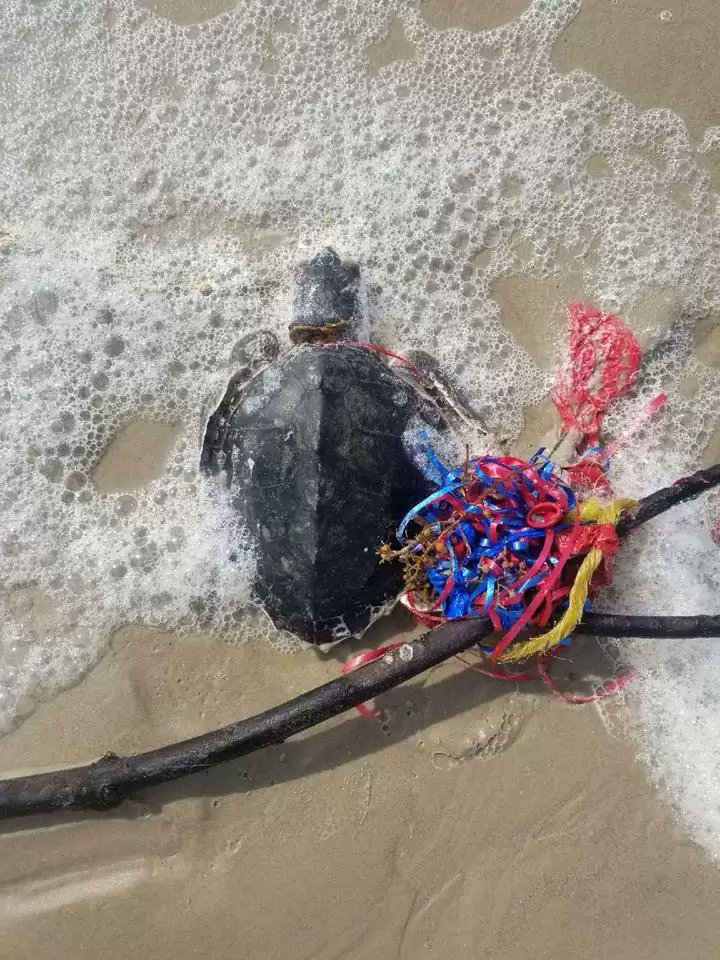
Avoid single-use plastic if you can, but if you wind up with one of these: those 3 cuts take about 5 seconds and can prevent a slow death for wildlife.
A great whale sequesters about as much carbon as 1,000 trees when it dies.
Whale falls are some of the most important carbon sequestration events in the ocean. Each carcass becomes its own ecosystem on the seabed, hosting deep-sea organisms that depend on it for decades. The carbon doesn't go back into the atmosphere.
While alive, whales do something even more important. They dive to feed in deep water, then surface to breathe and defecate, pumping iron and nitrogen from the deep sea up to where phytoplankton can use it.
Phytoplankton produce roughly half of Earth's oxygen and absorb enormous quantities of CO2 every year. Healthy whale populations make phytoplankton populations more productive than they otherwise would be.
When we kill whales for oil and meat, we dismantle a global carbon-cycling system that took millions of years to evolve. Some great whale species are still at 3 to 5% of their pre-whaling numbers.
A whale you'll never see is doing climate work the entire planet depends on. The fewer of them there are, the worse the work gets done.