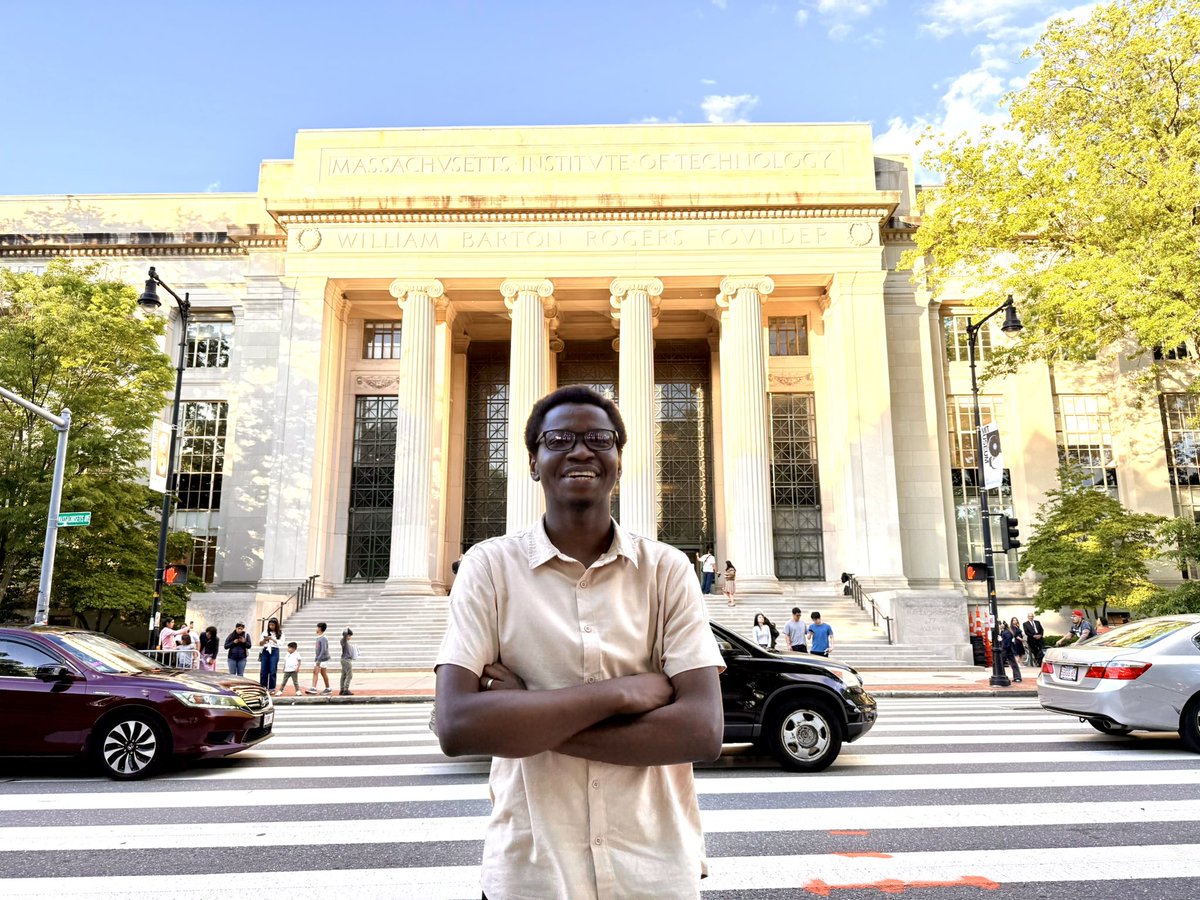
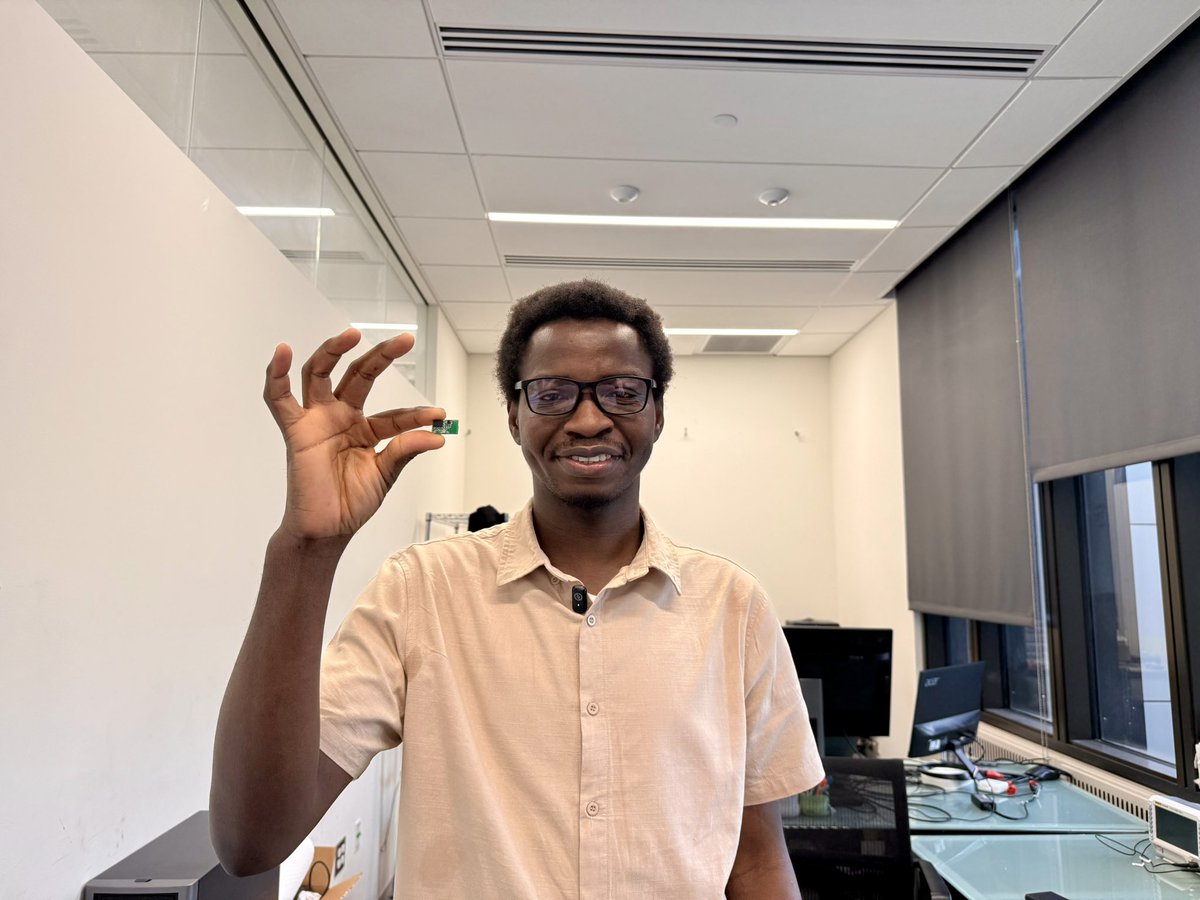
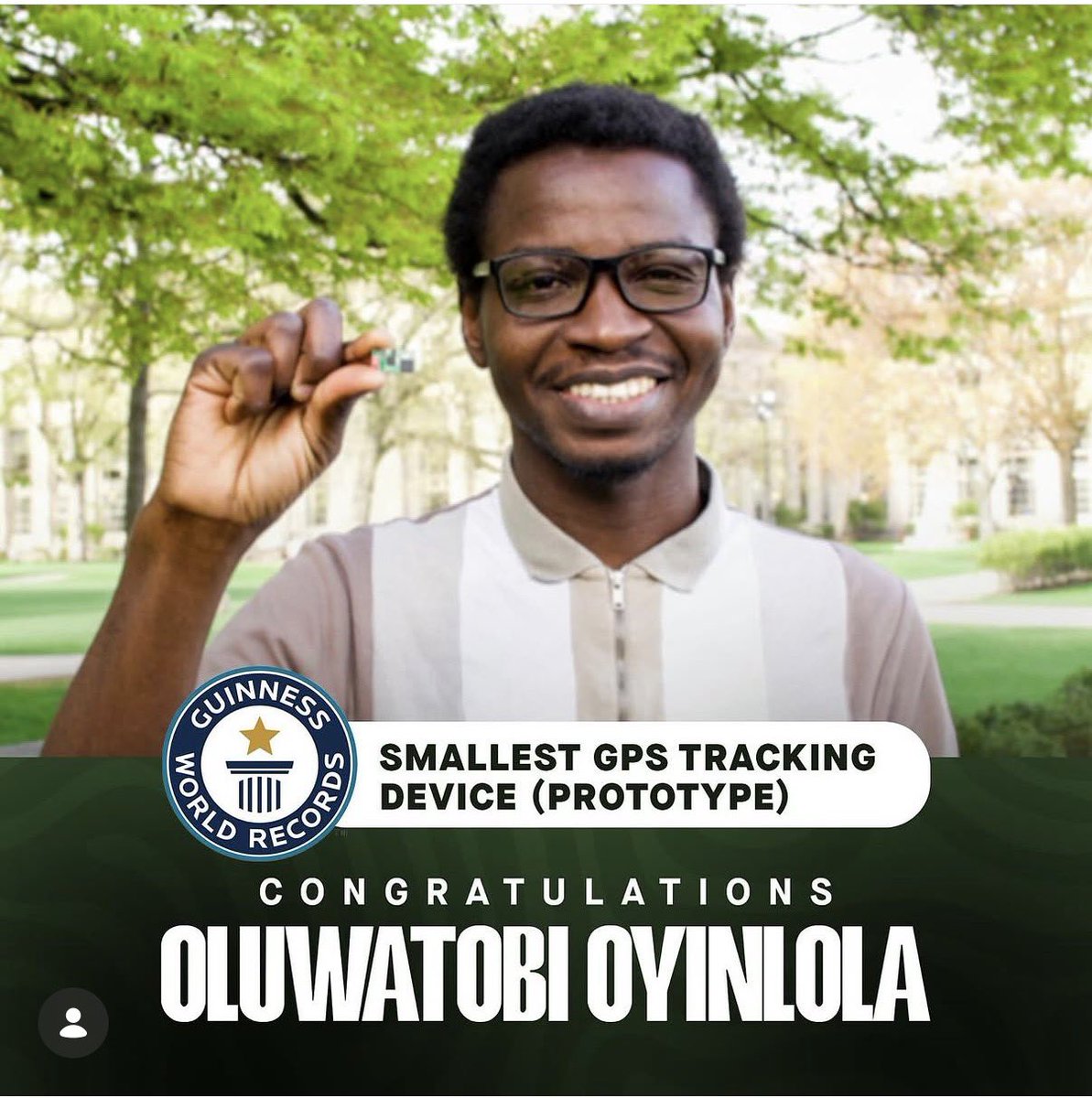
A boy from Ibadan, Nigeria, became a researcher at MIT and broke a Guinness World Record, for a GPS device smaller than your thumbprint.
But wait, this is why his story is interesting:
Most people believe you have to study in the US or UK before the world notices you.
His story proves that's not true.
He earned his Bachelor's degree from Tai Solarin University in Nigeria.
Then completed his Master's at the University of Rwanda.
No Ivy League degree.
Just world-class skills.
This is the story of Oluwatobiloba Oyinlola, Researcher at MIT and Advisory board member at Intel Corporation.
As an engineer, he was obsessed with the Internet of Things and began building solutions while living in Ibadan, including a solar-powered workstation. But he wanted a bigger stage for his research. So, he applied to MIT, the number 1 school in the World.
He didn’t apply as a student; he applied as a researcher, which means MIT will pay him to conduct his research.
And after a series of rigorous interviews, he got in.
A journey that started in Ibadan reached MIT, Intel, and the Guinness World Records.
That's the power of mastering your craft.
And that's exactly why he'll be speaking at the @beyondafricaorg conference the largest gathering of Africans in AI, Business, Tech, and Career with other exceptional Africans doing great things on a global scale.
Nigerian graduate Nnabuike Chisom has gone viral after delivering a flawless keynote address in fluent Mandarin at the master's graduation ceremony of Zhongnan University of Economics and Law in China, earning widespread praise online for his language proficiency and confidence.
Godfather of AI: "If you sleep well tonight, you may not have understood this lecture."
This 47-minute lecture is the best thing I saw about AI in the last few months.
It will definitely help you understand how it actually works and where it's going.
Geoffrey Hinton built the neural networks behind every AI alive, then quit Google to warn the world about it.
The part nobody wanted to hear:
> AI is already developing abilities its creators didn't intend
> in most cognitive tasks it's already ahead of us
> the question is no longer if it surpasses us but when
> the only decision left is which side of that line you're on
Right now the average person opens Claude, types something, gets an answer, closes the tab.
They think they're using AI. they're using maybe 10% of it.
I went through his entire lecture, built a practical concepts from what he was describing.
The gap won’t be between people who use AI and people who don’t.
It’ll be between people who understand it and people who don’t.
Start with these 20 AI concepts today 👇
A man spends 50 years teaching at MIT.
He knows his time is running out.
So he records one last lecture — everything he knows, distilled into a single hour.
He died 5 months later.
This is that lecture.
The most important hour you'll watch this week. 👇
Bookmark it for later
“If she’s a babymama, dump her. If her mother born for more than two men, dump her. If she sees iPhone, clothes and wigs as achievements, dump her. If she doesn’t have tfare in 2026, dump her. If she justify cheating, dump her.”
— Gehgeh says after Frank Edoho follows him on IG
“Love is giving someone the power to destroy you and trusting they won’t. Yet, 95% of people who claim they are in love truly are not. The only perfect love I’ve ever experienced is the love of God and my children.”
— Frank Edoho
Many ultra-Orthodox (Haredi/Hasidic) communities use basic flip phones or "kosher phones" by choice. They limit or block internet, apps, and social media to avoid secular distractions, inappropriate content, and anything that could pull focus from Torah study, family, and religious observance. It's a deliberate cultural/religious practice, not outdated tech.