Workers Are the Backbone of Every Nation
On this Workers’ Day, I warmly salute workers across the world, especially Nigerian workers whose daily sacrifices continue to sustain our families, communities, institutions, and national economy, even in the face of severe hardship and uncertainty.
It is deeply painful that those who wake up every day to teach, heal, build, farm, produce, transport, protect, and serve our nation are still denied the dignity and fair reward their labour deserves. In today’s Nigeria, the minimum wage can no longer guarantee even the most modest standard of living, as inflation, rising food prices, transportation costs, and economic hardship continue to erode the value of honest work.
No nation can truly develop beyond the strength, productivity, and wellbeing of its workforce. The progress of any society rests on the quality of its human capital, the skill of its people, and the commitment of its workers. When workers suffer, the nation suffers. When workers are empowered, the nation prospers.
But beyond their labour, workers also possess another powerful tool, their voice and their vote. Through democratic participation, they have the power to shape governance and determine the future direction of the nation.
I therefore urge Nigerian workers to recognise the strength they hold collectively. They owe it to themselves, their children, and future generations to support and demand leadership built on competence, character, capacity, credibility, and compassion. By refusing to reward failure, corruption, ethnic division, and bad governance, they can help build a nation where hard work is respected and rewarded with dignity.
A productive nation must be built on justice, fairness, and respect for labour. That is the Nigeria we must work together to achieve.
With the support and participation of Nigerian workers, a New Nigeria is POssible. -PO
With profound sadness, I received the shocking news of the passing of my dear elder brother Mike Okaka in USA. On behalf of my family and the Obidient family, I extend my deepest condolences and sincerely mourn his loss.
Mike was a devoted supporter of the Obidient movement and a passionate believer in the vision of a new Nigeria. His dedication, energy, and unwavering commitment to the ideals of good governance were truly remarkable. He stood firm in the collective struggle for a better nation and made meaningful contributions toward the cause we all cherish.
May God Almighty, who has called him home, grant him eternal rest, and may He comfort his family, loved ones, and all of us with the strength and fortitude to bear this painful and irreplaceable loss. -PO
Harnessing Youth Potential Through Sport.
I followed the recent celebrity boxing match where Carter Efe emerged victorious over the reigning champion, Portable. I congratulate the winner on his determination and commend both participants for embracing the spirit of sportsmanship. Such healthy competition, grounded in respect and fairness, is a culture we must consciously imbibe as a nation, especially in a time when unity and mutual respect are greatly needed.
It is worthy to note that what began as light-hearted entertainment is rapidly evolving into a platform that commands widespread attention, particularly among young Nigerians. Beyond the rings, it reflects the energy, creativity, and resilience of our youth. More importantly, it has the capacity to discover and nurture talents who, with the right support and structure, could become the Anthony Joshuas of the future, placing Nigeria firmly on the global sporting map.
It is therefore important that we look more deeply into such events. With deliberate investment, proper regulation, and institutional backing, this emerging space can be transformed into a viable industry - one that creates employment, instills discipline, and channels youthful energy into productive ventures. In doing so, we not only entertain, but also empower, building pathways for sustainable national development.
A new is POssible. -PO
"The condition of our nation and the urgent need to rescue Nigeria, informed my decision to leave ADC for NDC."
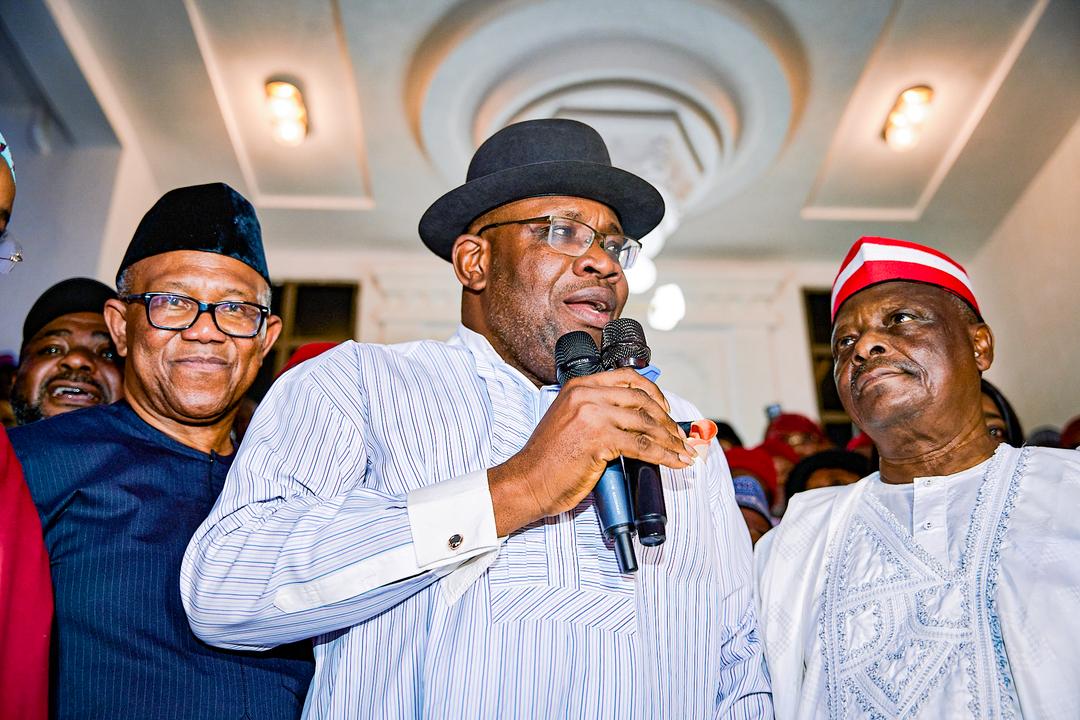
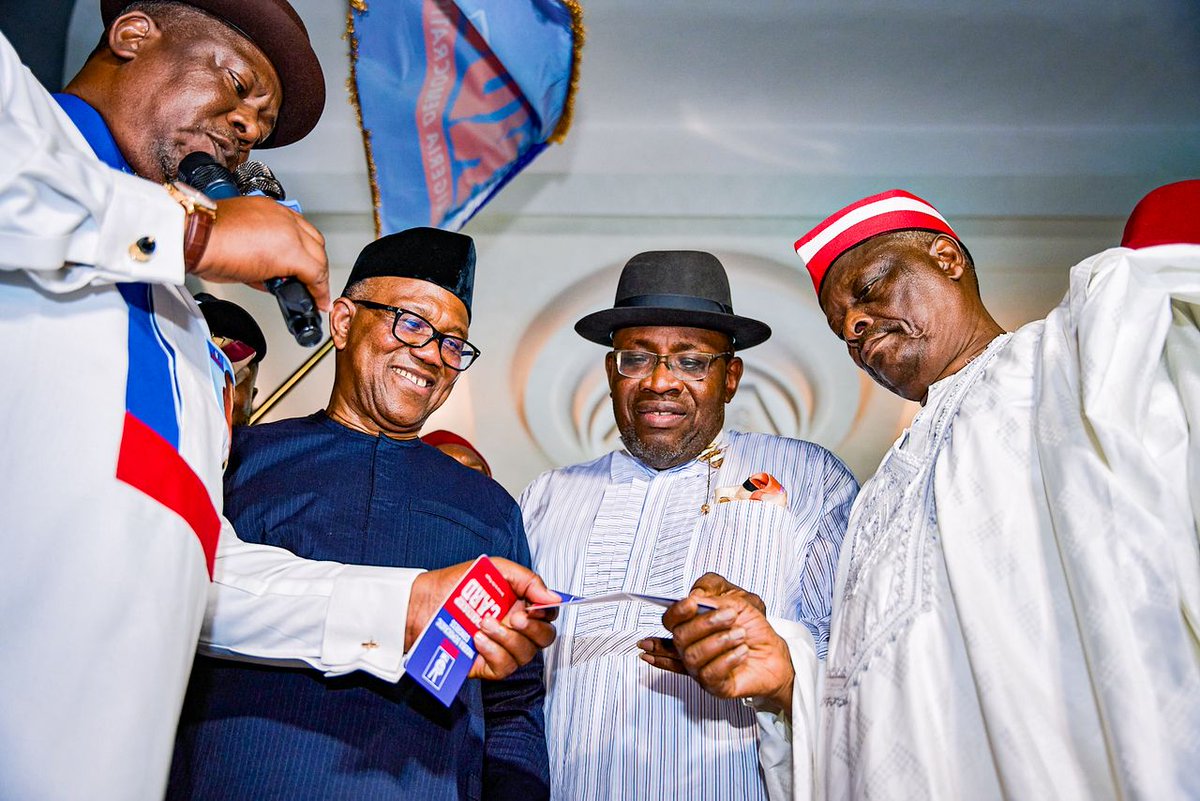
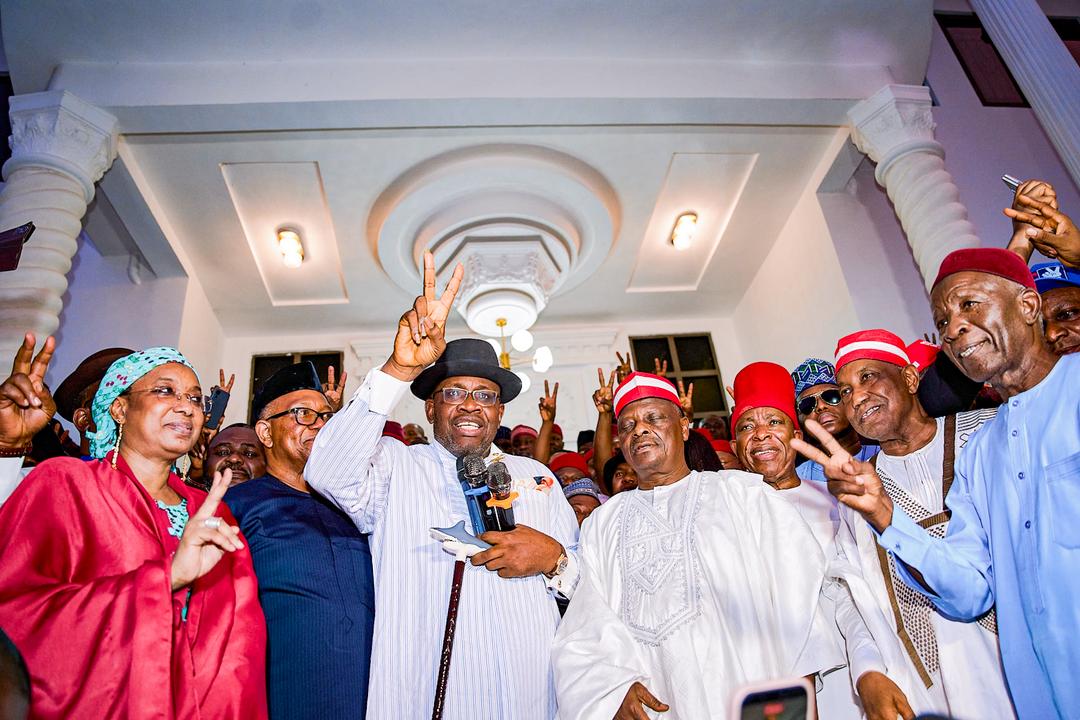
Yesterday, I formally joined the Nigerian Democratic Congress (NDC), alongside my dear brother, Engr. Dr Rabiu Musa Kwankwaso, with one clear purpose: to continue the struggle for a new Nigeria built on justice, competence, accountability, and compassion for the ordinary Nigerian.
As I stated yesterday, this decision was not made out of anger, personal ambition, or convenience. It came after deep reflection on the present condition of our nation and the urgent need to rescue Nigeria from the dangerous path it is currently heading.
Over the years, I have remained steadfast in my conviction that politics should never be about individuals, positions, or personal gain. It must be about the people, especially the millions of Nigerians who today can no longer afford necessities, whose businesses are collapsing, whose children are losing hope, and whose future is becoming increasingly uncertain.
I left the ADC for the same reason I left the Labour Party: the severe, orchestrated litigation and internal crises deliberately designed to ensure that I, alongside many other notable individuals, do not effectively participate in the electoral process. I sincerely appreciate and remain deeply grateful to the Leadership of ADC for the opportunity to work together in pursuit of a better Nigeria. I am particularly grateful to ADC Chairman Senator David Mark for his exceptional Leadership. I also deeply appreciate my Leader and elder brother YE, Atiku Abubakar, as well as other respected leaders within the party.
As we join the NDC, I sincerely appeal to the Nigerian Government against the encouragement of unresolved litigations and the infusion of crises within political parties. Democracy must never become a weapon against the people. A healthy democracy thrives on strong institutions, credible alternatives, and the freedom of citizens to make choices without intimidation, manipulation, or fear. Opposition parties must not be weakened or destroyed, because when democracy loses balance, the people ultimately suffer.
Nigeria today is passing through one of the most difficult periods in its history. Poverty is rising. Hunger is widespread. Insecurity continues to threaten lives and livelihoods. Businesses are shutting down daily. Our young people are becoming discouraged, and many citizens have lost faith in the system. At a time like this, leadership must be driven not by propaganda or division, but by competence, capacity, character, and compassion.
Our decision to join the NDC is therefore not an abandonment of values, but a continuation of the same mission we have always stood for: building a Nigeria where leadership is about service, where public resources are managed responsibly, where institutions function independently, and where every Nigerian, regardless of tribe, religion, region, or social status, can live with dignity, security, and hope.
I remain committed to working with all Nigerians of goodwill across political, ethnic, and religious lines. The task before us is bigger than any individual or political party. It is about the future of our children and the survival of our dear nation.
I thank Nigerians, especially our youths and women, for remaining peaceful, resilient, and hopeful despite the enormous challenges confronting the country. I urge you not to lose faith in Nigeria. Nations do not change because people surrender to hopelessness; they change because people continue to believe, continue to sacrifice, and continue to stand for what is right.
A new Nigeria is still POssible. -PO
Fellow Nigerians, good morning.
I woke up this morning after my church service with a deeply reflective heart, and despite every constraint, I felt compelled to share these thoughts with you.
Many people do not truly understand the silent pains some of us carry daily—the private struggles, emotional burdens, and quiet battles we face while trying to survive and serve sincerely in difficult circumstances.
We now live in an environment that has become increasingly toxic, where the very system that should protect and create opportunities for decent living often works against the people—a society where intimidation, insecurity, endless scrutiny, and discouragement have become normal.
More painful is when some of those you associate with, believing you would find understanding and solidarity among them, become part of the pressure you face. Some who publicly identify with you privately distance themselves or join in unfair criticism.
We live in a society where humility is mistaken for weakness, respect is seen as a lack of courage, and compassion is treated as foolishness—a system where treating people equally is questioned simply because you refuse to worship status, tribe, class, or power.
Personally, I have never looked down on anyone except to uplift them. I have never used privilege, position, or resources to oppress others, intimidate the weak, or make people feel small. To me, leadership has always been about service, sacrifice, and helping others rise.
Let me state clearly: my decision to leave the ADC is not because our highly respected Chairman, Senator David Mark, treated me badly, nor because my leader and elder brother, Alhaji Atiku Abubakar, or any other respected leaders did anything personally wrong to me. I will continue to respect them.
However, the same Nigerian state and its agents that created unnecessary crises and hostility within the Labour Party that forced me to leave now appear to be finding their way into the ADC, with endless court cases, internal battles, suspicion, and division, instead of focusing on deeper national problems and playing politics built more on control and exclusion than on service and nation-building.
Even within spaces where one labours sincerely, one is sometimes treated like an outsider in one’s own home. You and your team become easy targets for every failure, frustration, or misunderstanding, as though honest contribution has become a favour being tolerated rather than appreciated.
And when you choose to leave so that those you are leaving can have peace, and you step out into the cold, you are still maligned and your character is questioned. Despite all your efforts to continue working for a better Nigeria and engaging people with sincerity and goodwill, those who do not wish you well continue to attack your character and question your intentions.
There are moments I ask God in prayer: Why is doing the right thing often misconstrued as wrongdoing in our country? Why is integrity not valued? Why is the prudent management of resources, especially when invested in critical areas like education and healthcare, wrongly labelled as stinginess? Why are humility and obedience to the rule of law often taken to be weakness rather than discipline?
Let me assure all that I am not desperate to be President, Vice President, or Senate President. I am desperate to see a society that can console a mother whose child has been kidnapped or killed while going to school or work. I am desperate to see a Nigeria where people will not live in IDP camps but in their homes. I am desperate for a country where Nigerian citizens do not go to bed hungry, not knowing where their next meal will come from.
Yet, despite everything, I remain resolute. I firmly believe that Nigeria can still become a country with competent leadership based on justice, compassion, and equal opportunity for all.
A new Nigeria is POssible. -PO
Standing Up for Democracy
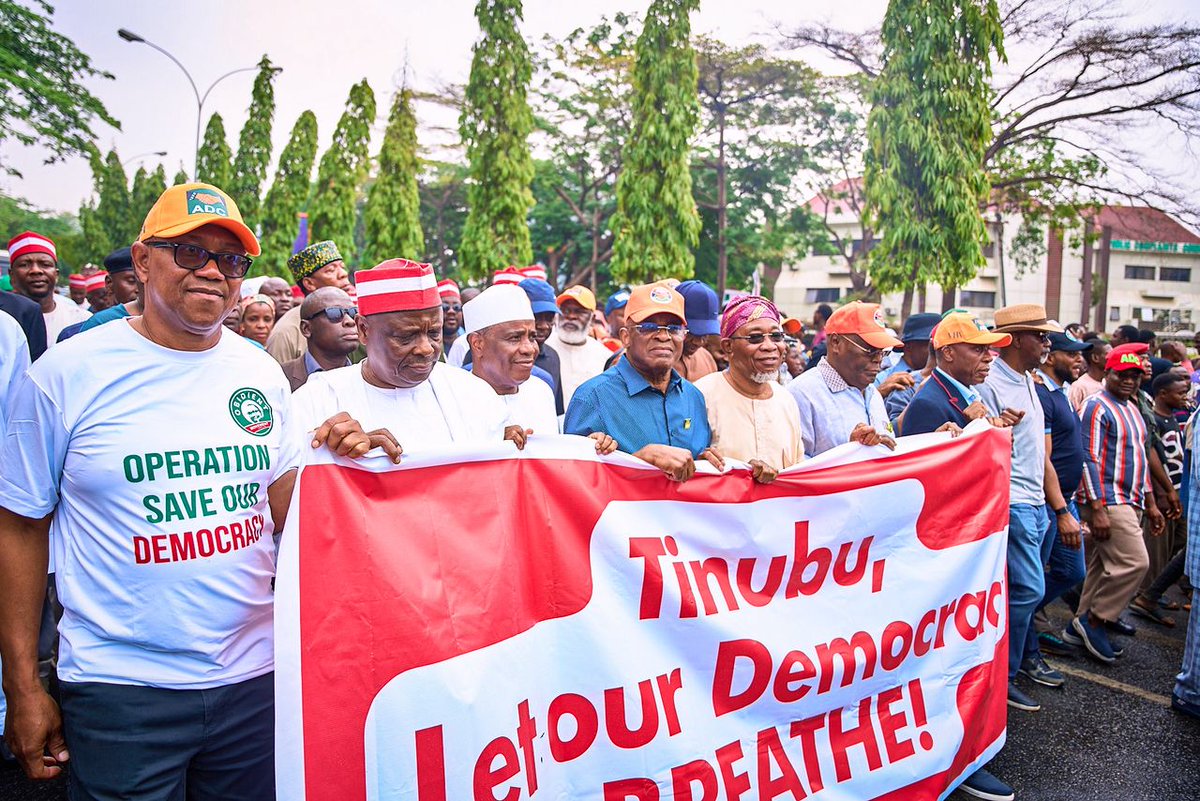
Today, I joined fellow Nigerians, leaders, and members of the African Democratic Congress (ADC) led by National Chairman Sen. David Mark to participate in a peaceful "Save Democracy" protest.
This event was not just an effort to protect our democracy; it was also a moment of reflection on how far we have fallen as a nation. We must resist the suffocation of our democracy by those who once claimed to have sacrificed to defend it, but are now doing everything possible to undermine it and silence opposition.
History will not be kind to those who traded the struggle for democracy for the comfort of power. We will not remain silent, we will not be intimidated, and we will not surrender the future of this nation. The will of the people must prevail—stronger, louder, and impossible to suppress.
A New Nigeria is POssible. -PO
Now a Disgraced Country Indeed
Today, as the world marks World Health Day, we must pause for honest reflection.
Nigeria, a nation of over 200 million people, continues to grapple with one of the weakest healthcare systems in the world. Our primary healthcare structure is almost comatose. We now record worse infant mortality outcomes than India, a country with a larger population, while health insurance coverage in Nigeria remains below 5%. These are not just statistics; they are a painful indictment of our priorities.
Recent disclosures by the Honourable Minister of Health show that out of the ₦218 billion appropriated for healthcare capital expenditure, only about ₦36 million has been released. This is deeply troubling.
At the same time, the Independent National Electoral Commission (INEC) has projected over ₦135 billion for legal expenditures.
Let us reflect on this.
The amount earmarked for election-related litigation is far higher than what has been made available for primary healthcare, the very foundation of a nation’s wellbeing. This is the same primary healthcare system expected to serve millions of Nigerians and support critical institutions such as:
1. University of Benin Teaching Hospital, Benin City
2. University of Calabar Teaching Hospital, Calabar
3. University of Abuja Teaching Hospital, Gwagwalada
4. University College Hospital, Ibadan
5. Obafemi Awolowo University Teaching Hospital, Ile-Ife
6. University of Ilorin Teaching Hospital, Ilorin
7. Irrua Specialist Teaching Hospital, Irrua
8. University of Nigeria Teaching Hospital, Ituku-Ozalla, Enugu
9. Jos University Teaching Hospital, Jos
10. Aminu Kano University Teaching Hospital, Kano
11. Lagos University Teaching Hospital, Lagos
12. University of Maiduguri Teaching Hospital, Maiduguri
13. Nnamdi Azikiwe Teaching Hospital, Nnewi
14. University of Port Harcourt Teaching Hospital, Port Harcourt
15. Usmanu Danfodiyo University Teaching Hospital, Sokoto
16. University of Uyo Teaching Hospital, Uyo
17. Ahmadu Bello University Teaching Hospital, Zaria
18. Federal Teaching Hospital, Abakaliki
19. Abubakar Tafawa Balewa University Teaching Hospital, Bauchi
20. Federal Medical Centre, Yola
These institutions represent hope for millions. Yet, they remain underfunded, overstretched, and burdened by systemic neglect.
A nation that prepares more for electoral disputes than for the health of its citizens is a nation that has lost its way.
We must begin to ask the difficult but necessary questions: What are our true priorities? What kind of nation are we building? And for whom?
Healthcare and education are not optional; they are the foundation of national development. Any country that neglects them undermines its own future.
Nigeria must urgently reorder its priorities. We must invest in the health and wellbeing of our people, strengthen our institutions, and build a system that works for all, not just a few.
A new Nigeria is POssible. -PO
We, members and leaders of the ADC, and other well-meaning Nigerians, lovers of democracy, are saying that our democracy must not be killed. We say NO to a one-party system and for that today we’re calling out Nigerians who believe in unity, peace, and security of our country to join us as we defend democracy in our land.
A New Nigeria is POssible. -PO
Yesterday defenders of democracy, today's destroyers, What a shame.
What an irony of history, that the acclaimed defenders of democracy and human rights who claimed to have fought for democracy during the era of General Sani Abacha now find themselves worse than the man they opposed.
Today, General Sani Abacha, once presumed face of oppression, will be remembered as seemingly more democratic and more respectful of human rights than the so-called champions of activism from the NADECO days. Power indeed reveals character.
A New Nigeria is POssible. -PO
Leadership Without Compassion is Not Leadership
During his visit to Benue State in June 2025, Bola Ahmed Tinubu stopped at the Government House but did not go to the actual scene where innocent Nigerians lost their lives. Similarly, yesterday in Jos, his engagement ended at the airport instead of at the affected communities.
What happened in Plateau yesterday highlights a complete absence of leadership. True leadership requires presence, empathy, compassion, and a willingness to meet people where their pain truly lies. For citizens who have just lost loved ones, homes, and their sense of safety, being addressed from an airport tarmac is profoundly inadequate.
This approach exacerbates the sense of abandonment already felt by innocent Nigerians who have endured repeated cycles of violence without meaningful protection or justice. Plateau deserves more than distant words; it requires urgent action and a clear commitment to ending the insecurity that continues to claim innocent lives.
In such moments, leadership must not only be visible but also tangible—standing with victims, listening to survivors, and acknowledging the depth of their grief.
If we truly desire a better Nigeria, we must demand leadership that is present, responsive, and responsible at all times.
A new Nigeria is POssible. -PO
Tinubu in Jos Confirms ‘Don't Vote for Me’ Prediction on Power Supply
During the 2023 campaign, President Tinubu made a clear electoral promise: “If I don’t give you constant electricity in four years, don’t vote for me for a second term.”
When he took office in 2023, Nigeria had a power supply of over 4,000 megawatts and lower tariffs. Today, the electricity power supply is less than 4,000 megawatts on the average, and Nigerians are paying higher tariffs. Nigeria currently has the lowest per capita electricity consumption in the world, with a rate below 30% of the African average. Africa’s average is 617kwh, Nigeria’s is 144 kWh. This means that Nigerians consume least electricity than other Africans.
In a glaring display of disregard for promises and a lack of trust, President Tinubu, during a brief airport stopover to visit grieving families of the Jos attack on Thursday, April 2, 2026, stated that one of the reasons for his 10-minute stay was that the airport had no electricity. “You have no light here I fly out in ten minutes” At a time when Nigerians are enduring days without power, our leaders cannot even stay a few minutes without it.
Now is the time to stop incompetent leaders—those lacking the capacity and compassion—who prioritise their own comfort over the well-being of the people and make empty promises.
A new Nigeria is POssible. -PO
Let Easter give us hope of a better Nigeria ahead.
As we commemorate the resurrection of our Lord Jesus Christ, even amid difficult times, we encourage you to remain steadfast in hope. Indeed, “Good Friday must come before Easter Sunday,” and our present challenges must not define our future.
We understand the heavy burden many families are carrying as a result of economic hardship. As we share in your struggles, we urge you not to lose heart. These difficult moments are temporary trials—our collective “cross”—that can lead to renewal if we remain resilient and committed to the common good.
Our nation continues to face serious challenges, especially in governance and the impact it has on the daily lives of citizens. Yet, Easter reminds us that after sacrifice comes renewal, and after darkness comes light. A better Nigeria is possible when we, together, choose accountability, compassion, and responsible leadership.
We remain hopeful that, through God’s grace and the determination of our people, the journey ahead will lead to a brighter future. Though the road may be rough, we believe in a Nigeria that works for everyone.
May this Easter renew our faith, strengthen our resolve, and inspire us to work together for a just and prosperous nation.
Happy Easter. -PO
“This Experience Will Not Repeat Itself” - Another Presidential Promise fails in less than 24 Hours.
Less than 24 hours after President Tinubu stood at the Jos Plateau State airport on April 2, 2026, and promised the grieving Nigerian citizens, “I promise you that this experience will not repeat itself,” another brutal attack occurred in Nyamgo Gyel, Jos South LGA, resulting in the deaths of several innocent citizens.
Since then, and only a week following that reassuring promise from the President, Nasarawa State has been plunged into grief as the Akyawa and Udege Kasa communities fled for their lives after gunmen killed at least 11 people. Many homes were reduced to ashes, and numerous families remain missing.
In Zamfara State, 150 innocent Nigerians were abducted from the Kurfa Danya and Kurfan Magaji communities in one of the largest mass kidnappings in recent times. On the same day of the Zamfara kidnappings, terrorists in Borno State stormed Chibok, killing four officers and burning down homes.
Yesterday, on Easter Sunday, Benue State was rocked by violence again, with over 17 Nigerians massacred, entire communities left in ruins, and many individuals still unaccounted for. Today, in Kaduna State, several innocent citizens were killed by terrorists inside churches, with many others abducted in the Ariko community of Kachia LGA.
Yet we were told, “This experience will not repeat itself.” This represents a failure of leadership and responsibility, and sadly, Nigerians are paying for it with their lives.
These attackers are not ghostly figures; our inaction emboldens them. How can a President make such a categorical promise and, mere hours later, the nation continues to count the dead across multiple states? The primary responsibility of any government is to protect lives and property; however, this responsibility is failing today. Nigerians are being slaughtered in their homes, in their communities, and in the very places they should feel safest. Even the President did not enter these communities, so who is truly safe in Nigeria?
This is a national emergency. Nigeria is bleeding, and the situation is worsening and increasingly helpless.
A New Nigeria is POssible. -PO
I express my deepest condolences to Professor Attahiru Jega and the entire Jega family on the profound loss of his beloved wife, Hajiya Hadiza Attahiru Jega.
May Almighty Allah grant her Al-Jannatul Firdaus, overlook her shortcomings, and envelop her soul in His mercy.
I also pray that Allah provides Professor Jega, their children, and the entire family with the fortitude and strength to bear this sad irreplaceable loss.
May her gentle soul rest in perfect peace. Ameen. -PO
Let us reflect, sincerely and without sentiment.
In the past few days, the President has reportedly approved ₦3.3 trillion as a “full and final” payment for debts in the power sector. Yet, this is not the first time such approvals have been made.
On May 17, 2024, ₦3.3 trillion was approved for the same purpose. On July 25, 2024, another ₦4 trillion bond was approved to settle similar debts. There have also been other approvals in between, all targeted at addressing the same power sector liabilities.
This raises a fundamental question: were the previous approvals mere announcements without execution?
₦3.3 Trillion Again? Nigeria’s Power Crisis Without End
During the 2023 campaign, President Bola Ahmed Tinubu made a clear promise: that if he failed to deliver stable electricity, Nigerians should not re-elect him. Today, the reality is that power supply has worsened, to the extent that there are even discussions about disconnecting the Presidential Villa from the national grid.
Each time legitimate concerns are raised, what we see appears more like policy pronouncements than measurable progress.
Now, again, we are confronted with another ₦3.3 trillion approval to settle power sector debts.
These debts were largely accumulated under successive administrations of the All Progressives Congress between 2015 and 2025. This raises serious concerns about accountability, transparency, and effectiveness in public financial management.
It is important to note that government institutions and agencies, including the Presidential Villa owe a significant portion of these debts. Year after year, budgets were made and funds appropriated. Why then were these obligations not settled when due? And from what source will this new payment be made? Are we resorting once more to borrowing to service inefficiencies?
Key questions remain unanswered: How did the debt accrue? What is the actual total debt in the power sector? Which components of the debts are due to operators’ inefficiency and should be borne by them? Why have previous approvals not translated into tangible improvements? Who are the real beneficiaries of these repeated payments?
Is the ₦3.3 trillion approved on April 6, 2026, the same as the ₦3.3 trillion approved in May 2024, and how does it relate to the ₦4 trillion bond approved in July 2024?
Nigeria must move beyond recycled announcements and confront the power sector crisis with sincerity, transparency, and decisive reforms.
Until we do so, we will remain trapped in a cycle of debt and darkness.
But with discipline, accountability, and the right leadership, a new Nigeria is still possible. -PO
Still on the worrisome killings in the country.
We can't stop bemoaning the unending killing in the country. Despite not being at war, the killing, abduction and banditry incidents in our country continue to be daily and increasing at a worrisome rate.
The recent attack in Okigwe, Imo State, that claimed the lives of many, with so many others still missing and feared dead, reflects once again, the alarming insecurity reality in our dear country.
Over the weekend, I read in the dailies that Amnesty International warned that the Nigerian government is emboldening bandits through its “stunning failure” to protect citizens. They described the week as a bloody one, recording several deaths across various parts of the country, including the massacre of over 50 worshippers in a mosque in Katsina, the abduction of over 60 people in the same Katsina State, and the killing of over 15 farmers in Mangu, Plateau State, which displaced more than 200 families in just days. All of these in a single week in the country.
Amnesty International further revealed that in just two years of this administration, over 10,000 Nigerians have been killed by armed groups in various states across Nigeria. Instead of improving security, insecurity has worsened under this administration and in just 2 years, with new armed gangs emerging
Nigeria, which is not even officially at war, has recorded over 10,000 civilian deaths in just two years, a number similar to civilian deaths in Ukraine, which is officially at war.
This means that, in just two years, Nigeria’s insecurity crisis has taken almost as many civilian lives as a country under open warfare.
We must now wake up as a nation. The first duty of any government is to secure the lives and property of its people. This should concern all of us who claim to be politicians and leaders. We must put Nigerian citizens first, stop the politicking, name-calling, and gossip, and focus on addressing these real issues.
The time to act is now.
A New Nigeria is POssible. -PO